Note to readers: Prior to reading this essay please be familiar with this website’s Research Proposal, Robotech Manifesto, Disclaimer, and Mission Statement posts.
This essay is approximately 128 pages 63,988 words in Microsoft Word published 9/3/2020.
Table of Contents:
Introduction
Analysis of Episodes 1 to 36
Final Thoughts
Appendix
Introduction
This essay is dedicated to the fans (fanatics) of Episodes 1 to 36. This essay offers new perspectives on an old classic. The intention of this essay is for fans to read this essay and recapture the original joy of experiencing this series for the first time by acknowledging the successful elements of this series.
This essay ambitiously attempts the impossible. Due to the daunting length of this essay some readers may wish to initially browse this document. Suggested highlights for these readers are the analysis of Lynn Minmei’s (Minmay’s) freefall in Episode 2, the synopsis for Episode 4: Lynn Minmay, the synopsis for Episode 9: Miss Macross, the synopses for Episodes 27 and 36, and the Final Thoughts section of this essay.
This essay deconstructs Episodes 1 to 36 of Super Dimension Fortress (SDF) Macross and Robotech. Utilizing critical theory, this essay strives to first acknowledge symbolism encoded in these episodes and then decode these symbols as perceived by various viewers through the lenses of their individual social contexts and life experiences. It is hoped this essay will be enjoyed by audiences of both franchises. However, in the interest of full disclosure, this essay is written using mostly Robotech jargon. It is hoped viewers of each franchise will extend their trust to the author as a steward of their goodwill. The author of this essay holds only the highest regard and deepest respect for all the fans of every Macross related media property. This essay aims to appeal to audiences of each franchise, and, for better or worse, the potential worldwide readership and larger source of fan enthusiasm restricted to Episodes 1 to 36 may be skewed to the Robotech audience thus justifying any Robotech preference detectable in this essay. Respectfully, the author of this essay humbly requests fans of SDF Macross endure the conscious narrative choice to utilize the Robotech lexicon. A special acknowledgement must be given to the fans of SDF Macross for their patience with, and tolerance of, Robotech fans. Furthermore, certain boundaries and limitations must be defined to allow for a more manageable analysis and discussion of the subject matter. Thus, the scope of this essay is mostly limited to the events depicted in the SDF Macross television series and the entire Robotech franchise. While certainly worthy of discussion, the entire Macross franchise is simply too rich and too vast to be included here.
This essay is an objective out-of-universe academic dissection of SDF Macross related material. The author’s point of view strives to be that of an unbiased observer. Hopefully, fans of the Macross franchise material will find some solace by adopting this perspective when reading this essay. This essay views these series from the perspective of world mythology and equates the adaptation of SDF Macross into Robotech with the ancient tradition of storytelling and cultural appropriation.
This essay attempts to disentangle the Gordian Knot of these series and examine their gestalt. Many of the conjectures of this essay exist in the academic space defined by the Death-of-the-Author construct. Other conjectures of this essay are built upon authorial intent. These series are unique when viewed in the context of the death-of-the-author point of view. The conventional death-of-the-author strategy may be applied to the Macross franchise. However, scholarly readers of this essay may utilize death-of-the-author in an unconventional two-stage strategy for the Robotech franchise. Since Robotech is not a faithful language translation but a rewritten and repurposed adaptation, it was born from the death of the authors. Thus, Robotech enables a viewer to first apply death-of-the-Author to the American team which adapted Macross into Robotech. From the context of this frame of reference, the Robotech viewer can then continue with this regressive mode by applying a second stage of death-of-the-author to the original Japanese creative team. Other concepts referenced in this essay are Mise en abyme, Defamiliarization, Fairytale Inversion, Transgressive Fiction, and Iceberg Theory.
Readers of this essay may find it helpful to remind themselves the creators of these series have a subconscious and may never be able to admit to what is the primitive primordial core of this series. Readers must also remind themselves the viewers of these series have their own subconscious which may interpret the content to carry the same or different primitive primordial meaning as intended by the subconscious of the creators. This concept justifies the assertions of this essay.
This essay aims to elucidate insight and deeper appreciation for this series by examining its inherent artistic merits. This essay attempts to slake the fan’s unquenchable thirst for this series. This essay is not intended as an episode guide for first time viewers. This essay is one giant spoiler. This essay examines the component parts of the media relating to Episodes 1 to 36 and examines them with new points of view and perspectives. This essay focuses on narrative structure and plot mechanics.
This essay examines symbols, allegories, metaphors, imagery, symmetry, asymmetry, motifs, themes, patterns, harmony, rhythm, pacing, tempo, film theory, art criticism, literary criticism, anime (animation) scholarship, plot devices, aesthetics, allusions, illusions, parallelisms, flow, balance, proportion, variety, movement, dominance, emphasis, shape, value, form, proximity, alignment, contrasts, similarities, archetypes, tropes, structure, craft, media literacy, and unity.
Much of the symbolism and interpretation found throughout this essay is more comprehensible when the material is viewed in isolation from later entries in the Macross franchise. The proposals asserted in this essay are most reasonable to a Robotech viewer or when confined to the material of both franchises existing between the years 1982 and 1991. The Robotech material limits the Zentreadi story possibilities and not until 1992 did the Zentreadi storyline branch into new directions in the Macross franchise. The more defined the Zentreadi become in later franchise installments, the more narrowed their symbolic interpretation becomes. This narrowing of interpretation is due to the tendency of later installments to retcon (retroactive continuity) new elements into Episodes 1 to 36. At times this essay ascribes symbolisms to the SDF-1 which are most powerful when considered prior to 1992 as later sister ships of the same class in sequel series somewhat retroactively dilute the metaphors presented here. In SDF Macross the SDF-1 is referred to as a capital ship or Megaroad-class ship.
Robotech is the combination of three unrelated animated series merged into 85 continuous episodes. SDF Macross consists of 36 episodes. These were directly adapted into the first 36 episodes of Robotech. Episode 37 of Robotech is a clip show. Episodes 1 to 23 of Super Dimension Cavalry Southern Cross (SDCSC) were directly adapted into Episodes 38 to 60 of Robotech. Episodes 1 to 25 of Genesis Climber MOSPEADA (Military Operation Soldier Protection Emergency Aviation Dive Armor) were directly adapted into Episodes 61 to 85 of Robotech. The Super Dimension Fortress Macross: Do You Remember Love? (DYRL) is an animated Japanese film based on the events of the animated series SDF Macross. It reimagines Episodes 2 to 27. Clash of the Bionoids is an English language dub of DYRL. This essay examines all this material as it relates to Episodes 1 to 36 of SDF Macross and attempts to isolate and distill the core essence of this material into a comprehensible synthesis. Interestingly, the adaptations and feature-length film incarnations serve to concentrate and illuminate the critical components of this series. These materials filter out and strip away the secondary elements. This essay attempts to propose a grand unified theory for Episodes 1 to 36.
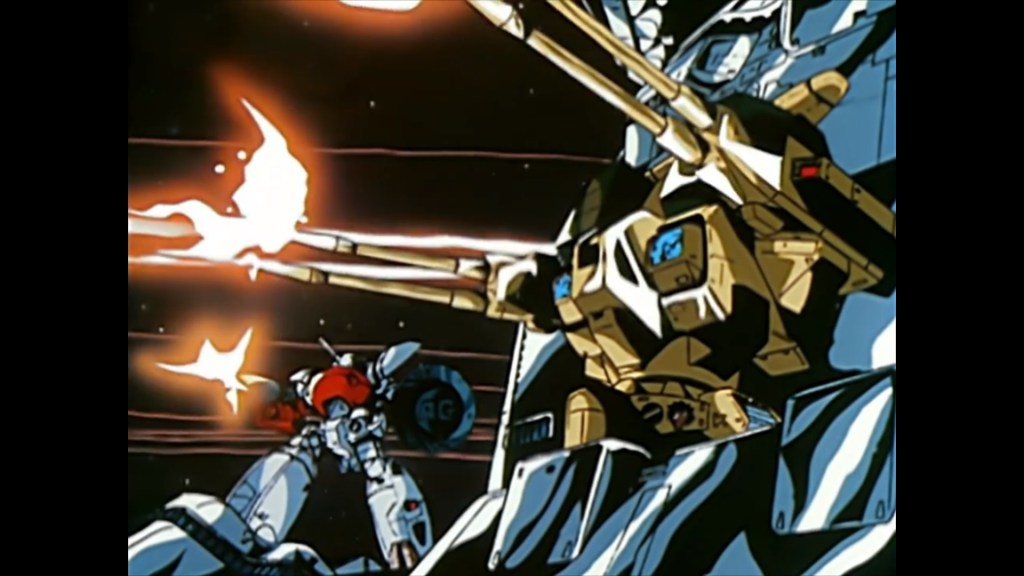
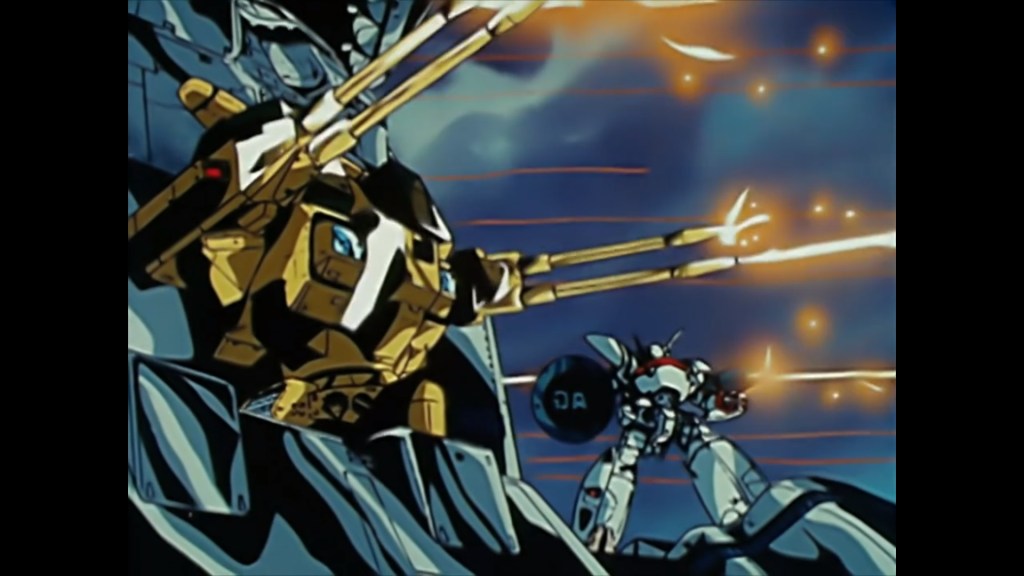
The Japanese Advertising Agency Big West sponsored the Super Dimension trilogy of SDF Macross, SDCSC, and Super Dimension Orguss. These series are a trilogy in name only and are completely unrelated. Although broadcast after SDF Macross, the Orguss mecha (mechanized) does make a cameo appearance in SDF Macross in Episode 27, and the animation is reused in Episode 36. As previously stated, SDCSC was used to create Robotech, and thus, selected scenes are edited into the first 36 episodes of Robotech.
Throughout this essay the term SDF Macross is used to denote the original Japanese episodes. For the most part, terminology from SDF Macross, SDCSC, and Genesis Climber MOSPEADA (GCM) will be presented in parentheses.
This essay takes its inspiration from and elaborates upon 35 years, at the time of this writing, of fan analysis and content available in the public domain. This essay consolidates and summarizes research related to the academic analysis of these series and owes a debt of gratitude to everyone who has come before.
Episode 1: Booby Trap in SDF Macross and Boobytrap in Robotech
The title of this episode is mentioned when Captain Gloval (Global) describes booby traps left behind by retreating soldiers in wartime. The SDF-1 (Super Dimension Fortress), or the Macross in SDF Macross, automatically fired the main gun at a Zentreadi (Zentradi) vessel. Captain Gloval realizes the SDF-1 is itself a booby trap. In SDF Macross he does not yet know the SDF-1 is a ship belonging to the never pictured Supervision Army which is an enemy of the Zentreadi. In Robotech, the Supervision Army concept from SDF Macross was rewritten as the Robotech Masters with the Zentreadi serving as their expendable clone army rather than their enemy. The Robotech Masters, a creation unique to the Robotech series, are an amalgamation of the unseen Supervision Army from SDF Macross and the Zor from SDCSC. In DYRL the Supervision Army element is absent, but, studying plot dynamics from an out-of-universe perspective, it was likely replaced with the Meltrandi (female Zentreadi) in a creative decision to condense events for a feature-length film. In so doing, while there is a battle of the sexes represented by the Zentreadi gender segregation of the television series, it is a cold war in SDF Macross as compared to active combat in DYRL.
The series begins with an out-of-universe extradiegetic or non-diegetic narrator which positions the viewers as the extradiegetic narratees.
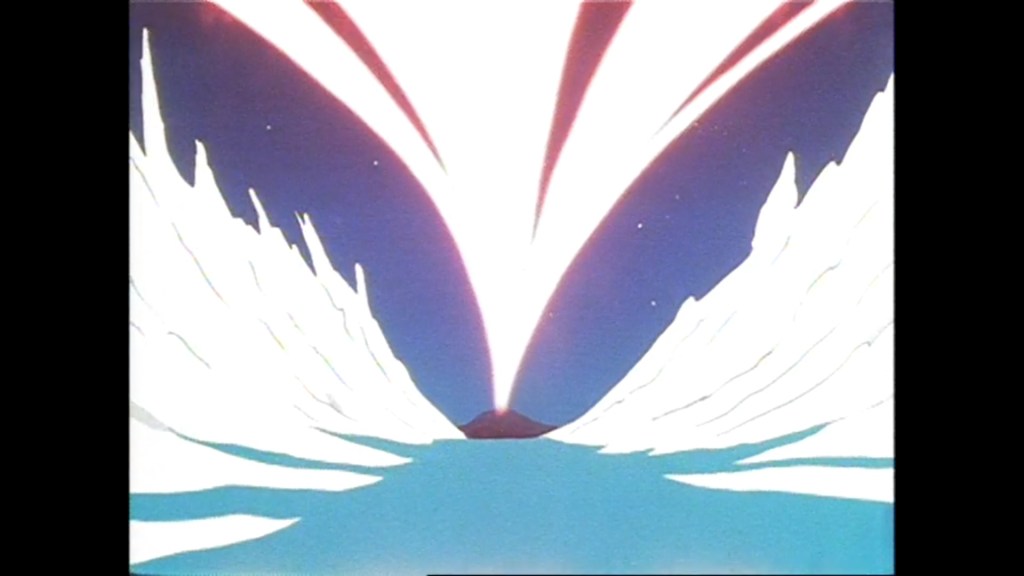
The first images of this series are of the SDF-1 (the Macross) crashing onto Macross Island (South Ataria Island). The SDF-1 is animated as a beam of light striking Earth.

This imagery is re-used in Episode 27: Love Flows By to represent Dolza’s (Bodolzaa’s) energy weapons striking Earth. While re-using and cross purposing existing animation is a cost efficient production strategy, it also inadvertently plants recurring subliminal images in the viewers’ minds.

For Robotech fans, this imagery is reversed in Episode 85: Symphony of Light (Adapted from Episode 25 of GCM). In Episode 85 the Regis (Refless) transfigures and transmutates the entire Invid (Inbit) population into a collective consciousness of pure energy and departs from Earth taking the form of a beam of light exiting Earth. For Robotech viewers, the opposing images of Episodes 1 and 85 provide aesthetic bookends to the 85 episode series.
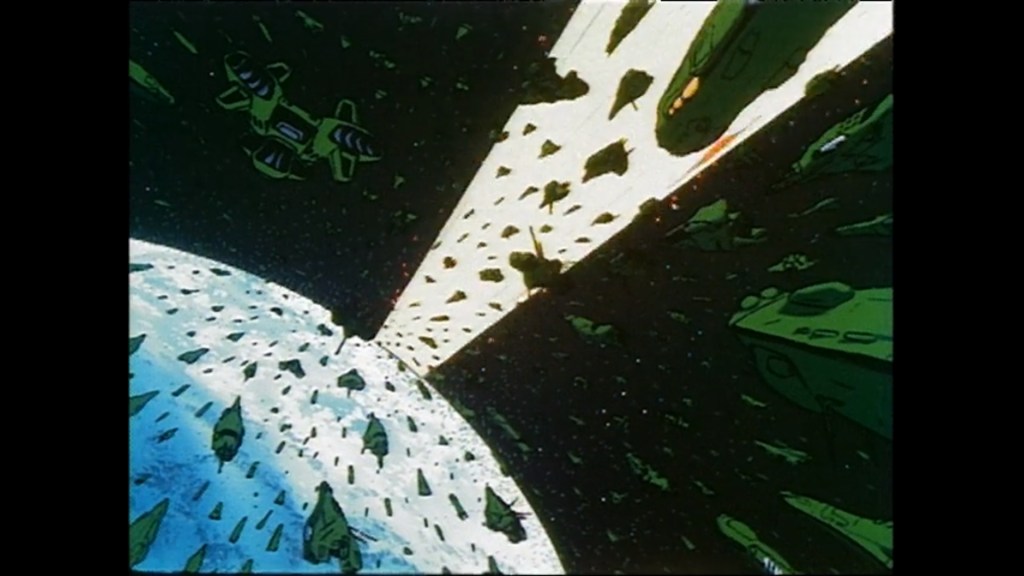
A smaller symmetry is achieved between episodes 1 and 27 as the Grand Cannon likewise portrays an energy being expelled from Earth.

In Robotech, another smaller symmetry is achieved between episodes 61 and 85 with similar imagery organically intended by the creators of GCM as these are the first and last episodes of that independent stand-alone series. Episodes 61 and 85 (1 and 25) portray the arrival and exit of the Regis.

Bookends for the SDF Macross series can be seen in every episode’s closing credits’ footage of a live action photo album containing animated stills. The live action closing credits were included in the first VHS Robotech adaptation in 1984 titled Macross Volume 1: Booby Trap (70 minutes). This imagery is alluded to in-universe in Episode 28: My Album and Episode 36: Gentle Farewell as the unifying final scene for the series finale. SDF Macross debuted in Japan on October 3, 1982 with only 2 or 3 of 26 planned episodes completed.
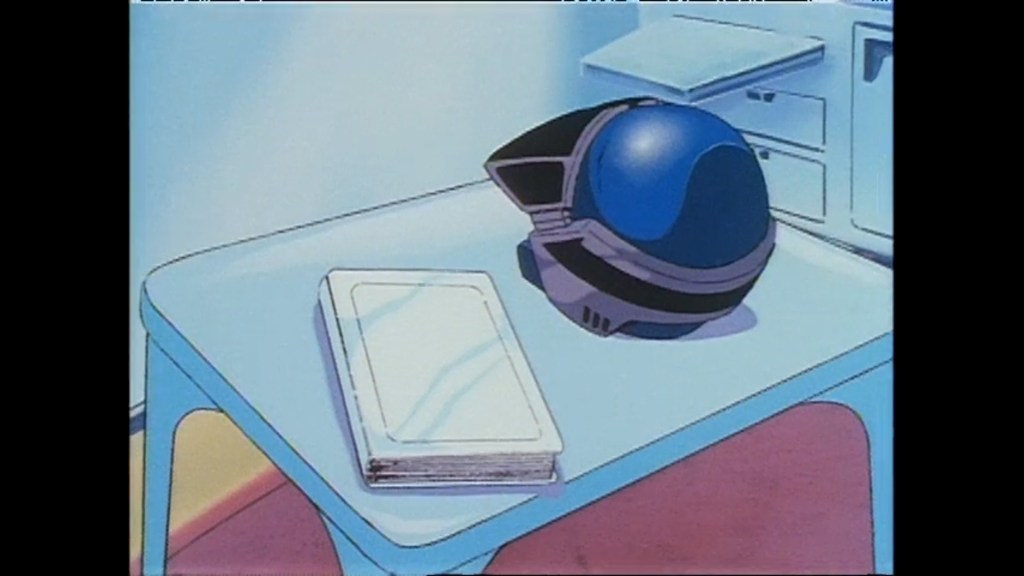
The series was originally proposed to be 52 episodes in length but underwent several rewrites trimming the outline from 52 to 48 to 39 to 23 to 26 episodes in its early development. However, SDF Macross was so successful upon debut, the sponsors were reportedly convinced to fund 10 additional episodes bringing the total number of episodes to 36. While the photo album imagery was likely pre-planned, the additional episodes possibly allowed its exposition to be pushed to episodes 28 and 36, highlighting and resolving the final and new post-apocalyptic reconstruction story arc. This final nine episode epilogue was written after the series was already in production. SDF Macross enters the metafictional realm of reality as it implies the entire series is a recollection existing in Lisa Hayes’ (Misa Hayase’s) mind as she peruses Rick Hunter’s (Hikaru Ichijyo’s) photo album.
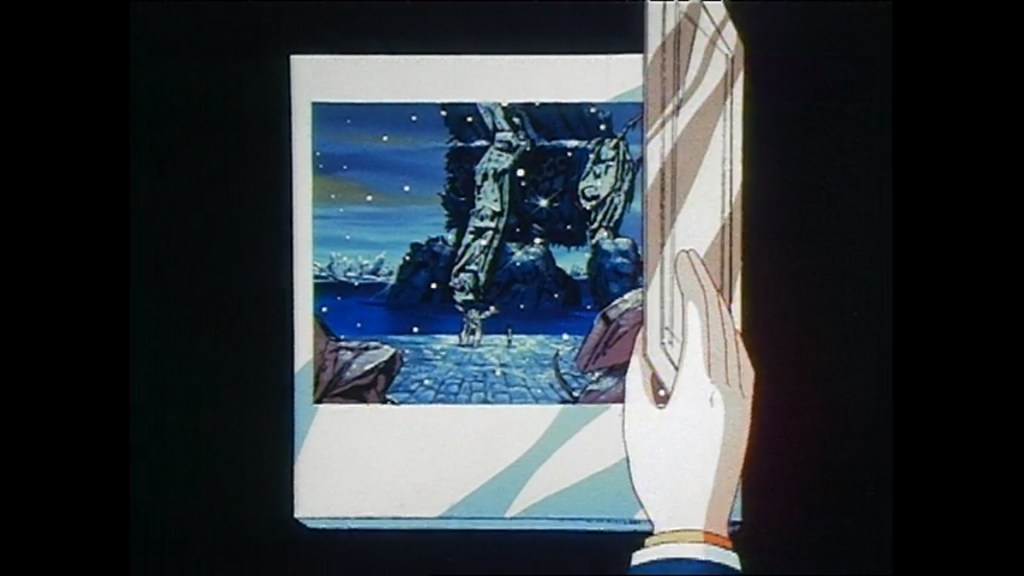
In episode 36 of SDF Macross the animated hand, not the live action hand, closing the album clearly shows the sleeve of Lisa’s uniform, but the sleeve is not shown in Robotech. All the photos in the live action album are of Rick and Minmei. In addition, the song played over the closing credits uses male vocals for the first 35 episodes but is sung by Minmei for episode 36. These points all support the very obvious fact Rick, Lisa, and Minmei are the main characters of this series. Story creator Shoji Kawamori has stated Rick is the hero, Lisa is the heroine, and Minmei is the star. Astoundingly, the earliest concepts for the Minmei character were vastly different from the final iteration. While Lisa’s character was always intended to play a major role, Minmei was subjugated to a very minor role. The standard closing credits’ footage for SDF Macross first premiered with episode 3 upon the original 1982 broadcast in Japan. Later broadcasts inserted it after episodes 1 and 2 as well.

In Robotech – The Original Broadcast Version (TOBV), the very first images displayed onscreen are the opening credits. Robotech TOBV uses the opening image of torn celluloid film stock slowly scrolling across the screen. This sets a metafictional tone and a sense of realism for the entire series. It defines the series as a historic and archival recording. This footage is taken from Episode 1 of SDCSC titled Prisoner and adapted as Episode 38 of The Masters story arc of Robotech titled False Start. However, this sequence was removed from False Start. The Robotech novelizations also convey a retrospective view from a fictional future present by including fictional epigraphs.
A difference in out-of-universe cultural perspectives as well as a possible reaction to geopolitical events transpiring between 1982 and 1985 is illuminated in the opening narration of these series. SDF Macross and Robotech premiered in 1982 and 1985 respectively. SDF Macross states the arrival of the SDF-1 instigated the creation of the Earth United Nations Government. This instigated the Unification Wars as some nations resisted world unification. Robotech reverses this prologue and states global war raged on Earth prior to the arrival of the SDF-1. Its arrival spurred the nations of the world to unite as The United Earth Government. The threat of alien invasion motivated humanity to unite and declare peace on Earth. These alternate series introductions may reveal the difference in perspectives between 1982 Japan and The United States of 1985 on the likely state of the world in 1999. Additionally, escalating events related to the Cold War transpiring between 1982 and 1985 may also be revealed in the artistic direction chosen by the American team adapting SDF Macross to Robotech. For context, the Berlin Wall fell in 1989 and the USSR dissolved in 1991 thus ending the Cold War. The out-of-universe American perspective of 1985 predicted war from 1985 to 1999 while the out-of-universe Japanese perspective of 1982 predicted peace from 1982 to 1999 for the in-universe events of these series. This theme is continued with the EBSIS (Eastern Bloc Soviet Independent States) antagonist introduced in the Robotech role playing guides published by Palladium Books between 1986 and 1995. Interestingly, the Japanese prologue and the story arc relating to the triumph of Earth culture may promote the homogeneity or monocultural desire of the Japanese Nation. In the prologue, the Anti-Unification forces resist assimilation as they are interested in the protection of each nation’s sovereignty and the preservation of their unique cultures. These forces would normally be an allegory for Japan. However, if the Earth is an egocentric macrocosm allegory for Japan, unifying Earth would be akin to unifying the microcosm of Japan. In this sense, the defeat of the Anti-Unification forces is a triumph of Earth’s monoculturalism as the existence of the SDF-1 has forced Earth to comprehend the intergalactic consequences of its actions as it embraces its role in events stretching beyond its solar system. The strength of this unified culture is then demonstrated when it is later envied and embraced by the foreign Zentreadi. This again reinforces the superiority of Japan’s monoculture if these events are viewed as an allegory for Japan. SDF Macross further enforces this egocentric view of monoculturalism with the proposal to spread human culture throughout the universe.

In SDF Macross two pedestrians witness Captain Gloval and Senator Russo drive past. One pedestrian is Mayor Tommy Luan (unnamed Mayor in SDF Macross). They question whether the SDF-1 is capable of flight as well as what will happen to all the businesses which grew up around the alien ship once the SDF-1 goes into service. The doubts about the flight worthiness of the SDF-1 build tension for the audience. The SDF-1 will in fact struggle to launch in the next episode. In the Filmrise subtitles the Mayor’s concern about the local businesses foreshadows their reconstruction inside the SDF-1 in later episodes. None of this dialogue is present in Robotech, and in the ADV (A. D. Vision Films) English language dub of SDF Macross the mayor’s dialogue is altered to state he is simply concerned about the economy of the city. In the AnimEigo subtitles he expresses concern about their business interests. This scene also highlights the attention to detail and above average quality of animation present in this series. This scene portrays a reflection in a car window which would normally not be present in animation.
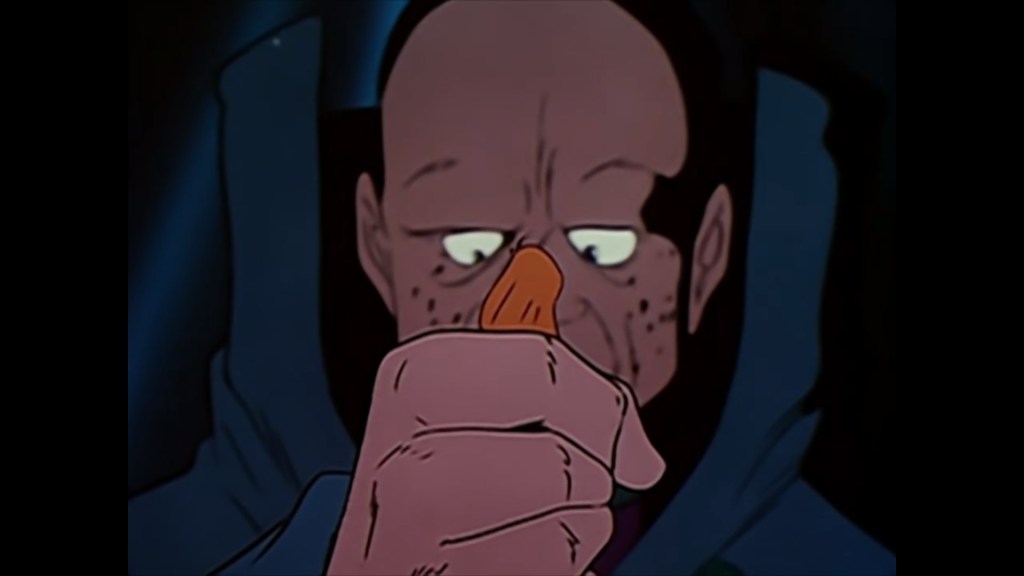
Another example of above average quality of animation is seen in Episode 11 which imitates a camera technique referred to as a focus pull when Dolza grips Lisa in his fist. The Robotech version deletes one focus pull but another still remains in Episode 11. This animated imitation of camera focus allows viewers to see Dolza’s point of view. Throughout this series there are multiple scenes which utilize a dynamic camera perspective. These production details elevate this series beyond standard animation.
Claudia and Lisa have a conversation about Roy’s late night and his piloting skills. Throughout this series the line is blurred between his combat skills and romantic skills in a possible metaphor.

Lisa tells Rick where to land his civilian fanjet. Rick will go on to randomly encounter Lisa several times in this series. See List 1 at the end of this essay for a summary of Rick’s chance meetings with Lisa.
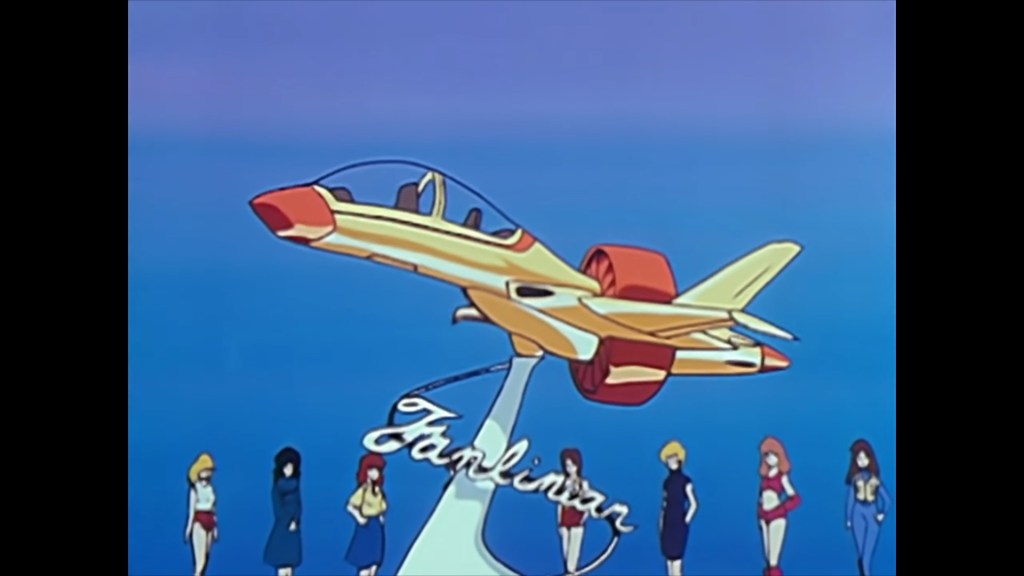

The fanjet imagery will later resonate with the grand prize during the Miss Macross Contest in Episode 9 as well as with a vehicle Hikaru (Rick) inspects in the ruins of Altira seen in DYRL.
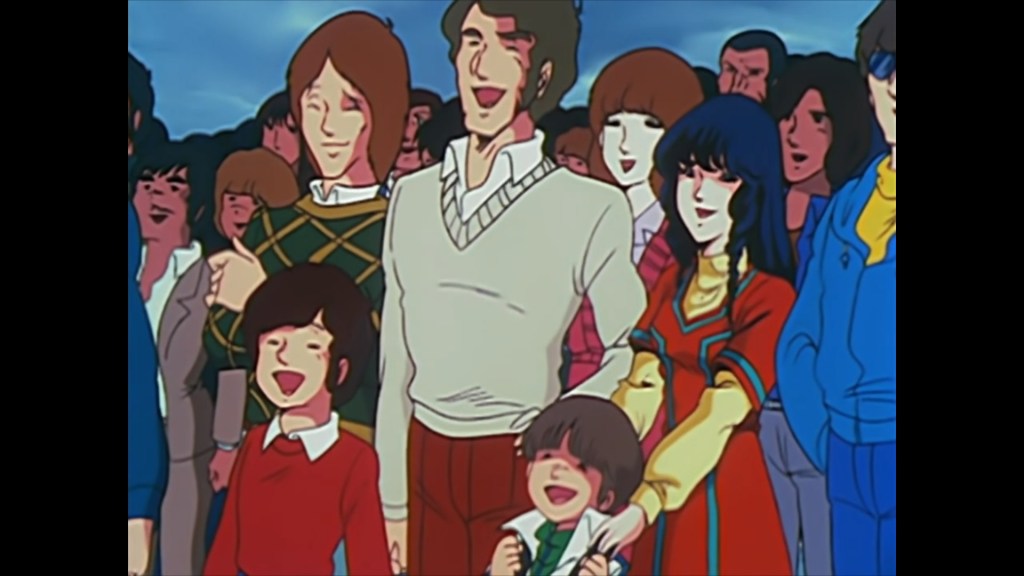
Before the viewers are introduced to Minmei, she and Lynn Jason (Yotchan/Yoshio) are shown in the audience listening to Roy Fokker (Focker) narrate aerial maneuvers. In SDF Macross, Yotchan is Minmei’s neighbor. In Robotech, Jason is Minmei’s cousin and Lynn Kyle’s (Kaifun’s) brother.
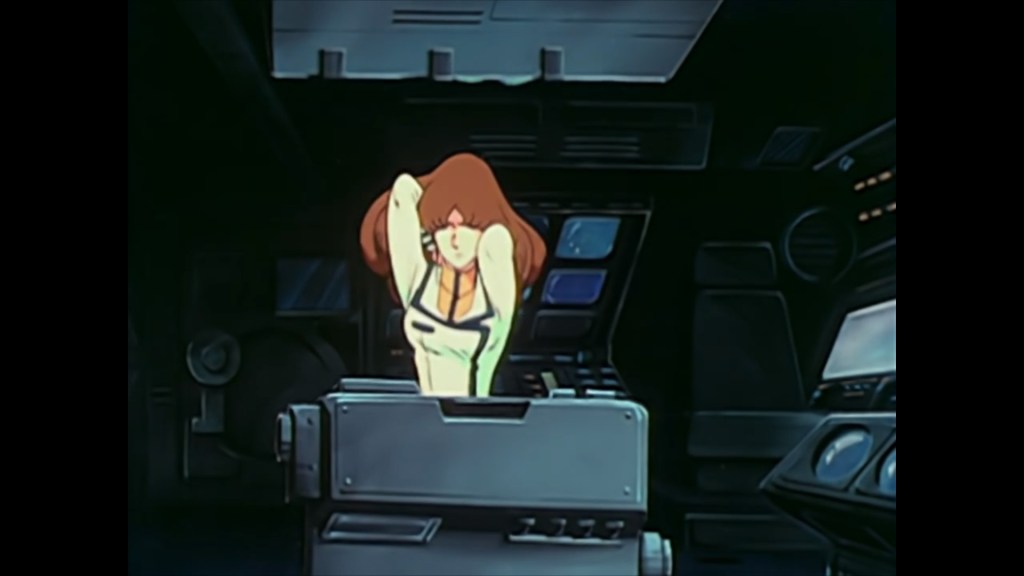
Lisa is the first girl shown onscreen and the first girl Rick sees on his veritech (valkyrie) monitor. Lisa fulfills a trope referred to as “First Girl Wins” as Rick and Lisa form a romantic couple in the final moments of this series, Episode 36: Gentle Farewell. Please refer to the internet (Macross version) and other reference materials for further information on tropes presented in this essay.
Rick calls Roy a killer (murderer) for his tours in the Global War (Unification Wars). This sets an anti-war tone for the entire series. Memorable dialogue in the Robotech version is Roy’s statement, “This Robotech thing is so exciting I couldn’t give it up! It just gets in your blood or something, I don’t know.” In the ADV subtitles for SDF Macross he states “But once you’ve flown a fighter plane… well, if you rode one for yourself, you’d understand.” In the AnimEigo subtitles he states, “…once you start flying fighters… Well, if you ever do, you’ll understand.” The Robotech version can be viewed as a prophetic statement as a successful Canadian fanzine titled “Protoculture Addicts” embodied this phenomenon beginning in 1987. However, Carl Macek and crew had the luxury of knowing SDF Macross had indeed infused into Japanese viewers’ bloodstreams, and thus, he was well positioned to write seemingly prophetic dialogue. In addition, SDF Macross episodes were animated and broadcast as the series progressed. Thus, SDF Macross could only storyboard elements such as foreshadowing while Carl Macek had the luxury of a complete 36 episode series. Thus, Robotech may benefit from the ability to highlight, amplify, or diminish different plot points within the constraints of the existing material. Robotech may also benefit from editing or rearranging scenes for a more intense viewer experience. In this sense, while blasphemous to SDF Macross purists, SDF Macross may be viewed as a rough draft and Robotech as the final version. In this vein, Japan may be viewed as the test market allowing SDF Macross’ refinement and worldwide distribution as Robotech. Robotech may find additional success in its multi-generational plot. The three generations lend a sense of epic grandeur. The in-universe passage of time allows the viewers to reflect upon their own mortality and the consequences of war.
This series can be viewed as didactic children’s media as it teases out the nuances of meeting aggression with violence. Rick’s character arc will evolve from pacifism to reluctant militarism. Lisa will question her personal philosophy in Episode 16 and in several comparisons between herself and the Zentreadi in Episodes 12, 21, and 23. In the Robotech version of this episode Captain Gloval delivers a monologue mourning Earth’s short lived peace. Later, Lynn Kyle will illustrate alternatives to war, and Admiral Hayes (Takashi Hayase) will pay the ultimate price for his militaristic stance. These plot elements form a cohesive case for the restrained use of force.
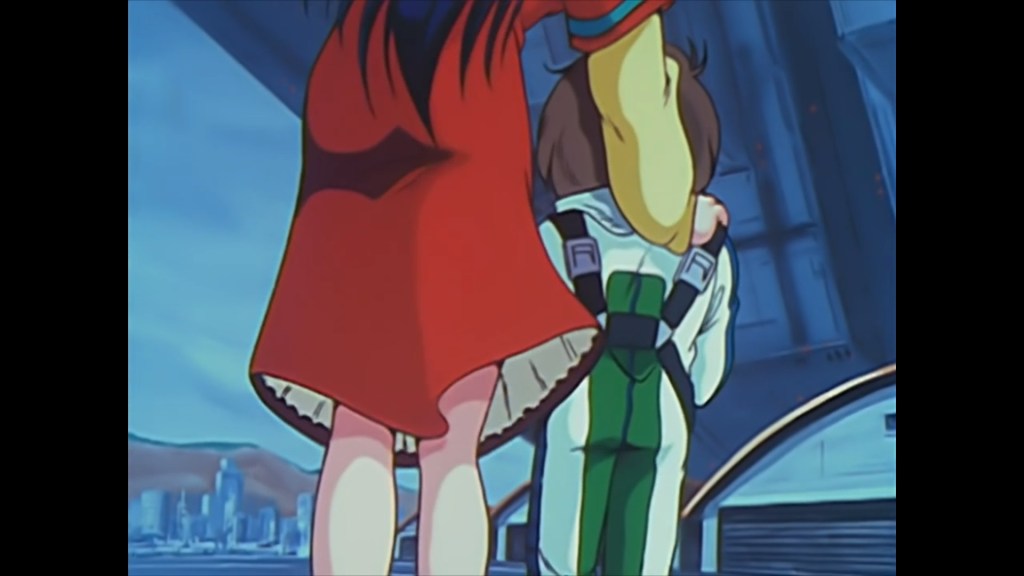
Roy leers at Minmei’s bottom in SDF Macross but not in Robotech. In Robotech Roy simply leers. This plays into continuity as Roy similarly leers at Minmei’s and her Aunt’s bottoms in the next episode titled Countdown.
Captain Gloval decides to leave the opening ceremony and take command on the bridge. He is on a raised platform with Senator Alphonso Russo (originally an unnamed politician in SDF Macross but later referred to as Hyman Gwent), and instead of climbing stairs or taking an elevator up to the bridge which would symbolically place him above the Senator and the civilians, he takes an elevator down to the civilian’s level. This may symbolize Captain Gloval’s humanity.
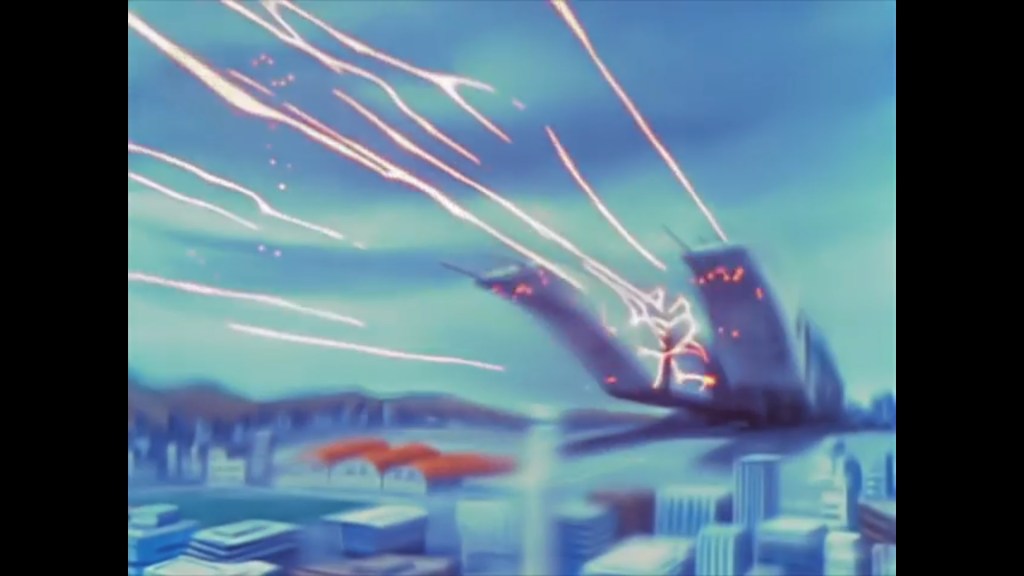
With the introduction of Minmei to the viewer, Rick, and Roy, the SDF-1 discharges its main gun as an allegory for an involuntary and almost premature response to a stimulus. See List 2 at the end of this essay for a summary of possible symbols of male hubris, male libido, and male anatomy.

Captain Gloval enters the bridge and hits his head on the doorway. This is later parodied in Episode 15: Chinatown when Colonel Maistroff will do the same.

To further the parody, Sammie (Shammy) tells Captain Gloval there is no-smoking on the bridge in this episode which is also later repeated with Colonel Maistroff and Captain Gloval in Episode 15. Sammie will go on to provide comic relief for the entire series. Captain Gloval and Sammie represent the first half of the plant-and-payoff storytelling technique. They plant or setup events here for a later payoff. In addition, Captain Gloval’s head collisions as well as Sammie’s reprimands help humanize Captain Gloval. The audience is able to identify with him as clumsy and henpecked. Also, by removing any supernatural aura from his character, there is much more foreboding tension relating to the success of the SDF-1 and her crew.
Captain Gloval makes a reference to World War II when he explains German soldiers would leave behind booby traps for Allied forces. He suspects the SDF-1 is a booby trap for the Zentreadi. See List 3 at the end of this essay for a summary of World War II allusions present in this series.

Lisa orders Rick to takeoff in a veritech and as he pierces the cloud cover he flies into a sky full of explosions which will later become reminiscent when Lisa mistimes a Daedalus Attack and actually hospitalizes Rick with friendly fire in Episode 16: Kung Fu Dandy.

These events and images add to the symmetry of this series by becoming gravitational bodies allowing the story to orbit on an elliptical path between perigee and apogee within the mind of the viewers.
Rick fulfills the “Falling Into the Cockpit” trope when the enemy attacks.

In SDF Macross and Robotech Remastered, scenes of Roy in his yellow biplane are shown which will be resurrected in Episode 28. This footage is removed from Episode 1 of Robotech TOBV, inserted into Episode 19, and remains in Episode 28.


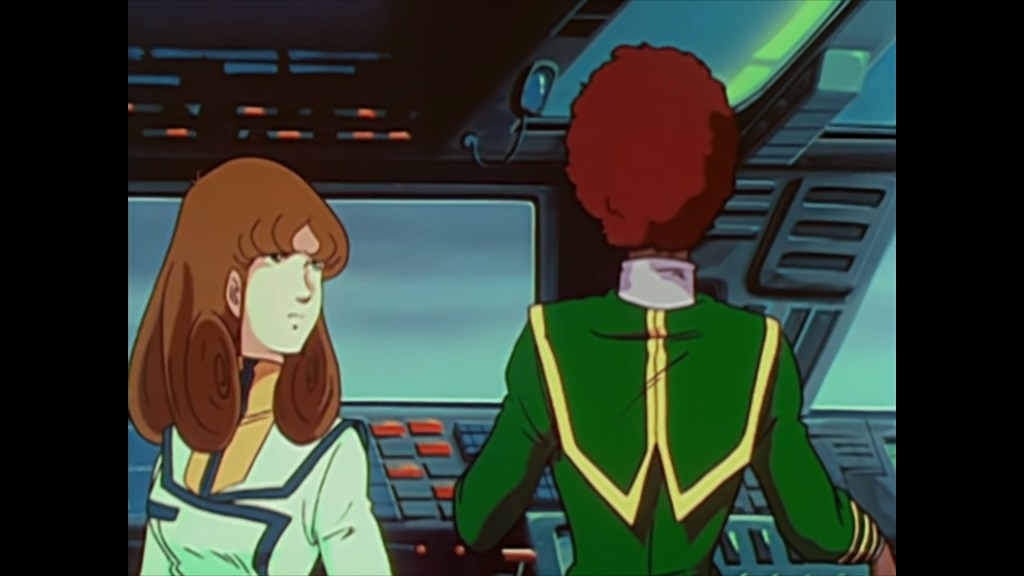

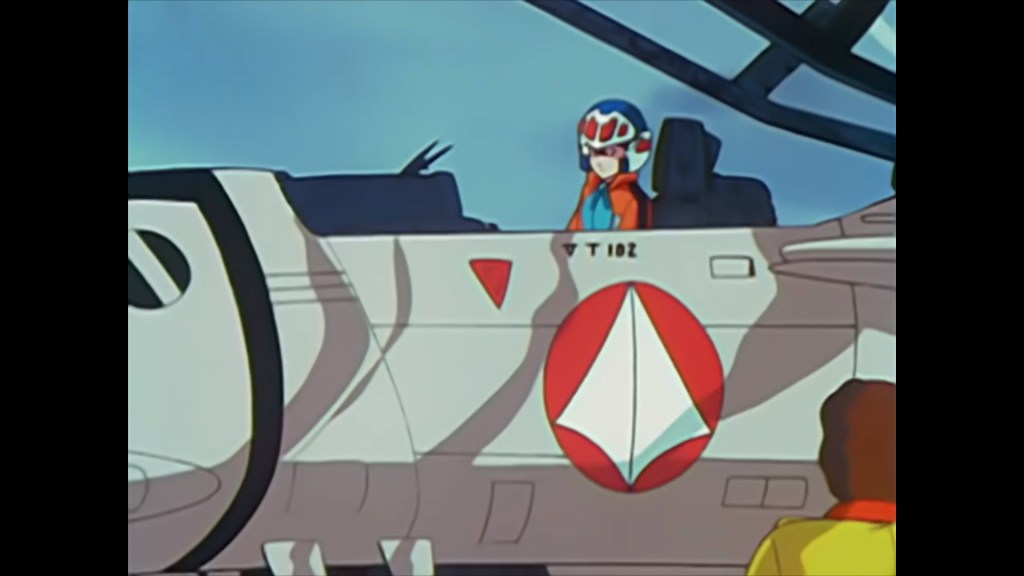
The insignia on the brim of Captain Gloval’s cap matches the design on Roy’s belt buckle. The colors and geometry vaguely resemble the Zentreadi insignia. The symbol from Captain Gloval’s cap and Roy’s belt buckle also share similarities with the design on the brim of the veritech helmets and the Bridge Bunnies’ sailor collars on their naval rigs, sailor suits, or sailor style collars on their sailor fukus. Interestingly, the Robotech Defense Force (UN Spacy) kite symbol, the Captain’s cap, Roy’s belt buckle, and the sailor collars are all symmetrical while the Zentreadi insiginia is asymmetrical. This asymmetry as well as Breetai’s faceplate may indicate a spiritual disfigurement while the symbols of the Earth forces represent balance and harmony.

In addition, Khyron (Kamjin) and Azonia (Laplamiz) each wear a paludamentum or one shoulder cloak which is asymmetrical. However, this likely implies military rank as opposed to their status as villains or antagonists.
The initial idea, concept, and inspiration for SDF Macross was for Studio Nue to achieve commercial success. With this success they could next achieve their primary goal of creating a less commercial series titled Genocidas. Wiz Corporation offered to fund the concept for SDF Macross but suggested it parody the science fiction genre. Studio Nue included this theme into the concept for SDF Macross. However, Wiz Corporation, previously Artmic Co Ltd which reformed after Wiz Corporation failed, closed and Studio Nue was free to abandon the parody story elements. These concepts eventually manifested in mild satire and parody of two cartoons titled Space Battleship Yamato and Mobile Suit Gundam. Intellectual concepts which began as humorous may have become more serious as they coalesced into the finished animated product. Some scenes may have had their foundations in comedy but eventually assumed a more serious tone. Possible candidates for this process as well as obvious comedy are the similarity of the surname Fokker to an English language expletive, Captain Gloval bumping his head, Sammy not allowing Captain Gloval to smoke his pipe on the bridge, Rick falling asleep in his trainer veritech during a combat alert, and Rick’s battloid (battroid) crashing through buildings. Another example is initially the captain of what became the SDF-1 was going to be female. She would eventually have an affair with an alien enemy. This later materialized as Max Sterling (Max Jenius) and Miriya (Milia). It is likely audiences outside of Japan and audiences of Robotech would never have been primed with Space Battleship Yamato or Mobile Suit Gundam. Without knowledge of these series, any parody or satire of them would go unnoticed.
There is a modern trend of Mecha Anime titles being named after the main mecha of the series. However, SDF Macross is named for the main battleship and not the fleet of veritechs.
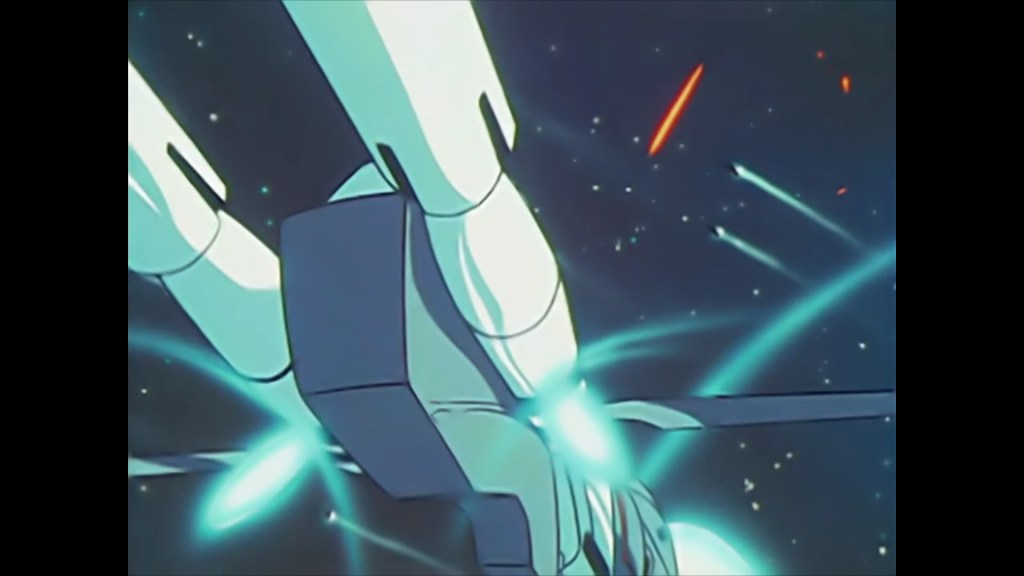
This episode features Vernier thrusters which will be featured throughout this series. They are briefly seen here on SF-3 Lancers (SF-3A Lancer II). This detail adds scientific realism to this series.


SDF Macross and GCM each utilize scientific realism when portraying explosions in zero gravity. This flatters the intelligence of the audience and provides further aesthetic bookends, cohesiveness, and continuity to the Robotech franchise.
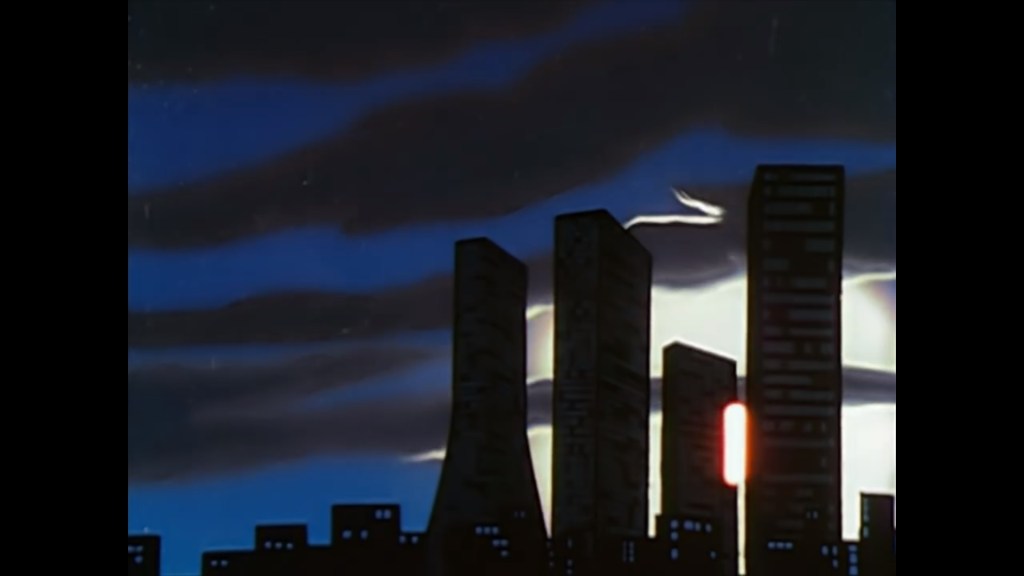

One final visual which provides thematic and aesthetic continuity to the Robotech franchise is the similarity between the arrival of the SDF-1 and the Invid. These events could each be construed as a version of a mushroom cloud stemming from the out-of-universe 1945 nuclear bombing of Japan. See the synopsis for Episode 8 for a further discussion of this topic.
Episode 2: Countdown
The name of this episode comes from a 10 second countdown to the liftoff of the SDF-1 which fails when the gravity pods of the anti-gravity (gravity) control systems tear away from the ship’s bow.

Submerged battlepods (battle pods or regults) destroy a few helicopters.
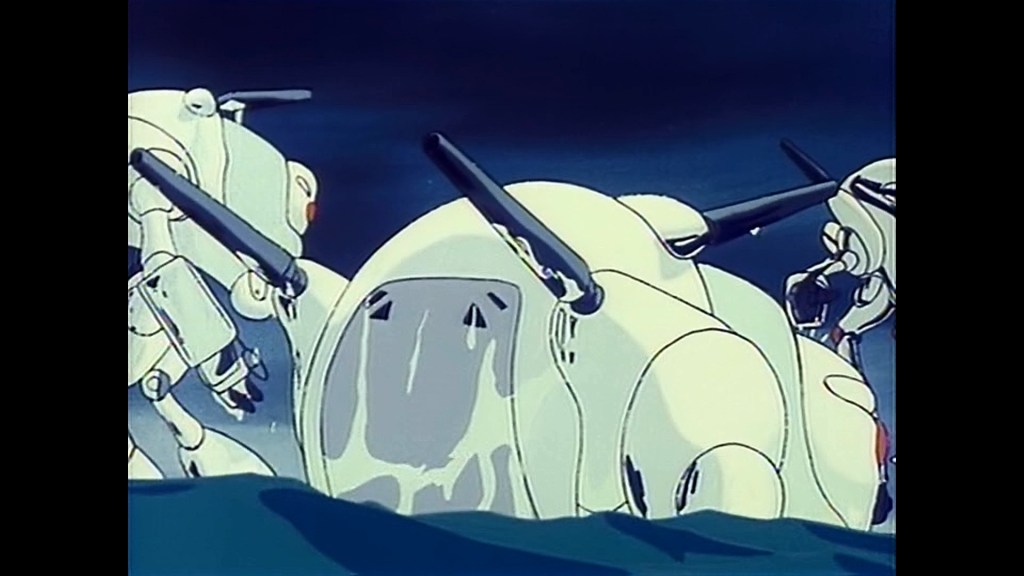
This scene is likely an inspiration for Jack Baker’s training sequence in Robotech II: The Sentinels. While submerged battlepods appear in other episodes, their placement in the first episodes of these series strengthens this tribute between the series.

Minmei looks up to Rick from her window. This perspective may be symbolic of Rick as the main character, but later Rick will be on the street level looking up at and idolizing Minmei in Episode 8.

Rick’s shock and confusion at his veritech transforming from fighter mode to battloid mode may be a metaphor for puberty. Rick’s body and interests are changing. Later in Robotech, but not in SDF Macross, Rick tells Roy, “I don’t even know what this thing is, and I’m sure not qualified to operate it.” This dialogue works on multiple levels as it may refer to his veritech, Minmei’s body, Rick’s own body, or his new romantic awakening. See List 4 at the end of this essay for a summary of instances in which Rick’s veritech is a symbol for his identity.
In addition to Rick’s transforming mecha being symbolic of his maturing body, the Zentreadi themselves are symbolic of Rick’s internal struggles as discussed in the Final thoughts section of this essay. These abstractions of Ricks’ puberty are an example of an artistic device referred to as mise en abyme. Mise en abyme is the technique of duplicating images or concepts which refer to the textual whole. Thus, Rick’s physical and emotional growth is portrayed by his transformable mecha, and the Zentreadi exposure to culture portrays Rick’s exposure to Minmei. See List 5 at the end of this essay for a summary of mise en abyme examples.
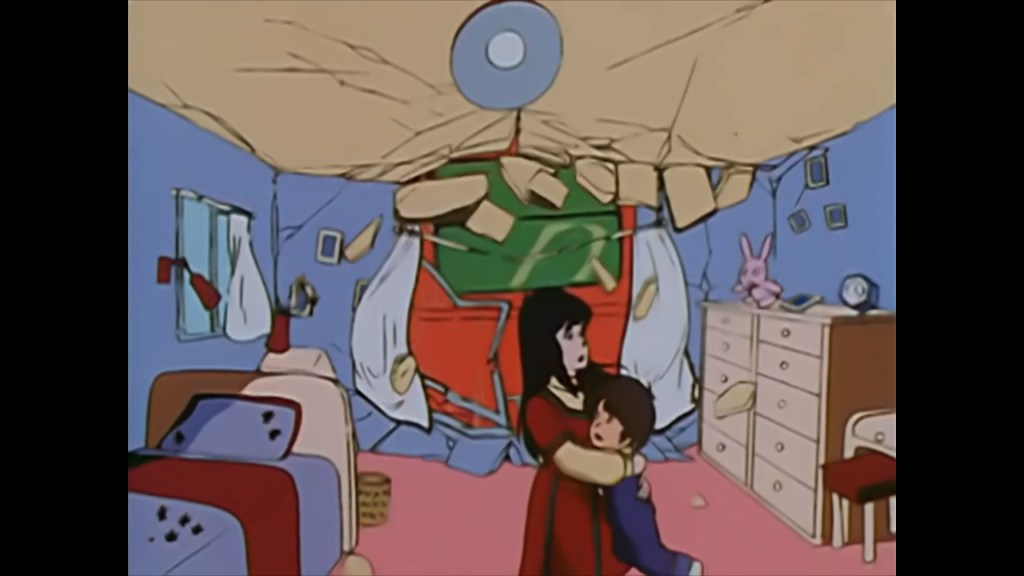
Rick tries to maneuver his battloid but crashes into Minmei’s bedroom. This is symbolic of his future intimacy with her and breaking her seal or popping her bubble of reality. Alternatively, it could be seen as setting the tone for his relationship with Minmei as he is insulated from her bedroom by his mecha and is always watching Minmei from a distance. See List 6 at the end of this essay for a summary of major symbolic metaphors in this series. Rick’s crash into Minmei’s bedroom may also be seen as an unintentional intimacy which is discussed in the synopsis for Episode 21.
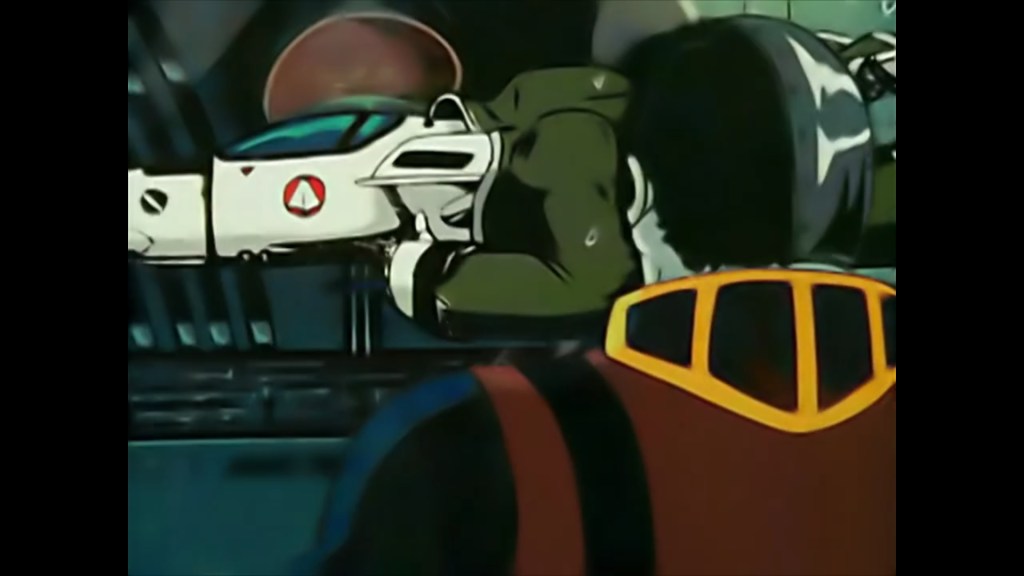
This scene is also discussed in the synopsis for Episode 12 as it resembles Max’s crash through Breetai’s observation sphere.
Rick’s failure at maneuvering his battloid is echoed in Captain Gloval’s attempt to launch the SDF-1. Rick and Captain Gloval reflect each other in these juxtaposed scenes. The viewers are able to identify with Rick on a personal microcosm level while Captain Gloval’s experience portrays the same event on a macrocosm level. Roy is a senpai or big brother to Rick, who in this scene, is akin to a younger brother with a skinned knee. Likewise, Captain Gloval is a father or big brother to the bridge crew when he recommends using the main booster rockets (main rockets) to launch. Rick’s veritech and the SDF-1 reflect one another as well as Roy and Captain Gloval in overlapping parallelisms. The motif of representing the same event on both a humanized microcosm level and a more abstract macrocosm level will repeat many times in this series. In fact, the origin of the very title Macross has multiple parallelisms as it is a play on the Japanese words Macbeth, Macro, and Across. Any parallel themes between the broadcast episodes of SDF Macross and Macbeth are likely unintended by the series’ creative team. However, Dolza may resemble Macbeth as a central theme of the theatrical play is blind ambition leading to the destruction of the self and others. Macro refers to the immense size of the mecha and ships, and Across refers to the distance traveled. Western audiences might project the concept of a heavy burden onto the word cross if seen in a Christian context.
Rick’s struggles with his battloid and his ability to learn the controls cement his character as the audience avatar. Rick fulfills “The Watson” trope and the “Audience surrogate” trope. However, an audience member may identify with any character in this series. The audience is allowed access to many characters’ inner thoughts and this enables any of them to be fairly effective audience avatars.
Claudia asks Roy how many combat kills he tallied. In the previous episode Rick accused Roy of being a killer (murderer) during the war (Unification Wars). Rick also stated he is not a fighter pilot. Later in this episode, Rick will experience rage and fire upon a battlepod. This is all exposition for the acceptance and necessity of lethal force in combat.
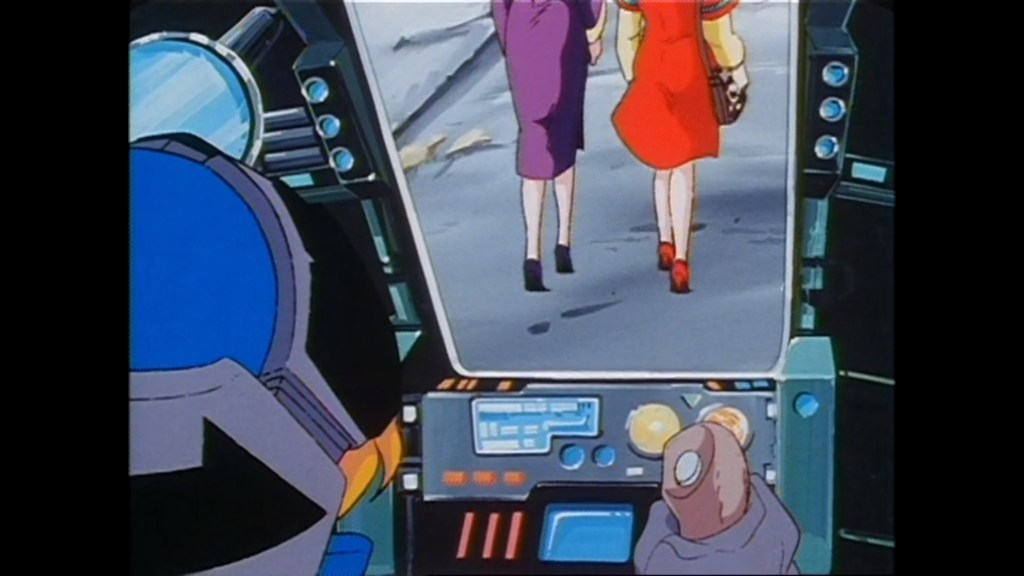
While not in Robotech, Roy leers at Minmei and her Aunt’s bottoms in SDF Macross. This harkens back to the previous episode when Roy leered at Minmei’s bottom.
Rick and Roy transform their veritechs into guardian (GERWALK or Ground Effective Reinforcement of Winged Armament with Locomotive Knee-joint) mode. Initial sketches for the series focused on mecha with reverse knee joints. Supposedly the battloid mode was mandatory as it was insisted upon by toy designers. The battloid is anthropomorphic which increases profits. The reverse knee joint is more alien and may be a marketing risk. While the guardian mode of the veritech does utilize the reverse knee joint, the battloid mode is an available option with human-like knees.

Rick rescues Minmei in the fist of a veritech in guardian mode. See List 7 at the end of this essay for a summary of Rick’s rescues of Minmei. Grasping people in the fists of mecha or Zentreadi becomes a recurring motif and iconic image in this series. Also, Rick and Minmei enter a freefall and Rick pulls Minmei into the cockpit. Rick’s grasp of Minmei in the fist of his veritech provides exposition for the capabilities of the mecha. It is apparent to the viewers this mecha has great delicacy, dexterity, and nimbleness to cradle Minmei. This maneuver portrays the broad range and spectrum of its applications. It recalls a popular quote which states, “Nothing is so strong as gentleness, nothing so gentle as real strength.”
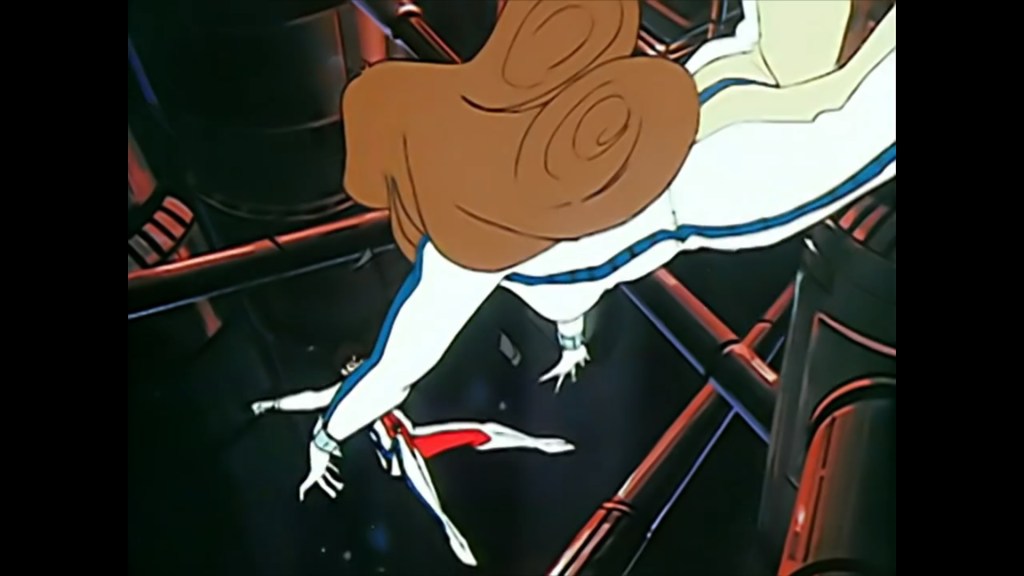
Later, in Episode 12: Big Escape, Rick and Lisa fall through a catwalk into reservoir liquid. These falls may symbolize falling in love as the “Literally Falling in Love” trope.

Hikaru (Rick) first meets Minmay (Minmei) in freefall in SDF Macross: Do You Remember Love? (DYRL). In this film they crash inside the engine block at 00:13:00 and their time together resembles the plot of Episode 4. In the SDF Macross television series the audio fades out for the freefall scene in this episode and an ethereal score fades in. This score and lack of dialogue heightens the emotional impact of this scene. In Robotech Minmei screams while a suspenseful score plays in the background. Minmei’s screams in Robotech heighten her characterization in that series but diminish the impact of the overall scene. This scene will be repeated again in Episode 17 during Rick’s hallucinations. In the SDF Macross version of Episode 17 Minmei sings a pop song titled “0-G Love” (Zero-Gravity Love) which equates the weightlessness of love with the weightlessness of freefall. English speakers are so familiar with the phrase “to fall in love” it must be given special scrutiny so as to grasp the international recognition of its accuracy in illuminating this shared aspect common to all humanity. See the synopsis for Episode 25 for a discussion of additional visual portrayals of this concept. See List 8 at the end of this essay for a summary of these instances.
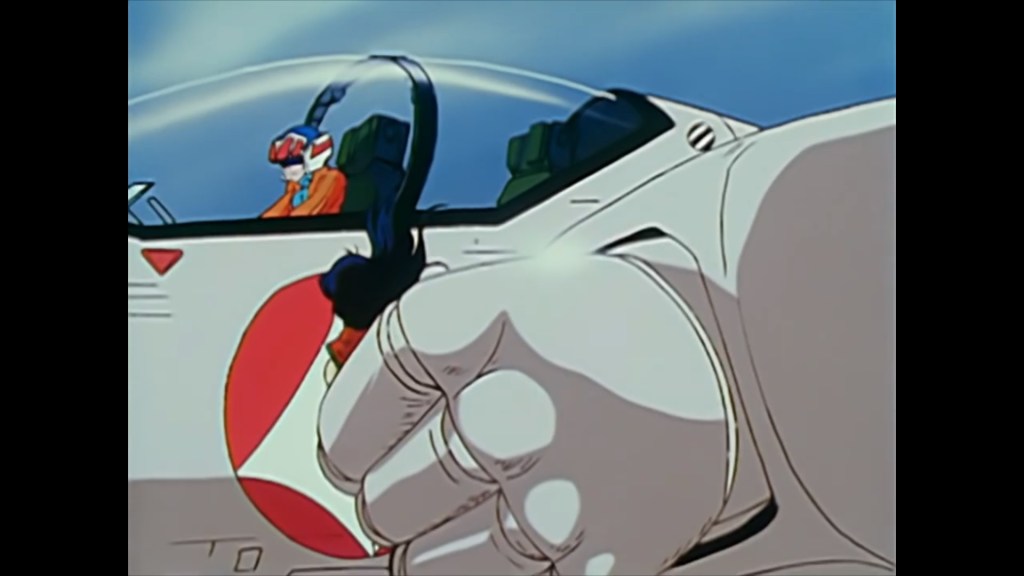
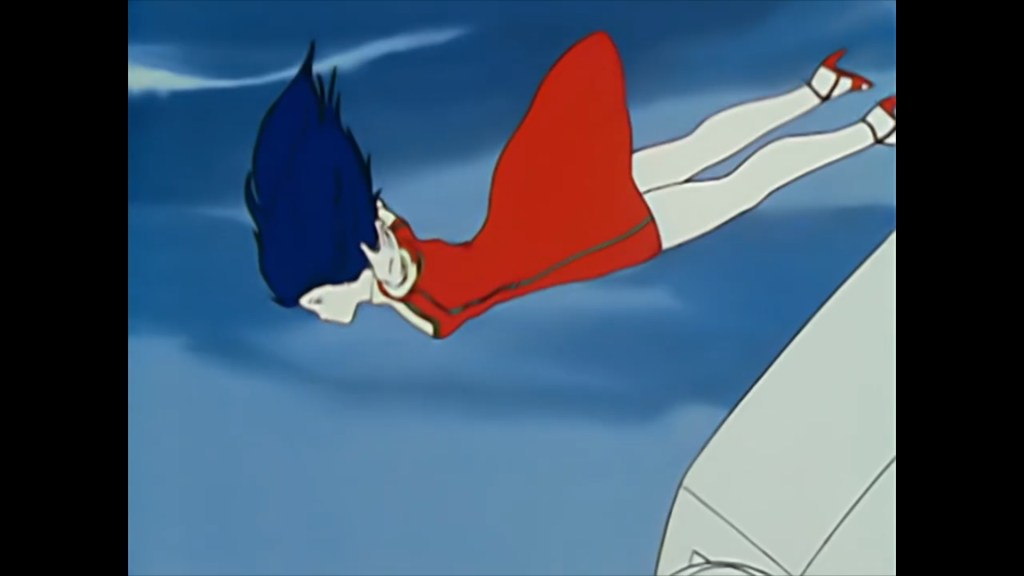
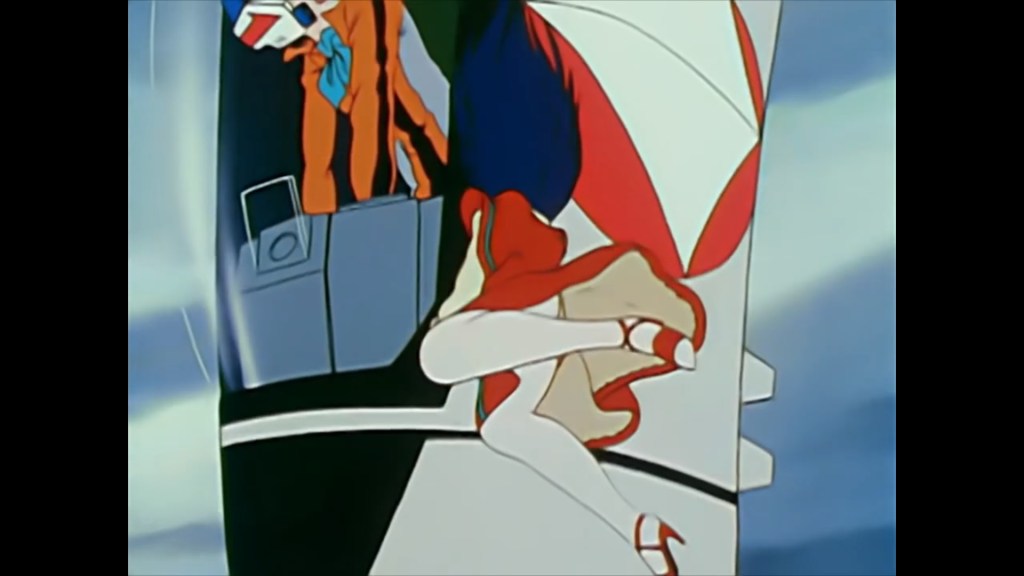


Minmei’s freefall in this episode may represent Rick’s concept of an ideal relationship with Minmei. Minmei’s freefall can be examined in a frame by frame analysis. She was in his guardian’s grasp. She falls away. He chases after her. She falls head first with arms swept back for a brief moment. In this pose her body language is simultaneously submissive, passive, directional, and independent which are all conflicting attributes somehow coexisting within Minmei’s character. Rick and Minmei reach out for each other and she moves from frustratingly beyond his grasp to his co-pilot seat. The co-pilot seat may symbolize a romantic relationship and her submissiveness. This brief 20 second freefall sequence may be a visual exposition of the entire arc of Rick and Minmei’s relationship and may foreshadow and encapsulate the narrative engine and core plot of this series. These being Rick’s unrequited love and Minmei’s elusiveness. The freefall depicted in DYRL loses all this nuance as it depicts a much more one-sided rescue. Similar to this 20 second freefall as a summary of this series’ story arc, Rick’s hallucination in Episode 17 will similarly condense the main themes of 36 episodes of material into one single episode. This freefall is another example of an artistic device referred to as mise en abyme, a concept discussed earlier in this synopsis. The freefall can be categorized as a mise en abyme as it is body language which is later repeated emotionally as well as verbally through dialogue. Mise en abyme is similar to a musical reprise and as such the freefall, as first portrayed here in this episode, may strike the first harmonic tone of the core plot. This frequency will build to a crescendo with consecutive resonant tones as the series progresses. Rick’s hallucinations in Episode 17 may be another note struck with matching oscillation as notably the freefall is shown again in this episode. In Robotech the freefall was shown three times over the course of the series if the premiere of Codename: Robotech is included in the count. See the synopsis of Episode 14 for a discussion of Codename: Robotech. These harmonies may build to a vibrating climactic resonance disaster in Episode 36 when Lisa’s character offers salvation through the introduction of a dissonant note to the score of this plot which then resolves in a new harmony. This being Rick and Lisa’s romance. A musical coda may present itself in a VHS tape included in a Matchbox Robotech playset titled Robotech Wars in 1986 as the freefall is shown again in this tape.
Rick shoots a battlepod in a mild version of the “Beserker trope” which is discussed in the synopsis for Episode 23. His motivation for this action was seeing Minmei unconscious. Rick likely felt angry. However, this action could be viewed as defending or protecting Minmei. This in fact will become Rick’s raison d’etre (reason for existence) as hinted at in Episodes 4, 5, and 17 before finally being stated in Episode 22.
Robotech Remastered chose to replace some sound effects. This episode reveals the new gun pod sound effect. Sound effects in fiction are an immersive experience for viewers. Knowledgeable fans become consciously aware of the changes in the audio tracks. Every altered sound effect becomes an interruption in the viewing experience for these fans. Audio in fiction is so powerful it is often equated as being among the cast of characters, and it may be difficult for some viewers to adjust to the changes made in Robotech Remastered.
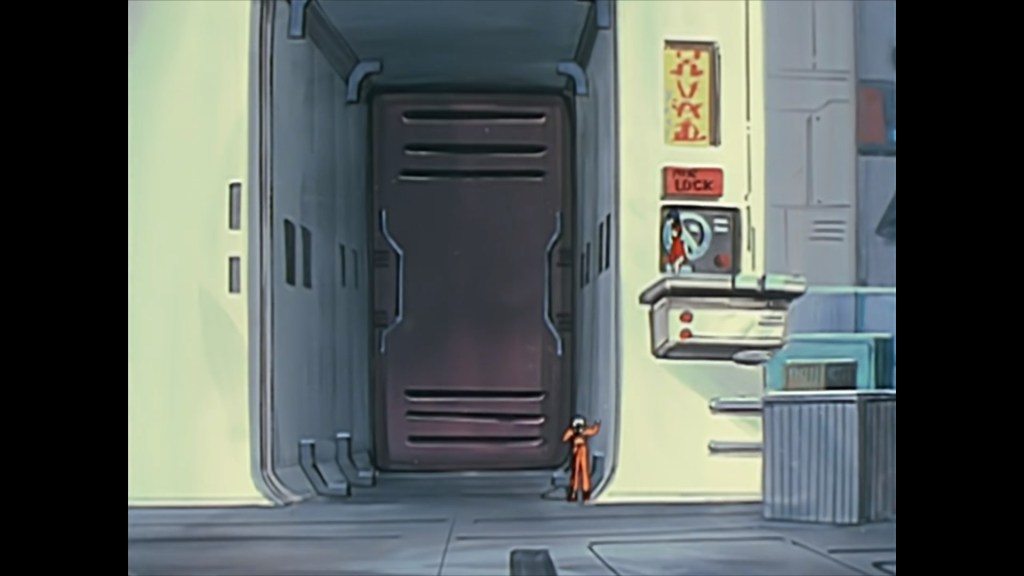
Rick and the viewers see their first Zentreadi soldier in this episode in relation to their scale and size. This is a major revelation for first time viewers. This is clarified when the Zentreadi steps on a car. The Zentreadi size instantly validates an internal logic and rationality to the transformable mecha in this series. The mecha are purposefully functional in contrast to the mecha in Transformers and Voltron which each debuted the year prior to Robotech in The United States. The size of the Zentreadi will be implied again in Episode 4 when Rick and Minmei discover a giant air lock control panel and door as well as in Episode 5 when combat recordings are reviewed by the Zentreadi.

Roy informs Rick and the viewers the battloids were built to combat the giant Zentreadi which reveals not only a clandestine military agenda but the deception of most of the human race.
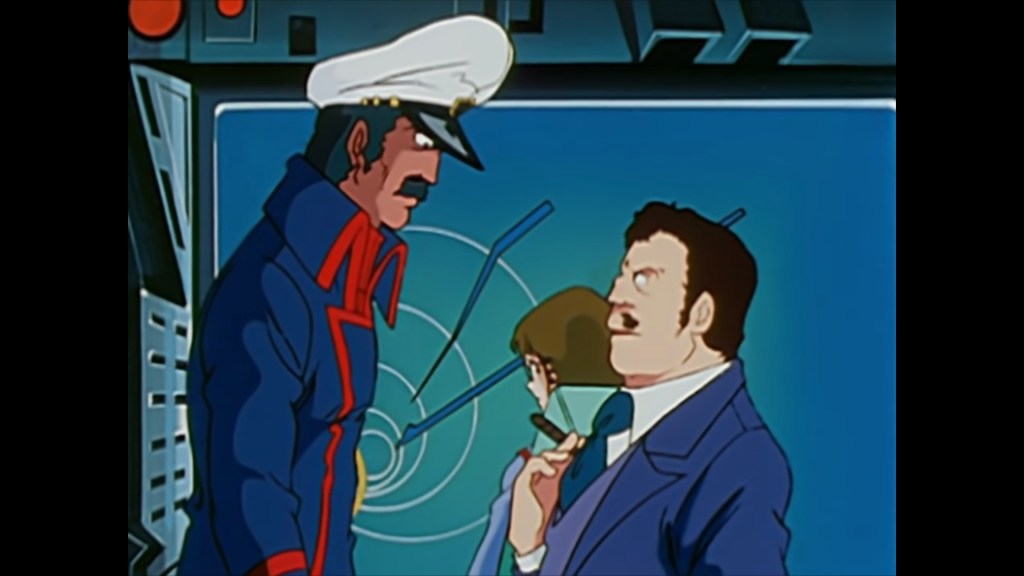
As stated in the synopsis for Episode 1, there may or may not be certain scenes which were initially based on satire or parody. Potential candidates for humor are Captain Gloval’s intense stare at Senator Russo’s cigar, the gravity pods tear loose and the SDF-1 falls to Earth, Rick’s battloid stumbles into Minmei’s bedroom, two trucks pull Rick’s battloid upright, and Roy transforms his veritech into guardian mode. Guardian mode is a plane with legs possibly beginning as a humorous conceptual idea. In Episode 11 Max’s guardian will wear a Zentreadi coat possibly continuing this comedic element.
Episode 3: Space Fold
This episode is named for the SDF-1’s hyperspace fold to Pluto space.

Rick attempts to pilot his veritech away from the dead Zentreadi soldier. However, the veritech is held in place by the death grip of the giant soldier. This imagery could be viewed as containing a message of anti-violence as the Zentreadi soldier reaches from beyond the grave. While violence may resolve short term hardships, it only leads to additional repercussions. This new complication allows Roy to further demonstrate his supernatural role as a guardian, protector, and savior.

Roy detaches the cockpit of Rick’s veritech and attaches it first to his veritech’s arm and then fuselage.
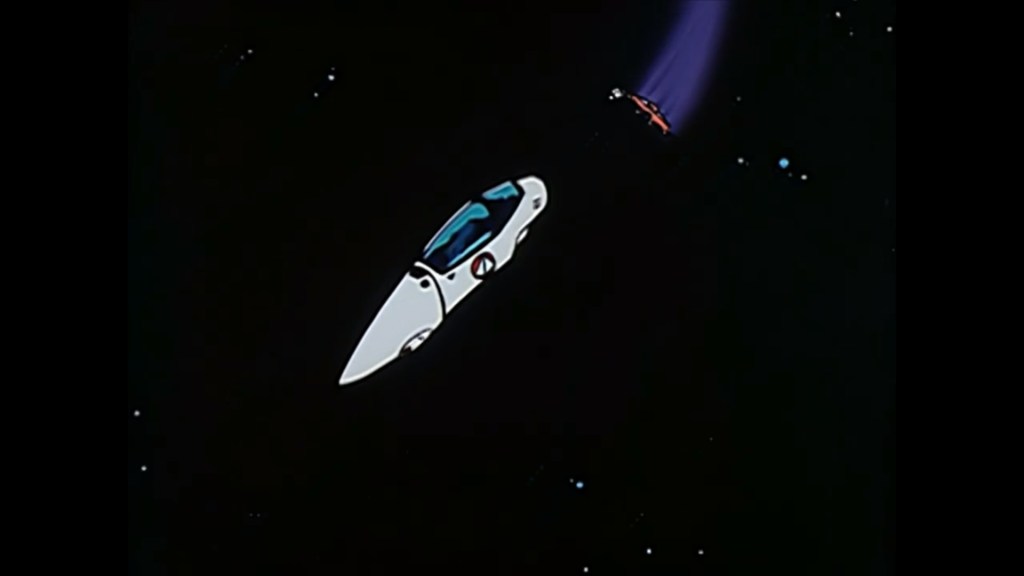
This technological capability will be alluded to again in Episode 17 during Rick’s hallucinations when the cockpit of his veritech morphs into his fanjet.
In the SDF Macross version of this episode Rick insults Lisa for the first of many times stating, “Hey, what’s with the old lady?” Rick will insult Lisa again in Episode 6: Daedalus Attack. See List 9 at the end of this essay for a summary of these insults. In Robotech Rick refers to Lisa as a sourpuss. Rick’s actions toward Lisa eventually accumulate into a long list of evidence supporting the “Oblivious to Love” trope. This scene starts Rick and Lisa down a long road to the “Aww, Look! They really do love each other” trope.
Breetai destroys Armor-3 (ARMD – Armaments Rigged-up Moving Deck) but forbids any attacks on the SDF-1. This supports a symbolic parallel between the SDF-1 and Minmei as Breetai wishes to subdue and capture the SDF-1 undamaged, and Rick wishes to possess and subdue Minmei in order to receive her voluntary reciprocation of his love. As an antagonist Breetai contends with his own plot tension. He possesses superior fire power and the ability to destroy the SDF-1, but his goal is to capture the SDF-1 undamaged. Similarly, Rick contends with his own internal tension as he feels the primitive urge to possess Minmei, but prefers she exercise her free will and choose him as her romantic partner. Breetai’s constraints in seizing the SDF-1 may also be an allegory for Rick’s insecurity and overabundance of politeness in his romantic overtures toward Minmei. Both series eventually reveal Breetai’s motivations for capturing the SDF-1. In SDF Macross it seems the firing of the main gun revealed the presence of a long lost technology known as reflex weaponry. In Robotech Breetai desires to retrieve the protoculture matrix.
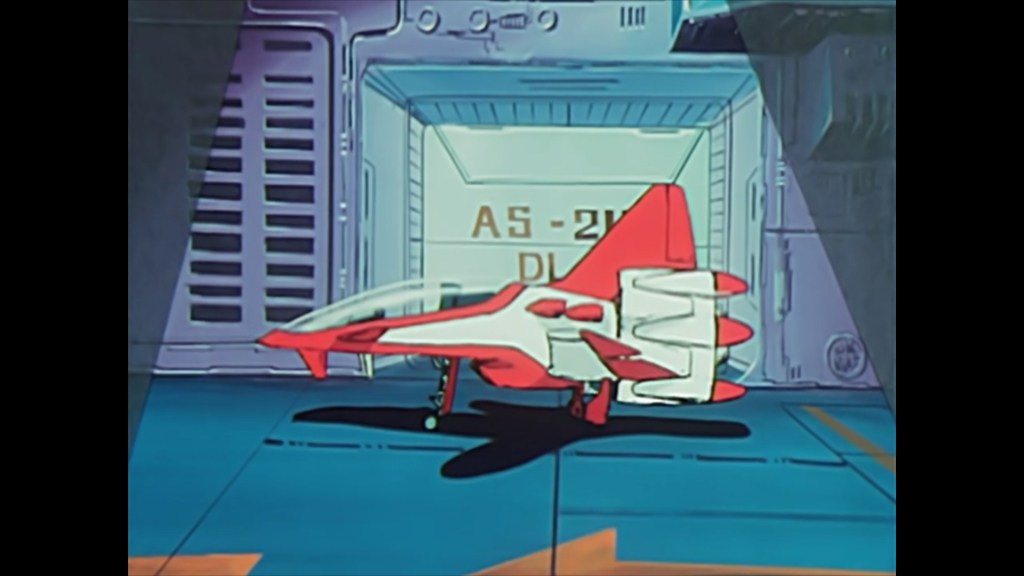
Roy has moved Rick’s fanjet inside the SDF-1. This is the plant portion of a plant-and-payoff plot device. The payoff will be the following events of this episode involving the fanjet. The fanjet also assists this episode’s story arc, tension, and dynamic rhythm. Rick’s reunion with his plane is an emotional climax setting the stage for the falling action and resolution of this episode which neutralizes the fanjet’s symbolic sense of freedom.

Rick’s fanjet seats only one person. Thus, Minmei sits on Rick’s lap which is an intimacy of convenience as neither party was romantically assertive in pursuing this physical contact. This is an example of Minmei’s innocence and ingénue status. In Episode 9 the Mayor will enter Minmei in the Miss Macross Contest maintaining her innocence.

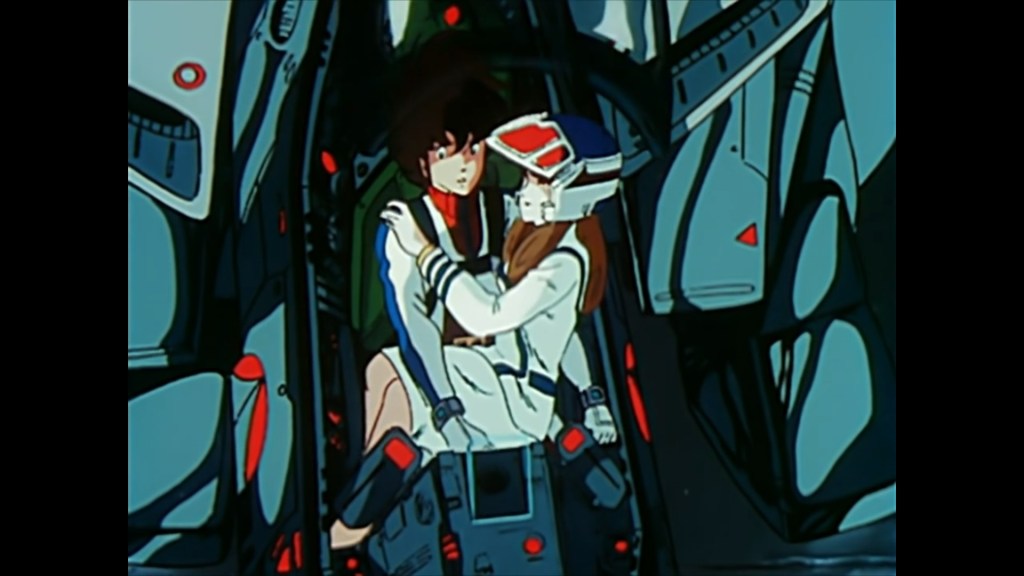
In Episode 11 Lisa will kiss Rick for purposes of intelligence gathering, in Episode 15 Minmei will sit on Kyle’s lap, and in Episode 27 Lisa will sit on Rick’s lap which are all examples of intimacies of convenience.
Rick may have already fallen in love with Minmei, and the space fold may represent his being transported to another place and time by the power of love.

Rick’s fanjet becomes entangled and ensnared upside down inside the SDF-1. This may symbolize Rick becoming entangled in events beyond his control, Rick being trapped inside the SDF-1, Rick’s world being turned upside down, or Rick being caught in Minmei’s romantic web.
Chief Engineer Emil Lang (unnamed Chief Engineer in SDF Macross) informs Captain Gloval the fold system has vanished into thin air. This is one of a series of accidents involving the SDF-1 listed in the synopsis for Episode 19. See List 10 at the end of this essay for a summary of all the accidents and solutions involving the SDF-1.
Transporting Macross Island and the surrounding ocean to Pluto is likely a concept rooted in humor, parody, and satire which evolved into a more serious event in the final draft or execution.
Episode 4: Lynn Minmay in SDF Macross and The Long Wait in Robotech
This episode is obviously named for Minmei as she is the focal point of this episode. Robotech renames this episode for her long wait to be rescued.
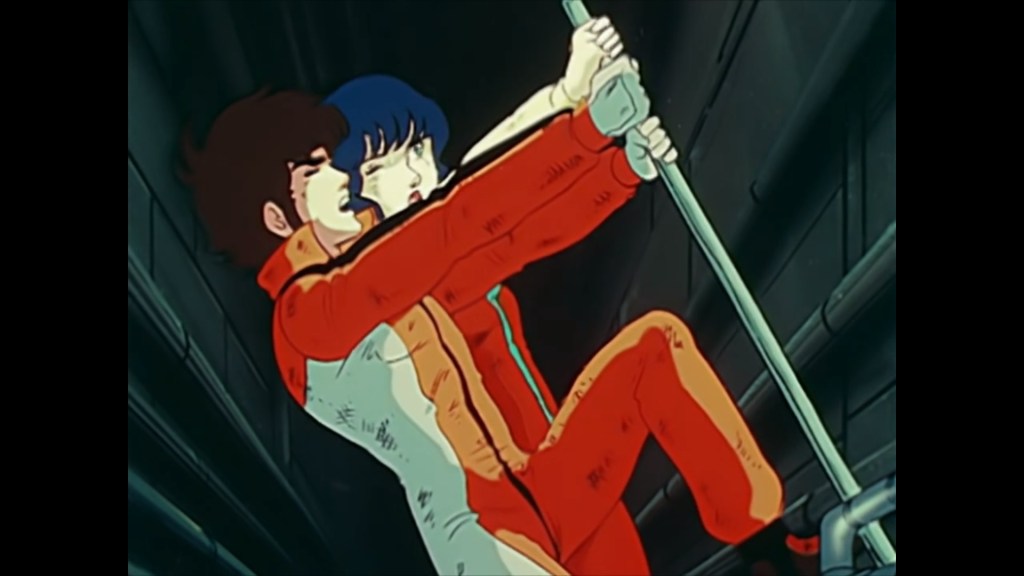



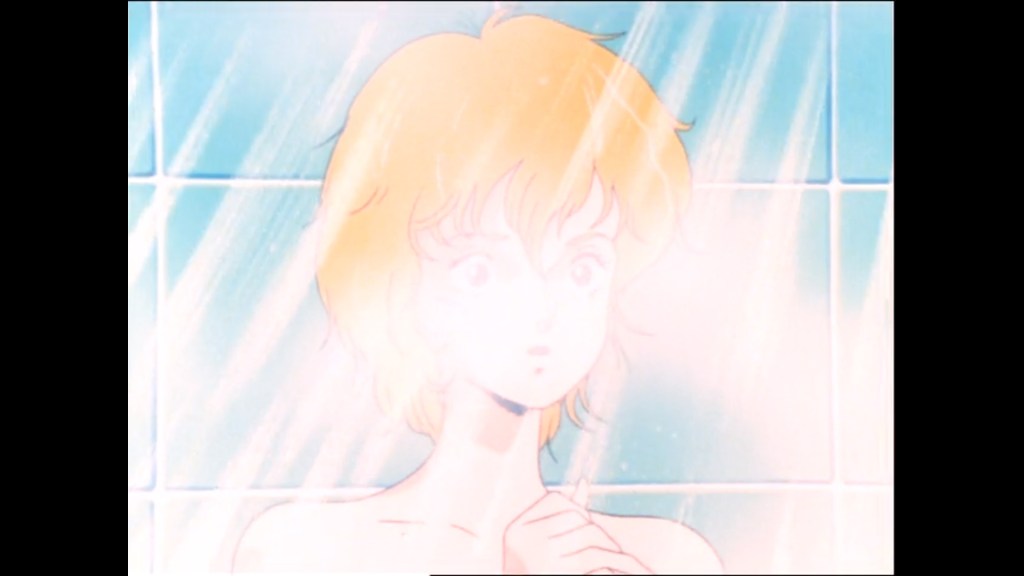



Minmei and Rick break a pipe and are each soaked. This demonstrates the “Romantic Rain” trope. Minmei showers and later in the Remastered versions of Episode 38, 39, 43, 46, and 48 of Robotech (Episodes 1, 2, 6, 9, and 11 of SDCSC) Dana Sterling (Jeanne Francaix) will shower. Dana’s showers are less romantic and emphasize introspection and fan service. Breaking the pipe may be a double entendre or innuendo as Minmei helps Rick to release the pressurized, warm, and cathartic fluid. Previously, Minmei burned her hand on the hot, firm pipe. Minmei will also shower in DYRL. A sense of symmetry with this scene will be achieved in Episode 12: Big Escape when Rick and Lisa fall into reservoir liquid (cooling water) possibly symbolizing “Romantic Rain.” In Episode 12 water is seen dripping and the echoing sound effects of drips resembling rain is audible. Additionally, while never animated, Rick and Lisa’s emergence from the water is a form of rebirth, maturation, and baptism for these two characters. Unseen but described, Lisa explains her rescue of an unconscious drowning Rick from the water symbolizing Rick’s forced or assisted premature romantic development. In Episode 33: Rainy Night Roy and Claudia and Rick and Lisa will experience more direct and conventional versions of the “Romantic Rain” trope.
In SDF Macross Minmei explains soldiers will protect her Aunt and Uncle. Rick repeats this and contemplates it. This will become a major motivation for Rick’s actions throughout this series. His motivation will be revisited in Episodes 2, 5, 17, and 22. This dialogue is not present in Robotech. However, in Episode 5 of Robotech and not SDF Macross, Roy warns Rick a man in uniform could steal Minmei. This emphasizes jealousy as a slightly different motivating factor for Rick to join the military in Robotech. Jealousy is emphasized again in Episode 8 when the Mayor comments Max may seduce Minmei.


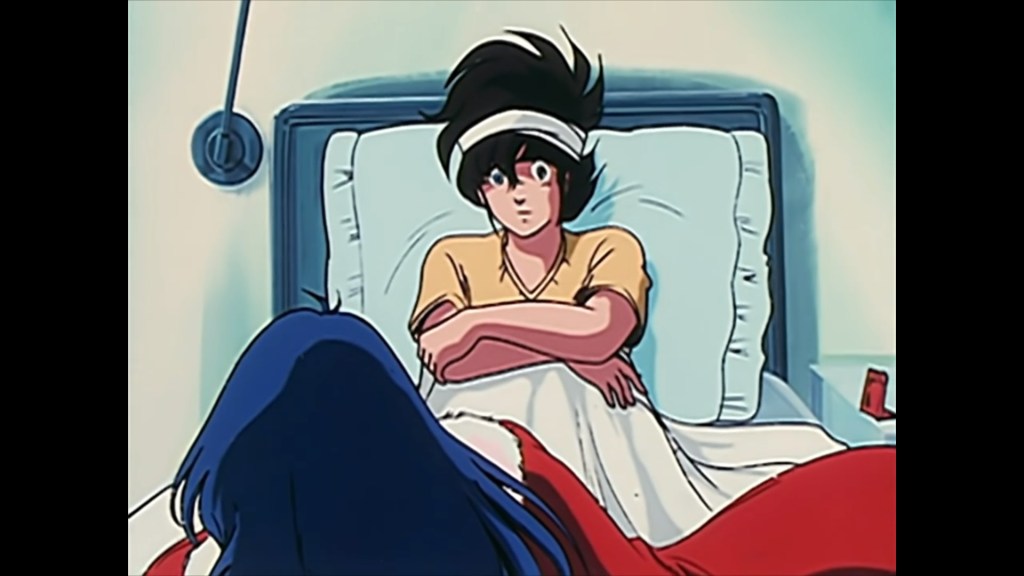
Minmei falls asleep. She will fall asleep again in Episodes 15, 17, and 18 portraying the “Beautiful Dreamer” trope.
Minmei marks time by scratching tally marks on Rick’s fanjet. This illustrates the different perspectives of men and women. Rick sees the fanjet as a prized possession while Minmei sees it as garbage. Rick’s silence illustrates how tiny resentments can build into arguments in a relationship.
A tuna fish is floating in zero gravity outside their window. They decide to bring it inside as a source of food. The plan goes awry, and they only retrieve the head. This helps the viewers relate to Rick as their surrogate. Rick’s struggles and failures are relatable. This incident also recalls similar failures which present as a comedy of errors. These errors are Rick piloting a trainer veritech during a battle, Rick’s battloid stumbling into Minmei’s bedroom, the gravity pods tearing away from the SDF-1, folding to Pluto, losing the fold drives, transporting an entire Island to Pluto, and Ricks fanjet entangling upside down.
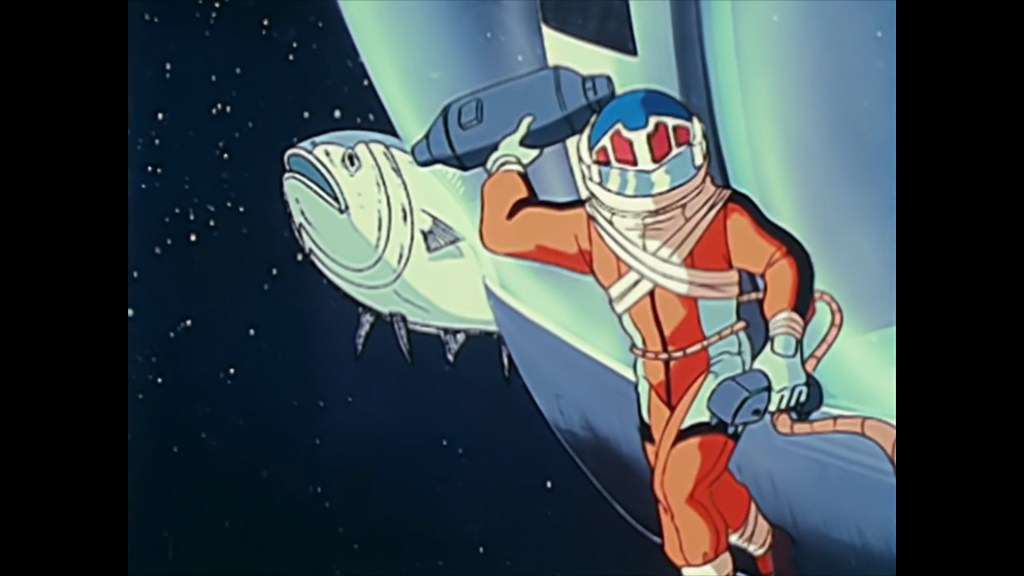
Rick maneuvers to the tuna fish in zero gravity by casting objects with mass in the opposite direction. Similar to the Vernier thrusters illustrated in Episode 1, this detail lends scientific realism to this series.


Rick and Minmei prepare for a mock wedding ceremony. This theme will be reinvented in DYRL when Misa (Lisa) hosts a mock tea party. This is discussed in the synopsis for Episode 23. Similar roleplaying scenes will occur in DYRL when Minmay (Minmei) acts out a kissing scene with Hikaru (Rick) as well as during their date at an interactive holographic costume arcade.
In SDF Macross but not Robotech Minmei suggests a quick death in the vacuum of space. This bears similarity with Lisa in Episode 7: Bye Bye Mars when Lisa wishes to be consumed in the explosion of Mars Base Sara (Salla). In Episode 12 Lisa desires to be left behind on Breetai’s flagship when her camera breaks. Later, Miriya begs Max to end her life in Episode 25. The double suicide suggested in this episode is referred to as shinjū in Japan. It can be viewed as a romantic notion as the two lovers are thought to be reunited in the afterlife. Two similar scenes occur in DYRL. First, at 00:56:56 Hikaru (Rick) places his handkerchief on Misa’s (Lisa’s) forehead. Misa (Lisa) is resigned to death, feels hopeless, is self-pitying, and refuses to eat. Then, at 01:35:08 in DYRL Minmay (Minmei) asks Hikaru (Rick) to remain on the observation deck with her as she believes the battle is hopeless and they will all die. See List 11 at the end of this essay for a summary of these emotional breakdowns.
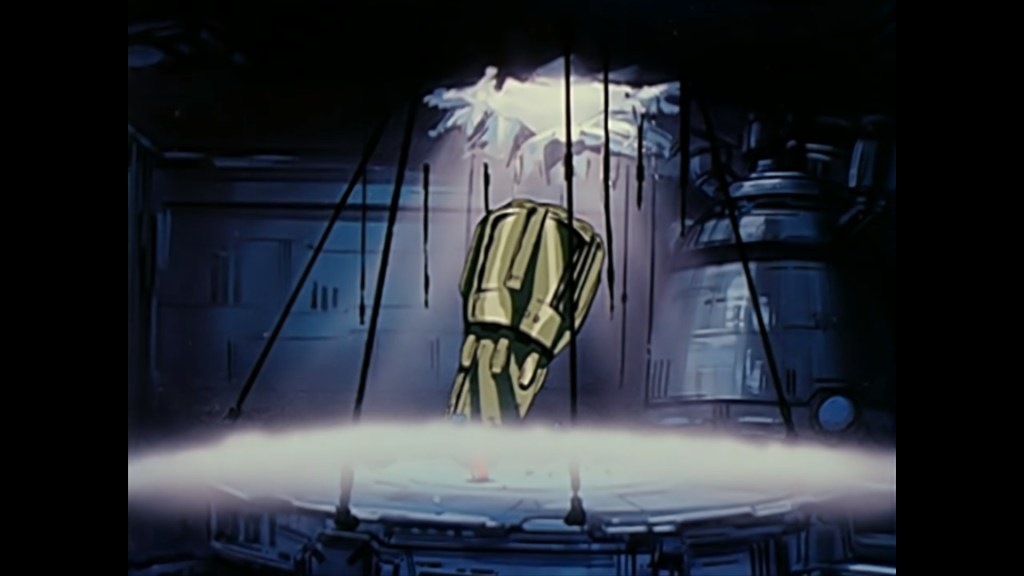


In an intimate moment, Rick and Minmei almost kiss when a missile (enemy dud missile) opens a hole in the ceiling. Interrupted kisses become a recurring pattern in this series. The tension of the moment is released by the explosion in the ceiling which symbolizes the emotional power of a kiss. While not an explicit kiss, the pattern of interruptions will next be repeated in Episode 9: Miss Macross as Rick’s building anticipation to see Minmei in a swimsuit causes him to almost collide with a Zentreadi Reconnaissance (Recon) Vessel at the climactic moment. Returning to the interrupted kiss in this episode, Minmei and Rick are rescued through the hole created in the roof of their tomb. This is symbolic of a rebirth for both characters. Escaping through this hole becomes a turning point for both their lives. Minmei later references their entombment in Episode 36: Gentle Farewell as she yearns to return to this idyllic time. Escaping from their imprisonment becomes a point of no return. Similarly, Rick and Lisa’s unseen but described emergence from water in Episode 12 may also be a point of no return. An alternate interpretation of Rick and Minmei’s predicament in this episode is to understand it as a psychological metaphor. Their compartmentalized enclosure represents their psyches and mental constructs inside a compressed claustrophobic space. Their exploration of the SDF-1 is a metaphor for explorations of the self and of each other. The soft glow from inside the parachute tent is an allegory for their innermost consciousness providing access to raw fear, desire, ego, insecurity, vulnerability, intimacy, and aspirations. This episode and perhaps this entire series may be more an exploration of inner space than an exploration of outer space. This psychological metaphor may be a microcosm later balanced against two macrocosm versions of their psyches or emotional worlds. The two macrocosm versions being the climactic battle in Episode 27 and the final battle in Episode 36 which may be viewed as metaphors for internal struggles and decisions. This symbolism is discussed in the synopses for Episodes 27 and 36 and the Final Thoughts section of this essay. In addition, the parachute tent will be reinvented in DYRL with Hikaru (Rick) and Misa (Lisa) as the occupants.
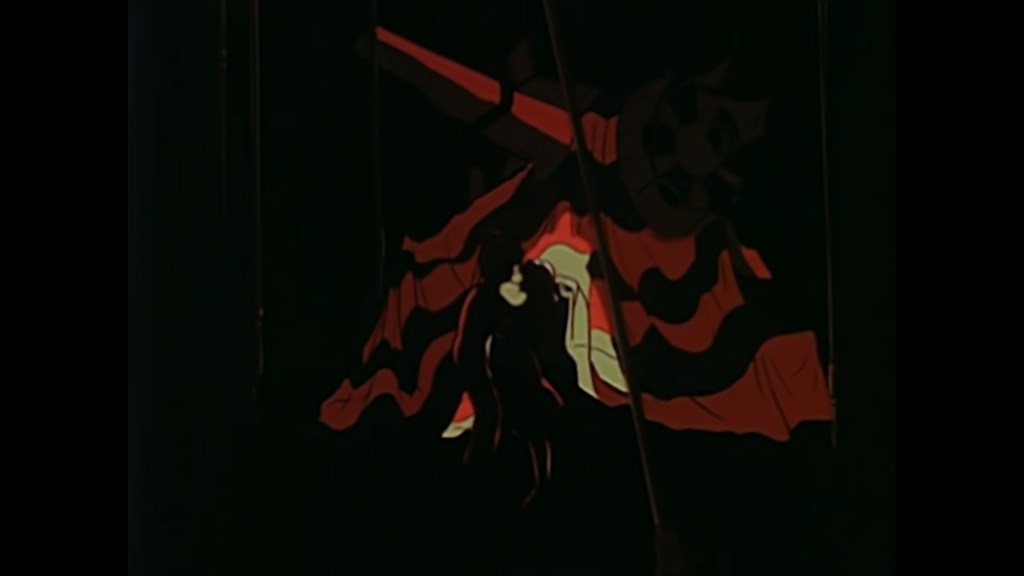


A kiss in anime intended for adolescents may symbolize the physical act of love. Therefore, Rick is unable to consummate his union with Minmei in this episode. They do seem to kiss in a flashback during Episode 27 but likely consummate their relationship sometime in Episodes 35 or 36. The interrupted kiss here in Episode 4 is lit by the light of their portable stove. This interruption will eventually be reconciled in Episode 35 when they kiss by the light of a Christmas cake candle. Assuming Hikaru (Rick) and Misa’s (Lisa’s) imaginary tea party of DYRL parallels Rick and Minmei’s mock wedding ceremony and acknowledging the time constraints of a feature-length film versus a television series, there is a contrast between Rick and Minmei’s interrupted kiss and Hikaru (Rick) and Misa’s (Lisa’s) fulfilled kiss.
The imagery of a missile penetrating a hole at the climactic moment of the kiss may be a double entendre or innuendo. SDF Macross refers to the missile as a dud missile which may further this symbolism. The downward slant of the missile may represent Rick’s impotence in the face of events beyond his control.
Soon after their rescue, Rick collapses from exhaustion and shock at seeing the city inside the SDF-1. He may also be shocked at Minmei’s sudden emotional distance, change of mood, and new personality. While Rick faints here, Minmei will faint in Episode 19. She previously fainted in Episode 2 in Rick’s trainer veritech. Lisa faints but is caught by Rick in Episode 36. The difference in stamina between Rick and Minmei is heightened in the beginning of the next episode. Minmei seems to be very busy and enthusiastic while Rick seems to be in a state of convalescence. Their different responses to their rescue is an impressively subtle and indirect method of characterization. Minmei seems to experience events on a shallow surface of existence while Rick seems to attach great significance to his interactions with Minmei. Rick does not receive any acknowledgment or evidence of a personal emotional bond from Minmei. Rick and Minmei do not share the same depth of feeling and empathy for their shared experience. See the synopses for Episodes 11 and 36 for a further discussion of Minmei’s inauthenticity and her true songs as it relates to her characterization here. The pattern of contrast between Rick’s depth and Minmei’s superficial experience of her life will continue throughout this series. Minmei will not grasp the lethal danger Rick faces, she has blind faith in authority, she eagerly consumes and creates military propaganda, and she breaks her date with Rick in episode 10. In Episode 32 Minmei does begin to become aware of the constant threats to Rick’s life but still only as his death would affect her. Not until Episode 36 will she experience an epiphany and comprehend the potential fulfillment of living a life which is both altruistic and self-satisfying.
Rick and Minmei’s time marooned together inside the SDF-1 helps the viewers identify with the plight of all the citizens of Macross Island now aboard the SDF-1. Rick and Minmei’s survival in their compartment is an analogy for the entire city. The macro level reconstruction of the city is portrayed and personalized by juxtaposing it with Rick and Minmei’s survival at the microcosm level. However, this juxtaposition stretches into the next episode as the reconstruction of the city is more clearly shown in Episode 5: Transformation.
Initial titles for this series were Battle City Megaload or Megaroad. The city constructed inside the SDF-1 is the mega-load and the trip home from Pluto is the mega-road. The letters L and R can be transposed in the Japanese Rōmaji alphabet as discussed in the synopsis for the next episode. The title of this series also revolves around MacBeth, Macro, and Cross which is discussed in the synopsis for Episode 2.
Episode 5: Transformation
This episode is named for the modular transformation the SDF-1 undertakes in order to fire the main gun. However, Rick also undergoes a transformation in this episode as he decides to join the defense forces (military).
Minmei suggests her Aunt and Uncle restart their restaurant business. There may be a small allusion to World War II when they reference army rations during the war (Unification Wars). This proposal of an allusion assumes the out-of-universe audience draws a parallel between World War II and the Unification Wars.
In SDF Macross, but not Robotech, an instrumental version of “My boyfriend is a Pilot” is played during the opening of the restaurant. Minmei will debut this song in Episode 11. The repetition of songs throughout these series are similar to reprises and encores in a symphony.

In The White Dragon (Nyan-Nyan) restaurant Rick overhears Minmei tell soldiers he is a friend and not her romantic partner. Rick’s fanjet is in a state of disrepair with the parachute now serving as a burial sheet. The fanjet is a symbol of his mood, libido, and masculinity. In parallel fashion, the SDF-1 can no longer fire its main gun which furthers a sense of impotence. Rick is staying in a room near Minmei’s. She will later move into Rick’s bungalow in Episode 35: Romanesque providing a sense of symmetry.
The AnimEigo DVD (digital versatile disc) liner notes explain early drafts of SDF Macross planned for Rick and Minmei to end their flirtations in what would eventually become Episode 23: Drop Out when Rick witnesses Kyle kiss Minmei. While Rick’s fanjet is in a state of disrepair here in this episode, there were proposals for Rick to burn his fanjet so as to symbolize his loss of friendship with Minmei after her and Kyle’s kiss. This concept validates the symbolism between Rick and his fanjet proposed in this essay.
Rick unintentionally overhears Minmei explain he is only a platonic friend. In Episode 23 Rick will unintentionally see Kyle kiss Minmei. In Episode 29 Minmei unintentionally overhears Rick tell Lisa he put her photos in his album. In Episode 35 Lisa will unintentionally hear Minmei ask to live with Rick. In DYRL, Misa (Lisa) accidentally walks in on Minmay’s (Minmei’s) embrace of Hikaru (Rick) in his private quarters.
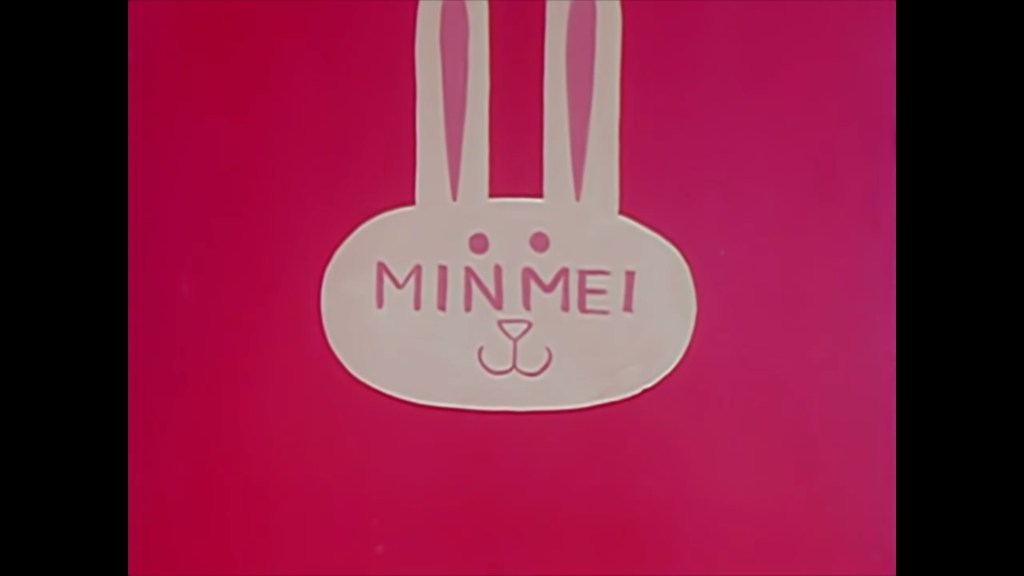
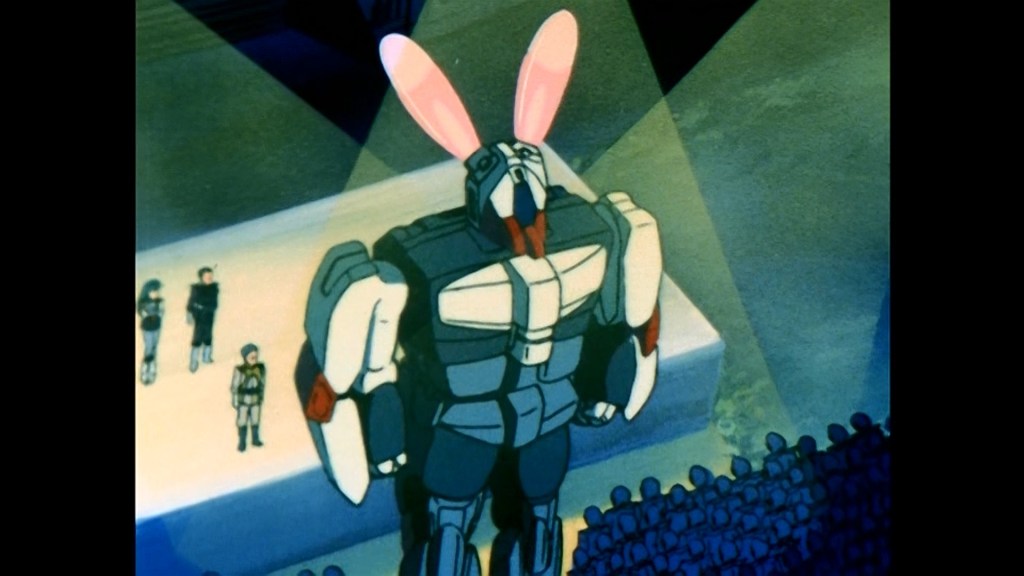
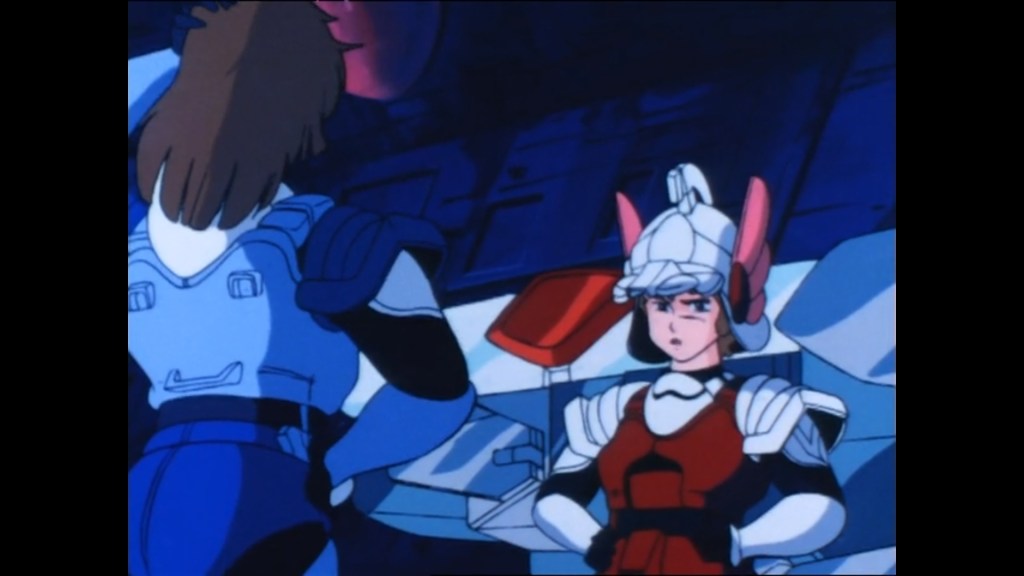
In Episodes 5 and 29 a pink bunny inscribed with the name “Minmei” is shown on her bedroom door. This goes beyond ordinary symbolism and stretches into the core of the viewers’ reality. While the bunny is likely not a symbol at all but a simple decoration on a young girl’s bedroom door, it can also be understood to indicate Minmei’s innocence and vulnerability. On one hand, the bunny does not rise to the level of deserving analysis. On the other hand, it serves to illuminate assumptions about gender roles and a patriarchal society. Women are viewed as prey to be chased by male predators. The bunny goes beyond being a symbol and warrants its own category as a “super symbol” or gender dynamic metatrope. Robotech renames Hikaru Ichijyo as Rick Hunter. The surname “Hunter” may be an aptronym. Rick may be hunting bunnies, Minmei, or Zentreadi. All of this may reveal the workings of the unconscious minds of the animators and Carl Macek and crew. In SDF Macross, Hikaru translates as light and Ichijyo translates as assistant. In Robotech the bunny imagery is briefly continued in Episode 39 (Adapted from Episode 2 of SDCSC).
Minmei’s name is presented with two spelling alternatives in-universe. It is seen throughout the series spelled as either Minmei or Minmay.
Dr. Lang explains his modular transformation proposal to Captain Gloval. This sets up the tension and internal conflict for this episode. The main gun cannot be fired without the missing fold system, but a transformation of the ship will realign the energy conduit necessary for its operation. Captain Gloval’s military arsenal is constrained by political factors in the form of civilian morale and casualties. This supplies plot tension and also begins a theme of the military as a benevolent authority over civilians in this series. It also casts the civilians as a nuisance and burden upon the military. The military grapples with complex decisions while the civilians lead lives of patriotic blissful ignorance. This will be portrayed again in Episode 31 when Kyle leads a mob against Rick. Kyle will come to symbolize an additional consideration and burden for the military as discussed in the synopsis for Episode 16.
Breetai (Britai) and Exedore (Exsedol) review combat footage of the initial battle on Macross Island. The size of the Zentreadi is again reinforced as the inhabitants of Earth are described as micronians or miclones. (See this episode’s synopsis for a discussion of the Japanese transliteration of the letters L and R as the word miclone may also be spelled micron or micronian.) Character size is shown by the camera angles and point of view of the combat footage. The word micronians itself implies the size disparity with the Zentreadi. The size of the Zentreadi was previously revealed in Episodes 2 and 4. Upon realizing Earth is home to micronians, Exedore cites a military record instructing the Zentreadi to avoid micronians. This creates plot tension and somewhat foreshadows the eventual victory of the micronians.
The introduction of the term micronian defamiliarizes humanity for the out-of-universe viewers in an existential moment. Defamiliarization is a narrative device or literary concept which presents something common in an uncommon setting or circumstance. It allows the viewer to experience the familiar again for the first time and reevaluate the nature of the concept being defamiliarized. In this case, the viewers see themselves through the eyes of the Zentreadi.

Minmei’s bedroom is visibly damaged from Rick’s veritech which may mean Rick has marked his territory and left a scar. Minmei and Rick fight in the park after she subtly hints Rick should join the military.
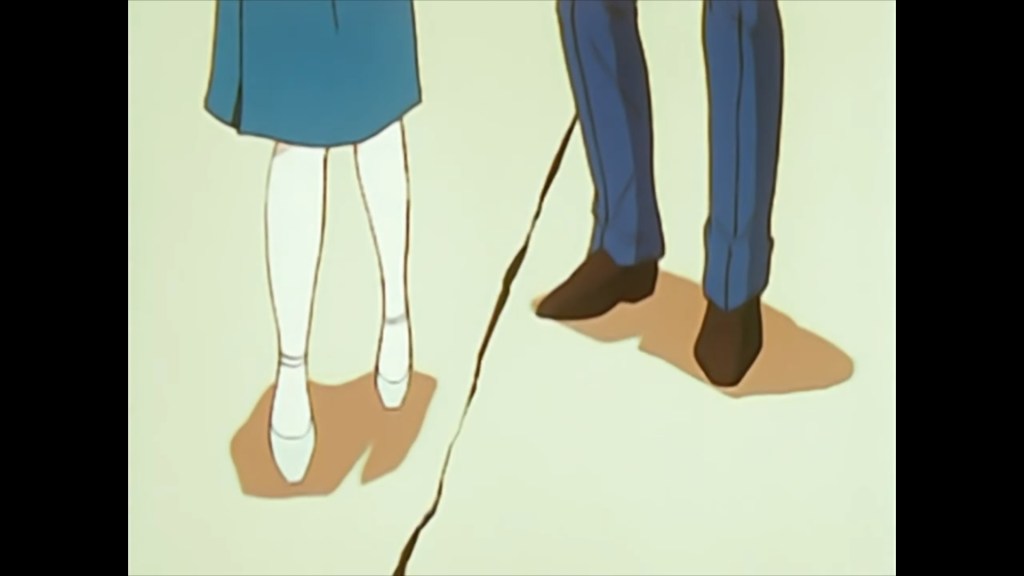
The argument is shown symbolically when the ground splits between them and Minmei falls in. Rick shows where his true loyalties lie by jumping the chasm to Minmei’s side and pulling her out. As Rick regains his manhood by rescuing Minmei, so too does the SDF-1 regain the potency and prowess of its main gun. The action of Rick jumping a chasm foreshadows his shortly impending declaration to join the military after 5 episodes of his pacifist philosophy. Rick and the SDF-1 are complimentary and analogous of a transformation from impotence to virility. Additionally, destruction is a recurring motif symbolizing emotional conflict between Rick and Minmei as noted in the following examples. The city is damaged during the transformation and will be rebuilt. Rick and Minmei met in Episode 2 and Macross Island was destroyed in Episode 3. Minmei is distant in Rick’s hospital room and Max and Miriya battle outside the window in Episode 18. Minmei and Rick part ways in Episode 27 and the Earth will be annihilated but rebuilt. Rick will refuse Minmei’s pleas in Episode 36 and the SDF-1 will be destroyed.
Rick and the SDF-1 reflect each other in this Episode. Previously, Rick’s veritech and the SDF-1 reflected each other as discussed in the synopsis for Episode 2. Episode 7 will demonstrate the SDF-1 as a metaphor for Lisa. The SDF-1 is a cipher throughout this series and may portray a multiplicity of symbolisms. Mostly the SDF-1 and Minmei seem to mirror each other as discussed in the synopses for Episodes 12, 19, 29, 32, and 36.
A small error in dialogue occurs in the Robotech version of this episode. In SDF Macross, as Rick and Minmei argue, Rick states he’d prefer the SDF-1 be destroyed than for Minmei to equate him with other soldiers. In Robotech this dialogue is changed to Rick wishing he and Minmei had never been discovered as stow aways in the SDF-1. After the transformation and the destruction of the city, in both versions Minmei asks Rick if he is happy because he had wished for the destruction of the city. However, Rick only wished for this in the SDF Macross version of this episode. Rick’s selfish thoughts portray a brief moment of existential nihilism in his character. He will eventually have an existential crisis as discussed in the synopsis for Episode 22.


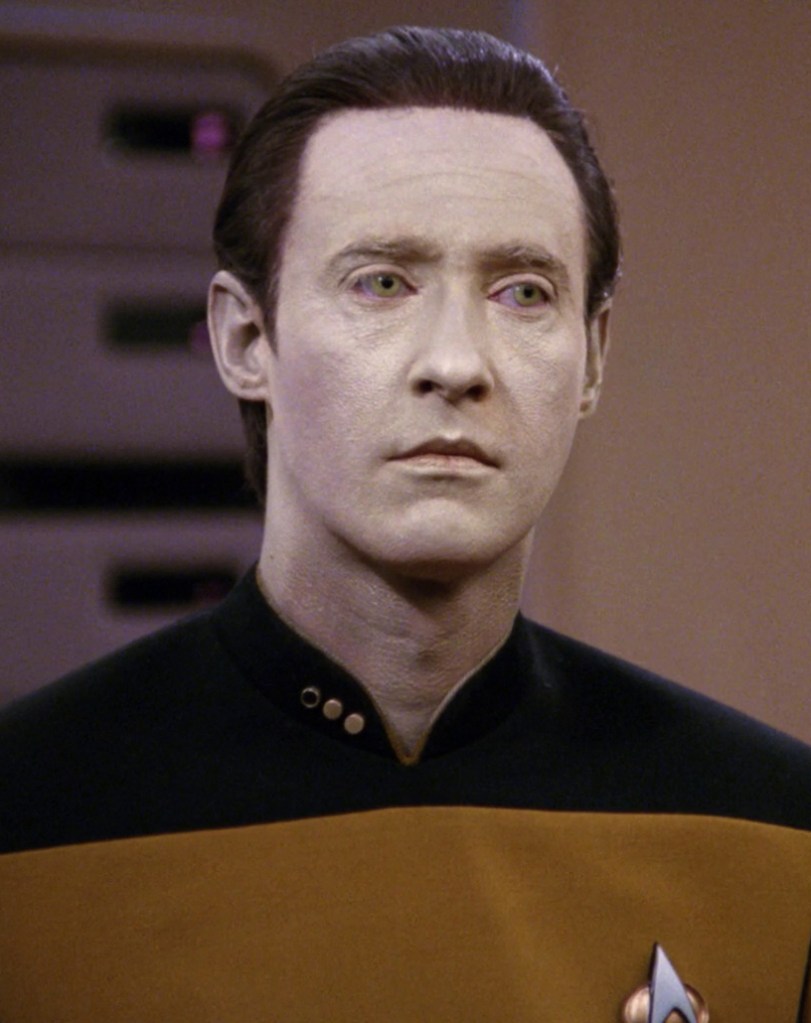

After the transformation, a certain symmetry and harmony is achieved as the SDF-1 now resembles a veritech in battloid mode. The raised main gun booms now portray the “Vertical Mecha Fins” trope. The SDF-1 is now anthropomorphized. The SLV (Submersible Landing Vehicle)-111 Daedalus and CVS-101 Prometheus aircraft carrier now resemble arm-like appendages. These ships provide an asymmetrical beauty to the SDF-1 similar to scars, beauty marks, and tattoos portraying the “Fashionable Asymmetry” trope. The transformation of alien technology into a humanoid form may egocentrically foreshadow the triumph of micronian culture. If the SDF-1 is now viewed as a human, the upper limbs may portray the “Artificial Limbs” trope. Artificial limbs are a protagonist character trope possibly implying uniqueness or superiority in their ability to overcome obstacles despite the handicap. The personification and anthropomorphic nature of the SDF-1 may depict a tragic yearning to be human similar to the characters Data from Star Trek or Pinocchio. The “Fashionable Asymmetry” trope is lost in DYRL as two ARMD space carriers were docked as appendages instead of naval vessels. In an interview from a book which doubles as a paper craft model kit titled SDF-1 Macross: Thorough Dissection released February 27, 2015 Kazutaka Miyatake states the naval ships were placed alongside the SDF-1 to provide a sense of scale. It would be difficult to grasp the massive scale of the SDF-1 in space. A human pilot provides scale to a veritech which provides scale to the naval ships which provide scale to the SDF-1. This gives the viewing audience a frame of reference. As stated previously, these ships are absent from DYRL. In this feature-length film the wreckage of the Prometheus is seen on Earth. Animation of the Prometheus being destroyed on Earth was deleted from DYRL but can be seen in the 1997 eponymous Sega Saturn video game. One final examination of the SDF-1 in battloid mode concerns the microcephalic nature of the cranium. In the absence of any obvious head, visor, or eyes, the eyes of the observer have no focal point and continuously scan the SDF-1 in battloid mode searching for a point upon which to rest. In portrait paintings the eyes of the subject are often the natural focal point for the observer. Works of art may contain one or more focal points or a dominant focal point and minor focal points. The SDF-1’s lack of a true center of thought or face allows the viewer to project any attitude or emotion, whether benevolent or malevolent, onto the SDF-1 imbuing a cipher-like quality into the SDF-1. The SDF-1 may be viewed by some as an expressionless savior. The absence of a focal point may also stimulate the observer as their eyes search the image endlessly.
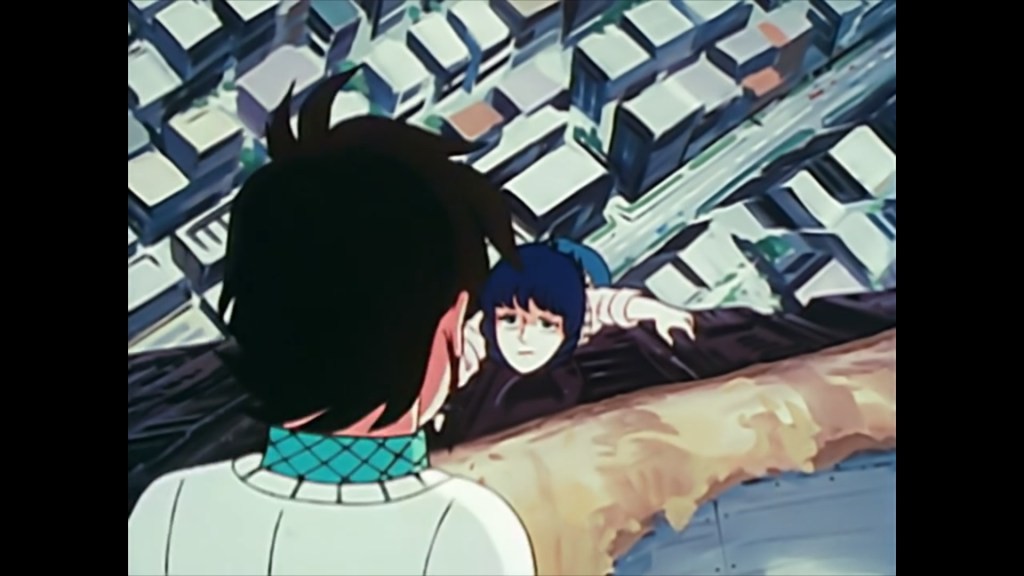


Rick has previously rescued Minmei from Zentreadi, freefall, the vacuum of space, and exile in the SDF-1. In this episode she falls in a crack. In Episode 13: Blue Wind Rico (Loli Dosel) will fall in a crack and be rescued by Konda (Conda Bromco) and Bron (Warera Nantes), and in Episode 21: Micro Cosmos Minmei falls in a crack to be rescued by Kyle dissolving into Rick. Rick will rescue Minmei again in Episodes 17 and 32.
In SDF Macross the three Zentreadi names presented in the previous paragraph are translated using a Romanization of Japanese alphabet characters to English characters termed Rōmaji. The letters R and L are pronounced the same in Japanese and thus Loli can become Rori. Their names can form the sentence “Warera roricon da.” This sentence translates to “We are lolicons” or “We have a Lolita complex” referring to their infatuation with a very young Minmei. The term Rōmaji also helps Western viewers understand the Eastern perspective on the title of Episode 35: Romanesque.
This episode clearly portrays the construction of the city inside the SDF-1. The epic scale of the SDF-1 was a novel concept in 1982. The impact of the size of the ship has been diluted with time and other science fiction franchises. Similarly, the Death Star portrayed in the 1977 film Star Wars has since lost its impact and shock value.
Episode 6: Daedalus Attack in SDF Macross and Blitzkrieg in Robotech
In SDF Macross this episode is named for a pugilistic maneuver using the warship Daedalus. In Robotech this episode is named for Captain Gloval’s blitzkrieg (ambush) strategy. This episode shows the first of many Daedalus attacks by the SDF-1. See List 12 at the end of this essay for a summary of these attacks. While there are some references to World War II throughout this series, the term blitzkrieg is not used in SDF Macross. It was inserted during the adaptation of SDF Macross to Robotech.
Rick is in a clothing store with Minmei when Lisa, Sammie, and Kim stop in for lingerie.
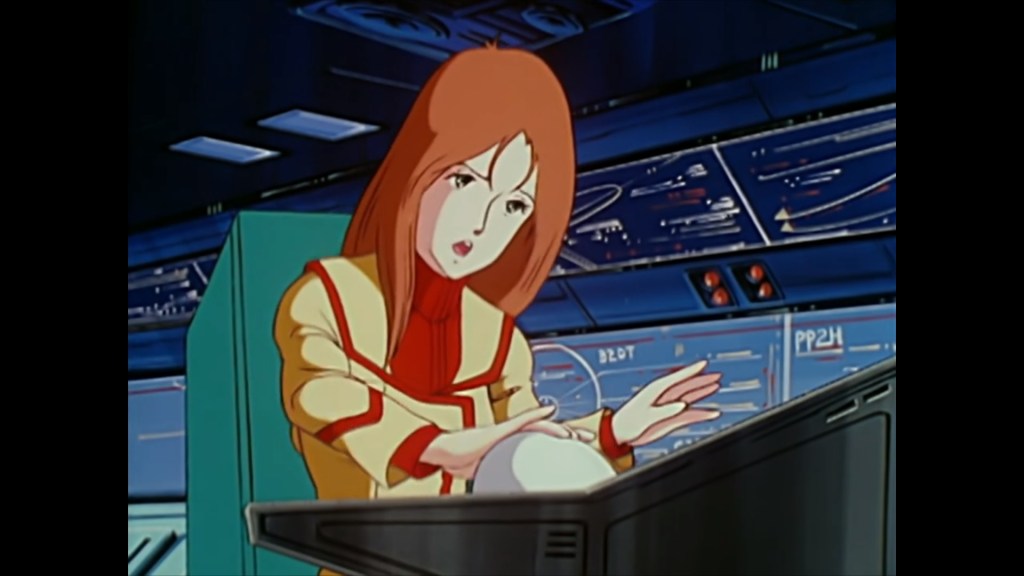
Dr. Lang proposes a force field idea for Captain Gloval’s consideration. Later in this episode it will be explained and labelled the Pinpoint Barrier. It provides plot tension as it cannot cover the whole ship but only small areas. The trackball controls add additional frantic tension to this episode. Furthermore, this barrier will unintentionally disable the main gun later in this episode amplifying the already established tension.
In SDF Macross Rick bumps into Lisa on the street and calls her an old lady for the second time as previously seen in Episode 3. In this same episode he calls her an old lady for the third time inside the rings of Saturn. In Robotech, Rick does not refer to Lisa as a sourpuss again until Episode 7: Bye Bye Mars.
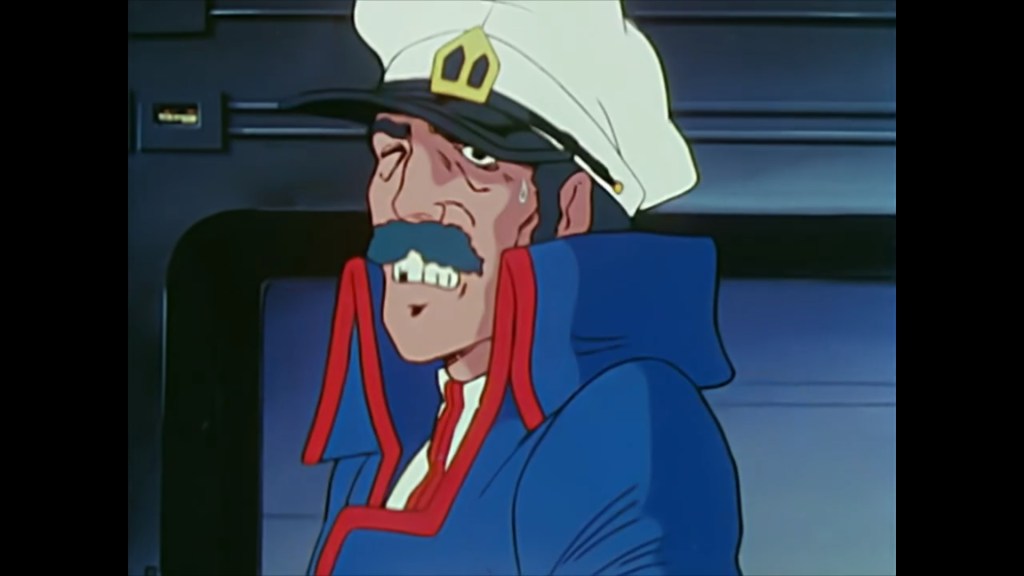
Captain Gloval again bumps his head on the doorway to the bridge as previously seen in Episode 1.
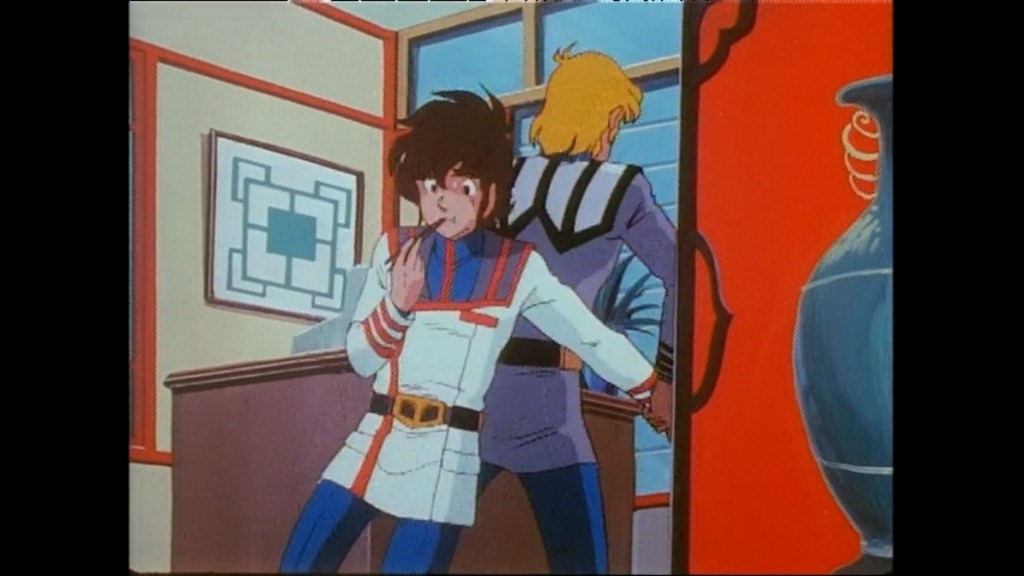
In SDF Macross Rick’s meal at The White Dragon is interrupted by Roy as Rick has orders to fly a mission. This scene is not shown in Robotech. Interrupted meals become a recurring theme in this series. See List 13 at the end of this essay for a summary of these interrupted meals.


Rick and Minmei meet in the park and have their photo taken in front of a fountain. This photo was displayed in the photo album of the closing credits for SDF Macross since the premier of Episode 3. This photo supports the photo album motif for this series and implies the album belongs to Rick.
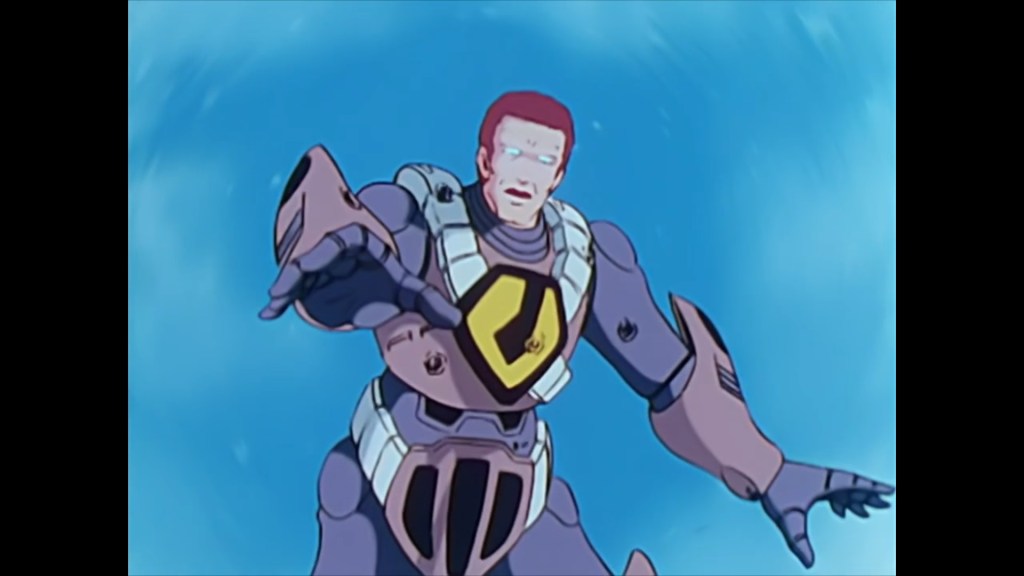
As Rick falls asleep he has a flashback to Episode 2 when Roy killed a Zentreadi soldier in front of Rick. This foreshadows a similar incident in this episode.
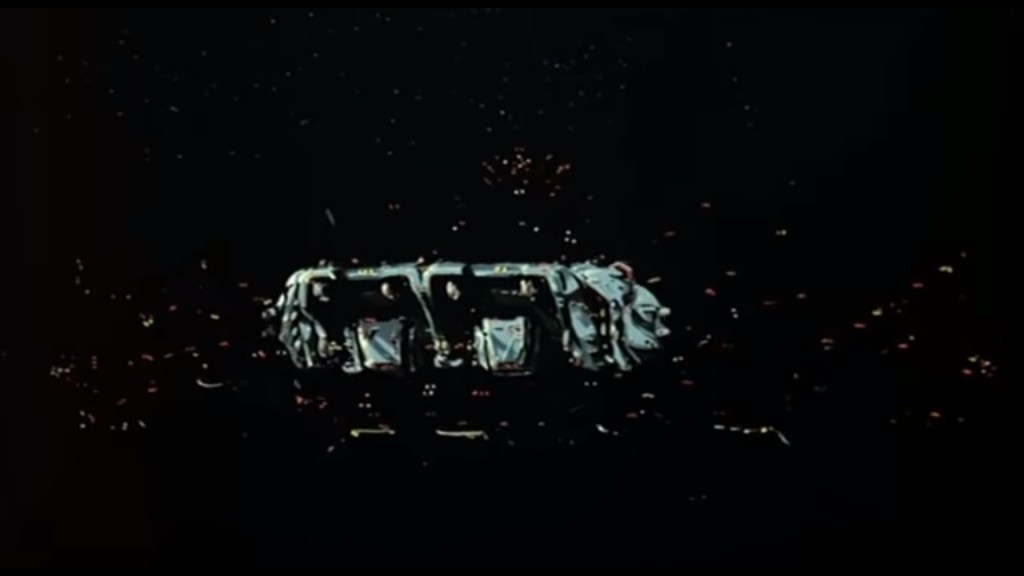
The veritechs emerge from a shadow in the rings of Saturn. This same concept is utilized to reveal the SDF-1 in the beginning of DYRL.

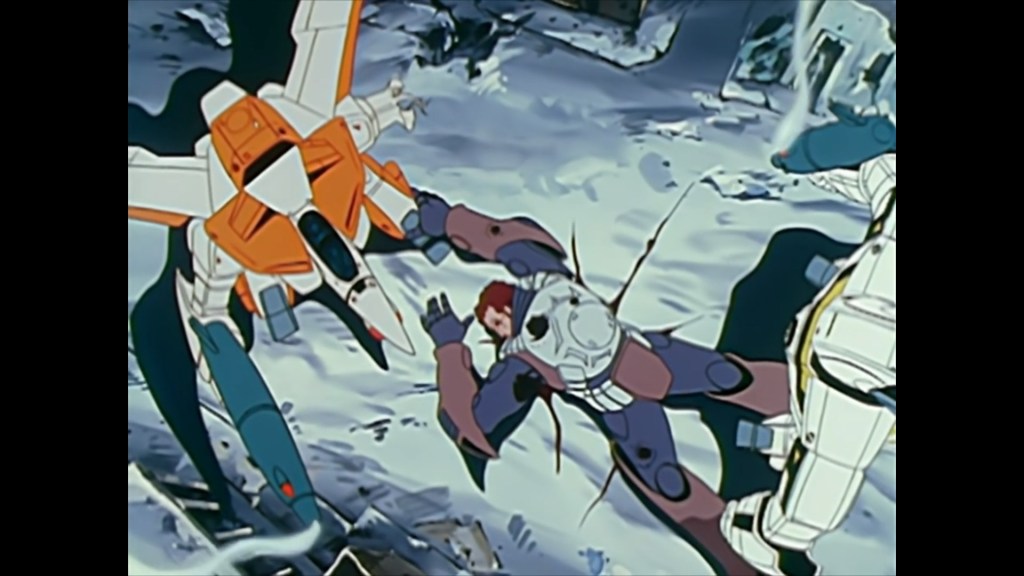
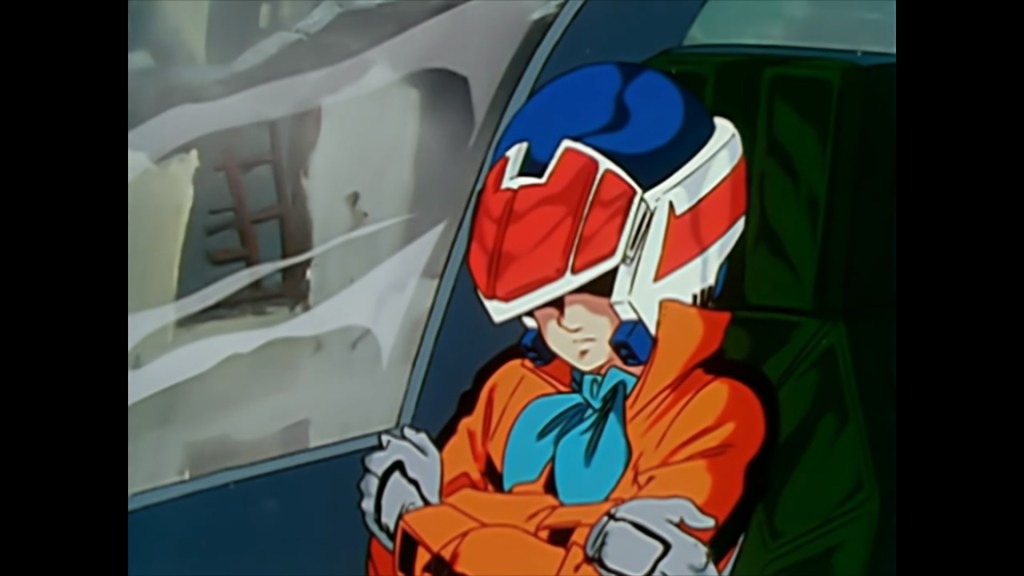
Rick penetrates inside a Zentreadi vessel and is unable to fire upon a full size Zentreadi. For the viewers this recalls Episode 2: Countdown when Roy killed an advancing Zentreadi soldier threatening Rick and an unconscious Minmei. Moments later in Episode 2, Rick shut down as he entered a catatonic state of shock similar to the scene discussed here. This scene provides character development and plot tension due to Rick’s indecision about killing in war. Interestingly, the viewer may identify more with the Zentreadi character or antagonist than with Rick as the protagonist and audience surrogate. This confrontation may symbolize the conflict of man versus machine. However, the viewer recognizes the human-like Zentreadi as the self and sees a battloid as an inorganic robot. On the other hand, it is later revealed the Zentreadi species is a somewhat robotic and machine-like species while the battloid is piloted by a human being. Whether by design or serendipity, multilayered scenes of double-meanings or inversions may be one successful component of this series. Upon first viewing, this scene humanizes the Zentreadi along with a debriefing scene which occurs in Episode 10 and is discussed in the synopsis for Episode 13.


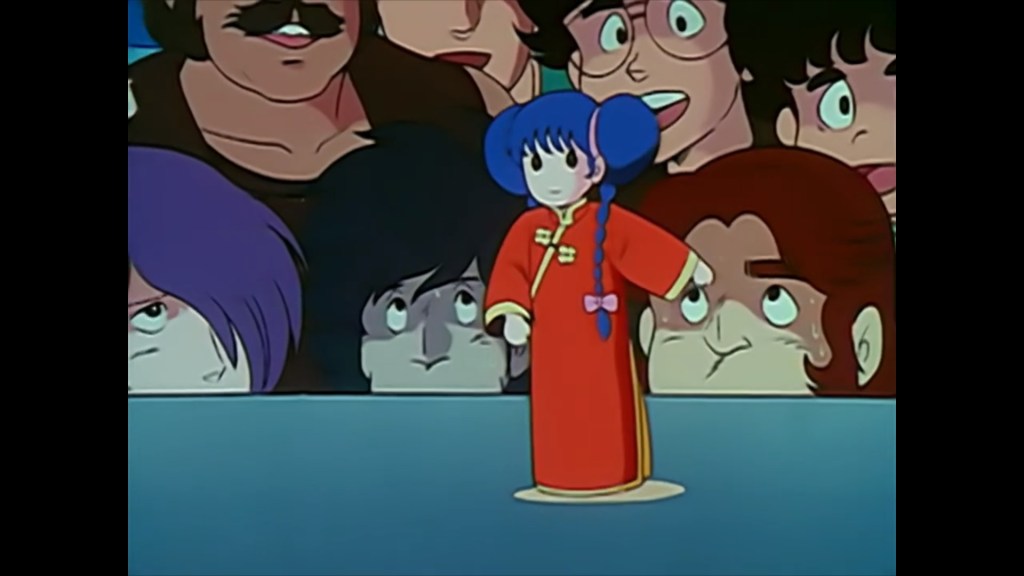

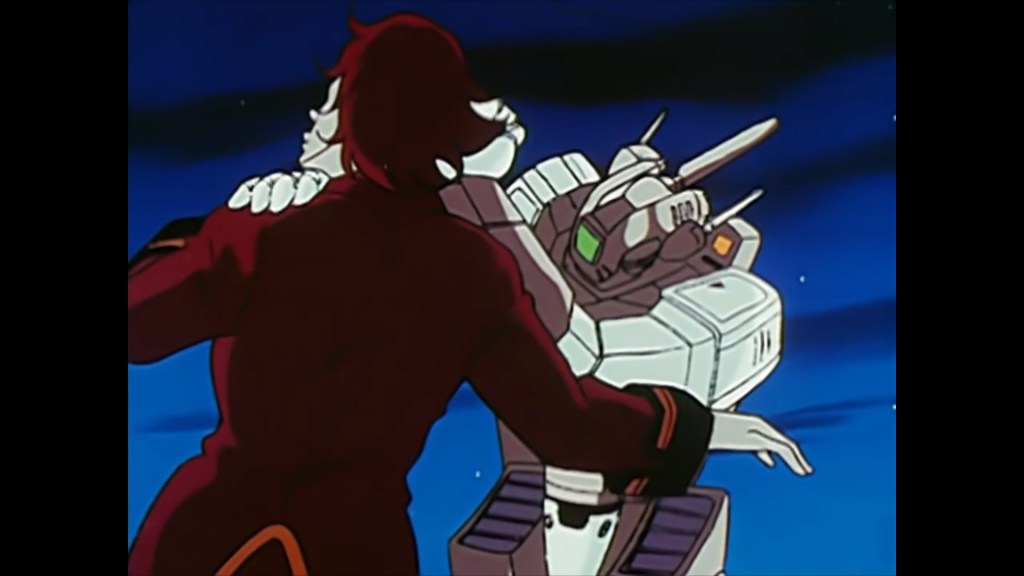

Returning to this episode, Daedalus Attack, this marks the first of many times Rick will penetrate inside a Zentreadi vessel. See List 14 at the end of this essay for a summary of Rick’s entries into Zentreadi craft. This imagery once again provides the viewers with a sense of scale. This series will eventually demonstrate five levels of scale. From smallest to largest the progression ranges from the Minmei videogame avatar and Rick’s Minmei charm, to the Minmei doll, to micronian fist fights, to Zentreadi vs Battloid fistfights, to the SDF-1 punching Zentreadi warships. See List 15 at the end of this essay for a summary of these different scales. These five levels imbue an aesthetically pleasing sense of harmony, balance, and proportion to this series. There is also harmony in the allegories and symbolism spread across this series which will be discussed throughout this essay. Some examples of these intellectual harmonies are the Zentreadi symbolize Rick’s desire for Minmei, and the SDF-1 often symbolizes Minmei. See Lists 2, 4, 5, 17, 18, 19, and 20 at the end of this essay for a summary of examples of this artistic balance between the emotional and intellectual and these abstract concepts’ physical manifestations as people or things. See the Final Thoughts section of this essay for a further discussion of this topic.
Rick’s encounter with the full size Zentreadi recalls events of Episode 2 which remind the viewer of the cost of life in war. American audiences of animated television shows were unfamiliar with onscreen enemy deaths or even contemplating implied enemy deaths in 1985. Cumulatively, these portrayals begin to exhibit the insanity of war. These scenes eventually lead the viewer to embrace Breetai’s defection. This animated series takes the audience on an out-of-universe attitude shift from enthusiastic combat to compassion after evaluating all available options for humanity’s in-universe objective.
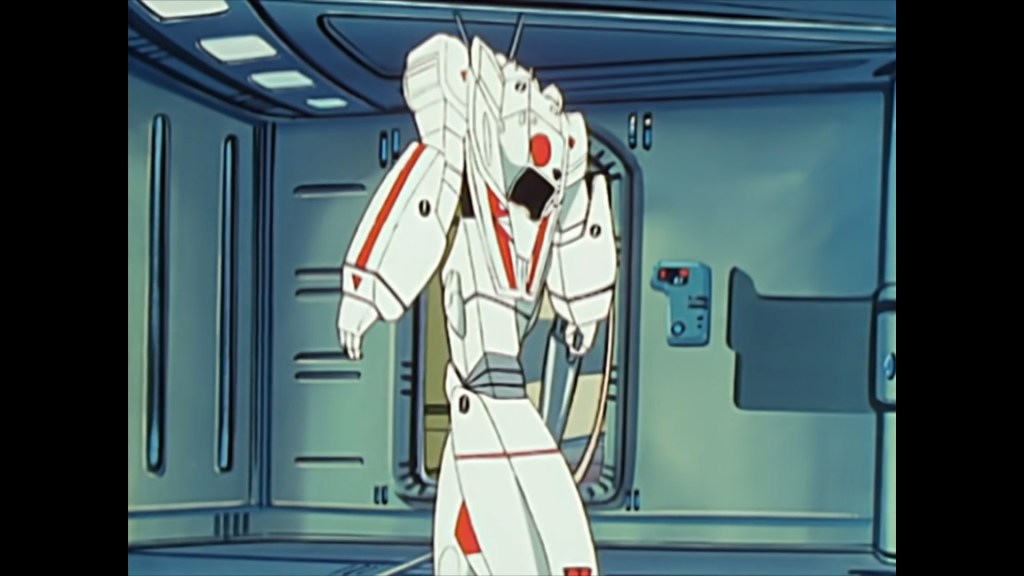

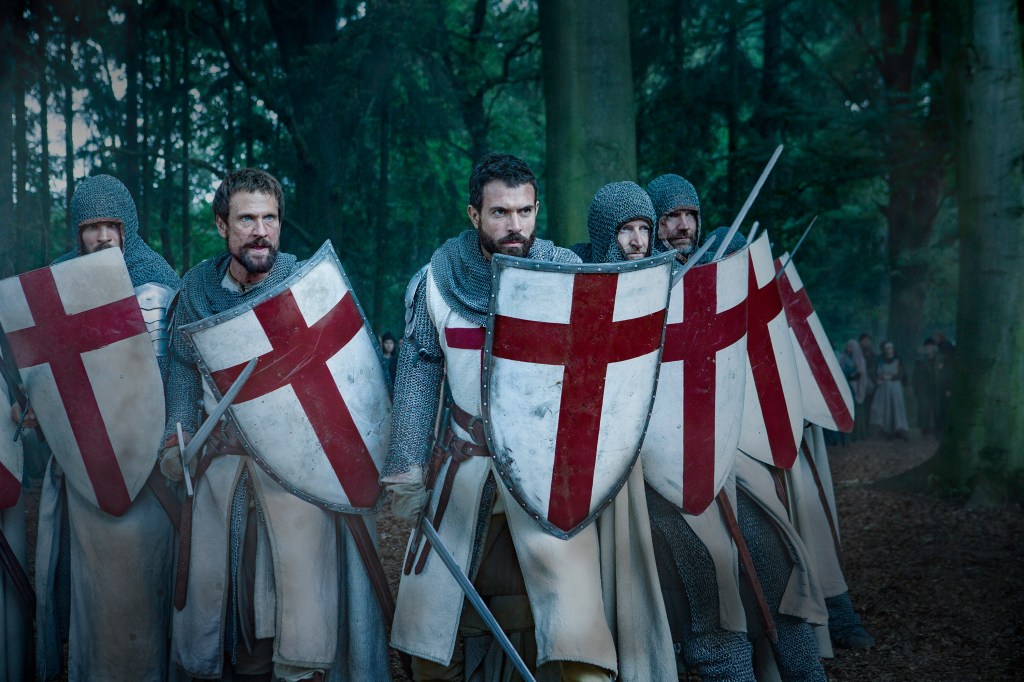



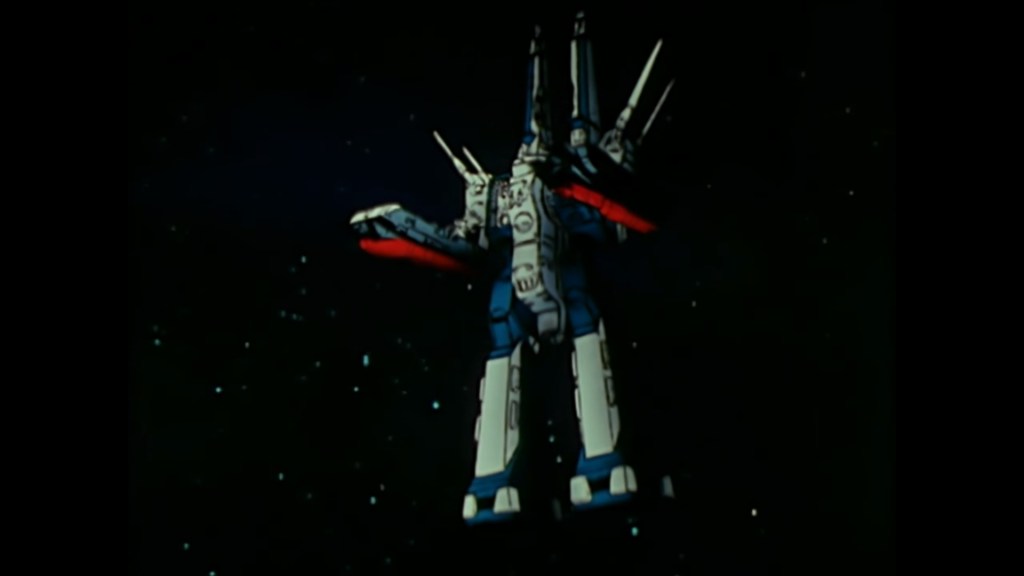

This episode introduces the color scheme of Rick’s veritech. It is white with red trim. This is likely an allusion to the flag of Japan which embodies the land of the rising sun. Rick’s veritech may also borrow from Saint George’s Cross which later inspired the uniform of the Knights Templar and the flag of England. Saint George was a military saint. The mantle of the Knights Templar is white with a red cross. The white color symbolizes purity and chastity. The red cross symbolizes the Knights’ willingness to suffer martyrdom. All these symbols and their implied qualities may be intended as characterization or foreshadowing for Rick. The red and white color scheme also bears resemblance to the symbol for the International Committee of the Red Cross. The positive connotations of the Red Cross Organization may likewise inform Rick’s character. Later, in Episode 19, Rick will exchange his veritech for Skull-One which portrays the skull and crossbones. These colors and emblems of Rick’s aircraft symbolize his maturation from youthful purity and innocence to lethality. This episode also introduces the color scheme of Rick’s uniform which is red, white, and blue. This resembles the color scheme of Captain Gloval’s uniform and the SDF-1 possibly implying an interconnectedness among these elements. Lisa’s uniform is white implying neatness, chastity, and possibly a wedding dress. Lisa portrays the “Woman in White” trope. Minmei is often in red colored outfits implying romantic availability. Minmei portrays the “Lady in Red” trope.
Episode 7: Bye Bye Mars in SDF Macross and Bye-Bye Mars in Robotech
This episode is named for the destruction of Mars Base Sara as well as for the SDF-1’s progress towards Earth and away from Mars.
Khyron is introduced. Exedore speaks very ill of him. While fiction can either show or tell, showing is often much more effective. In this case the viewer is told by Exedore and immediately shown Khyron’s character flaws as Khyron’s ships materialize from hyperspace and collide with Breetai’s ship. The character of Khyron adds tension to the remainder of this series due to his unpredictability.
Rick tells Minmei the overhead Public Address system announcement is propaganda. This reinforces a subversive tone throughout this series. See List 16 at the end of this essay for a summary of in-universe subversive themes in this series. Later, in Episode 9: Miss Macross, Roy tells Max and Ben the contest is rigged and predicts Jan Morris (Jamis Merin) will triumph. Roy is proven wrong, but this cynical comment reveals a political depth woven into this series. This theme is demonstrated again in Episode 15: Chinatown when the United Earth Government (United Nations) admits to falsely reporting the Anti-Unification (Anti-UN) League rather than the Zentreadi destroyed Macross Island, and the SDF-1 was able to launch and escape harm. The population of Earth is aware of the existence of the SDF-1 but is unaware of the city full of refugees inside. The subversive theme of this series may engender the mistrust of young adult viewers’ for parental authority. This element of subversion also helps emotionally bond the viewers with the fictional characters of this series as the fictional characters have seemingly entrusted the viewers with insight into ulterior motives and outside forces. The subversive theme of this series may also be related to the outcome of World War II. There may be a dichotomy between Allied and Axis generated out-of-universe post-war entertainment media. The Allies may have produced more patriotic and nationalistic fictional plots and characters as their governments were victorious in the war. In contrast, Axis powers like the Nation of Japan may have produced post-defeat entertainment media with a healthy cynicism of the government and military. Distrust of the elites and other power structures may have been present in the out-of-universe Japanese audience as well as the creators of SDF Macross.
Lisa has a flashback which explains her motivation for joining the military is a desire to join Karl Riber (Riber Fruhling) on Mars. This somewhat mirrors Rick’s motivation as he joined to protect Minmei. Rick’s motivation is discussed in the synopses for Episodes 2, 4, 5, 17, and 22.

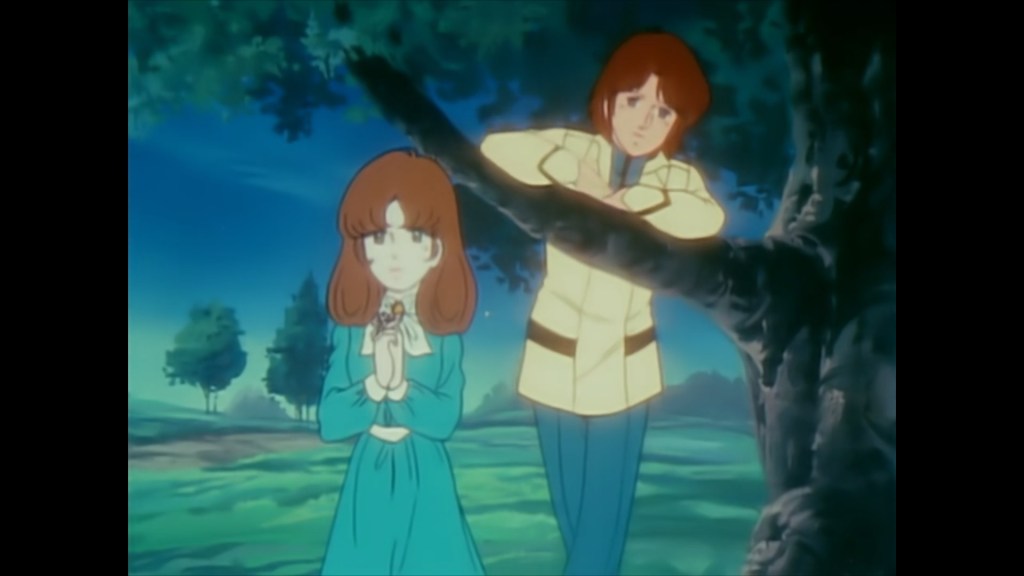

The synopsis for Episode 5 discussed the Lolita theme running through this series which is a possible meta-reference to the creators as well as the out-of-universe fans. The previous two scenes continued this theme with Minmei in a schoolgirl uniform and a very young Lisa shown in a flashback. Sammy also has a few quick scenes throughout this episode furthering the Lolita imagery.
In SDF Macross, while on patrol, for the fourth time Rick refers to Lisa as an old lady while communicating with Roy and Claudia. In Robotech, for the second time, Rick refers to Lisa as a sourpuss.
The SDF-1 is held captive by underground gravity mines. This is symbolic of Lisa carrying the weight of her past. She is borne down with emotional baggage. Thus, in this episode the SDF-1 symbolizes Lisa.
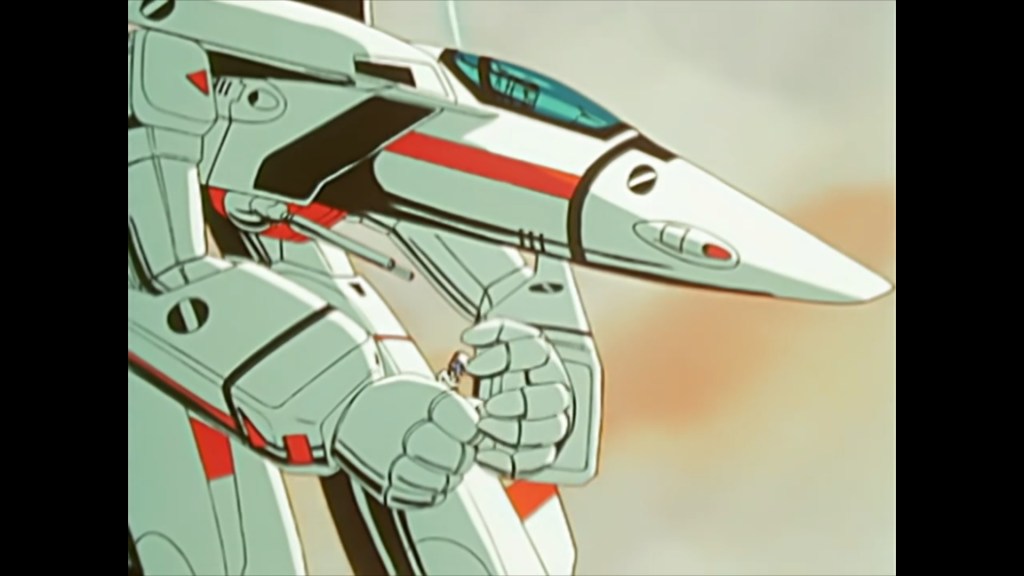
Rick rescues Lisa in the fist of his guardian recalling similar events and imagery when Rick rescued Minmei in Episode 2. The mecha may be a barrier to intimacy as Rick does not physically touch Minmei or Lisa in these rescues. Furthermore, mecha may be viewed as an in-universe modern fictional version of medieval armor. In this sense, Rick may represent a Knight errant. Rick’s orders to rescue Lisa represent his fifth chance meeting with Lisa. Rick will eventually rescue Lisa five times. See List 17 at the end of this essay for a summary of Rick’s rescues of Lisa.

Prior to the destruction of Mars Base Sara, the imagery of an abandoned base will be reinvented in DYRL when Hikaru (Rick) and Misa (Lisa) explore post-apocalyptic Earth. This is discussed in the synopsis for Episode 23.

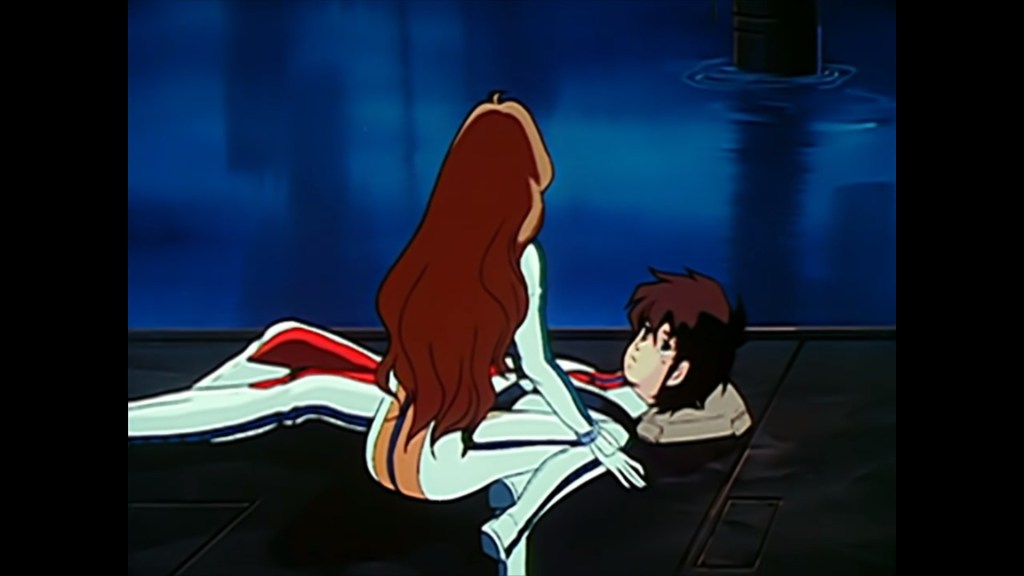
In this episode Lisa explored Mars Base Sara looking for survivors and the source of a received transmission. The destruction of Mars Base Sara is a symbol of Lisa’s inability to let go of her past. She does not reconcile her unresolved emotional traumas through a normal grieving process, but instead is involuntarily torn from her past by Rick. The explosion symbolizes the psychic trauma of her begrudging acceptance, mental assimilation, and heartbreak at the realization of the absence of survivors. While the ghost of Karl Riber will later be resurrected in a likeness with Kyle, for the most part Lisa turns the page on this chapter of her life. There is also foreshadowing when Rick is the one to wrest Lisa from her burdensome emotional baggage. Additionally, there is symmetry with Rick forcing Lisa to emotionally mature at Mars Base when he symbolically rescues her from her past, and, in Episode 12, Lisa metaphorically forcing Rick to develop romantically when she rescues Rick from Minmei’s unreciprocated love symbolized as his unseen drowning while unconscious. This is discussed in the synopses for Episodes 4 and 12.
Lisa’s arrested romance for Karl is a theme which will provide continuity in Robotech. In the third Robotech war Scott Bernard (Stick Bernard) will similarly yearn for Marlene (Marin), his fiance. Additionally, Kyle will resemble Karl, and Ariel (Aisha) will resemble Marlene.
Khyron is thwarted for the first of eight times. See List 18 at the end of this essay for a summary of Khyron’s military failures.
Episode 8: Longest Birthday in SDF Macross and Sweet Sixteen in Robotech
This episode is named for Minmei’s birthday. The AnimEigo DVD liner notes state the SDF Macross title is an allusion to the 1962 live action World War II film “The Longest Day” as the team at Studio Nue were fans of World War II films. There are references to World War II in Episodes 1, 5, and 15. Also, the SDF-1 may stand for Self Defense Force which is the name of the Japanese military since 1954. From a Japanese perspective, the Zentreadi may symbolize the invading Allied forces. The post-apocalyptic reconstruction story arc of Episodes 28 to 36 may have been inspired by life in post-war Japan. This series may also portray allegories for militarism, globalism, capitalism, foreign culture, Westernization, culture shock, and nuclear holocaust. These may all be associated with Japan’s experiences in World War II. Assuming the Zentreadi are an allegory for occupying Allied forces in World War II, there is one glaring difference. The Allied forces likely westernized the Japanese Islands. In this series, the micronians as Japanese surrogates, “westernize” the Zentreadi. This may be an egocentric prejudice or revenge fantasy by the creators of this series. Additionally, an out-of-universe irony arises in the embodiment of Western culture in this Japanese series as evidenced in written English language in the background of most scenes and Western military hardware providing inspiration for the veritech aircraft design. This ironically demonstrates Western culture was embraced and coopted by Japan, an Eastern society, which now claims it as their own. In another strange irony, not only was culture a transformative in-universe force but, from an out-of-universe perspective, this series actually became a Japanese cultural phenomenon. In Japan, a subculture of anime enthusiasts labelled Otaku was forming at the time of the debut of this series. SDF Macross greatly increased their passion and enthusiasm. Harnessing this momentum, Robotech and the fanzine “Protoculture Addicts” clearly demonstrated the conquest and worldwide victory of Japan’s culture mirroring the plot of the series itself.
The Zentreadi may also be commentary on the Allied forces as lacking culture, violent war mongers, and single-minded. However, this suggestion contradicts the out-of-universe infiltration of Western culture into Japan beginning with the occupation of Japan as some Japanese may have envied the culture of the occupying forces. Therefore, the Zentreadi are not strict allegories for the Allied forces. It can be assumed post-World War II Japanese society viewed the culture of the Allied forces as possessing both negative and positive attributes and at times seemingly devoid of culture. This perception of the occasional absence of culture may have inspired the fictional Zentreadi.
An alternate interpretation seen through the lens of World War II may define Rick as an allegory for Japan and Roy as an allegory for the Allied forces. Rick began this series as a pacifist and eventually experiences self-realization as a reluctant warrior possibly symbolizing Japan’s choice to restrict their military to self-defense as opposed to imperialism. Roy’s death may symbolize the 1952 withdrawal of occupational forces and the return of sovereignty to Japan forcing Rick as a surrogate for Japan to embrace his new militaristic role in this vacuum. In Episodes 29 and 31 Captain Gloval and Exedore discuss humanity’s penchant for war possibly implicating the Japanese people. Rick as their surrogate resists this implication and another crew member counters Rick.
In addition, the initial crash of the SDF-1 on Macross Island may be a visual symbolizing the psychic trauma of the two Allied nuclear attacks on Japan in 1945. This would define the protagonists of this series as similar to the resilient out-of-universe people of Japan after these bombings. Macross Island may be a microcosm for Japan and the crash of the SDF-1 may symbolize the destruction of nuclear bombs as well as the impact of culture clash. Dolza’s annihilation of Earth may also by a psychic visual of the events of 1945. SDF Macross could be placed in a broader context of post-World War II Japanese media which evidences Nuclear Suffering Denial Syndrome, psychic numbing, submissive culture, Japanese authoritative culture, compliance, highly ordered society, rigid social structures, and a victimhood mentality. Thus, the series may be based upon a sympathetic or controversial reshaping of history in which the crash of the SDF-1 on Macross Island is symbolic for the nuclear attacks on Japan and Allied occupation which followed and brought beneficial technology and culture.


Another World War II reference appears on a vinyl record titled The Super Dimension Fortress Macross Vol. III MISS D.J. released June 21, 1983. Minmay (Minmei) references World War II and sings the 1939 song “Lili Marleen.” In an initial character synopsis in the possession of Tatsunoku Production Company Limited, annotated by Carl Macek, and published in 2017 as a commemorative script book for Robotech it is stated Minmei is Lili Marleen in space. This analogy is also referenced in the Character Notes section of the AnimEigo DVD liner notes. Lili Marleen is a fictional character and the subject of a song in which a soldier yearns for her company. Interestingly, this song appealed to both Allied and Axis forces in World War II similar to Minmei’s appeal to both micronian and Zentreadi forces in the first Robotech war (Space War I). In Robotech Episode 46: Star Dust (Adapted from Episode 10 of SDCSC) a character named George Sullivan mourns his sister Marlene. They were an unrelated romantic couple in the original SDCSC version. In the third Robotech war adapted from GCM Scott Bernard mourns for his girlfriend Marlene. Later, Scott’s romantic interest and Invid simulagent is named Marlene. The Marleen referenced in the out-of-universe World War II song is not a singer and is not deceased. However, Minmei and these three Marlenes bear some resemblance to her as they are all idealized objects of affection in the eyes of male soldiers. These allusions to Lili Marleen are strongest in the Robotech adaptations as the character’s names in the original Japanese episodes are Marin in GCM and Mireinne in SDCSC.

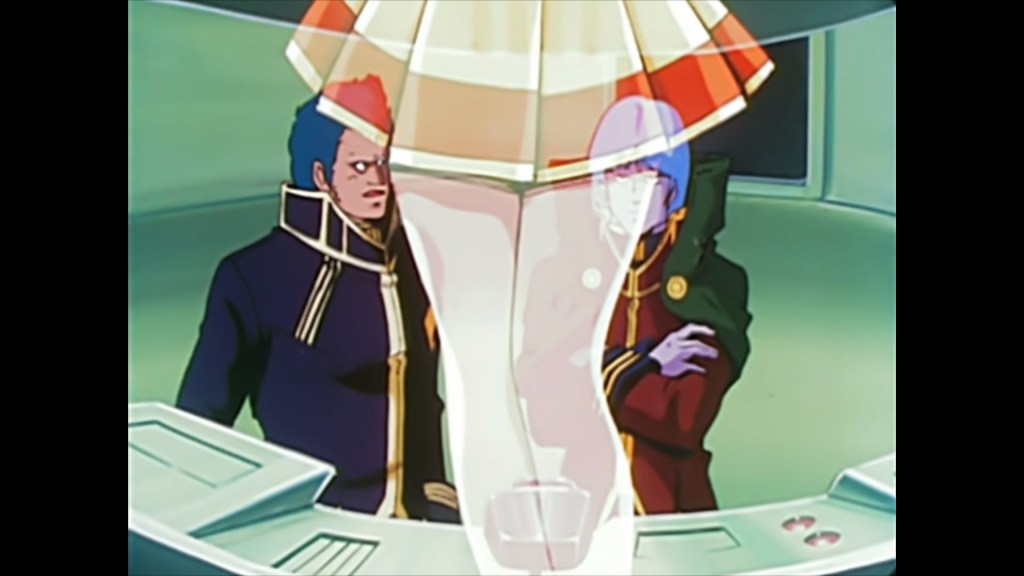
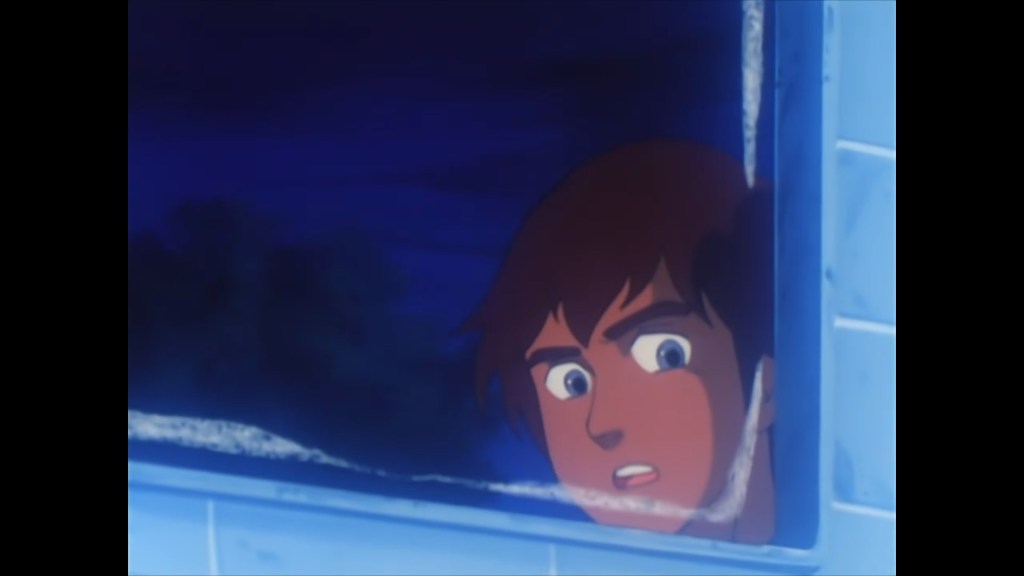
In addition to demonstrating the assimilation of Western culture, the presence of English language signage in the backgrounds throughout this series vaguely reflects the phenomenon of the male gaze. The male gaze is the gaze of the out-of-universe male audience members or consumers of any form of art. The Japanese creators of this series were likely cognizant of the profit motive and the business model of syndicating animation to an international market. While the profit motive pressures the conscious process of the creators to cater to the male gaze, the male gaze also often inserts itself into art subconsciously. The white gaze and the male gaze are the two most ubiquitous forms of this phenomenon across all acts of creation. The intended international market for this series can be subcategorized from white gaze to the European or Western gaze. This intentional conscious accounting for the male gaze portrayed by English language signage allows the creators of this series to maximize their profits. When the male gaze is consciously acknowledged during the process of creation, it is very similar to the concept referred to as fan service. Tangentially, Roy and Khyron portray an in-universe male gaze or leer in Episodes 1 and 27 as surrogates for the out-of-universe male gaze. The profit motive and expectation of international syndication may also have spurred the inclusion of a multi-ethnic cast of characters specifically with Roy, Claudia, Kim, Captain Gloval, and Vanessa. As previously mentioned, Roy especially seems to represent the West, and Minmei’s lineage and culture bridges Japanese and Chinese cultures.
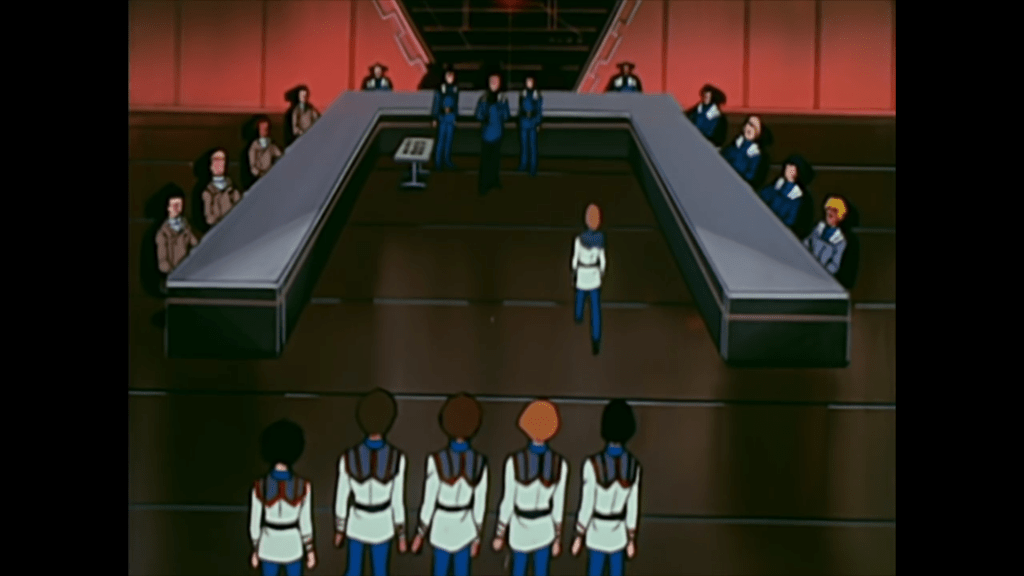
Rick is summoned to a meeting and is the last to arrive. There is symbolism in Roy having a place at the table but Rick remaining standing. Roy is not seated at the head of the table but at the end. This illustrates his role as a maverick and renegade within the establishment. There will be further symbolism of meetings from Episodes 13 to 32. See List 19 at the end of this essay for a summary of multilateral meetings in this series. Between Episodes 8 and 31 the choreography or mise-en-scène of these meetings will symbolize Rick’s evolution as he will go from standing at attention to sitting among peers at a round table. The imagery of conferences spanning these episodes may also be commentary on political progress from a military dictatorship to an egalitarian representative democracy, or, alternatively, an absentee authority to a local and possibly self-governing society. Likewise, the imagery of these meetings could be a surrogate for parental authority as perceived by young adult viewers progressing into adulthood.
Ben (Kakizaki) Dixon and Max are introduced. Max may be an Anti-Rick or alter ego. In this episode Minmei’s special interest in Max is reciprocated, and, while Rick shrinks from singing to Minmei, Max volunteers. Max will go on to quickly succeed in love and marriage while Rick remains indecisive and in constant torment. Max’s character design allows Rick to learn the lesson of envying an individual while remaining friends. As Max’s genius and skill are revealed, the audience is able to identify with Rick as an everyman and audience surrogate. Over 36 episodes this series will present variations of doppelgangers, archenemies, antagonists, counterparts, and alter egos. Roy’s leering at Minmei, his confrontation with Captain Gloval, his superior officer, about searching for Rick in Episode 4, his obsession with his combat record, and his hedonism all position Khyron as his counterpart and Rick’s foil. By default, if Khyron is Ricks’ foil, Azonia becomes Lisa’s counterpart. Khyron will go on to portray the Anti-big brother (Anti-senpai) as discussed in the synopsis for Episode 32. Minmei has dual roles as the Anti-Lisa and the Anti-Dolza. Lisa sees Kyle as a doppelganger for Karl Riber. Rick sees Kyle as his romantic rival for both Minmei and Lisa. Kyle is similar to Admiral Hayes as each character stubbornly refuses to moderate their extremist views. Colonel Maistroff similarly resembles Kyle’s opposite except for his cordial welcome of Exedore aboard the SDF-1 in Episode 26. Admiral Hayes is the Anti-Kyle which is interchangeable with the term Anti-Karl. Breetai is Captain Gloval’s archenemy and Exedore and Claudia are counterparts in their roles as advisors. The Bridge Bunnies are somewhat matched or balanced with the three recon scouts appearing in the next episode. Sammie, Grel (Oigul), and Ben’s characters each fulfill similar comic relief roles. Max and Minmei may be viewed as the alpha male and alpha female. Minmei seduces all male Zentreadi and Max seduces Miriya as a surrogate for female Zentreadi. Admittedly, in Episode 15 several female characters will swoon over Kyle which seems to pair him with Minmei. However, Max and Minmei anchor larger story arcs while Kyle veers more closely to a plot device used to provide tension and not an alpha male. The symmetry between Max and Minmei is further discussed in the synopsis for Episode 24. Interestingly, in DYRL Max and Minmay (Minmei) are each abducted by Zentradi (Zentreadi) and Meltrandi (female Zentreadi) respectively and seem to possess a hypnotic or seductive power over their captors. See List 20 at the end of this essay for a summary of opposites, equals, counterparts, doppelgangers, archenemies, and alter egos.
Examining character dualities leads to the implication Lisa may have fallen in love with Karl for his similar personality and yet opposite philosophy to her father. This explanation could work for Lisa’s attraction to Kyle as well. While Admiral Hayes and Kyle live to suffer the consequences of their actions, besides his untimely death, Karl does not live to reap the repercussions of his ethos. Instead, Karl enjoys an eternal martyrdom and sainthood in Lisa’s nostalgically biased recollections. Karl escapes the trajectory of Admiral Hayes and Kyle both of whom lose sight of their values due to their narrow focus on their larger personal philosophies. The repercussions of this tunnel vision being Admiral Hayes’ death and Kyle’s failed relationship with Minmei. As Lisa and Rick eventually become romantic, it may also be implied Rick, Kyle, Karl, and Admiral Hayes all share similar traits. Only Rick managed to master these traits and manifest a functional philosophy. Lisa recognized these traits in Rick as attractive qualities in a mate. While the series states Kyle resembles Karl in-universe, the youthfulness of the Kyle character in Lisa’s flashback in Episode 7 somewhat resembles Rick’s youth in the earlier episodes of this series from an out-of-universe perspective.
In SDF Macross Max Jenius’ last name is an allusion to his combat genius. In Robotech his surname Sterling is an allusion to excellence and value.
While Khyron adds tension to this series through treachery, Ben will cumulatively add tension to this series through incompetence in combat. He is often in need of assistance and is a burden on Rick’s command.
The Mayor warns Rick against Max seducing Minmei. Previously, in Episode 5 of Robotech, Roy similarly warned Rick about Minmei and men in uniform. This increases Rick’s paranoia and insecurity.

Rick and Khyron face off in their mecha and each severs the mecha arm of the other symbolizing a kind of stalemate or symmetry. Breetai recalls Khyron using a type of manual override beam (wide area beam signal). The manual override beam is a loose example of the deus ex machina plot device. The contrast with the deus ex machina is the plant-and-payoff or “Chekhov’s Gun” trope. The transformation exhibited in Episode 5 is an example of the plant-and-payoff. Dr. Lang’s dialogue at the beginning of Episode 5 provided exposition for the transformation, and, at the end of the episode, Captain Gloval executed the procedure. This can be restated as Dr. Lang plants the concept, and the firing of the main gun is the later payoff. In this episode the manual override beam was never planted and never referenced again making it a deus ex machina.
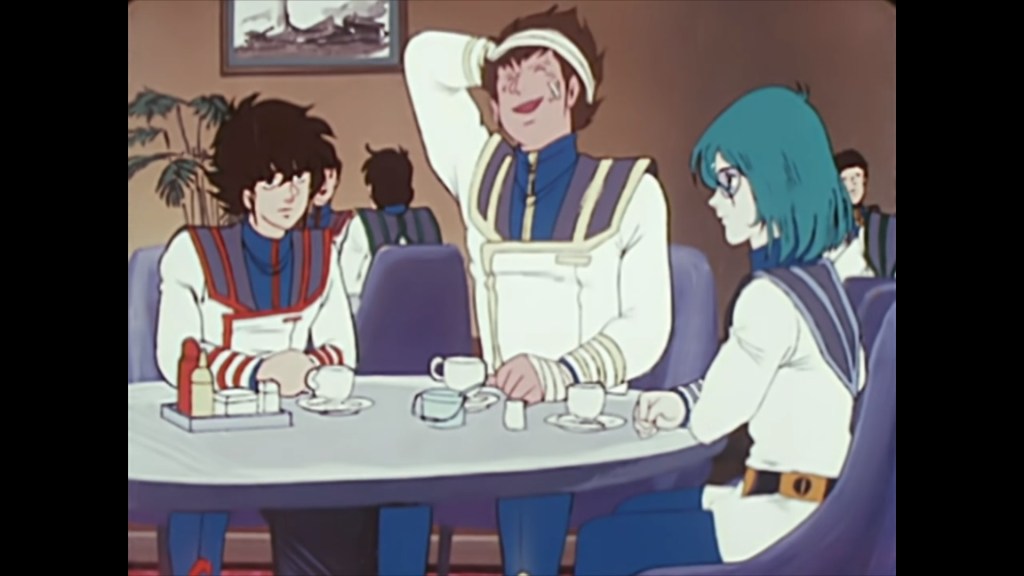



Ben is shown with a bandaged head. Later, Rick will be bandaged in Episodes 17 and 18. Kyle will be bandaged in Episode 24. These may all portray the “Bandage Babe” trope. Additionally, Robotech Episode 61: The Invid Invasion (Adapted from Episode 1: Prelude to the Offensive) will show Scott Bernard with a bandaged head, Episode 70: Enter Marlene portrays Rand (Ray) with a bandage, Episode 76 portrays Rook (Houquet et Rose) bandaged, and Rand is bandaged in Episode 85.


Minmei is at her second-story window as Rick throws a gift to her portraying the “Balcony Wooing Scene” trope. This trope implies a distance between the two characters and a lack of interest on the recipients end. A role reversal has occurred as previously, in Episode 2, Rick was looking down on Minmei from atop his battloid. Now Minmei is on a symbolic pedestal and looks down upon Rick. Later, in Episode 34, Minmei will give Rick a scarf for saving her life. This brings balance to the exchange of gifts between Episode 8 and Episode 34. An alternate interpretation may be in Episode 4 Minmei took Rick’s scarf to use it as a wedding veil and in episode 34 she replaces it. Another balanced exchange of gifts will occur in Episode 21 between Rick and Lisa.
Episode 9: Miss Macross
This episode is named for the Miss Macross Contest.
The Robotech version of this episode begins with the first few seconds of the theme song for Space Fortress (two words) Macross. This was a pre-Robotech pilot of Episode 1.
The Mayor submits Minmei’s application for the contest. Thus, Minmei maintains her coy innocence and ingénue status as she is a passive participant in events around her. See List 21 at the end of this essay for a summary of instances portraying Minmei’s passivity. While ingénues are by definition female in gender, Max portrays all the qualities of an ingénue as a member of the male gender, continuing his symmetry with Minmei as discussed in the synopsis for the previous episode. Rick’s character flirts with ingénue status but the indicators more strongly resemble unintentional intimacies.
Rico states the codename of their recon mission is Blue Wind. Episode 13 will later be titled Blue Wind but its repetition likely has no significance. The Episode 13 title likely refers to an ocean breeze as the SDF-1 splashes down in that episode.
Zentreadi curiosity about micronians may be an allegory for Rick’s curiosity about Minmei.
The grand prize of the contest is a fanliner airplane. This foreshadows Minmei’s victory as this plane could replace Rick’s destroyed fanjet. This prize also creates plot tension as the out-of-universe audience would like to see Rick restored to his former self. Minmei is somewhat responsible for the destruction of Rick’s fanjet and winning this fanliner would erase her debt to Rick.
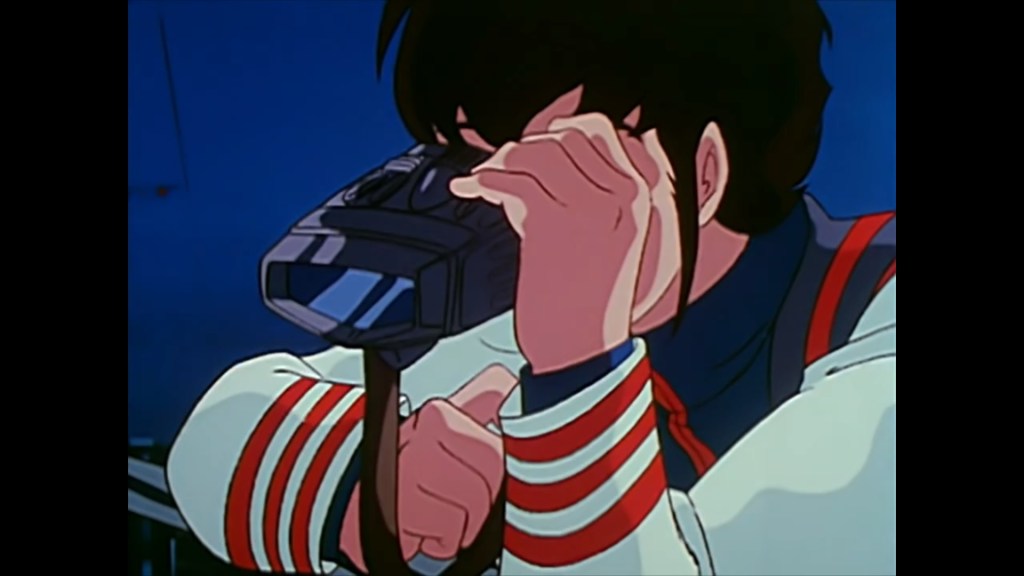
Rick watches the pageant through binoculars shaped like the visor of his veritech. He resembles a micronian sized veritech in battloid mode. This strengthens the identity of Rick with his veritech.
Lisa’s constant interruptions foil Rick’s desire to see Minmei which foreshadows Lisa’s later intrusion into this romantic relationship.
Rick’s opportunity to see Minmei in her swimsuit is interrupted when he almost crashes into an enemy recon vessel due to his distraction and intense anticipation. This harkens back to the ceiling explosion interrupting his kiss with Minmei when they were marooned together. Next, Rick takes the brunt of a barrage of exploding missiles and this is instantly juxtaposed with Minmei falling onstage in her swimsuit. Rick and Minmei become analogies for each other. See List 22 at the end of this essay for a summary of analogies between Rick and Minmei in this series. Rick’s near collision with the recon vessel portrays the “Distracted by the Sexy” trope.
In the subtitled dialogue for SDF Macross Rick states, “I can’t believe these guys,” and Rico states, “I can’t believe this guy.” This portrays the “Not So Different” trope. In the ADV English dub of this episode Rick states, “These guys are nuts” and the element of a common humanity is lost. In Robotech this dialogue is absent. The trope barely exists in Robotech as Rick and Rico are juxtaposed exclaiming “Fire!” This commonality is lost in the ADV English dub as Rick states, “Now!” and Rico states, “Plow through them!” In the AnimEigo English subtitles Rick states, “Go!” and Rico states, “Punch through them!” When translating from one language to another the dialogue must match the animated lip movements and mouth shapes. The vocalizations of English words which begin with the sounds for the English letters B, P, and M match a certain mouth shape which forces the authors to write dialogue so as to contain words which match this particular mouth shape.

This episode also portrays an ideal example of the “Macross Missile Massacre” trope and the “Roboteching” trope. These are also referred to as the “Itano Circus,” named for their creator, Ichiro Itano. The missiles from Rick’s armored veritech and most missiles in Robotech could be viewed as subconscious sexual imagery as they may resemble male reproductive fluid. This episode also portrays the “Quivering Eyes” trope. Rick’s eyes quiver after his missile massacre on the recon vessel. The trope usually implies tears or emotion but here it emphasizes Rick’s hyper-acute combat focus. Minmei’s entire body quivers when she falls onstage implying pain.

Earlier in this episode Rick asked Minmei on a date and she rejected him because she was scheduled to work at her Uncle’s restaurant. Later, Rick chooses an armored veritech for his assignment. The veritech may symbolize Rick and the armor may symbolize emotional armor. At one point in the battle the armor is either destroyed or jettisoned. Thus, Rick sheds this armor to participate in intimate combat which may be a metaphor for vulnerability in courtship. Rick is the organic animating force of his inorganic veritech which itself is a barrier to intimacy. To be more specific, Rick is the animated animating force of his veritech. The veritech as a barrier to intimacy was previously discussed in the synopsis for Episode 7. The synopsis for Episode 2 discussed the possibility of the trainer veritech’s transformation into battloid mode representing Rick’s own prepubescent body’s hormonal transformation further strengthening the metaphor between Rick and his veritech. Also, Rick’s merged identity with his veritech is hinted at earlier in this episode by the shape of his binoculars. Finally, the colors of Rick’s uniform are somewhat similar to his veritech’s color scheme. Upon achieving penetration and intimate relations with the recon vessel, Rick is consumed in an explosion and almost killed. This may foreshadow the outcome of any future relations with Minmei. Admittedly, linking the armored veritech and the recon vessel’s destruction with Rick’s emotional defense mechanisms and the romantic risks of intimacy with Minmei respectively requires a leap of faith and imagination on the part of the readers of this essay. Also, contrary to this proposal, this episode synopsis has already suggested and goes on to provide evidence for Rick and Minmei as analogous in this episode. Therefore, this essay proposes two simultaneous and inconsistent character metaphors. These two metaphors are the overarching primary symbolism portraying Rick and Minmei as analogous as well as a brief sequence of the two characters symbolized as independent hostile entities. In this brief sequence Rick’s veritech epitomizes Rick and the recon vessel epitomizes Minmei. The readers of this essay may disagree with this suggestion, take these images at their superficial face value, and assume the artist simply inserted the armored veritech for strictly aesthetic reasons. It may be simple luck, coincidence, wishful thinking, or over-analysis which frames this scene as plot development occurring within the medium of visual images without the need for audio or dialogue. Alternatively, the readers may accept the ability of these images to reinforce the plot by acting on the viewers’ subconscious minds. Likewise, the creators of this series may have written this scene with intent and knew the intended effect may work either consciously, subconsciously, organically, or inorganically. These moments of artistic genius may owe their creation to the artists’ talent and ability to channel and express the unconscious mind directly to the viewers either with or without the artists’ conscious knowledge or with or without the viewers’ conscious knowledge. The images simply translate. Framing and aesthetics supersede the dialogue.
Coincidentally, the armored veritech literally portrays a trope titled “Plot Armor” which is also referred to as “script immunity” or a “character shield.” These concepts describe how the nature of plot and fiction insist the main character cannot die. Minmei’s swimsuit may also be plot armor as in Robotech the Zentreadi speculate it may be a new form of skimpy armor. SDF Macross refers to it as a combat suit.

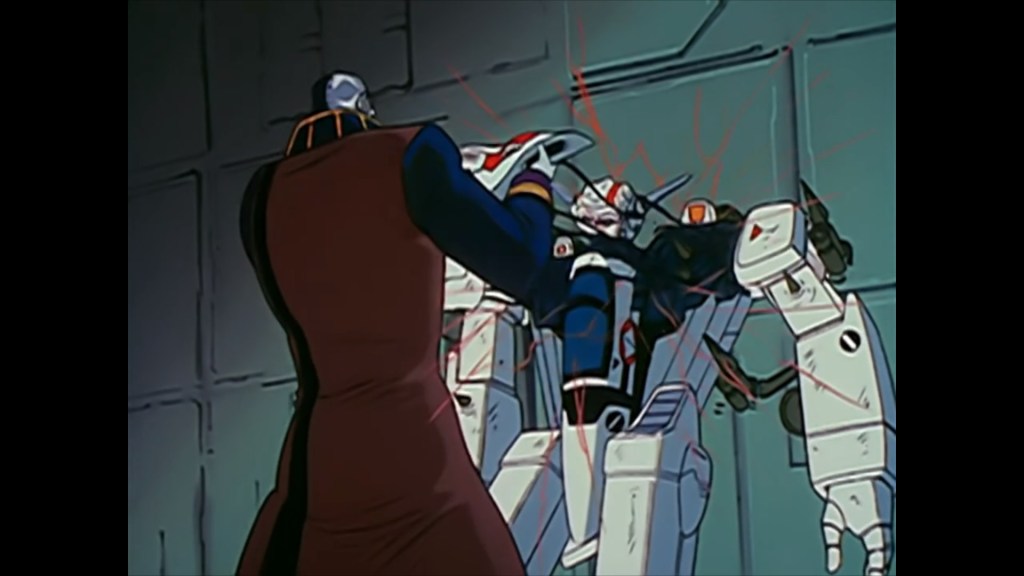
Rick penetrates inside the recon vessel. Rick previously entered a Zentreadi vessel in Episode 6: Daedalus Attack. Rick enters the recon vessel by pressing through the fuselage with his veritech’s feet. Tearing through metal becomes a recurring image in this series. Next, Breetai will tear apart Rick’s veritech in Episode 11: First Contact. DYRL portrays the tearing of metal in Roy’s death scene and when Hikaru (Rick) locates Minmay (Minmei) but is pulled into the vacuum of space.



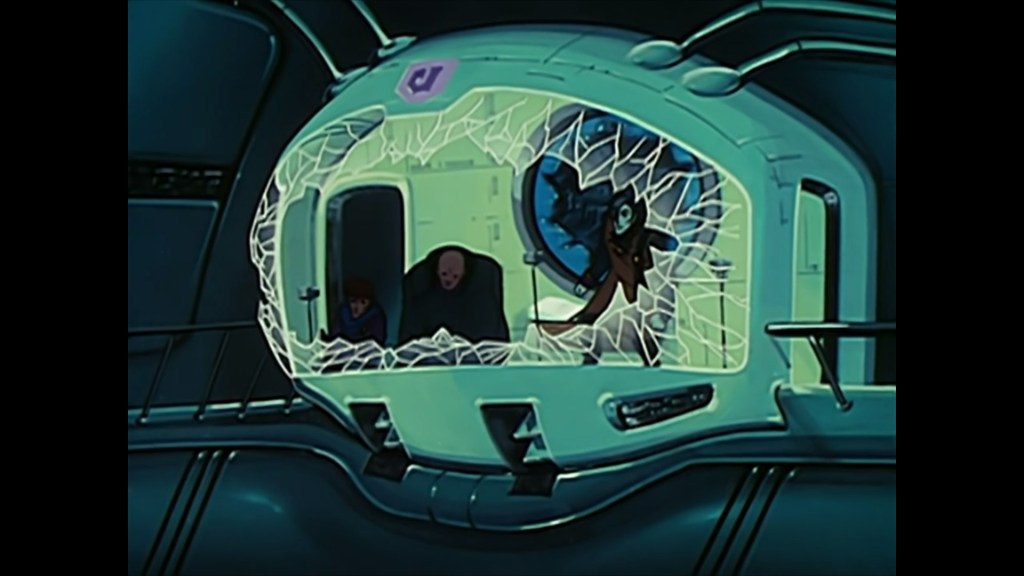
In this episode metaphors for the physical act of love are portrayed in a 30 second scene. Rick and Minmei seem to consummate their relationship in a symbolic sense. As the recon vessel first fires missiles at Rick, the frame zooms in on his right flight controller stick and then cuts to a panning shot using the point of view from between Rick’s legs looking up at the same stick. Rick’s targeting system is reflected in the visor of his helmet and when the target aligns he pulls the trigger and shoots the incoming enemy missiles with his gun pod. Instantly, Minmei falls onstage and in SDF Macross she says, “It hurts,” but there is no dialogue in Robotech. She later has trouble walking due to a broken shoe but perhaps more than her shoe was symbolically broken. In Episode 12 Max will shatter Breetai’s observation glass in a similar metaphor as it relates to Miriya or the Zentreadi race. The symbolism of the 30 second scene referenced in this paragraph is more obvious in the SDF Macross version as there is no musical score or dialogue, and the viewer is allowed to focus on the imagery without distraction. This is very similar to the ethereal score used in Episode 2 during Minmei’s freefall. In the Robotech version of this scene the symbolism and emotional impact is lost due to dialogue by Rick and Minmei and a military musical motif playing in the background.
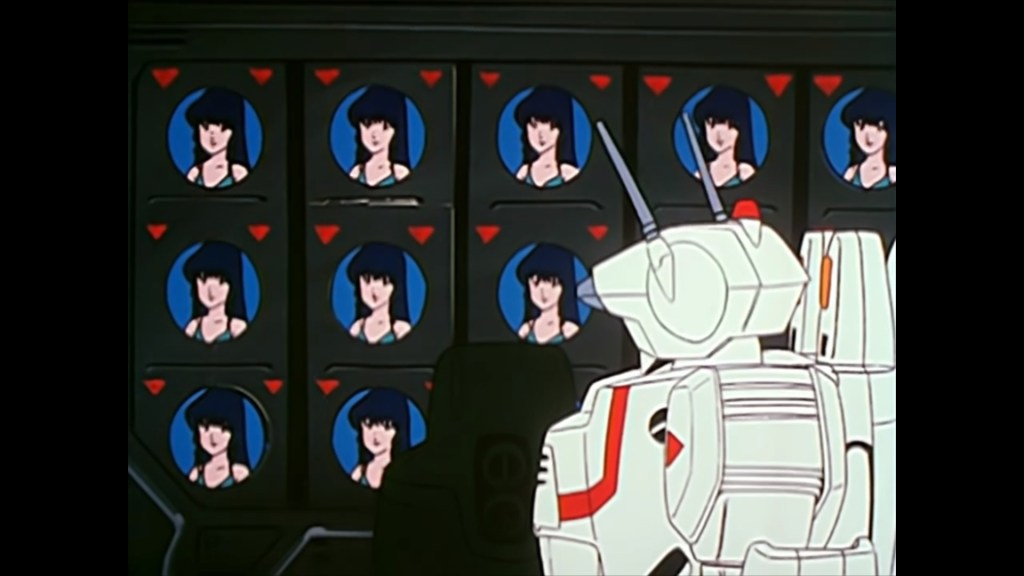
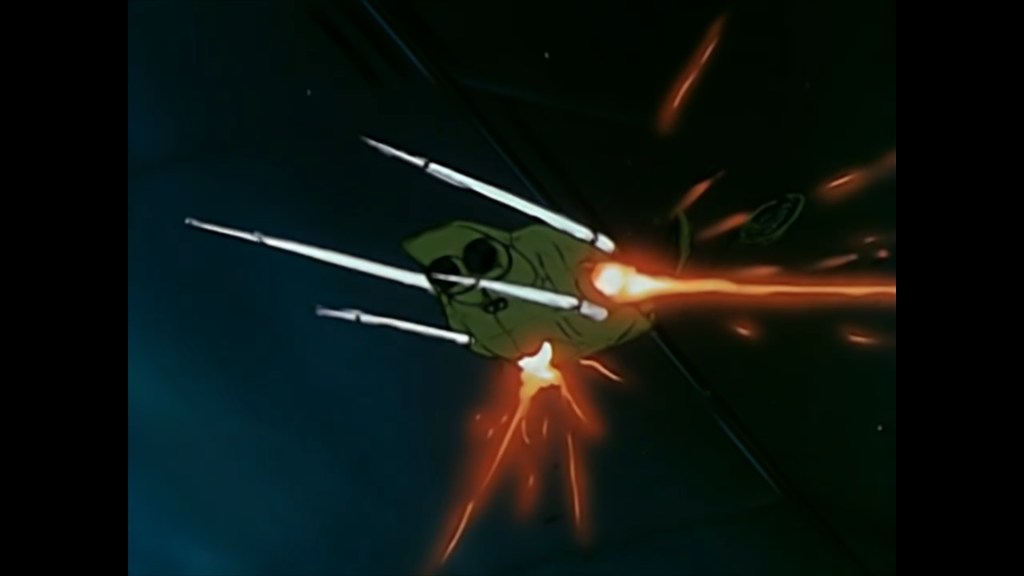

While Rick is inside the recon vessel he stands in front of a wall of monitors displaying Minmei. With the recon vessel itself symbolizing Minmei, this imagery represents Rick penetrating Minmei’s subconscious. This is her control center or control room similar to the imagery of the parachute tent discussed in the synopsis for Episode 4. Rick’s brief intimate access here is met with disaster and an explosion. Later cinematic visualizations of the subconscious are depicted in the snow fortress scene of the 2010 film Inception and the architect scene of the 2003 film The Matrix Reloaded.
The recon vessel fails to retrieve any data as the ship is destroyed. This will become a pattern in this series as next Lisa will break her spy camera in Episode 12: Big Escape. With the failure to record any footage, the Zentreadi are left to their own devices in attempting to understand the live broadcasts from the SDF-1. This is a trope titled “Aliens Steal Cable.” It is used to hilarious effect in the 1999 Tim Allen film Galaxy Quest. It will occur again from Episodes 21 to 26 with Minmei’s film Small White Dragon and the broadcast of Max and Miriya’s wedding in Episode 25.
As previously stated in the Episode 7 synopsis, Roy tells Max and Ben the contest is rigged. This statement is dual purposed as it continues the subversive tone of this series but also adds to the viewers’ suspense which serves to heighten the triumph the viewers vicariously experience through Minmei’s cathartic victory. Furthermore, Minmei’s fall during the swimsuit competition adds to the dramatic suspense of the contest.
In this episode, Rick is victorious and recovers in time to witness Minmei victorious and recovered from her earlier fall onstage. Again, Rick and Minmei were analogies for each other throughout this episode amplifying the viewers’ experience of anxiety and eventual resolving victory. Minmei’s underdog victory foreshadows the asymmetrical victory of the SDF-1 against overwhelming odds.
Interestingly, this episode portrays a growing distance between Rick and Minmei both physically and emotionally. From the physical point of view, this episode begins with Rick and Minmei together in a cafe. Then, they are on the phone together. Next, Rick watches her from outside the stadium. Soon, Rick watches her from space. Finally, he watches her from the edge of life and consciousness.

Jan Morris’ loss to Minmei continues a theme of punishing arrogance and overconfidence. This is seen throughout this series in all of Khyron’s arrogant and frustrated attempts to destroy the SDF-1. This will also be demonstrated in the fate of Admiral Hayes and the Grand Cannon. Finally, Dolza, Breetai, and Exedore’s overconfidence is eventually crushed in one way or another. Jan Morris also embodies the “Alpha Bitch” trope which serves to contrast with and inspire sympathy for Minmei. Additionally, Minmei’s defeat of Jan Morris may represent an out-of-universe egocentric victory for the Asian culture in an East-versus-West matchup. Minmei will also bring a symbolic victory for the East when she defeats Dolza in Episode 27. Similarly, Rick will symbolize the East replacing the West when he fills Roy’s absence in Episode 19. In Robotech’s later episodes Dana Sterling, George Sullivan, Rook, Rand, Annie, Carla, and Mayor Donald Maxwell (Dogarbo) are also symbols of the West.
Continuing the Rick-Minmei analogies, Rick was awarded a medal in the previous episode, and Minmei was crowned in this episode. Each has been recognized by their peers. In addition to the trophy and crown, Minmei wins a fanliner which harkens back to Rick’s fanjet shown in Episodes 1 through 5. Minmei’s trophy topper is a miniature winged ingénue the wings of which share a silhouette of a super veritech in guardian mode or the SDF-1 in battloid mode with the main gun booms raised as vertical mecha fins. Thus far, four of five levels of scale have been revealed ranging from the trophy topper, to Minmei, to a veritech, to the SDF-1.
While Roy was jaded and assumed Jan Morris would win, his in-universe perspective is unaware of the out-of-universe notion of “plot armor” which propelled Minmei to victory as it protected Rick from the explosion of the recon vessel. Sadly for Roy, his character only possesses “sub-plot armor” which will soon serve its purpose and expire along with his character.

Captain Gloval was presented as a judge of the Miss Macross Contest. Although the audience was allowed to vote for their favorite finalist, Captain Gloval may have had a hand in shaping Minmei’s meteoric rise to fame. He also later chooses Lisa to be a captain of her own space fortress. His selections almost define him as a divine oracle or prophet in this series.
Episode 10: Blind Game
This episode seems to be named for the Zentreadi attack on the SDF-1’s wide range radar (wide area radar) causing the SDF-1 to fly blind. The title may also refer to Rick and Minmei as they are unable to connect emotionally.
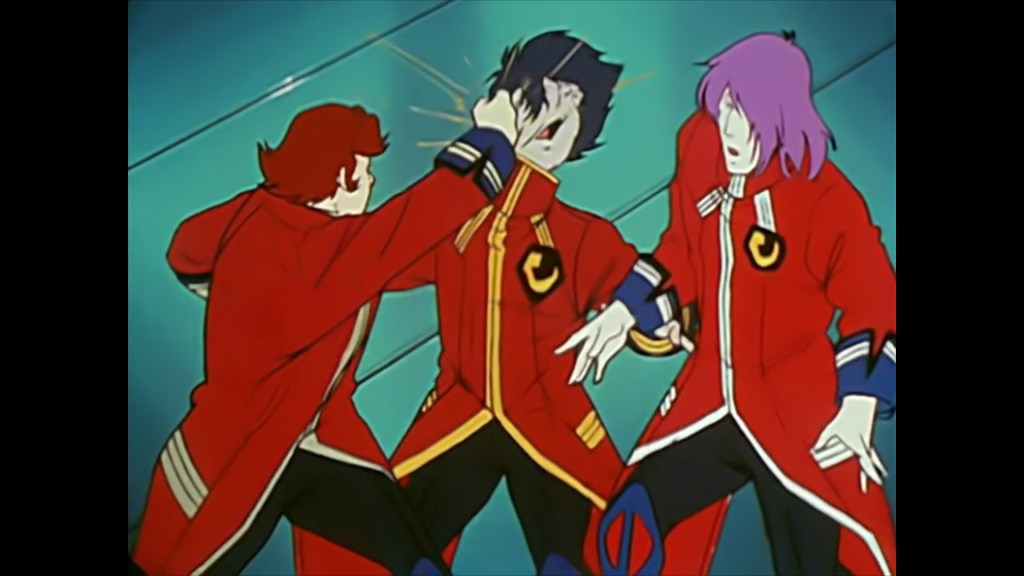
The three Zentreadi recon scouts from the previous episode report their findings to Breetai. Breetai’s eventual coup d’état germinates in this moment as the contagion of emotion takes hold within his forces as evidenced by the squabbling of the three scouts. Furthermore, Breetai’s forces (Adoclas fleet) are an allegory for human male puberty from this point forward as they experience an internal awakening. Rick is likewise maturing along with the Zentreadi. The Zentreadi females are a stereotypical allegory for human female puberty as they seem to be more mature, controlled, knowledgeable, instinctive, intimidating, and stoic. This is exemplified by Miriya onboard the SDF-1 from Episode 21 and beyond as she seems oblivious to human culture relative to the three spies covertly inserted inside the SDF-1 in Episode 12. Puberty as a fundamental theme to the story arc may strike a familiarity and sacred elemental truth with viewers. This may allow adolescent viewers to identify with the fictional characters. While the three Zentreadi are debriefed in this episode, they will be debriefed again in Episode 20 when they are returned to full size after having been micronized.

Minmei attends singing lessons and breaks a date with Rick. Minmei’s social radar may be flawed causing her to be blind to Rick’s feelings. Rick may be blind to Minmei’s flirtatious innocence. They are in a blind game analogous to the SDF-1’s inoperative radar. See List 23 at the end of this essay for a summary of Minmei’s symbolism with the SDF-1. Minmei cancelling this date adds to the mounting evidence of her lack of feelings for Rick. With the piano teacher present, Minmei is again able to maintain her role as a passive participant in events around her. This is similar to the Mayor entering her in the Miss Macross Contest in the previous episode.
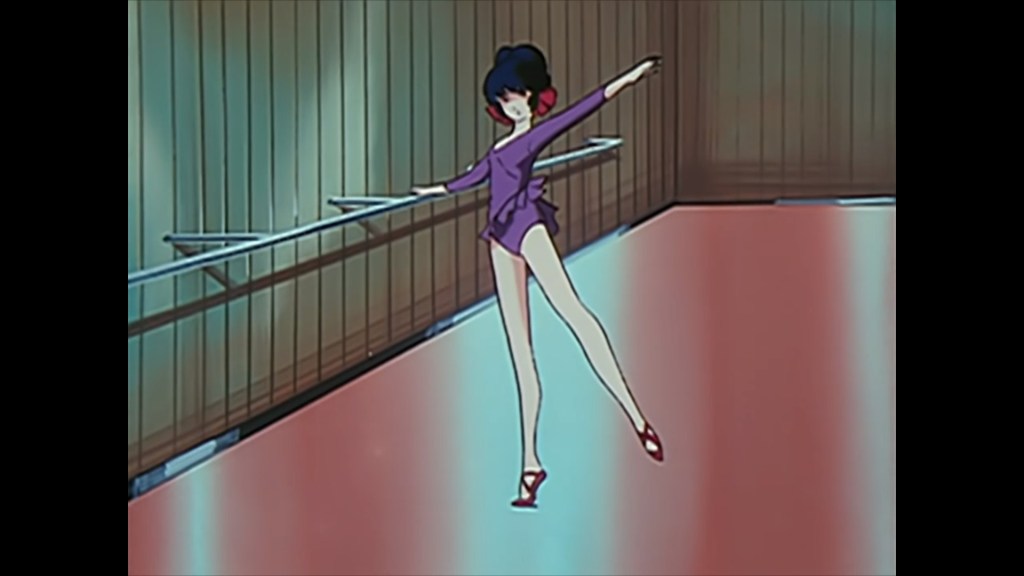
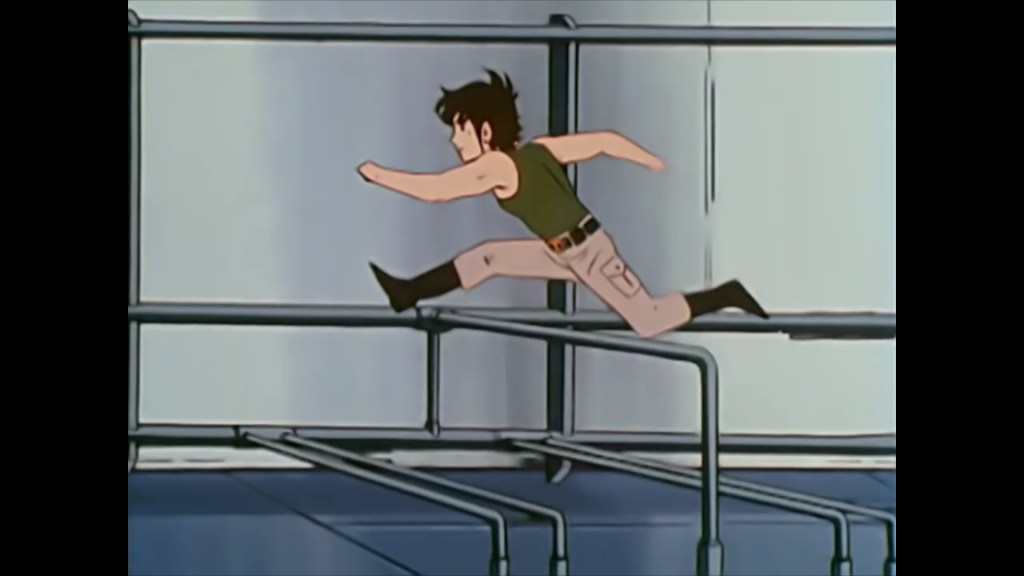

In this episode Minmei is taking singing lessons. There will be a montage of her budding career and further training in the next episode, First Contact. There is a symmetry here with Rick’s boot camp montage in Episode 6: Daedalus Attack. Each character is maturing and acquiring skills. DYRL uses a montage of Rick and Minmei during a date.
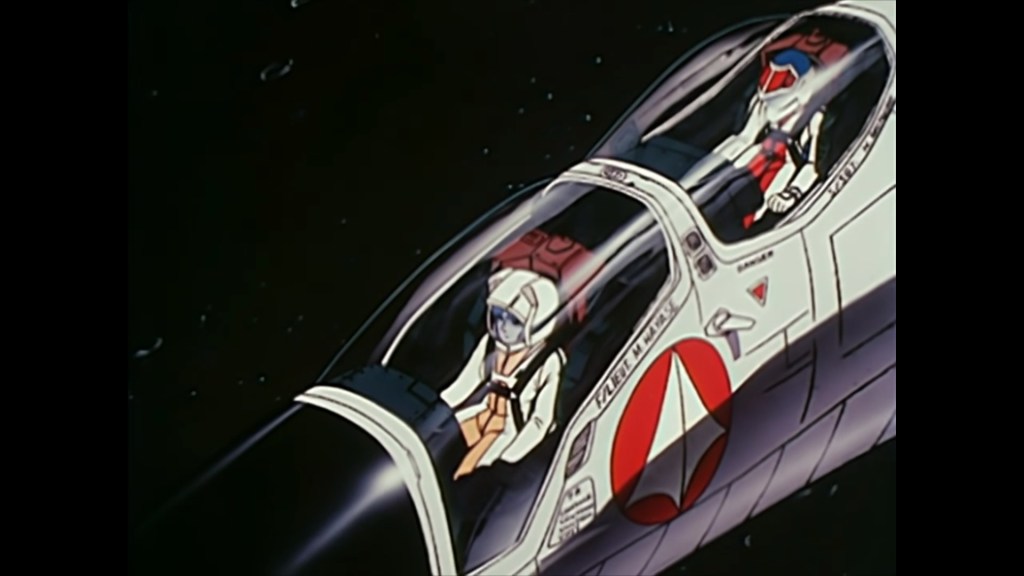
Interestingly, while Minmei took the backseat of Rick’s trainer veritech in Episode 2, Lisa occupies the front seat of the Cat’s Eye recon vessel. These seating arrangements may symbolize these character’s relationship roles. Later, in Episode 25 Miriya will take the backseat to Max.

For the third time, Rick enters a Zentreadi vessel. First Breetai dropkicks Rick’s veritech from an overhead catwalk. After being pushed into outer space, Breetai executes a paragon of an overhead clubbing of Ben’s veritech. Breetai maximizes this overhead swing with a two handed grip, windup, and follow through using all his strength and weight. This imagery is viscerally symbolic of the conflict in this series. Breetai’s assault on Rick and Ben’s veritechs is a quintessential personal microcosm representation of the conflict shown in this series on the macro level between warships. Breetai’s use of a club is the most primitive action with the most primitive weapon summarizing and symbolizing the conflict in the most primitive and simplest of terms. This clubbing bears resemblance to the primitive emotional impact of the Daedalus attack which uses the SLV-111 Daedalus to punch an alien ship.
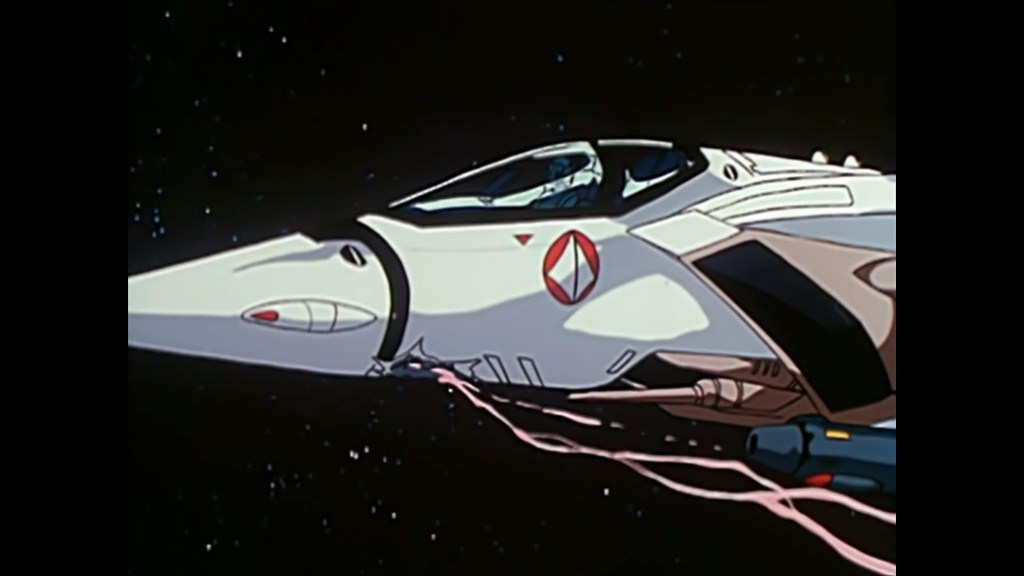
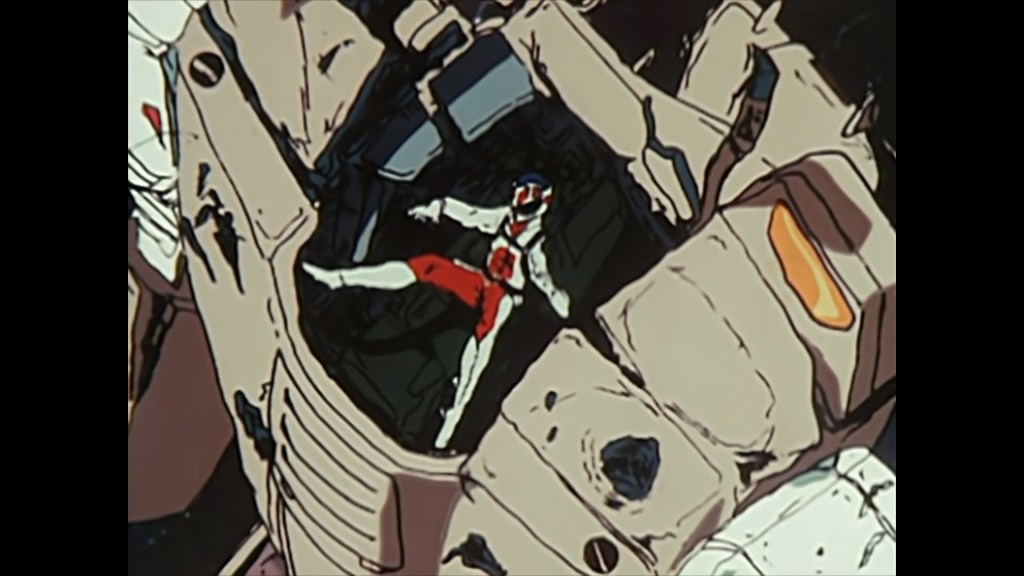
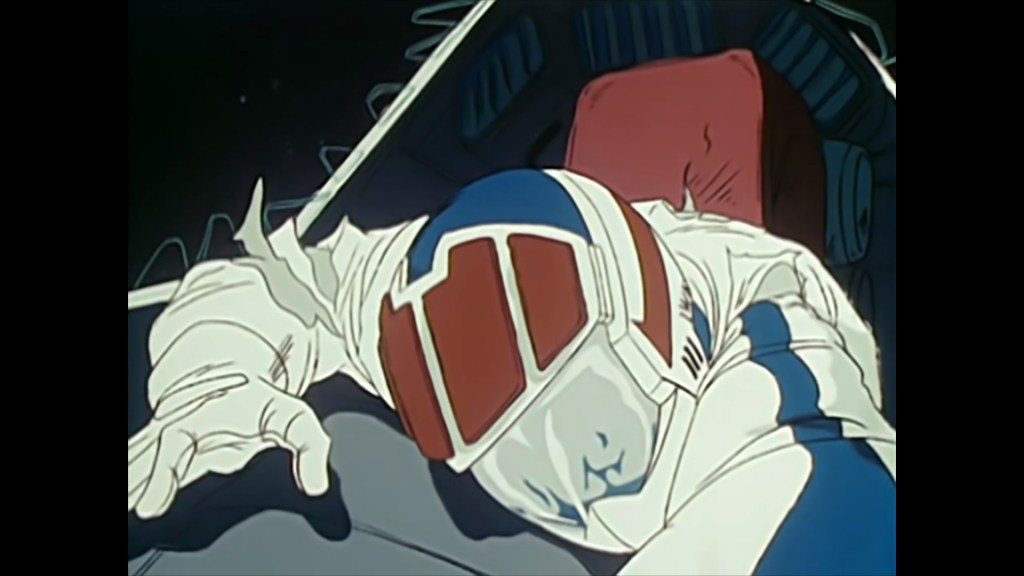
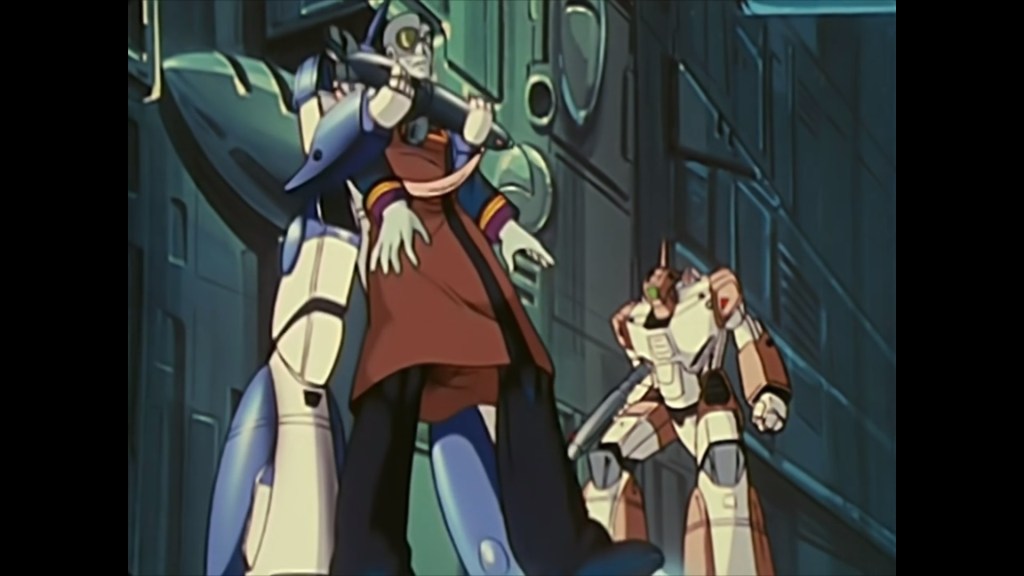
Breetai’s strength is illustrated by his ability to survive the vacuum of space. This portrays the plant-and-payoff literary device. The plant portion occurred earlier in this episode when Rick argued with Lisa over returning to the SDF-1 due to Ben’s damaged veritech. Later, Lisa witnessed a deceased pilot in the wreckage of a veritech drifting past the observation window on the bridge. Still later, the pilot of Lisa’s recon vessel is exposed to the vacuum of space with fatal results. In Episode 4 Rick experienced the vacuum of space while capturing the frozen tuna. Breetai’s imperviousness to space exposure is the payoff portion of the plant-and-payoff.


Imagery in this episode which will later be revisited is the veritech’s head mounted lasers cutting a hole in the ship’s hull. Rick will use this technique in guardian mode to rescue Lisa in Episode 27: Love Flows By.
Episode 11: First Contact
This episode is named for the first contact between the micronian prisoners of war (POWs) and the Zentreadi. In this episode, Rick and Lisa’s lips also make first contact.
Breetai tears open Rick’s veritech. This somewhat harkens back to Episode 9: Miss Macross when Rick entered the recon vessel by tearing through its hull. In the next episode, Miriya will tear open the SDF-1 to insert the three spies.

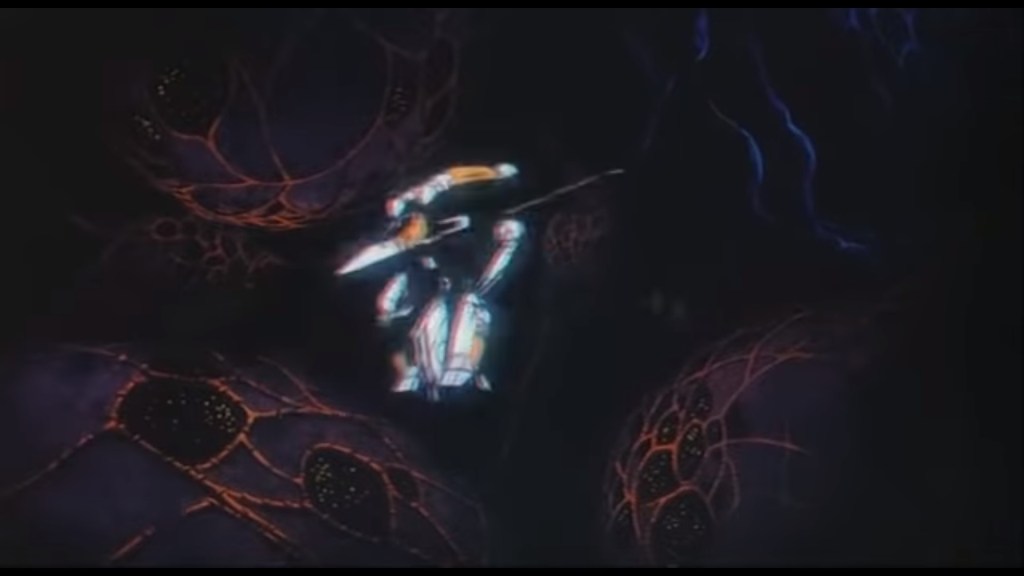
Max is swept into the vacuum of space. This will be reinvented in DYRL when Hikaru (Rick) and Misa (Lisa) are swept into the vacuum of space during their attempt to rescue Minmay (Minmei) at 00:47:44.
In SDF Macross, Exedore states, “When men and women are together in one place, disaster will inevitably follow.” This statement almost breaks the fourth wall for any adult married viewers with a good sense of humor. However, staying in-universe, it speaks to the Zentreadi worldview. The out-of-universe analysis interprets this statement as a plot device portraying hubris and setting up the later triumph of co-ed micronian culture and domination. In Robotech, Exedore simply states the mingling of men and women results in arguments.
The Minmei montage shown here is discussed in the synopsis for Episode 10. In the montage Minmei mentions her song is titled “My Boyfriend’s a Pilot.” This dialogue was retained in Robotech in error and likely should have been changed to “Stage Fright.” The mention of this song is the plant portion of a plant-and-payoff. The payoff is discussed in the synopsis for the next episode.
This episode contains the first mention of the word protoculture (Protoculture) when the viewers overhear Dolza’s internal dialogue. In SDF Macross Protoculture is the first culture or prototype culture. It was redefined as an energy source in Robotech by renaming GCM’s HBT fuel source, a major GCM plot point, as protoculture. In SDCSC the Protozor flower is renamed the Flower of Life in Robotech. The Zor, or Robotech Masters in Robotech, have a symbiotic relationship with the Protozor. Robotech will somewhat diminish this plot point in Episodes 37 to 60 and apply it to the Invid in Episodes 61 to 85. In Robotech, protoculture will become the primary MacGuffin for an overarching story arc or myth arc spanning all 85 episodes and beyond. The SDF-3, protoculture matrix, and Rick himself are MacGuffins spanning Episodes 36 and beyond. The SDF-1 is a MacGuffin spanning Episodes 1 to 36. The fold generators are a MacGuffin spanning Episodes 2 to 13 and the entire series in the Robotech novelizations. Minmei is a MacGuffin spanning Rick’s story arc from Episode 1 to 36.
In SDF Macross only, Exedore states, “The universe is filled with conflict, and it is in battle that one finds life!” Robotech deletes this dialogue from Episode 11, moves it to Episode 12, and credits it to Admiral Hayes when Lisa paraphrases her father saying, “Only where there’s battle being waged is there life being lived.” Later, in Episode 19 the three spies listen to Kyle’s anti-military press conference and Rico is confused because Kyle’s philosophy would deny the very purpose of life for a Zentreadi. Then, in Episode 31 Exedore states the Zentreadi will “forever revel in war” in SDF Macross. This is edited as a “war-loving race” in Robotech.


Dolza demonstrates his superior firepower by incinerating a planet. This familiarizes the viewers with this imagery as Earth will later suffer the same fate in Episode 27.


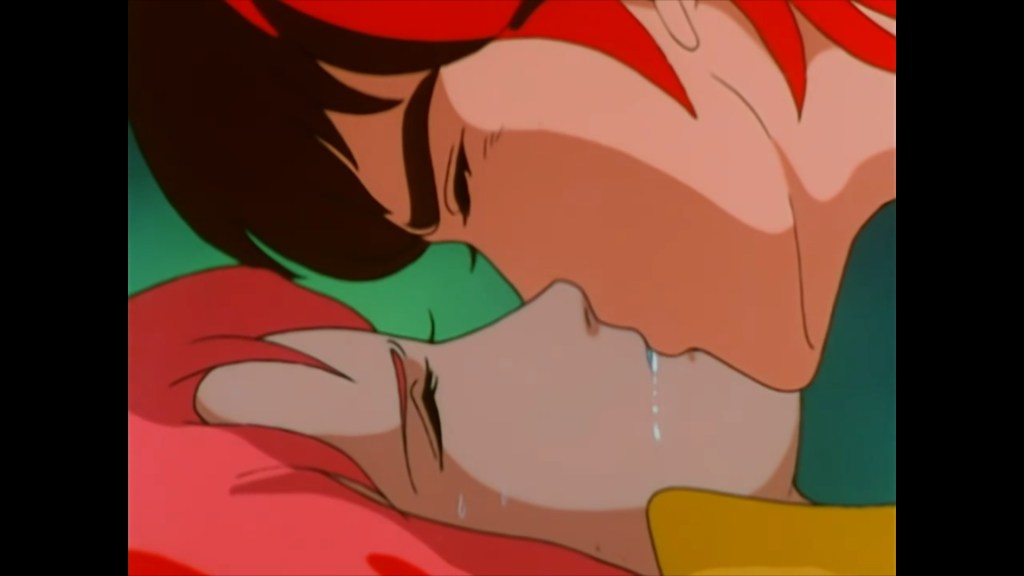

Lisa orders Rick to kiss her. This will occur again in Episode 30. Rook will insist Rand kiss her in Episode 66: Hard Times (Adapted from GCM Episode 6: Support Girl Blues). Rand forces water into Ariel’s mouth in Episode 73: Sandstorm (Adapted from GCM Episode 13: Sandstorm Playback). Later, in Episode 78: Ghost Town (Adapted from GCM Episode 18: The Nature of Old Soldier’s Polka) Lancer (Yellow Belmont) stages a kiss with Ariel. These kisses are mostly platonic and demonstrated for an audience under false pretenses or other motivation.


During the interrogation the Zentreadi are disgusted by the kiss between Rick and Lisa. In Episode 21 Rick and Lisa will leave Minmei’s film to avoid disgust at Minmei and Kyle’s kiss. In Episode 23 Rick will be disgusted at witnessing Kyle kiss Minmei. After the POW interrogation and Rick and Lisa’s kiss, the Zentreadi will hold a conference meeting which is discussed in the synopsis for the next episode.
As discussed in the synopsis for Episode 10, the Zentreadi are a symbolic manifestation of Rick’s puberty. A Podcast titled Reflex Point: A Robotech Podcast subconsciously created a logo which supports this assertion. The logo combines Rick’s hair with the Zentreadi insignia. This Podcast debuted March 19, 2020. In SDF Macross Breetai asks, “Love each other? How is this done?” In Robotech he asks, “This love, what is it? How do you express it?” A deconstruction of this scene implies Breetai’s dialogue is actually Rick’s own internal dialogue.


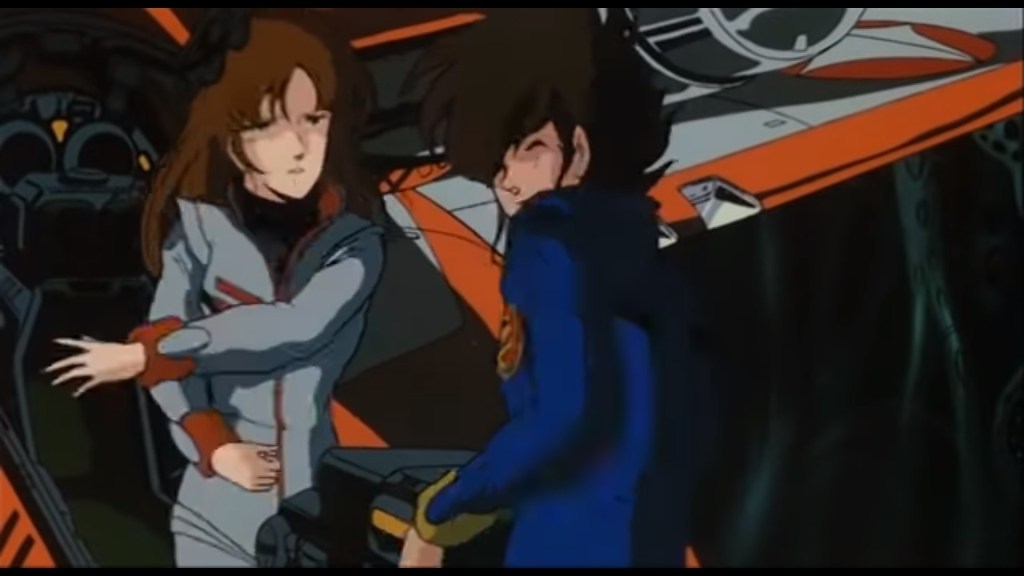


This series uses the act of kissing to define relationships and boundaries between characters. The utilization of kissing as a window into the psyches of these characters was maintained in the plot for DYRL. At 00:23:26 Minmay (Minmei) acts out an in-universe kissing scene with Hikaru (Rick). He is unable to separate his emotions from the physical act. Minmay’s (Minmei’s) roleplaying kiss in DYRL resembles Rick and Lisa kissing for Dolza in this episode as well as Minmei and Kyle’s kiss for their film in Episode 21 as all the participants in these kisses were mostly emotionally detached from the act except for Rick. These kisses under false pretenses allowed each participant to avoid romantic responsibility and the consequences normally implied by social conventions. Later, in DYRL Minmay (Minmei) is uncomfortable when her brother kisses her to appease Britai (Breetai) which retroactively implicates Minmay’s (Minmei’s) earlier kiss with Hikaru (Rick) as a sign she is open to the possibility of romance with Hikaru (Rick) by default because she easily performed the act with him. Soon after this scene, Hikaru (Rick) kisses Misa (Lisa) in order to distract hostile Zentradi (Zentreadi) and Misa (Lisa) slaps him which implies she sees Hikaru (Rick) as romantically aggressive and also feels she is only being used. All these scenes build character development through subtly implied attractions and flirtations, or lack thereof, between characters. The slap in DYRL mentioned previously is balanced later when Hikaru (Rick) slaps Minmay (Minmei). Furthermore, here in this episode, for the benefit of Dolza, Rick suggests Lisa kiss Ben. Keeping her body language to a minimum, she deftly and politely shifts her eyes to examine Ben without alerting him. She acknowledges she would prefer to kiss Rick. Thus, Lisa somewhat acknowledges the intimacy of a kiss and is protecting Ben from the knowledge of her rejection of him. Interestingly, as warranted by the writing for any main character, Hikaru (Rick) of DYRL is an embodiment of compassion and love against which the Minmay (Minmei) character’s shortcomings are illuminated. In DYRL Minmay (Minmei) initially kissed Hikaru (Rick) in a soulless, empty, and duplicitous act. In this feature film she has a subtle story arc of emotional growth as one possible interpretation of her subplot is a self-realization of the absence of emotional depth in her kiss, life, and songs. Her eventual discovery of a new emotional intelligence strips away her self-delusions, and, when Hikaru (Rick) chooses Misa (Lisa), it results in her existential crisis. She is able to redeem herself by channeling emotional authenticity into her concert during the film’s climax. See the discussion of Minmei’s true songs in the synopsis for Episode 36 as it relates to her story arc presented here and the emotional authenticity of her performances as well as the synopsis for Episode 4 as it relates to her reaction during and after her rescue. Interestingly, the artistic exploration of a kiss was later dissected in a scene from the 2003 film The Matrix Reloaded when Neo kisses Persephone in front of Trinity.
In SDF Macross the Zentreadi present at the interrogation discuss their upsetting reaction to the kiss they witnessed, and Dolza explains the threat of the Protoculture. This is quickly juxtaposed with Minmei singing. This juxtaposition foreshadows Minmei’s eventual fruition as a tool of the military machine justifying Dolza’s fear. The symbolism of these scenes is lost in the Robotech version of this episode as protoculture is a fuel and not culture manifested by Minmei. Equating Minmei with Zentreadi leadership is also discussed in the synopsis for Episode 12.
In SDF Macross Minmei debuts a new song titled “My Boyfriend is a Pilot.” The song’s subject matter is an excellent in-universe marketing strategy for a captive audience of civilians and professional military being pursued by hostile aliens. However, the song’s lyrics also further Minmei’s ingénue status as they obscure her in-universe romantic relationship status. An instrumental version of the song was previously heard in Episode 5: Transformation during the opening of the restaurant. This possibly subliminally prepared and familiarized the viewers with the song in this episode. This song is replaced in Robotech.
The interrogation scene of this episode provides a display of the use of catch lights to communicate a character’s status as a protagonist or villain. Rick and Lisa often have detailed pupils with reflected catch lights in their eyes. The Zentreadi characters generally only have an iris with no catch lights.
Episode 12: Big Escape in SDF Macross and The Big Escape in Robotech
This episode is named for the micronians escape from their Zentreadi captors.

At the Zentreadi strategy meeting Dolza is shown standing with crossed arms. This symbolizes his authority and demonstrates the “Badass Arm-Fold” trope which indicates resistance to influence. Dolza also is standing with his back to his subordinates. This portrays the “Badass Back” trope which may indicate trust and contemplation. Dolza’s character design also incorporates the “Bald of Evil” and “High Collar of Doom” tropes.
Rico, Konda, and Bron volunteer to infiltrate the SDF-1. Using a psychoanalytic interpretation, the Zentreadi represent Rick’s internal emotional life. Dolza’s fortress represents Rick’s subconscious. Minmei is often symbolized as the SDF-1. This new mission for the three spies may symbolize Rick’s attempts to reevaluate Minmei and his culture utilizing his newfound perspectives and maturity springing from his ongoing personal growth.
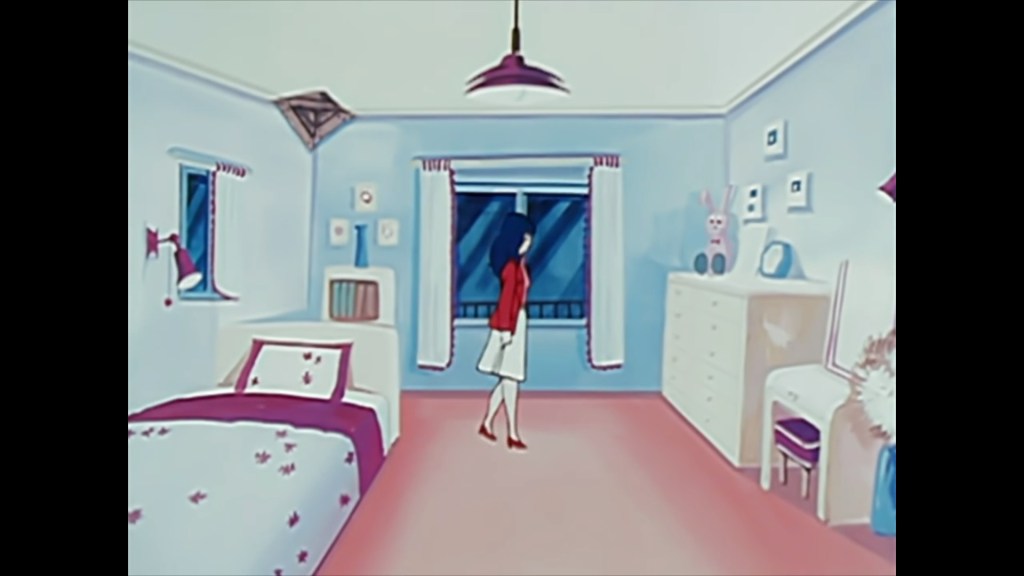
Rick and Lisa kiss again in this episode to distract their guard but it is actually Max in a disguised veritech. Max goes on to shatter Breetai’s command observatory glass. While Miriya has no affiliation with Breetai’s command center beyond a shared Zentreadi race, this may still foreshadow Max eventually deflowering Miriya and shattering her seal. Furthermore, Breetai’s broken glass sphere becomes iconic imagery demonstrating serial continuity within the series as compared to other cartoons of the time period being standalone episodes. In a possible double or quadruple parallelism (quadruplism?), as Rick damaged Minmei’s bedroom so too does Max damage Breetai’s command center. Minmei’s damaged bedroom is shown in Episodes 2, 5, and 29. While acknowledging Miriya is only loosely associated with Breetai by race and military structure, Minmei and Breetai’s quarters may be paired as serial continuity devices as well as symbolism for romantic overtones with regard to Rick and Max and their respective love interests. The romantic overtones of Minmei’s damaged bedroom were previously discussed in the synopses for Episodes 2 and 5. Additionally, a theory of symmetry could propose Minmei’s bedroom is a command center similar to Breetai’s. All this imagery may also be intended to elevate Minmei and equate her as an equal or counterpart to Breetai or even Dolza as Dolza, Breetai, and Exedore were all in the glass sphere when Max smashed through it. In Episode 27, Minmei and Dolza practically come face to face in an epic showdown when the SDF-1 penetrates inside Dolza’s fortress (mothership). Breetai’s shattered bubble also symbolizes the breaking of a hermetic seal and the point at which Dolza, Breetai, and Exedore are literally infected by the Protoculture as defined in SDF Macross. The initial exposure to the Protoculture is discussed in the synopsis for Episode 10 Blind Game classifying Rico, Konda, and Bron as infected.
As previously discussed in the synopsis for Episode 8, Max and Minmei share many similarities in their character designs. Minmei is often a passive actor in events surrounding her and here in this episode Max unintentionally shattered Breetai’s observation bubble adding to the library of timeless and symbolic iconography of this series.


Lisa’s espionage camera breaks in this episode, and she will return to the SDF-1 with no photographic evidence. This is similar to Episode 9: Miss Macross when the crew of the Zentreadi recon vessel returns without any reconnaissance material. Later, in Robotech Episode 83: Reflex Point (Adapted from Episode 23: Black Hair’s Partita of GCM), Sue Graham will die attempting to record footage of the Invid for the Robotech Expeditionary Force. Additionally, Kay the news reporter will break her cassette recorder at the end of her interview with Lancer in Robotech Love Live Alive (Adapted from GCM Love Live Alive). The camera in this episode is a plant-and-payoff. It was planted in Episode 10 and used to reach a tragic trough of hopelessness in the rhythm of this episode. The rhythm of this episode repeatedly rises and falls for a dynamic storytelling experience. The broken camera represents a turning point in Lisa’s character arc. Her motivation was previously a military reconnaissance mission, and the camera held valuable data. Rick is kicked into a rack of rifles, and Lisa drops her camera. Instead of concern for Rick, she is concerned for the camera. Rick runs to her rescue while she mourns the broken camera. While not supported by the dialogue, after the camera breaks Lisa seems to embrace basic survival and comradery with Rick as her new motivating engine. Lisa switches from concern for an inorganic camera to concern for her organic subordinates. This demonstrates Lisa’s discovery and embrace of her own humanity. This is the arc of her character’s growth and development. She began this series as overly concerned with rules and regulations as demonstrated in Episode 1 with her commentary on the crew’s late night activities prior to launch day. Over the course of this series she will achieve a healthy balance between her personal and professional lives. The broken camera may symbolize the shattering of Lisa’s flawed personal ethos allowing her to regroup and rebuild a more functional and comprehensive ideology. Lisa’s initial lack of humanity stands in contrast to the humanity displayed by Roy and Rick. As Roy protected Rick in combat, Rick protects Ben demonstrating the value of life. The recording devices scattered across the Robotech franchise may represent barriers to intimacy. The torn celluloid film scroll in Robotech’s opening credits may also share this symbolism. In each situation the character, or viewer in the case of the celluloid film scroll, achieves a deeper intimacy with the characters after the removal of this barrier.
Rick rescues Lisa for a third time by using a Zentreadi rifle to shoot a Zentreadi soldier. Rick had previously rescued Lisa in Episode 7: Bye Bye Mars and Episode 10: Blind Game. Rick’s zeal with this weapon is reminiscent of his first attack on a battlepod in Episode 2. Both these events are mild portrayals of “The Beserker” trope.

Rick and Lisa freefall through a catwalk into reservoir liquid. This is similar to Rick and Minmei’s freefall in Episode 2: Countdown. Both instances may be symbolic of falling in love. As previously stated in the Episode 4 synopsis, Rick and Minmei broke a pipe and portrayed a version of the “Romantic Rain” trope. This resembles Rick and Lisa’s fall into reservoir liquid which is not animated but described through dialogue and evidenced by Lisa’s hair. Additionally, from this point onward in this episode, Lisa is drawn with big beautiful bombshell hair as the water has undone her hairstyle. Lisa looks seductive and feminine in this episode. This portrays the “Letting Her Hair Down” trope and the “Long Hair is Feminine” trope. Also, unseen and already mentioned in the Episode 4 and 7 synopses, Lisa rescued an unconscious Rick from the water symbolizing Rick’s forced or assisted premature romantic development. Previously, in Episode 7, Rick tore Lisa away from Mars Base Sara against her will symbolically forcing her own similar emotional maturation. Also, Rick and Lisa’s unseen emergence from the water recalls Rick and Minmei’s rescue through the ceiling in Episode 4.
There is a larger theme of forced maturation throughout this series beyond that discussed in the previous paragraph. Rick’s initial flight in the trainer veritech required his acceptance of his circumstances. Rick was the audience avatar for all the new recruits being forced into active combat in Episode 1 transitioning them from rookies to veterans over the course of this series. Similarly, the citizens of Macross Island are involuntarily transported into deep space. Intertwined with the theme of forced maturation is another example of mise en abyme in the transitions of child to adult, prepubescent to pubescent, ignorance to awareness of social roles, civilian to military, and the Zentreadi’s introduction to culture. Also, the military can be viewed as a more rigid and defined sub-culture of human society. Additionally, relationships increase in complexity from two individuals through family, career, city, nation, planet, species, and the intergalactic.

Rick hallucinates and the viewers are shown Rick’s thoughts which supports Rick being the main character of this series. Rick imagines Minmei standing in waist deep water. This animation will be reused again in Episode 17: Phantasm which is an entire episode allowing the viewers to observe Rick’s inner fantasies. While the viewers are often allowed access to many characters’ thoughts and see their daydreams, Rick’s inner life dominates other characters’ in terms of screen time. Minmei standing in waist deep water bears a strong similarity to the SDF-1 often seen half submerged in water. This portrays a parallelism along with Rick’s pursuit of Minmei and the Zentreadi’s pursuit of the SDF-1.

While Rick’s unconscious body is not seen on camera, he will later be illustrated as unconscious in Episodes 16 and 17. When Rick does regain consciousness here in this episode the animation is brought into sharp focus to imitate Rick’s eyesight. This point of view reinforces Rick’s role as the main character and the audience surrogate.
Lisa is the latest generation of her family to serve in the military and she compares herself to the Zentreadi. This is a fairly metafictional comparison as alien characters in works of science fiction are generally metaphors for humanity. Lisa will repeat this metaphor again in Episodes 23 and 31. The metaphor of science fiction alien characters as a window into the human condition will become truly metafictional in Episodes 23, 29, and 31 as this series all but states in-universe the Zentreadi and micronians are identical and related.

There is a slow building romance between Rick and Lisa, and this episode represents another step in its progression as these two characters spend intimate time alone together. In DYRL at 00:58:58 Misa (Lisa) spots a column sticking out of the ocean. While she has discouragingly discovered Minmay’s (Minmei’s) autograph on Hikaru’s (Rick’s) handkerchief, this column counterintuitively represents the first shoots of a bud which will blossom into love out of the barren ocean scenery. The ocean as well as the post-apocalyptic Earth symbolize their desolate romantic landscape as discussed in the synopsis for Episode 23.


The micronians escape by commandeering a battlepod. The imagery of micronians piloting a battlepod will later be revisited in Episode 20 when the Zentreadi spies leave the SDF-1 as well as Episodes 22 and 23. The escapees hear Minmei’s song and are able to confirm they have de-folded near the SDF-1. This is the payoff portion of a plant-and-payoff initiated in the previous episode with the discussions of Minmei’s debut. Minmei and her song have now fused with the SDF-1, home, and feelings of nostalgia. These elements unite the escapees in a common bond. Later, in Episode 27, Rick and Lisa will hear Minmei’s singing from their location in Alaska which again identifies Minmei with the SDF-1.
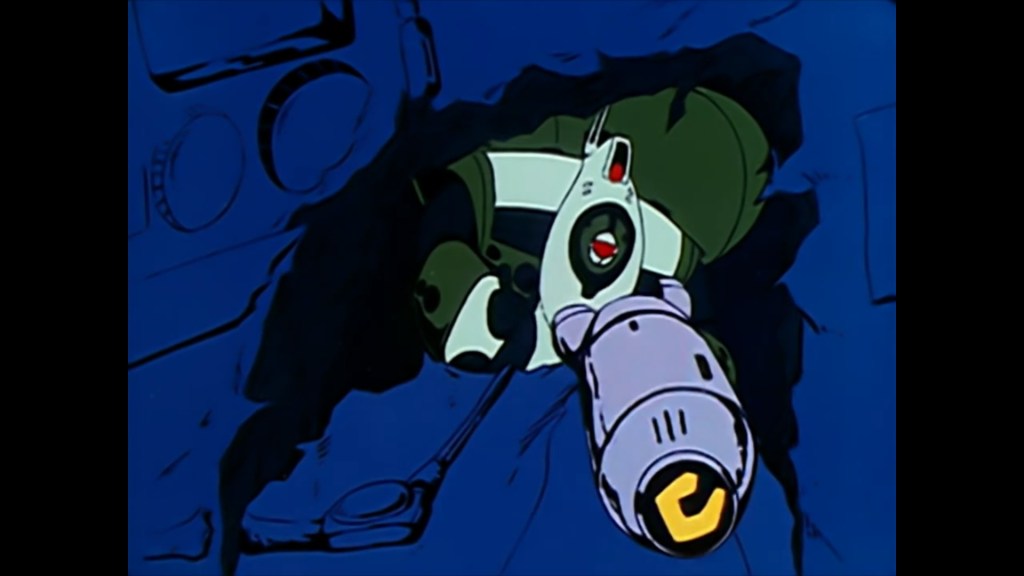
Finally, Miriya and Azonia make their first appearance in this series. Azonia tasks Miriya with delivering the three spies to the SDF-1. In Robotech Miriya is arrogant with Azonia which sets up Miriya’s later character growth and emotional maturation. Azonia foreshadows the eventual micronian victory when she warns of their danger. In SDF Macross Miriya’s arrogance is more pronounced in her combat scene dialogue in this episode than in her mission briefing dialogue with Azonia. Roy displays a healthy fear of Miriya when he observes her combat skills. As Roy’s piloting skills are well established for the viewing audience, his reaction quantifies Miriya’s combat skill in relation to his own. Roy becomes a yardstick against which to measure Miriya and communicate her lethality to the audience. Miriya delivers the three spies to the SDF-1 by tearing open the metal fuselage of the ship. This has a familiarity to Episode 9: Miss Macross when Rick entered the recon vessel and Episode 11: First Contact when Breetai tore open Rick’s veritech. The container housing the three spies will be somewhat resurrected in Episode 19 when Miriya is inserted into the SDF-1. In each instance female Zentreadi are utilized to deposit spies inside the SDF-1 embodying a maternal symbolism of a mother carrying her children. In Episode 30 Miriya will transport her child to Breetai’s flagship in a similar container also recalling a maternal theme. For first time viewers in 1982, the concept of female Zentreadi would be a major revelation in regards to character background and the narrative element known as world building. Episode 9: Miss Macross and Dolza’s interrogation in Episode 11 revealed many details regarding male Zentreadi discomfort with the female gender. The segregation of the genders in the Macross franchise has become so ubiquitous and widely known, the impact of this facet upon first time viewers and their introduction to Zentreadi society is sadly no longer appreciated. This series does not qualify as dystopian but Zentreadi culture appears so in comparison with micronian culture.
Episode 13: Blue Wind
This episode title likely refers to an ocean breeze or marine blue wind as the SDF-1 splashes down in the ocean. The phrase “blue wind” was previously referenced in Episode 9: Miss Macross as the codename for the Zentreadi recon mission.

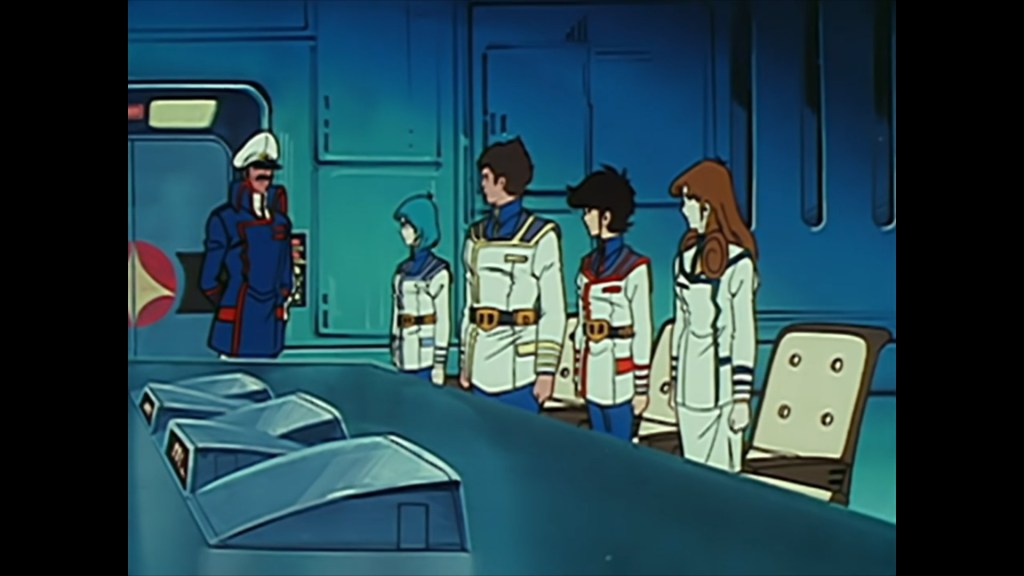
The escaped prisoners from the previous episode are debriefed and shown sitting opposite the RDF (Robotech Defense Force) establishment. This symbolizes a confrontation between the younger protagonists and their mature skeptical superiors. Captain Gloval symbolically sits at the head of the table demonstrating balanced wisdom between the two sides. This micronian debriefing scene retroactively humanizes the Zentreadi previously seen in Episode 10 as Breetai and Exedore debriefed their own Zentreadi soldiers in a similar scene. The debriefing shown here marks the first of several occasions Lisa is believed to be mistaken. See List 24 at the end of this essay for a summary of authorities disregarding Lisa’s opinions.

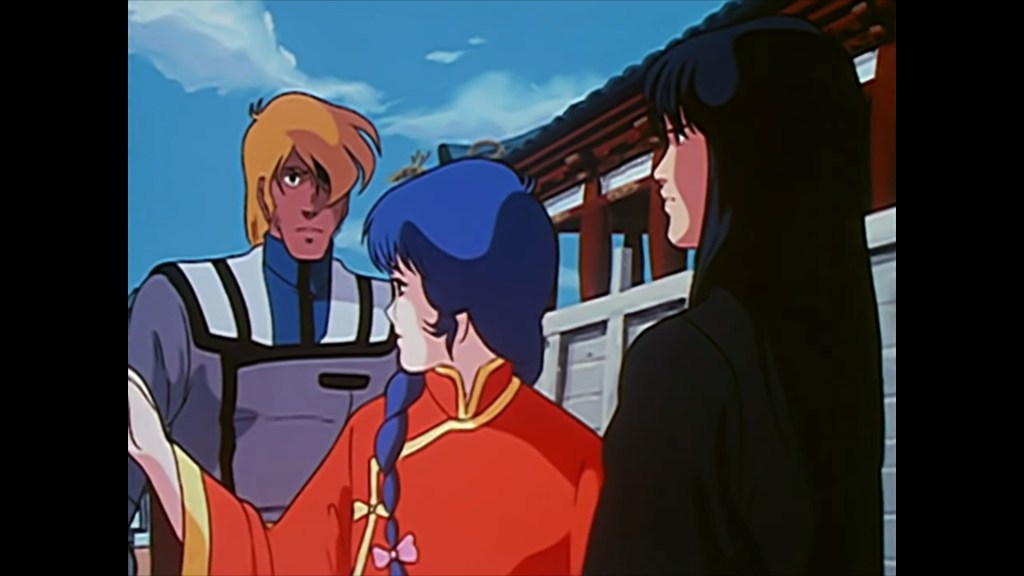


In Robotech, the theme song is used in-universe during the welcome home celebration. While this is metafictional, it is likely due to the rushed process of creating Robotech. It will also be used in Episode 16: Kung Fu Dandy and Episode 19: Pineapple Salad. SDF Macross will play its opening theme song during Episodes 17 and 36 and closing theme song during Episode 25. This celebratory concert scene begins Minmei’s evolution into a leadership role and culminates in Episode 27 when Minmei’s cult of celebrity is equated with lethality, military authority, and political power. In this episode’s welcome home celebration Minmei is the authority thanking the heroes for their service. In Episode 15 her trip to Yokohama is juxtaposed with Captain Gloval and Lisa’s trip to Alaska. In Episode 5 and 18 the front of her cheongsam dress fastens diagonally in a similar fashion to Captain Gloval’s double-breasted jacket. In Episode 20 Minmei is juxtaposed with and overshadows Captain Gloval as she succeeds in delicately threading the needle of reframing the SDF-1’s exile from Earth in a manner wholly inaccessible to Captain Gloval and thus, never considered in his risk assessments, threat evaluations, or situational awareness. She defuses a possible riot unforeseen by Captain Gloval. In Episode 25: Virgin Road, Minmei and Captain Gloval are again juxtaposed and equated while toasting Max and Miriya. In Episode 26 Exedore requests her presence at the peace negotiations as a vital component of the military apparatus. Finally, in Episode 27 Minmei physically manifests Captain Gloval’s desire and defeats Dolza. See List 25 at the end of this essay for a summary of Minmei’s juxtapositions with Captain Gloval. In addition to this conjecture of Minmei as equated with Captain Gloval, this essay proposes Minmei is simultaneously analogous with Rick. This is summarized in the synopsis for Episode 19. Minmei is also often symbolized as or paralleled with the SDF-1. This is evidenced as she arrives in Rick’s life as does the SDF-1, Rick pursues her as the Zentreadi purse the SDF-1, the Zentreadi wish to capture and subdue the SDF-1 undamaged as Rick wishes to possess and subdue Minmei in order to receive her voluntary reciprocation of his love, she and the SDF-1 have damaged radar in Episode 10: Blind Game, in Episode 12: Big Escape her song broadcast identifies her with the SDF-1 for the escapees, she is portrayed as half submerged in Episode 17: Phantasm akin to the SDF-1 in water, she faints and recovers in Episode 19: Burst Point as the SDF-1 rises from its crater, in Episode 27: Love Flows By she all but merges identities with the SDF-1 to defend the Earth, in Episode 29: Lonely Song a Minmei doll and the SDF-1 are both portrayed as battle scarred, and in Episode 36: Gentle Farewell Minmei and the SDF-1 find resolution.
At the end of the welcome home celebration in SDF Macross Lisa notices Rick is dazed and she expresses concern for him. In the Filmrise subtitles of SDF Macross he replies, “The lights are a little bright.” In the AnimEigo subtitles he replies, “The lights are just bright.” If he is assumed to be teary eyed, this dialogue works as a masculine excuse and as a metaphor for Minmei’s rising star in the world of show business. In Robotech, the dialogue leans toward being a macho excuse.
Rico falls in a crack and Konda and Bron pull him to safety. This resembles when Minmei fell in a crack in Episode 5. Minmei will fall in another crack in Episode 21: Micro Cosmos.
This episode marks the third time Khyron is thwarted in his efforts to destroy the SDF-1. In Episode 7: Bye Bye Mars he was forced to retreat from the reflex furnace overload and in Episode 8: Longest Birthday he was recalled by a tractor beam or manual override beam. Here, in Episode 13, Azonia physically blocks him with her ships and targets his fleet. List 18 at the end of this essay contains nine instances of Khyron’s military failures. Three of the nine involve the viewers siding with and cheering for the Zentreadi against Khyron. These three examples are Breetai’s use of the tractor beam, Azonia targeting him in this episode, and defectors to the SDF-1 interrupting his battle plans. These instances along with Rick’s inability to kill an unarmed Zentreadi as discussed in the synopsis for Episode 6 begin to blur the lines between the protagonists and antagonists. This lays the groundwork for Breetai’s future defection and the viewers’ ability to embrace it.
Episode 14: Global Report in SDF Macross and Gloval’s Report in Robotech
This episode is named for Captain Gloval narrating or dictating his report to the United Earth Government (UEG).
This episode is a clip show and summary of the previous 13 episodes. This is similar to a show titled Codename: Robotech which was not a pilot episode but intended as a primer and teaser for episodes 1 to 14. Codename: Robotech was broadcast prior to the official U.S. debut of Robotech. Similar to Global Report, Episode 37: Dana’s Story is also a clip show designed to transition The Macross Saga (the first Robotech war) into The Masters (the second Robotech war) story arc. Additionally, Episode 17: Phantasm, and, to a lesser extent, Episode 73: Sandstorm (Adapted from Episode 13: Sandstorm Playback of GCM) are also clip shows but repurposed as dream sequences. In 2013 a feature-length clip show was released titled Robotech Love Live Alive. It adapts the 1985 GCM Love Live Alive clip show. Released in 1986 and 1987 Robotech Wars and The Super Dimension Fortress Macross: Flash Back 2012 are also a clip shows.
Clip shows were a fan service prior to VHS tapes and VCRs (videocassette recorders). In 1982, viewers would view individual episodes on broadcast television. For those who may have missed an episode, clip shows provided a condensed summary of past episodes and storylines. Clip shows are no longer necessary for modern viewers with access to digital streaming and digital pirating. Clip shows are an artifact of the past. They are metafictional as they inherently acknowledge the viewers’ plight. This can also be extended to episode recapitulations (recaps), previews, and narration. Character flashbacks, fantasies, and visions also assist viewers in maintaining plot threads. Contemporary viewers in 1982 were constrained by the artistic medium. Robotech Love Live Alive is an exception to this rationale as it was born from different circumstances. Robotech Love Live Alive was likely a cash grab since it commoditized the last scraps of unused GCM animation.
This episode recaps Episodes 1 to 13 but only uses animation from Episodes 1 to 11. While the animation is recycled, the dialogue is rerecorded and sometimes changed. Throughout this series many flashbacks are likewise reanimated versions of previously shown scenes. This may introduce a phenomenon of false memories, unreliable memories, or self-doubt on the part of the viewers.
Episode 15: Chinatown in SDF Macross and Homecoming in Robotech
This episode is named for Minmei’s trip to Chinatown. The title Homecoming will also be used for the third Robotech novel.


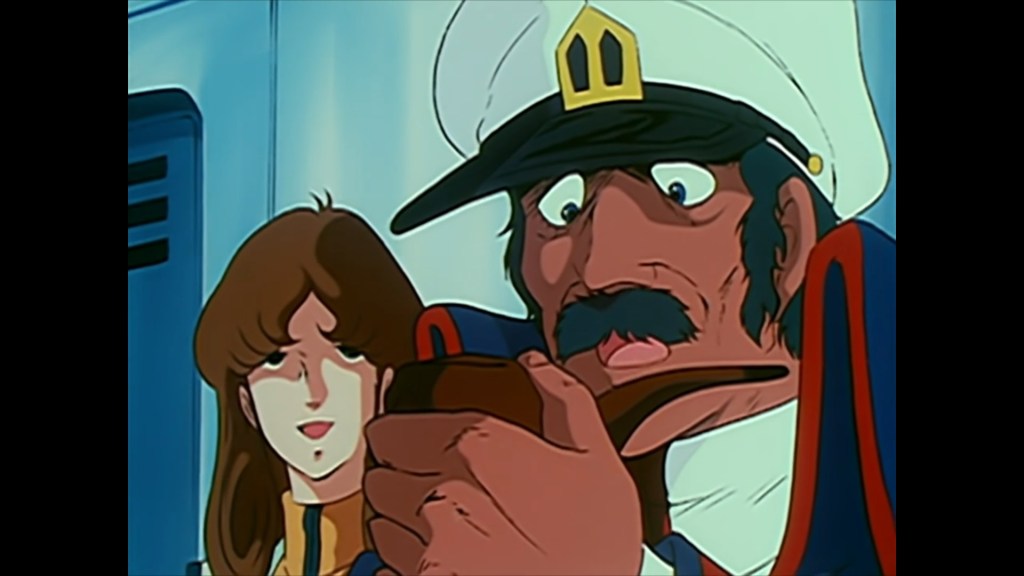
Colonel Maistroff bangs his head on the doorway to the bridge which provides continuity humor with Captain Gloval doing the same in Episode 1: Boobytrap. Similarly, Colonel Maistroff puts a cigar in his mouth prompting Sammie to inform him of the no-smoking policy repeating the same scene from Episode 1. Additionally, Captain Gloval is also warned not to smoke by a smoke detector with a robotic female voice while inside the Grand Cannon in this episode.
While the Robotech franchise delivers a satisfying Grand Cannon, its grand canon remains forever elusive and malleable.
There is a parallelism in Captain Gloval and Lisa travelling to Alaska Base and Rick and Minmei travelling to Yokohama, Japan. The UEG is juxtaposed with Minmei’s parents. This amplifies the viewers’ frustration with these authorities. It also supports the viewers’ ability to identify with Captain Gloval and Lisa’s predicament in addition to Rick’s predicament. Minmei’s authority figures are an allegory for military chain of command moving the viewers between family politics and geopolitics. Rick is forced to deal with a new personality in the form of Kyle, and Captain Gloval is forced to deal with his superiors. For young adult viewers of this series, all these authority figures may be surrogates for parental authority.
The UEG is displayed on giant display screens which resembles Episode 11 when Lisa was interviewed by Dolza. Epiosde 11 may be viewed as Lisa negotiating with Rick’s subconscious in the form of giant Zentreadi. Episode 15 may be viewed as Lisa negotiating with her father’s subconscious in the form of the UEG. Lisa is eventually torn between trying to satisfy these two men.


Claudia finds Roy asleep in his bed. This may be intended to contrast with Roy on his death bed in Episode 18. Later in the SDF Macross version of Episode 30, Claudia comforts herself on her bed which emphasizes her yearning for Roy as his guitar tune plays over the scene. In the Robotech version of Episode 30 Claudia does not mention Roy and the guitar tune is not present. Roy, Rick, and Minmei each portray the “Beautiful Dreamer” trope in this series. Occasionally, the SDF-1 may also be interpreted as portraying this trope.

In the ADV DVD commentary for this episode, Mari Iijima states Harborview Park, the park Rick and Minmei visit, is understood to be a romantic setting for out-of-universe couples. This subtlety is lost for non-Japanese viewers.
There is a possible World War II reference in the English subtitles of the AnimeIgo version of SDF Macross when Minmei’s father is concerned Minmei’s fame is similar to being a Chinese comfort woman for the Japanese Army. The ADV DVD English subtitles rephrase this as entertaining the troops. This is also done in the Robotech version of this dialogue. “Entertaining the troops” is actually the more accurate translation. The Japanese term spoken in the dialogue is “Imon Butai” which were hired musicians to entertain infantry. While not a reference to comfort women, it is still a reference to World War II.
Minmei’s enthusiasm and ecstasy at returning with Kyle to the SDF-1, which the UEG has just revealed to be a sacrificial decoy or prison, enables a contrast with the solemnity and crushing weight of reality now bearing down on Captain Gloval and Lisa.
Minmei and Lisa reflect each other as they each refuse their parent’s wish for them to leave the SDF-1. This may foreshadow Episode 20 when the refugees inside the SDF-1 rally and are proud to stay onboard. Lisa’s independence here works as an exposition for when her father takes away her freedom in Episode 26. Furthermore, parental authority is not symbolized here but is directly presented. Lisa is forced to simultaneously control and split her emotional worlds as her father is a leader in the UEG. She is ordered to artificially suppress her intimacy with her father while on duty. Confrontation with a father figure may be a theme which gradually builds to a climax in this series. Rick , Lisa, and Minmei are all separated from their fathers. Lisa and Minmei confront their fathers in this episode. Kyle’s father is emotionally distant upon their reunion in Episode 16. Lisa confronts her father again in Episodes 24, 25, and 26. Dolza likely portrays an exaggerated maniacal father, and he is defeated in Epiosde 27.
Additionally, there may be a symmetry woven through the series with the UEG utilizing the SDF-1 as a decoy and Minmei using Rick as a suitor. Furthermore, the UEG does not desire the SDF-1 to stay on Earth perhaps mirroring Minmei’s lack of desire for Rick. In these two examples the SDF-1 is a surrogate for Rick.
Episode 16: Kung Fu Dandy in SDF Macross and Battle Cry in Robotech
This episode title likely means Kung Fu Master or someone great at kung fu martial arts. Kyle defends himself in a brawl at The White Dragon restaurant using kung fu. The word dandy may less likely refer to Kyle being anti-violence. The Robotech title is likely a generic title referencing the combat shown in this episode. The name Battle Cry will go on to bear synchronicity with the title of the second Robotech novel and with the multiplatform videogame Battlecry released in 2002.
Kyle resembles Lisa’s ex-boyfriend Karl Riber. They are voiced by the same Japanese voice actor. The two characters also share a similar anti-violence philosophy. Several characters in this series portray the “Reluctant Warrior” trope including Kyle, Captain Gloval, Breetai, Rick, Max, Miriya, Minmei, and Lisa. Additionally, Kyle portrays the “Martial Pacifist” trope. The Kyle character is a plot device which embodies all the characters’ and viewers’ morality. Kyle is an ombudsman or gadfly. He represents the fears and anxieties each character must weigh in their balanced approach as they struggle to make decisions and attempt to resolve their internal and external conflicts. Kyle enables the viewers to see what would otherwise be abstract moral assessments made by military personnel. Kyle is an example of the “Show, Don’t Tell” trope as he illustrates many conflicts throughout this series. In addition, the audiences’ passionate dislike of the Kyle character is proof of the successful writing of this series. Audience indifference to the character would indicate a failure of the writing. Likewise, if the audience has a love-hate relationship with Minmei’s character, this is proof of successful story execution as frustration was likely the writer’s intention.
Minmei’s television broadcast is interrupted by a news bulletin explaining a temporary delay for permission to leave the SDF-1. The news anchor is wearing sunglasses which expresses a cold and emotionless authoritarian demeanor. It may also reveal an out-of-universe time saving animation shortcut which avoids rendering facial details.


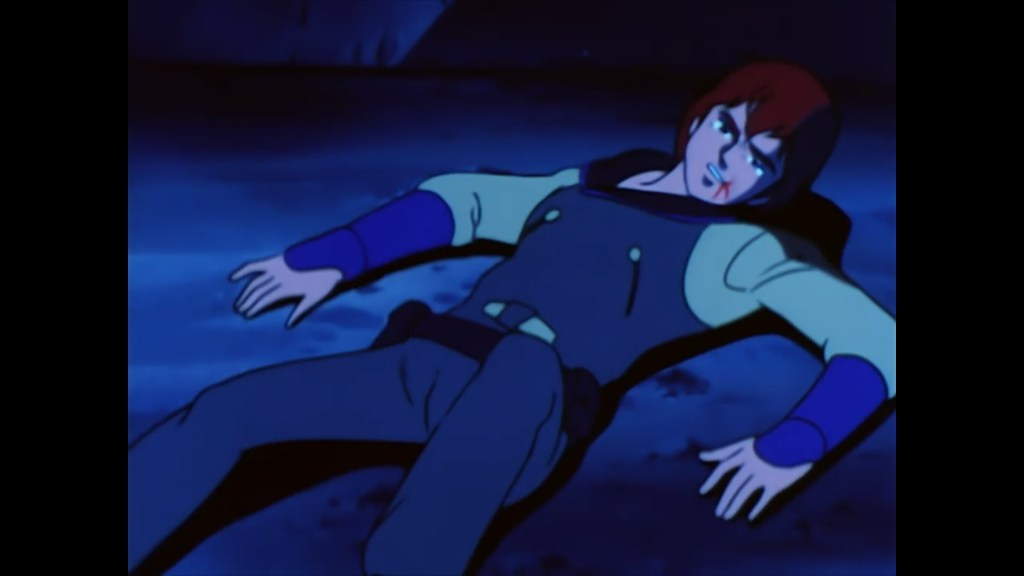
Lisa offers Kyle her handkerchief because his mouth is bleeding. Max and Rick will also have a trickle of blood from their mouth during this series portraying the “Blood from the Mouth” trope. Zor Prime (Seifriet Weiße) bleeds in Episode 57 of Robotech adapted from Episode 20 of SDCSC. Rand bleeds in Episode 75 of Robotech adapted from Episode 15 of GCM. Kyle maintains his personal code of ethics and refuses help from the military in the form of Lisa’s handkerchief. This will be repeated in Episode 31 when Kyle inspires a mob to refuse military protection of a protoculture chamber (micloning device). Kyle will even nobly refuse rescue when kidnapped by Khyron in Episode 32. Also of note in this scene is Minmei cuckqueans Lisa when Kyle accepts Minmei’s handkerchief. The handkerchief motif will appear again in Episode 21. Here in Episode 16 fate and the plot somewhat pushes Rick and Lisa together as both their love interests, Minmei and Kyle respectively, ignore them and find solace with each other.


This episode contains another Daedalus Attack. This one is on the open ocean. Lisa is daydreaming or frozen and mistimes the maneuver which hospitalizes Rick. The viewers may experience shades of déjà vu as in Episode 1: Boobytrap Lisa ordered Rick to takeoff in a veritech, and, as he pierced the cloud cover, he flew into a sky full of explosions which has some similarities to events here. Furthermore, Lisa freezing at her post will later be reminiscent when Minmei freezes during live singing performances. Minmei freezes onstage in Episode 29: Lonely Song in SDF Macross and refuses to sing in Episode 34: Private Time. Rick has also frozen twice as seen in Episodes 2 and 6. These all portray the “Heroic BSoD (Blue Screen of Death)” trope.


In this episode Rick becomes argumentative with Lisa while he is in his veritech and she is on the bridge. Rick expects a reaction, but perhaps Kyle’s politics have created self-doubt in Lisa and she remains silent. Previously, Lisa has been very vocally critical of Rick while he is piloting his veritech, notably in Saturn’s rings in Episode 6 and a dogfight in Episode 10. This hostile relationship is counterbalanced by Azonia often appearing on Khyron’s monitor in his Officer’s Battlepod (Glaug Officer’s Battle Pod). She often emasculates or reprimands Khyron as is seen in this episode. Harmoniously, these two couples will end up together in the end.
Azonia orders Miriya to stop Khyron, she disobeys the order, and still, for a fourth time, Khyron is thwarted. Khyron sends a battleship on a collision course with the SDF-1, but it is repelled by a Daedalus Attack. Miriya’s refusal to follow orders continues a subversive theme in this series.
Episode 17: Phantasm
The title of this episode is likely an alternate English translation of Rick’s coma induced hallucination or fantasy.
Rick calls Lisa an old lady in this episode as well as in Episodes 3 and 7.
In Rick’s dream, he constantly fails at rescuing Minmei. In a Jungian or Freudian sense he is constantly cuckolded and emasculated in his attempts. Within Rick’s dream, he decides to become a soldier to rescue Minmei. While still somewhat vague, this motivation and connection with Minmei is spoken of more directly in this episode. It was previously alluded to in Episode 4: Lynn Minmay and was not until Episode 5 Rick decided to actually join the military. Rick’s motivation for joining the military is discussed in the synopses for Episode 2, 4, 5, 17, and 22.
In SDF Macross, the theme song is played during a combat sequence. This is not metafictional as it is only present in Rick’s hallucination. No other in-universe characters can hear it.
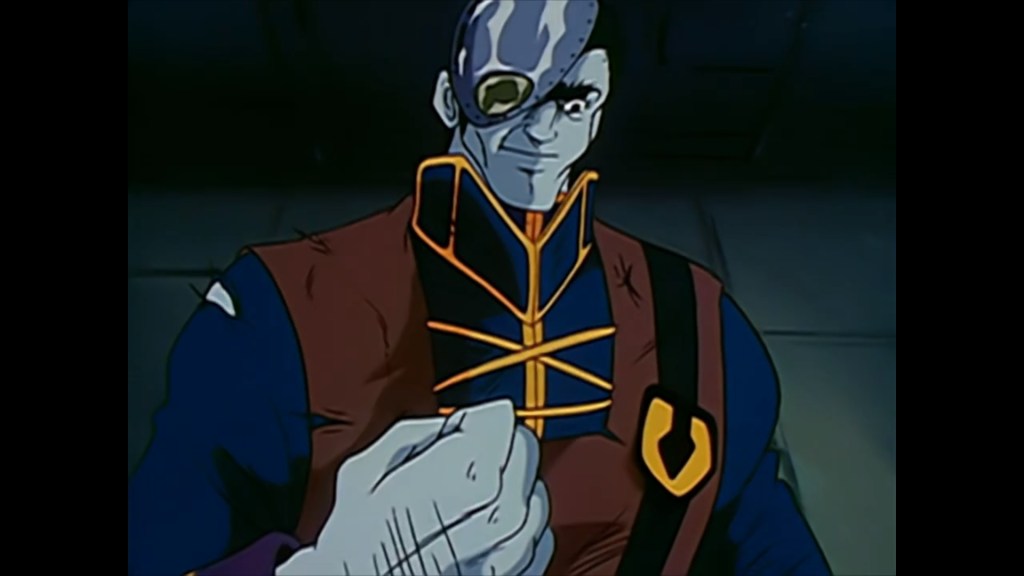

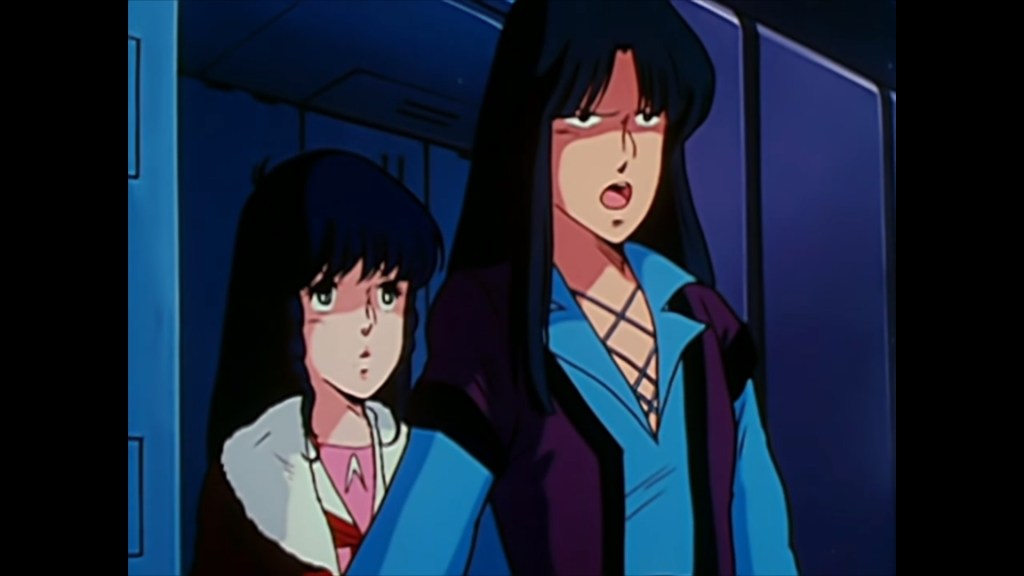


A nightmarish version of Kyle as Breetai possesses Minmei. Interestingly, each character design employs a laced medieval shirt. Kyle’s character design also parallels the coattails of the Zentreadi uniform. Rick gives up being a soldier and tears off his uniform causing Kyle to melt. This fantasy foreshadows future events. Being a soldier is Rick’s fundamental conflict. He finally chooses his path and makes a decision in Episode 36 when he chooses the military and Lisa and rejects Minmei. In Episode 35 Minmei explicitly asks Rick to quit the military, and in DYRL she asked Hikaru (Rick) to remain on the observation deck with her. Merging Kyle and Breetai overtly casts Kyle as a villain. In the Final Thoughts section of this essay it is asserted Rick’s battles against the Zentreadi are an allegory for his own internal struggles against his most primitive urges to possess Minmei. Rick also has an external struggle with Kyle as a romantic rival for Minmei which creates jealousy. Rick’s internal and external struggles are symbolized here as Breetai and Kyle merged as a single villain. Minmei is the common denominator in Rick’s struggles. Minmei also bridges the divide between Rick the reluctant warrior and Kyle the pacifist as two opposing life choices. Fittingly, it was at Minmei’s urging Rick joined the military, and it was Minmei’s choice to accept Kyle as a romantic partner. Minmei is an audience surrogate for sympathizing with these two opposing philosophies.
The cockpit of Rick’s veritech morphs into his fanjet which recalls the detachable cockpit seen in Episode 3.
Rick and Minmei explore a section of the SDF-1 and see a huge battle. Minmei is quickly swapped for Lisa and in Robotech only Rick remarks how beautiful a distant battle appears. Paraphrasing, Lisa replies a battle may be beautiful from a distance but is not beautiful at close proximity. Lisa is then quickly swapped for Minmei again. Lisa’s dialogue may be commentary on courtship with Minmei which may have been illustrated in Episode 9 if Rick’s combat with the recon vessel was a metaphor for intimacy with Minmei. See the synopsis for Episode 9 for a discussion of this possibility.
In Robotech, within this dream sequence, the viewers explicitly observe Rick tell Minmei he is developing romantic feelings for Lisa. Rick’s internal dialogue states, “I wonder if she’ll pay more attention to me now that I’ve rescued her.” This paints Rick’s insecurity and doubt as well as his motivation for joining the military.
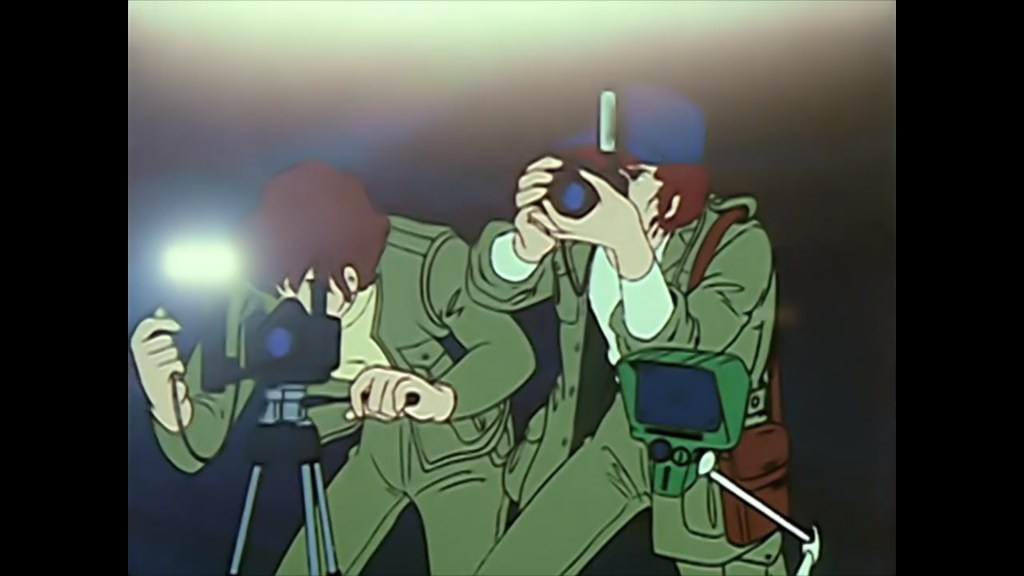

Paparazzi flash bulbs capture photos of Rick and Minmei. The animation is originally from Episode 9. This will be portrayed in DYRL at 00:25:01.
In SDF Macross but not in Robotech, Minmei sings a song titled “Cinderella.” Any Cinderella theme proposed here was not consciously intended by the creators of the SDF Macross series. Reportedly, Mari Iijima, the voice actor for Minmei, wrote this song at 16 and when asked to sing something beautiful for Episode 4 she chose this song. Mari Iijima has explained this was a love song for an unrequited love she experienced at the age of 16. The romantic situation did not allow her to make her feelings known so she was only able to express her feelings as Cinderella in song and then return to her real world self, similar to Cinderella at midnight. This allusion may reveal the SDF-1 as a glass slipper for humanity, the trainer veritech as a glass slipper for Rick, micronian culture as a glass slipper for the Zentreadi, or simply Minmei rising from lowly waitressing to intergalactic princess. The wicked stepmother and stepsisters may be any of the shortsighted authority figures or villains in this series. Minmei and Lisa are each embodiments of the Cinderella archetype. They both come to be recognized for their attributes after a period of being neglected. The synopsis for Episode 26 discusses Lisa’s Cinderella symbolism. Minmei previously sang this song in Episode 4. Minmei sings this song in DYRL at 00:51:20 framing her capture by Britai (Breetai) as analogous to Cinderella after the ball. However, Clash of the Bionoids is edited so this scene occurs at 00:38:35 and Minmei sings Do You Remember Love? This is a continuity error as the melody and lyrics have not yet been discovered in-universe.
While the appearance of Mari Iijima’s song “Cinderella” was an unplanned improvisation, it illuminates this series as belonging to the genre of Fairytale Inversion. This series inverts several motifs normally observed in fairytales. The villain character Breetai defects and allies with Earth forces. Earth is not spared but instead is almost totally annihilated. Lisa is trapped underground in the Grand Cannon and rescued by Rick as opposed to Cinderella being locked in the attic or a princess imprisoned by a king in a turret of his castle. Rick as a knight errant character does not defeat Dolza but Minmei as a princess character seemingly defeats the villain. Rick will not find love with the princess-like Minmei but with the more practical Lisa. Exedore turns out to portray the “Honest Advisor” trope instead of the “Evil Chancellor” or “Treachorous Advisor” tropes.
The song “Cinderella” may reveal even further serendipity assuming Mari Iijima was inspired by the 1950 animated Disney film. The song’s placement in this series forms a full circle. First, the 1950 animation helped a very young Mari Iijima process and express her emotions. This reveals the benefits, purpose, and usefulness of art and media. Second, the animation inspired her out-of-universe song. Third, the song was then inserted into animation for this series. Finally, presumably the animation of SDF Macross and Robotech would assist a new generation in comprehending the real world they inhabit similar to the original 1950 feature-length film.
Rick and Minmei almost kiss but a missile interrupts them when it crashes through the ceiling. Suddenly Rick is kissing Lisa in front of Dolza. This transition from Minmei to Lisa balances the earlier transition in this episode when Breetai transitioned into Kyle.
As previously discussed in the synopsis for Episode 14: Global Report, this episode is a clip show. Interestingly, this clip show, in contrast with Episode 14, utilizes subjective abstract images to convey hyper-meaningful plot threads. This episode is an example of subjective art and imagery communicating more meaning more quickly than an objective news article or narration. This episode shows instead of tells. This episode encapsulates the entire arch-plot of Episodes 1 to 36 which is Rick’s first crush. This arch-plot is discussed in the Final Thoughts section at the end of this essay. The artistic achievements accomplished in this episode manifested under high pressure deadlines and lack of resources which constrained Shoji Kawamori inside a creative box. As reported by Gwyn Campbell in SpeakerPODcast Episode 119, in a 2018 presentation at the Macross the Art exhibit in Takarazuka City, Japan, Shoji Kawamori related SDF Macross producer Hiroshi Iwata informed him to save production resources for Episode 17 so they might be used for Episode 18. With less than two weeks to the broadcast date for Episode 17, Shoji Kawamori created the episode using old clips, new dialogue, and editing. In these circumstances his artistic talents and choices focused the major plot points and enabled the rebroadcast of Minmei’s freefall. As discussed in the synopsis for Episode 2, this freefall may capture the core essence of this entire series.
This episode provides evidence supporting the theory Rick is the main character of this series. The viewers observe his dream which implies the series is seen from his perspective. However, this could be contrary to or parallel with Lisa recollecting the entire series. This series as seen as Lisa’s recollection is discussed in the synopsis for Episode 1: Boobytrap referencing the end credits footage and footage animated in Episodes 28 and 36.
Episode 18: Pineapple Salad in SDF Macross and Farewell Big Brother in Robotech
In SDF Macross, this episode is named for an uneaten meal Claudia prepares for Roy. In Robotech the title refers to Roy’s death.
Lisa visits Rick in the hospital and apologizes to him. This scene subconsciously reveals the interdependency of each soldier’s role in the military effort. While Roy exhibits freedom and independence, all pilots are, in reality, quite vulnerable and dependent upon their flight control officers. Roy’s cockiness is simply a façade which he will later explain to Claudia in Episode 33. Thus, Rick places great trust in Lisa during every mission. His life is in her hands. This scene illuminates a deep bond and relationship between Rick and Lisa even if only on a professional level.
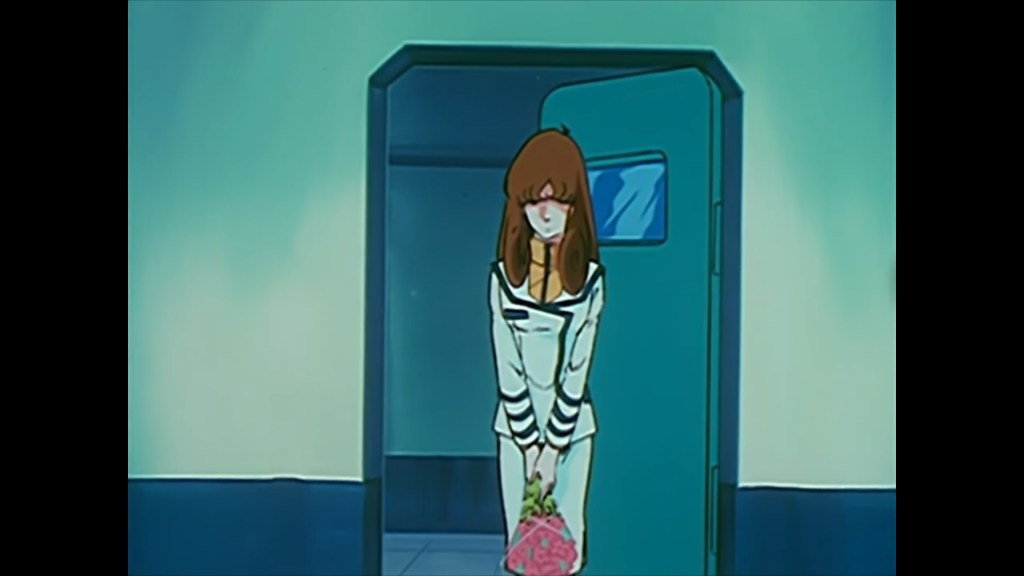
Lisa’s body language in the doorway to Rick’s room deserves analysis. Her head is bowed and her shoulders are slumped. She holds Rick’s floral bouquet in a flaccid presentation. This imagery illustrates her guilt and shame.
Claudia asserts Lisa is in love with Rick. This dialogue establishes the romantic tension between Rick and Lisa and Minmei. Claudia will be a consistent plot device foreshadowing the inevitability of Rick and Lisa’s romance in this series.

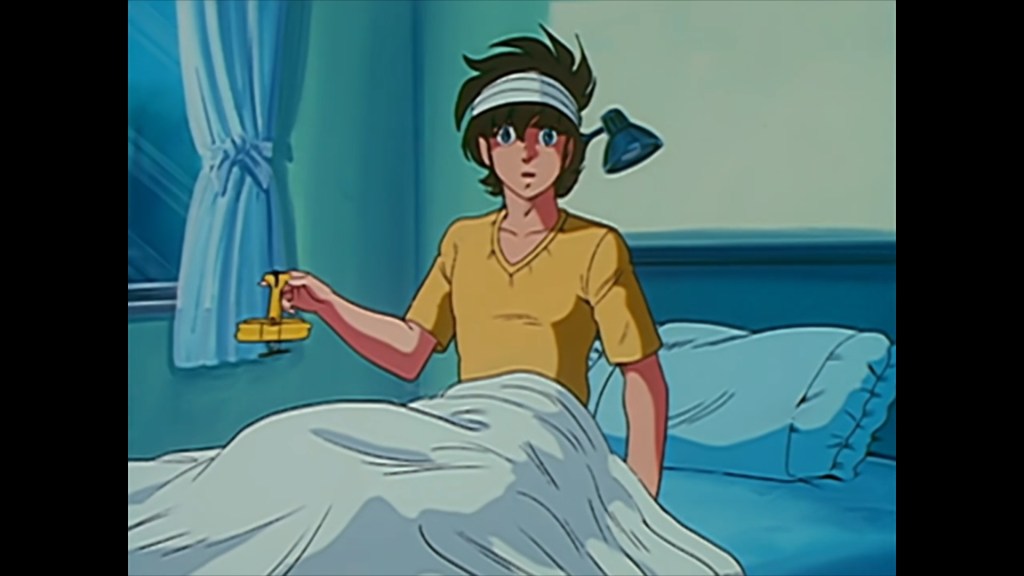
Roy visits Rick in the hospital and gives him a box containing a model airplane. Later, Rick drops and breaks the yellow biplane upon hearing of Roy’s death. The broken plane is symbolic of Roy’s demise. The image of a yellow biplane will later be shown in a flashback scene in Episode 28: My Album. The yellow biplane scene was present in SDF Macross Episode 1 but deleted in Robotech TOBV of Episode 1. This scene is retconned into Episode 1 in Robotech Remastered. It is not a true retcon in the strictest sense of the word as the scene was originally present in SDF Macross.
Roy’s character was named in honor of the Fokker aircraft company. The yellow plane shown in this episode is a 1918 Fokker D.VII which includes a skull and crossbones emblem. Roy’s surname emphasizes the symbolism of the yellow biplane in this episode.
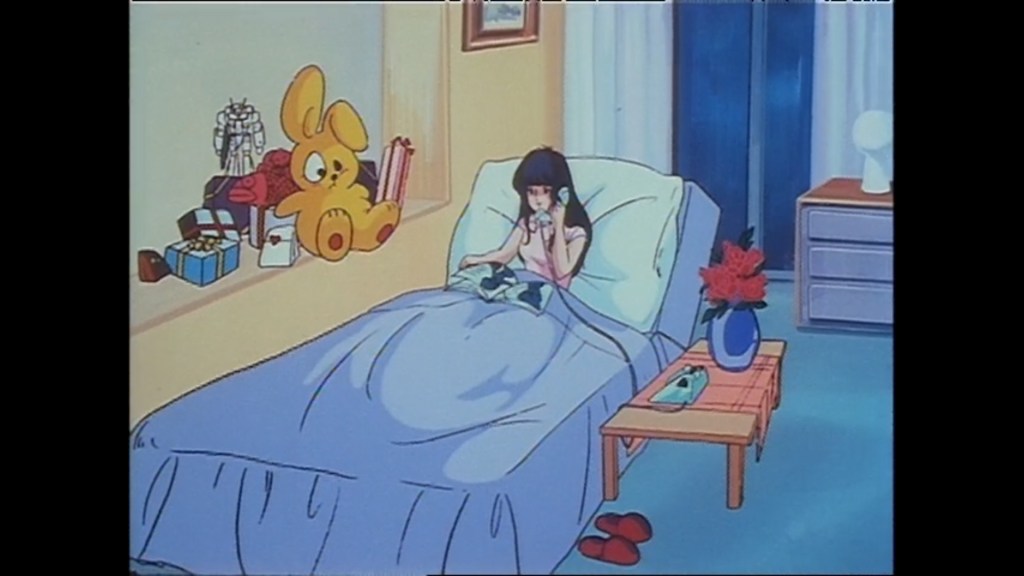
This episode introduces the Minmei doll which matches the same level of scale as the figure atop the Miss Macross trophy. The gamut of sizes in this series is referenced in the synopsis for Episode 6: Daedalus Attack. The five levels are the Minmei videogame avatar and Rick’s Minmei charm, the Minmei doll, micronian fistfights, Zentreadi vs Battloid fistfights, and SDF-1 Daedalus Attack fistfights. A toy battloid is seen on the toy vendor’s shelf. In the SDF Macross version of the next episode, Minmei has a toy battloid in her hospital room. This footage is deleted from Episode 19 in Robotech. These toy battloids provide another element of balance and harmony in this series.
Khyron tells Miriya there is an ace pilot on the SDF-1. Khyron is likely referring to Max however first time viewers have only observed Max’s combat superiority in Episode 8. Episodes 1 to 17 never show any interactions between Khyron and Max. As reported by Gwyn Campbell in SpeakerPODcast Episode 119, in a 2018 presentation at the Macross the Art exhibit in Takarazuka City, Japan, Shoji Kawamori related from the initial conception of SDF Macross the intention was to purposefully design the main character to not be the best pilot so as to break from this formulaic approach to anime. Thus, Max is a better pilot than Rick.
In SDF Macross, as Roy asks Minmei to visit Rick, Kyle tells Roy soldiers enjoy fighting, and they are responsible for their own injuries. Kyle has no sympathy for Rick. However, this may also foreshadow Roy’s impending demise and an interesting out-of-universe opinion inserted by the creators of this series. Kyle’s comment may be reflected in Miriya’s focus on vengeance instead of a military objective and Roy and Rick’s origins as air show performers. Miriya has lost her professional focus, and Roy and Rick use the military to fulfill their desire to fly airplanes supporting Kyle’s accusation of enjoyment. Kyle’s dialogue is not present in Robotech. A somewhat related topic with or without Kyle’s dialgoue, is both SDF Macross and Robotech viewers may both realize killing can be justified or unjustified. Miriya, Khyron, and Azonia are examples of being unjustified in their desire to kill. Roy and Rick are justified when they kill. This is often implied by these Zentreadi seeking revenge or glory while the micronians are often reluctant warriors.
There is a contrast between Rick and Minmei in the hospital room and the dogfight raging outside the ship. Rick’s tranquility and convalescence is disturbed when Miriya brings the battle to Rick’s window. Alternatively, Max and Miriya’s battle of the sexes may illustrate Rick’s internal struggles with Minmei. This episode may comment on the futility of romance as Minmei is distant and aloof from Rick, Max and Miriya are locked in combat, and Roy succumbs to death.
In the subtitled dialogue for SDF Macross, mirroring Khyron’s earlier comment to Miriya, in Claudia’s private quarters Roy references Max as a real ace on Rick’s team. In this statement, Roy passes the torch to Max. The viewers are assured the military mission will continue uninterrupted even after Roy’s passing. This dialogue is absent from Robotech and the ADV English dub of SDF Macross.
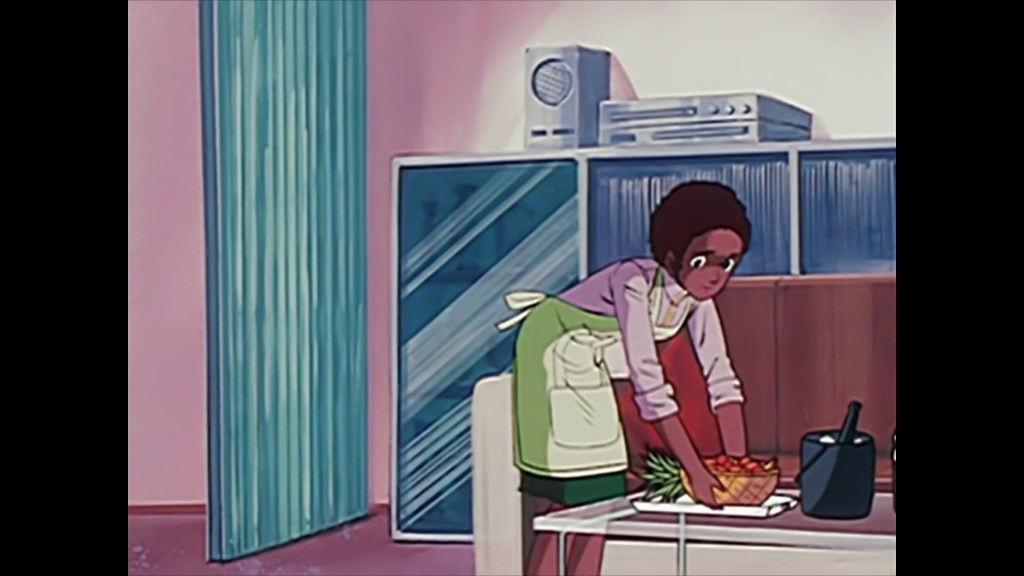

Claudia prepares a pineapple salad for Roy. Later, in Episode 35: Romanesque, Minmei drops a pineapple in a supermarket. The image of it splitting on the floor is juxtaposed with an explosion. The pineapple salad is twice referenced in the lead up to Roy’s death in this episode. It becomes a missed meal and will later bear resemblance to Ben’s missed meal in the next episode.
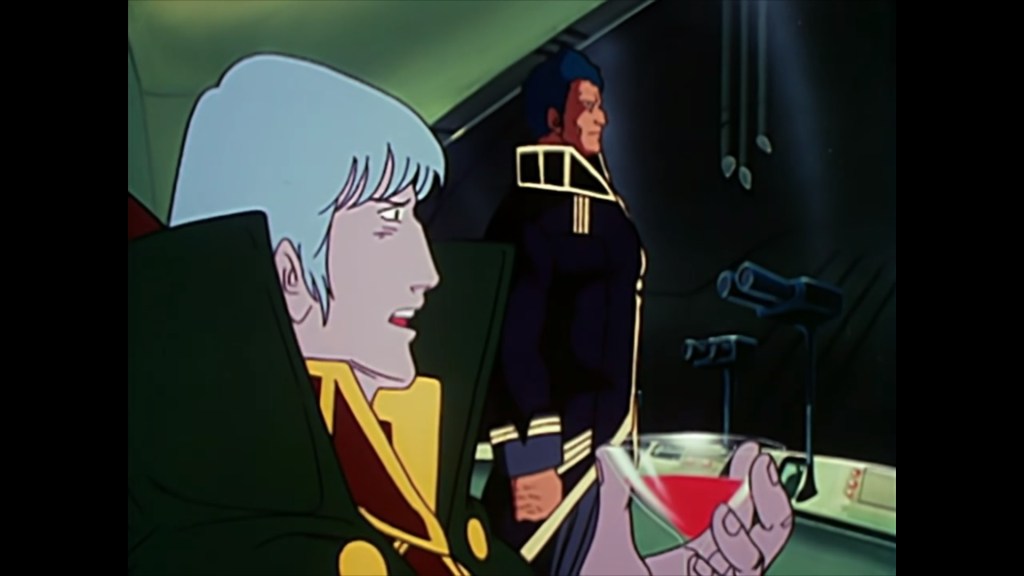


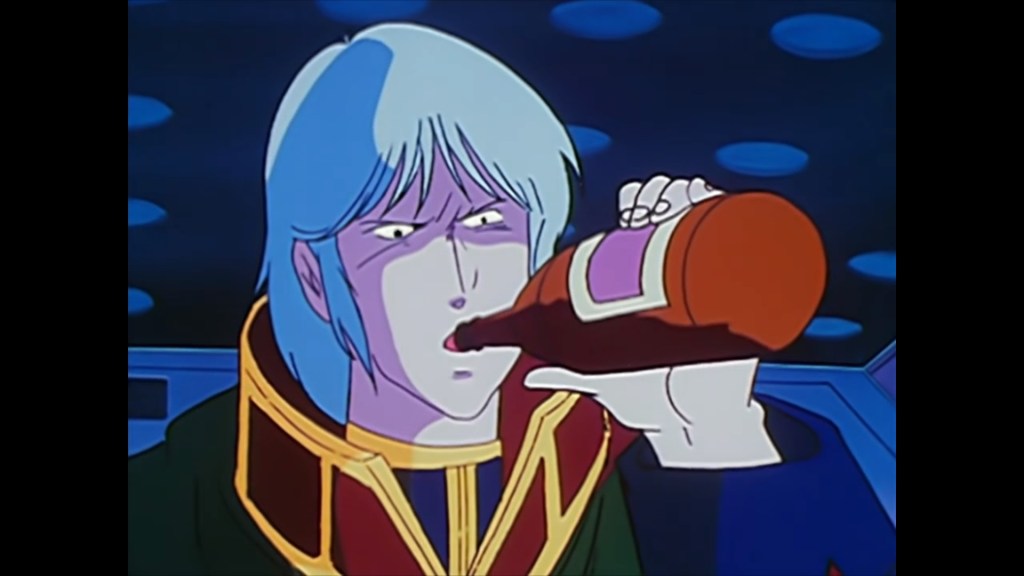
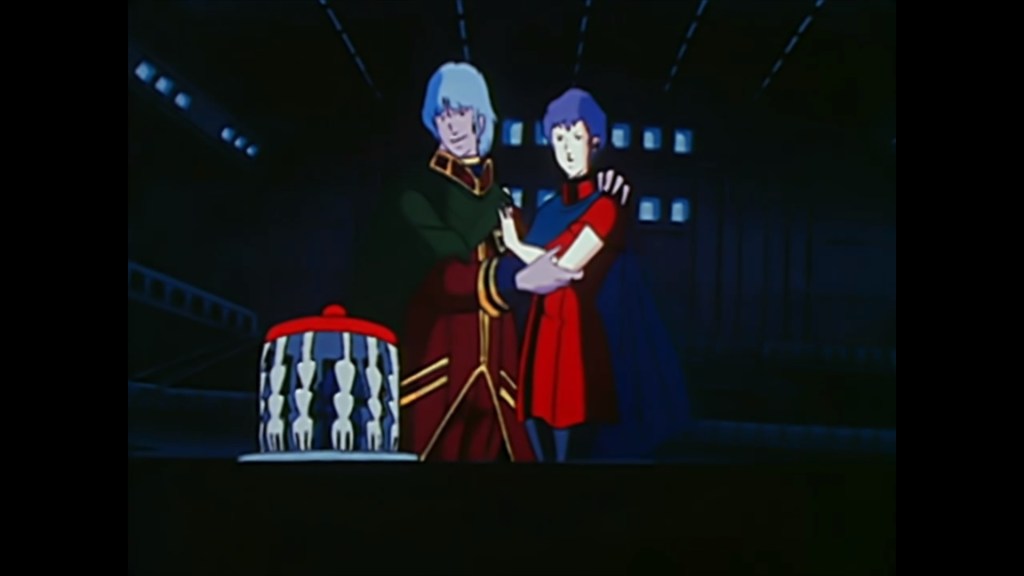

Along with the missed meal, Ben and Roy also share a vitality and passion for life. Roy enjoyed alcohol, cigarettes, and women. As Roy’s counterpart and Rick’s foil, Khyron also has a vitality and passion for life. The role of vitality will be discussed in the synopsis for Episode 20. Roy’s death may also demand Khyron’s death as Khyron is Roy’s counterpart and Rick’s foil. Khyron will die in Episode 36.
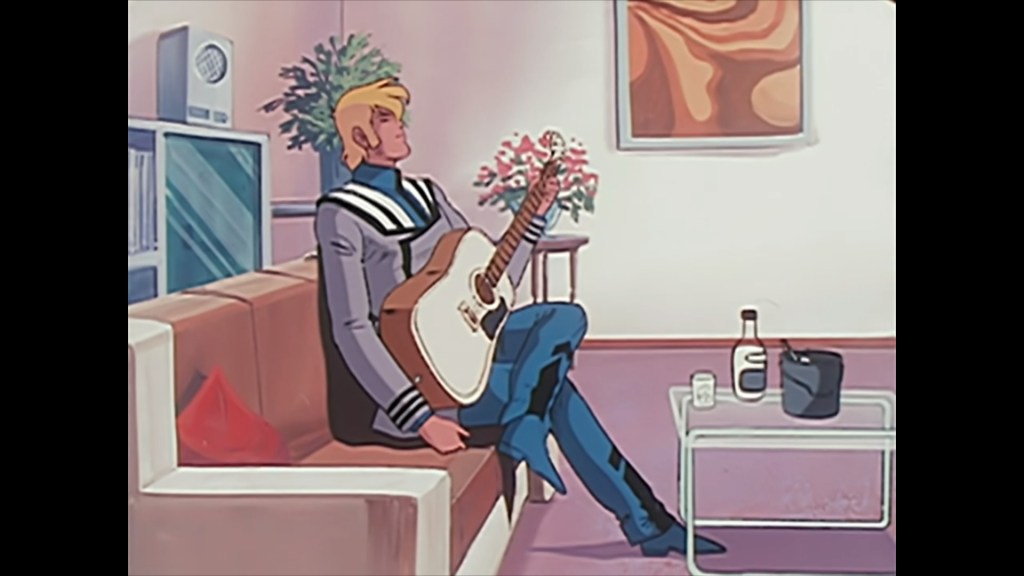
Roy’s death in this series contrasts with his death in DYRL at 00:45:21. In the television series he seems to exhibit a cosmic wisdom and alpha-male acceptance of his fate. He is fatally wounded but does not die in battle. However, in DYRL he is killed in action. Each death is heroic as each Roy lives and dies by his personal code of thankless military duty and comradery. Roy lives and dies on his own terms with a spirit of independence. In the television series Roy kept his date with Claudia fulfilling his obligation and personal ethos. This contrasts with Minmei breaking her date with Rick in Episode 10 and Rick arriving late for his date with Lisa in Episode 34. The final image of Roy with an erect guitar in his lap may be symbolic of his virility being maintained until his last moment of life. Seconds later he and the guitar fall to the floor. Prior to his death in SDF Macross the subtitles state he is looking forward to some pineapple salad (This is altered to “Keep that pineapple salad in the oven,” in the ADV English dub), but in Robotech he states he is hunting for pineapple salad. Thus, the SDF Macross subtitles utilize an event flag which is slightly obscured in Robotech as the Robotech dialogue does not reference the future expectation strongly stated in SDF Macross. The SDF Macross subtitled dialogue is the event flag highlighting Roy never eating the pineapple salad because the event of his death will prevent him. Sophisticated viewers may foresee Roy’s death due to the title of this episode and obvious plot techniques utilized to increase the dramatic impact of a character’s imminent death. However, even sophisticated viewers are misled as first Miriya’s search for an ace turns out to be Max instead of Roy. Then, Max and Roy each return safely to the SDF-1, and the viewer experiences a sense of relief. Soon the viewer is completely at ease as Roy relaxes in Claudia’s private quarters. However, the superior writing blindsides the viewer with Roy’s death at this vulnerable moment. Three elements foreshadowing his death were his wince in the cockpit, two mechanics shocked at the unseen appearance of Skull-One’s presumably bloody cockpit, and Lisa commenting on Roy’s flight pattern while returning to the SDF-1. However, the viewer only realizes the significance of these events in retrospect. All of this combined provides for an undulating dynamism in the tension of the episode. In Clash of the Bionoids Roy’s death is highly edited and is more tragic than heroic. Robotech TOBV edited the death scene and did not televise the bloody imagery. Robotech Remastered restored this footage.
Manga artist Kazuhiko Shimamoto has stated the hairstyles of Roy and Rick broadcast their status as main characters which heightens the impact of Roy’s sudden death.
From an out-of-universe perspective, Roy was a plot device guiding Rick from pacifism to militarism. This goal was achieved in Episode 5. Much like his in-universe ace pilot persona, Roy, the ace plot device, can now hit two targets with only one maneuver. Roy’s death creates a vacuum for a mature Rick to fill as well as demonstrates the Zentreadi threat to the viewers’ favorite characters. Roy’s character arc portrays tropes termed “The Plot Reaper, Too Cool to Live, The Worf Effect, and the Mentor Occupational Hazard.”
Claudia’s heartbreak now shares a symmetry with Lisa’s loss of Karl Riber. These two tales of loss are a dramatic technique to later emphasize the fragility of the romantic relationships between Max and Miriya and Rick and Lisa.
For the third time in this series, Minmei falls asleep in Rick’s presence. She first fell asleep on his shoulder when they were marooned. Then, she fell asleep on their flight to Yokohama in the fanliner. Finally, she falls asleep at the foot of his hospital bed in this episode. The Episode 4 scene of Minmei sleeping was also reused in Episode 17. This may portray the “Beautiful Dreamer” trope. There are several references to Minmei’s hectic schedule throughout this series. Her schedule quietly implies her efforts in show business are just as important as any soldier’s combat roster. This instance and several others subtly equate Minmei with the war machine. The diagonal fastener on the front of Minmei’s cheongsam dress seen in this episode and previously seen in Episode 5 closely resembles the military uniforms’ double-breasted overlapping closure. Rick was awarded a medal in Episode 8 and Minmei was crowned in Episode 9. Rick had a training montage in Episode 6 and Minmei had a training montage in Episode 11. In Episode 15 Minmei met with her parental authorities while Captain Gloval and Lisa met with their military leaders.
For the third time Minmei is a passive actor in events around her furthering her ingénue status. First, the Mayor entered her in the Miss Macross Contest. Second, her piano teacher instructed she hang up the phone with Rick. Third, Minmei’s manager discovers her asleep on Rick’s hospital bed and escorts her out. This scene required Rick to portray the “Stealth Hi/Bye” trope as he is missing from the room.
Interestingly, in the span of this episode Rick convalesces and emerges from unconsciousness into a world without Roy. Rick recovers from his injury and rises to the position, but not yet rank, previously held by Roy as will be explained in Episode 19. This transition began with Rick’s injury in Episode 16 and ends with his assignment to Skull-One in Episode 19. Rick’s hospital stay is a period of metamorphosis. In fiction there is a pattern regarding the continuity of the military mission which reflects the out-of-universe reality. In this pattern the veteran ranking soldier passes on his skills to the next generation. The viewers and their society can rest assured the new recruits will carry on the mission. Roy has died but the next generation will continue his fight as evidenced by Roy’s compliments regarding Max. The circle of life is demonstrated in observing Rick healing and emerging from the hospital but Roy being mortally wounded and dying in the very same hospital. The apprentice becomes the master. There is a yin yang or Zen balance presented in these events. In the SDF Macross version of Episode 1 Rick’s dialogue states, “I won’t be in your shadow forever, Senpai.” This dialogue foreshadowed the events of this episode.
The concept regarding the continuity of a military mission referenced in the previous paragraph manifests again in Episode 36 of Robotech when Lisa explains Captain Gloval pushed her into an escape capsule.
Episode 19: Burst Point in SDF Macross and Bursting Point in Robotech
The name of this episode refers to the explosion of the omni-directional barrier (barrier system).

A subversive theme is continued here when Captain Gloval disobeys orders and schemes to cruise at low altitude over population centers in a bid to find a home for the refugees of the SDF-1. The image of the SDF-1 in battloid mode or attack mode (Storm Attacker mode) floating over a city is symbolic of the looming tension of this episode. This tension will be released in a total catastrophe.
Claudia reminisces in Robotech, and scenes of Roy in a yellow biplane are shown. This is not shown in SDF Macross. For viewers of Robotech this alludes to the model airplane in the previous episode.
In the Filmrise subtitles of SDF Macross Lisa asks Rick, “Your girlfriend sings this song, right?” In the AnimEigo subtitles she asks, “It’s your girlfriend that sings this song, right?” Similar dialogue is spoken in Robotech. However, in SDF Macross the scene paints Lisa as interested in Kyle while in Robotech the emphasis is on Lisa being interested in Rick. In each version, this scene further illustrates the love triangle dynamic and possibly Lisa’s insecurity and doubt.

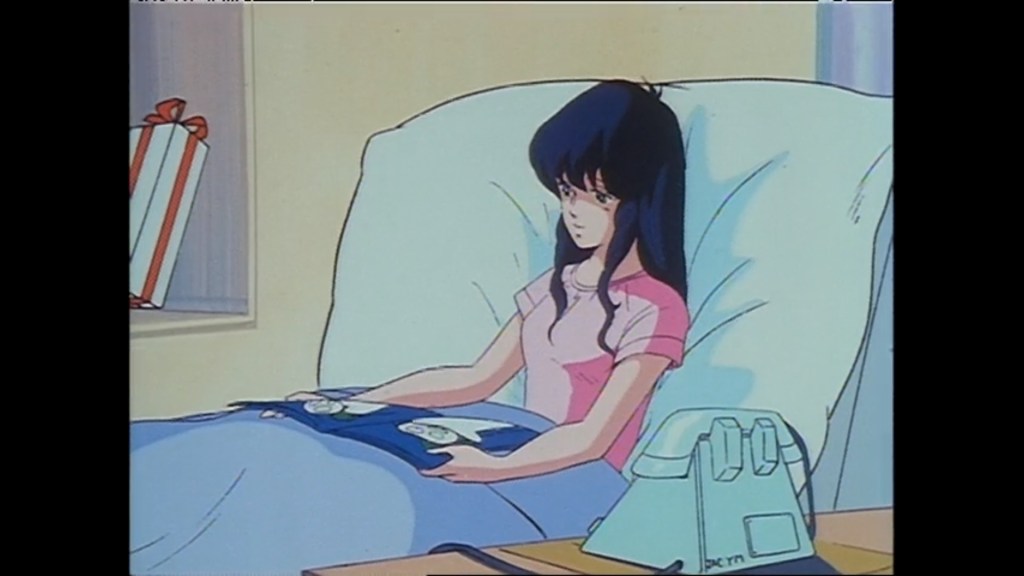
Minmei has a fainting spell which may foreshadow the impending explosion of the omni-directional barrier. This scene seems to connect recent and future events by a mystical female premonition similar to the protoculture shapings portrayed in the Robotech novelizations. Possible metaphors for her fainting and the barrier overload are Roy’s death, Claudia’s heartbreak, Ben’s impending death, Rick falling in love with Lisa, Skull-One passing to Rick, or the impending destruction of a North American city. At the end of this episode Minmei will be shown in high spirits in the hospital. As Rick was in the hospital in Episodes 16, 17, and 18, Minmei’s hospitalization continues her analogous relationship with Rick spanning Episodes 9 to 11 in relation to training montages, medals, trophies, and Miss Macross scene juxtapositions between the two characters. By the end of this episode, Minmei and the SDF-1 reflect each other as Minmei recovers in the hospital, and the always ambiguously symbolic SDF-1 rises from a smoldering crater.
Rick is assigned Roy’s Skull-One veritech. This portrays either the “Ancestral Weapon” trope or the “Legendary Weapon” trope. The SDF-1 itself can be viewed as a legendary weapon. See the synopsis for Episode 6 for a discussion of the symbolism of Rick’s aircraft assignment.

Ben does not finish his meal which foreshadows his death. The meal provides a specific example of the pleasures of living allowing the viewers to experience empathy and sympathy with Ben’s character. Ben constantly expressed vitality including his hunger for this meal. All his vitality was an orchestrated dramatic device so as to contrast life with death. There is a familiarity with Roy’s missed meal in the previous episode. In DYRL at 01:12:55 Kakizaki (Ben) arrogantly mocks the Meltrandi (female Zentreadi), Hikaru’s (Rick’s) courage, and Hikaru’s (Rick’s) relationship with Misa (Lisa). Kakizaki (Ben) quickly meets his demise. The writers may be punishing him for his arrogance, sexism, or lack of seriousness. Ben’s character is utilized to contrast with Rick. Rick’s etiquette and polite demeanor is illuminated against the backdrop of Ben’s crassness and impoliteness.
This episode marks the fifth time Khyron is thwarted in his attempts to destroy the SDF-1.


A micronized Miriya is inserted into the SDF-1. It was a full size Miriya whom in Episode 12: Big Escape had inserted the three spies. Miriya’s insertion is not actually animated but is alluded to by the imagery of Female Power Armor (Queadluun-Rau) and the transport container housing Miriya in her micronized form. For Zentreadi terminology in SDF Macross, the writers intentionally used Japanese letters and words which would be difficult to Romanize. Queadluun-Rau is one such example of this artistic choice. The containers used to transport the three spies in Episode 12 and Miriya in this episode are similar to the carrier for Dana in Episode 30.
Robotech repeats the use of enemy spies across the series. In the second Robotech war, the Robotech Masters orchestrate the capture of Zor Prime in Episode 47: Outsiders. In the third Robotech war, the Regis orchestrates the infiltration of Ariel in Episode 70: Enter Marlene.
The explosion of the omni-directional barrier is the last accident of the SDF-1. These accidents being the reflex firing of the main gun on Macross Island, the failure to launch using anti-gravity, the fold taking Macross Island to Pluto, attaching two Naval ships to the SDF-1, the disappearance of the fold system, the transformation of the SDF-1, the Daedalus Attack, using the distortions in space-time fabric to create the pinpoint barrier system, the interference of the pinpoint barrier with the main gun, and of course the omni-directional barrier. These events portray the SDF-1 as a misunderstood tragic hero demonstrating the “Tragic Hero” trope and “Classical Anti-Hero” trope. The SDF-1 also portrays the wise fool or holy fool archetype, “The Fool” trope, and the “Unluckily Lucky” trope. Several of these accidents will prove serendipitous when they are combined to defeat Dolza in Episode 27. These being the two naval ships, the transformation, the Daedalus Attack, the pinpoint barrier system, and the omni-directional barrier. This combination portrays the “Combo Platter Powers” trope.
The explosion of the omni-directional barrier portrays the “Phlebotinum Overload” trope.


The barrier is shown as a sphere around the SDF-1 on the macro level as well as a miniature in the barrier control room on the microcosm level. As it destabilizes, the sphere in the control room flattens and warps. This imagery will later be resurrected in Episode 27: Love Flows By when the barrier is intentionally overloaded to destroy Dolza’s fortress. In Episode 27 the animation shows energy tentacles flatten, arc, and wrap around the Earth high in the ionosphere. In Robotech, this is similar to imagery in Episode 61: The Invid Invasion (Adapted from GCM Episode 1: Prelude to the Offensive). Later in Episode 85: Symphony of Light, a similar pattern of energy in reverse will assemble and exit the Earth. This imagery from Episode 85 was previously discussed in the synopsis for Episode 1 as it related to the crash landing of the SDF-1, but that discussion does not relate to the imagery here in Episode 19. These images are recurring images due to their iconic nature or simple coincidence. A similar atmospheric phenomenon is animated in the beginning of Episode 32: Broken Heart as incoming Zentreadi missiles enter the atmosphere. Another recurring image is the sphere around the SDF-1 shown here and that of the hyperspace fold in Episode 3.
Kyle is interviewed by the press and indicts the phenomenon of celebrity worship which is fairly metafictional as Minmei is based upon, and there are several allusions to, out-of-universe Japanese pop stars Akina Nakamori and Seiko Matsuda. In SDF Macross Minmei’s voice actress, Mari Iijima, was just beginning her singing career when cast as Minmei and did in fact become a successful musician. Kyle’s dialogue can also be seen as an ironic metafictional indictment of the out-of-universe viewers themselves and their Otaku subculture. This continues a subversive theme previously discussed in the synopses for Episodes 7 and 9. Another metafictional element of this series is the three spies as the first Otaku. The out-of-universe fans of this series are somewhat manifested in the characters of the three spies. SDF Macross is partially credited with popularizing the word Otaku.
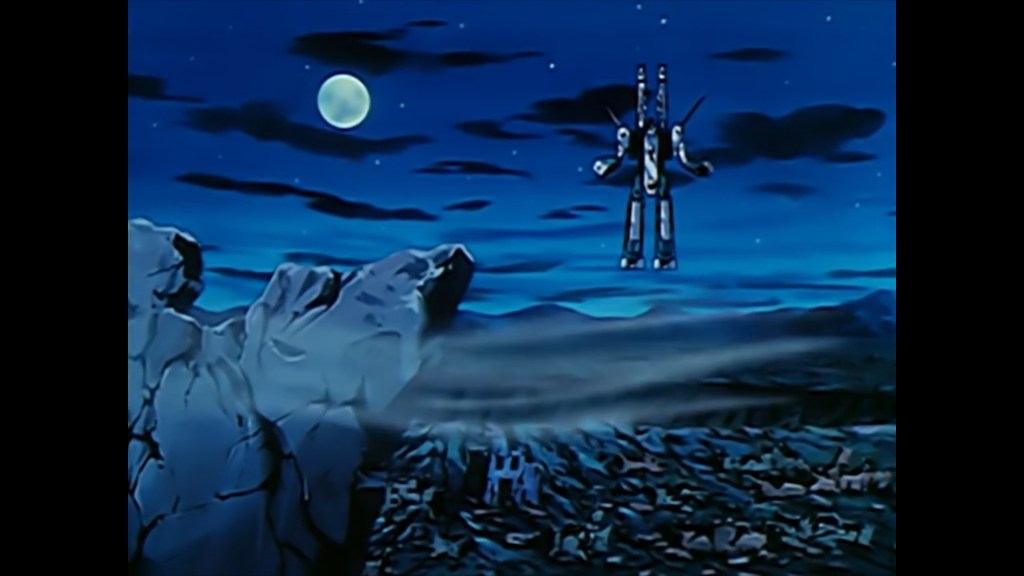

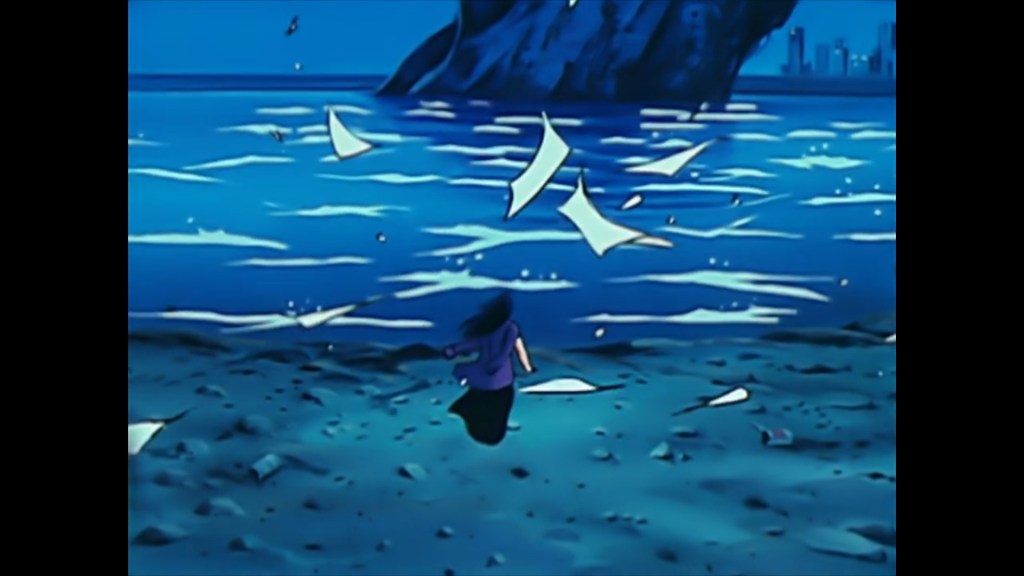
In the falling action of this episode, Rick hangs up on Minmei which may repeat the motif of the barrier overload. Rick may have reached his own personal overload or “Bursting Point” as Roy and Ben are dead, an entire city was destroyed, and Kyle just delivered an anti-military press conference. As the SDF-1 hovers above the surface of Earth a wind blows across the screen. This is similar to winds in Episodes 23 and 34. These all portray the “Empathic Environment” trope.
In the end, Minmei’s fainting spell was simply the writer’s ploy to keep Minmei at the forefront of the viewers’ thoughts. Minmei is the center of attention and manages to loom larger than the epic events of this episode. The writers of her character and Minmei herself have successfully placed the obedient viewers on a tight leash of focused attentiveness.
Episode 20: Paradise Lost
This episode is likely titled for the destruction of an entire asylum city in the previous episode. The title may also refer to orders issued in this episode from the United Earth Council. The orders are for the SDF-1 to leave Earth. Another interpretation references the three spies reluctantly leaving the SDF-1.
In the SDF Macross version of this episode Dolza scolds Breetai for speaking impolitely. Breetai denies the accusation. This dialogue subtly hints the emotional contagion of the micronians is effecting Zentreadi behavior either by Dolza’s paranoia or Breetai’s informality. This dialogue is not present in Robotech.
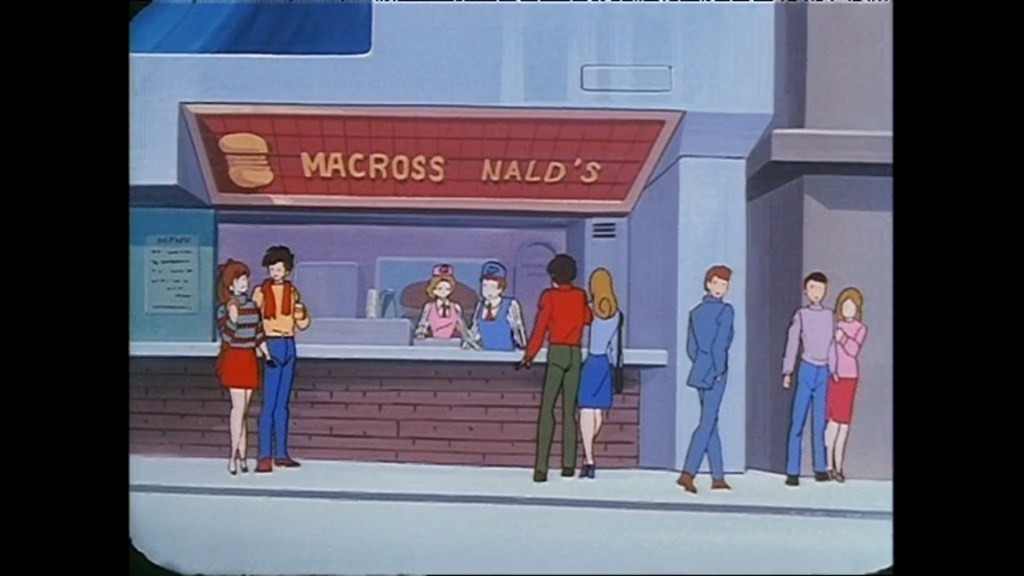

SDF Macross portrays a young teenage couple at Macross Nald’s which is a metafictional allusion to McDonald’s. The young couple is a younger version of Rick and Lisa with a subversive occult internal likeness possibly foreshadowing their romantic union. This scene is edited in Robotech and the dialogue is cut. The characters in SDF Macross state Macross is their home and they are Macrossians.
Captain Gloval receives written orders to leave Earth. In Robotech only, his internal dialogue states he accepted the orders in protest. This continues a subversive tone in this series. Viewers can relate to Captain Gloval as his superiors reflect authority figures such as parents, employers, and governments. The SDF-1 and its crew portray the “All of the Other Reindeer” trope as they have been continuously rejected in spite of their specialness. Other relevant tropes are “Hero with Bad Publicity, Dude, Where’s My Respect?, and Never Accepted in His Hometown.”
The three spies return to Breetai’s flagship and are returned to full size. They escaped the SDF-1 by piloting a battlepod in the same way the micronians escaped from Azonia’s fleet in Episode 12: Big Escape. This imagery will recur when micronized Zentreadi defect to the SDF-1 in Episodes 22 and 23. Furthermore, the three spies secretly keep some micronian souvenirs which continues a subversive theme in this series.


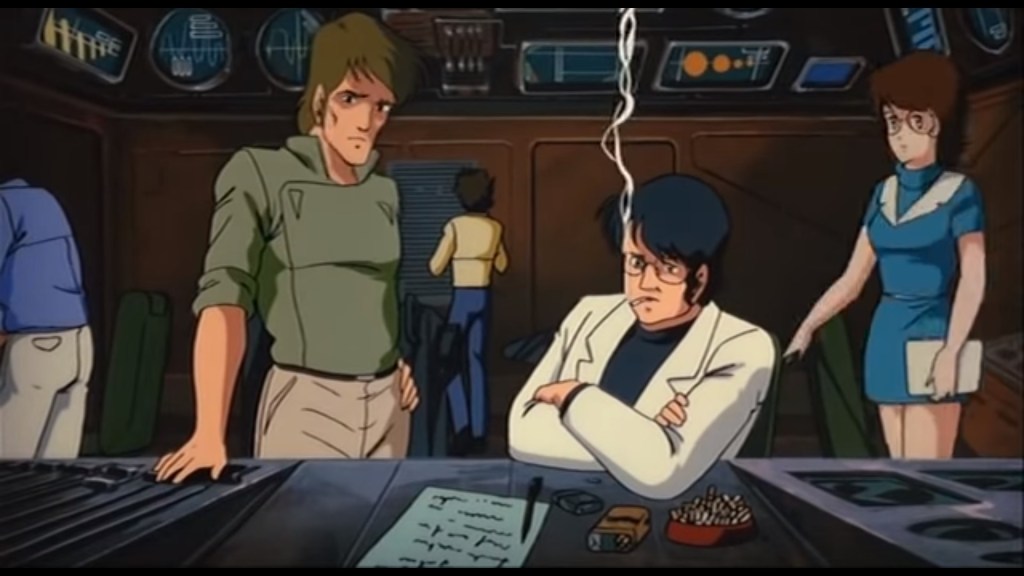
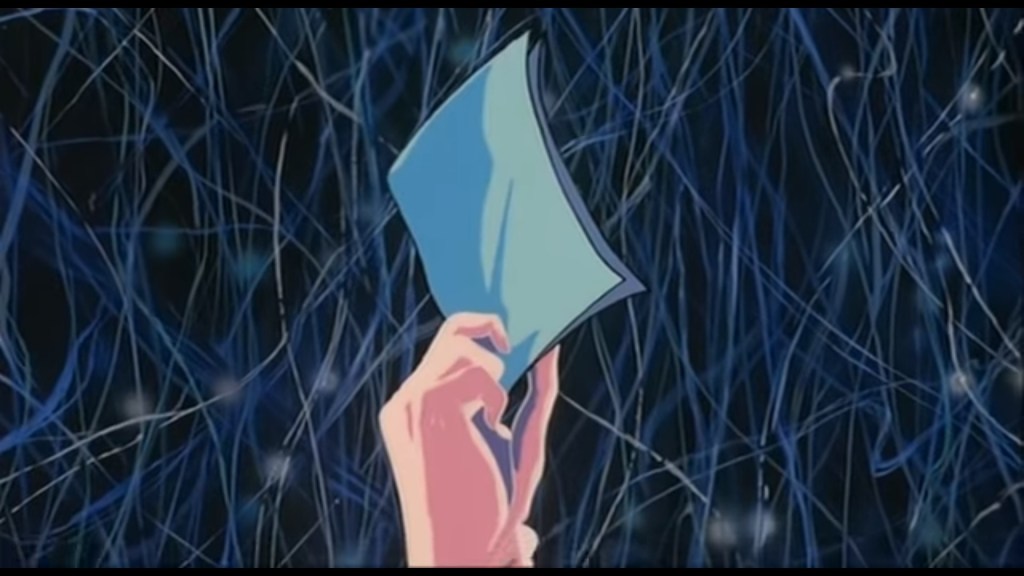
As Captain Gloval prepares to deliver a live television broadcast to the refugees onboard the SDF-1, voiceover dialogue from the camera crew and production staff is audible to the out-of-universe viewers. This dialogue is not present in SDF Macross. Production crew dialogue was previously audible at the beginning of the Miss Macross Contest in Episode 9 and was present in both SDF Macross and Robotech. This artistic choice by the creators of this series infuses a tone of realism into the out-of-universe audience’s viewing experience. These “behind-the-scenes” perspectives approach metafiction but do not quite break the fourth wall as they only reveal in-universe production and not out-of-universe production. These scenes portraying show business technicians may be egocentric if viewed as instances of the animators animating themselves. A major plot point of DYRL involves the miclones (micronians) possessing an ancient melody retrieved from the Protoculture civilization. The miclone (micronian) songwriters must create lyrics for this melody which can defeat the Meltrandi (female Zentreadi). These in-universe songwriters may be an egocentric boast of the importance of writing by the out-of-universe writers. Misa (Lisa) eventually discovers the original lyrics written by the advanced Protoculture civilization which prove to be akin to the ultimate force in the universe possibly further emphasizing the power of the in-universe writers as surrogates for the out-of-universe creative staff. In the falling action of DYRL Minmay (Minmei) raises the paper containing the lyrics high above her head as if praising a sacred religious text in a possible self-aggrandizement by the out-of-universe writers. This gesture is removed from Clash of the Bionoids.


This episode is a tragic trough in the rhythm of this series. Some tragic elements are Roy and Ben are dead, Rick has to write a condolence letter to Ben’s parents, Max is promoted which slightly decreases Rick’s relative stature, Rick and Max watch a sunset possibly symbolizing the end of all their journeys, Minmei is out of Rick’s reach, the three Zentreadi spies have grown fond of micronians and regret leaving them, the SDF-1 must leave Earth, and Captain Gloval cries on television.

Minmei rallies the citizens of the SDF-1 to stay onboard. This scene was previously discussed in the synopsis for Episode 13. Her ability to exploit the citizens’ comradery and group identity was foreshadowed earlier in the dialogue at Macross Nalds in the SDF Macross version of this episode. Minmei as well as Kyle portray “The Empath” trope by coming to the aid of Captain Gloval. However, for most of this series Minmei portrays the “Lack of Empathy” trope concerning Rick. In this scene Minmei’s positivity is symbolized by the SDF-1 rising to the heavens. Minmei’s juxtaposition with Captain Gloval in this scene is discussed in the synopsis for Episode 13. She demonstrates superior diplomatic skills in comparison to Captain Gloval.
Throughout this series the Zentreadi society is indirectly illuminated by their confusion and reaction to micronian society. The viewers are left to imagine and infer details about Zentreadi culture. For viewers, this defamiliarizes their own out-of-universe reality by the opportunity to observe society from a foreign and alien point of view. Omitting details about Zentreadi society is an artistic device known as Iceberg Theory or the Theory of Omission. Only the tip of the iceberg is observed. In this case the observation is Zentreadi reactions. The submerged iceberg, or character’s background story, exists in the mind of the viewer by way of inferences from indirect evidence. Counterintuitively, a fuller and richer viewing experience is enjoyed by actually omitting facts and details allowing the unlimited imagination of the audience to explain and justify onscreen behaviors.
Episodes 15, 16, and 20 all indicate the refugees onboard the SDF-1 will not be allowed to return to Earth and the SDF-1 will be used as a decoy or diversion. After struggling to return to Earth, they are betrayed and turned away. This may be symbolism for young adulthood and new social roles. The SDF-1 may be seen as a wayward child returning home as an adult only to find they are no longer welcome. A paradox of their growth and maturation is their relationship to their home and family has been irreversibly altered. It is no longer possible to return home either spiritually, emotionally, symbolically, or literally. This internal change is hinted at on the microcosm scale by the three spies withholding micronian souvenirs. The three spies now find Zentreadi life empty and unsatisfying. Later, Breetai’s armada will similarly be unable to return to their previous lifestyle. The forces of the SDF-1 and Zentreadi will turn to each other for comfort and peer support. This comfort and peer support on the marocosm level will by mirrored by the resolution of the love triangle in Episode 36 on the microcosm level. The synopsis for Episode 27 discusses how their authority figures will be overthrown allowing the victors to blaze a new independent path into the future while also providing vicarious vindication for viewer’s identifying with this experience as it relates to their out-of-universe parental authorities.
Episode 21: Micro Cosmos in SDF Macross and A New Dawn in Robotech
The SDF Macross title may refer to the microcosm level of events as contrasted to macrocosmic events. This episode contains personal moments between characters which may represent the microcosm. It may be a reference to the name Macross itself. The Robotech title may refer to a romantic beginning between Rick and Lisa.

Jan Morris further portrays the “Alpha Bitch” trope as she previously did in Episode 9: Miss Macross. The relationship between Minmei and Jan retains the same tone as previously seen in Episode 9. Minmei seems to possess an almost supernatural luck as a wise fool or holy fool.
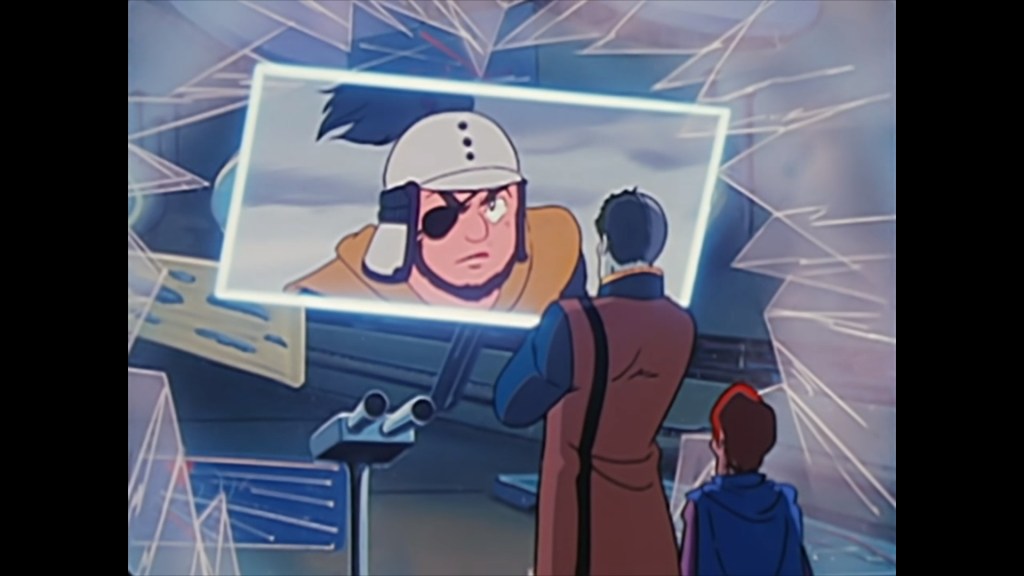
Minmei and Kyle star in a movie titled Small White Dragon (Shao Pai Long). In the film Kyle shoots lasers from his fingers at giants. This is obviously an in-universe as well as an out-of-universe metafictional reference to the characters’ battles against the Zentreadi. One scene shows Breetai with his faceplate watching a character with an eyepatch in the film which is highly symbolic and metafictional due to the similar design attribute in both these characters. In the brief scenes shown of the film, it is likely Kyle is the small white dragon. However, it is almost equally likely, Minmei is the small white dragon which may foreshadow and be embodied in her showdown with Dolza in Episode 27. In addition to its metafictional quality, this film is also another example of an artistic technique referred to as mise en abyme which is discussed in the synopsis for Episode 2. As discussed in the Final Thoughts section of this essay, SDF Macross is framed as an in-universe animated series portraying historical events for unseen in-universe viewers. Similar to Russian Matryoshka dolls and the mise en abyme technique, Small White Dragon is a film inside an animated series portraying unseen in-universe historical events later framed as Lisa’s reminiscence as she peruses Rick’s photo album. This utilizes a type of telescoping quality.

Minmei reserves a front row seat for Rick but he is never informed due to a miscommunication. An image of an empty seat adds to the romantic frustrations for these two characters and for the viewers of this series.
Kyle and Minmei kiss on screen. Rick and Lisa each leave the film in order to avoid seeing Minmei and Kyle’s impending kiss. This recalls Episode 11: First Contact in which the Zentreadi experienced disgust at seeing Lisa and Rick kiss. Rick will experience this disgust again in Episode 23: Drop Out when he witnesses Kyle kiss Minmei.
From Episode 21 to Episode 26, there are many Zentreadi references to Minmei’s film Small White Dragon. This is a trope titled “Aliens Steal Cable.” See the previous discussion of this trope in the synopsis for Episode 9.


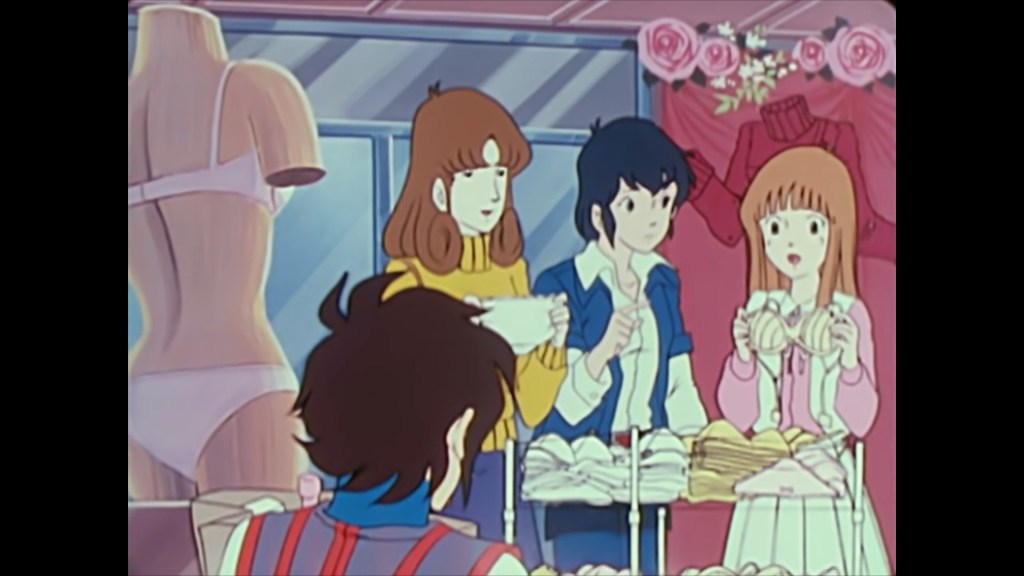


Rick stumbles exiting the film and touches Lisa’s posterior portraying the “Suggestive Collision” trope. This is an unintentional intimacy. Previously, in Episode 2: Countdown, Rick’s battloid similarly stumbled into Minmei’s bedroom. Lisa assumes the worst about Rick in this situation. Female characters’ assumptions concerning Rick’s honor have similarly been mistaken in Episodes 4 and 6. In Episode 4 a mouse scampered across Minmei which she mistook as Rick, and in Episode 6 Rick appeared to be a lecher in a lingerie store. Additional “Suggestive Collision” tropes occur in the original SDF Macross version of Episode 13 between Konda and a civilian inside the SDF-1 and in DYRL between Hikaru (Rick) and Minmay (Minmei) at 00:16:10.
Minmei falls in a crack and is rescued by Kyle, but she imagines him as Rick. In Episode 5 Rick did rescue Minmei from a crack in the floor. In Episode 13, Rico fell in a crack.
Max sees Miriya in person for the first time.

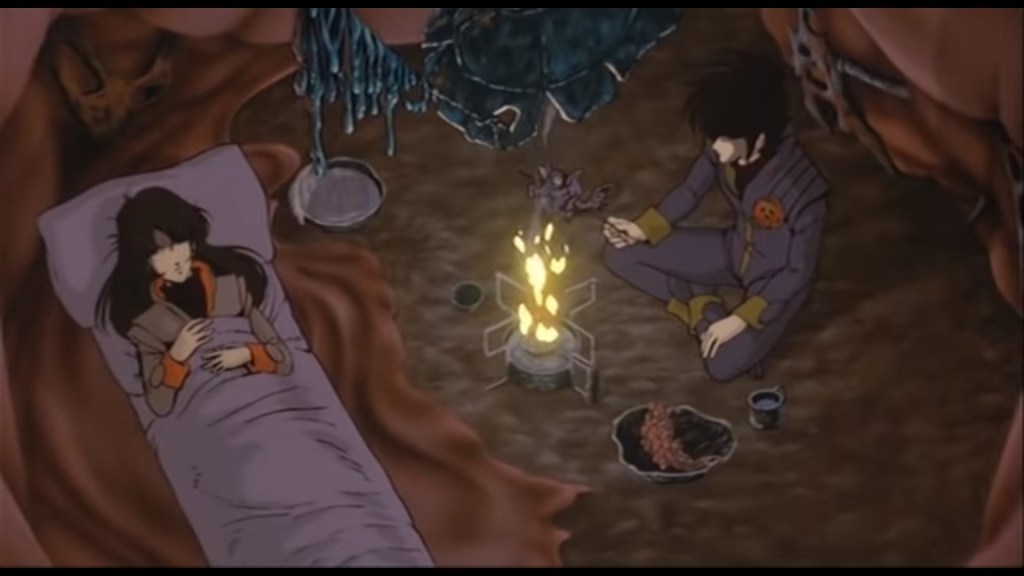
Rick and Lisa become trapped by bulkheads during a transformation. This bears a familiarity with Rick and Minmei being marooned inside the SDF-1 together as well as Rick and Lisa’s time recovering from falling into liquid in Episode 12: Big Escape. Rick and Lisa almost kiss but the bulkheads recede opening an escape route. This interrupted kiss is similar to Rick and Minmei’s interrupted kiss at the moment of their rescue in Episode 4. In Episode 5: Transformation Rick made his own transformation when he decided to join the military. During the transformation here in Episode 21, Rick seemingly has a transformation of heart as he grows closer to Lisa. DYRL also traps these characters together. Hikaru (Rick) and Minmay (Minmei) were trapped inside the engine block at 00:13:00 and Hikaru (Rick) and Misa (Lisa) were confined by rain inside a tent at 00:55:30 as well as left to wander a post-apocalyptic Earth. Hikaru (Rick) and Misa’s (Lisa’s) tent in DYRL recalls Rick and Minmei’s tent in Episode 4. All these scenarios of two characters being trapped together embody one stage of a seventeen stage template for studying fiction termed the hero’s journey which includes a stage titled the “Belly of the Whale.” While this paragraph lists many examples of this stage on the mirocosm scale, the fold to Pluto presents the same stage on the macrocosm scale. In this metaphor the universe or solar system is the whale, and being far from Earth and near Pluto is the belly of the whale. This may provide a pleasing harmony as Rick and Minmei are marooned inside their parachute tent, which is in an empty compartment isolated from their peers, who are in a city, which is inside the SDF-1, which itself is in the outer solar system.
Rick calls Lisa an old lady again in this episode.
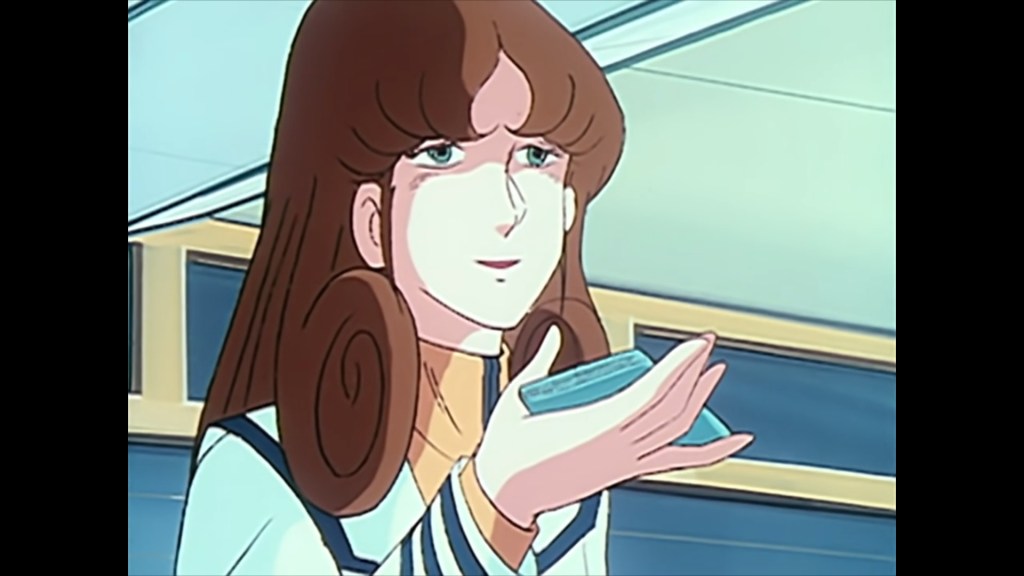
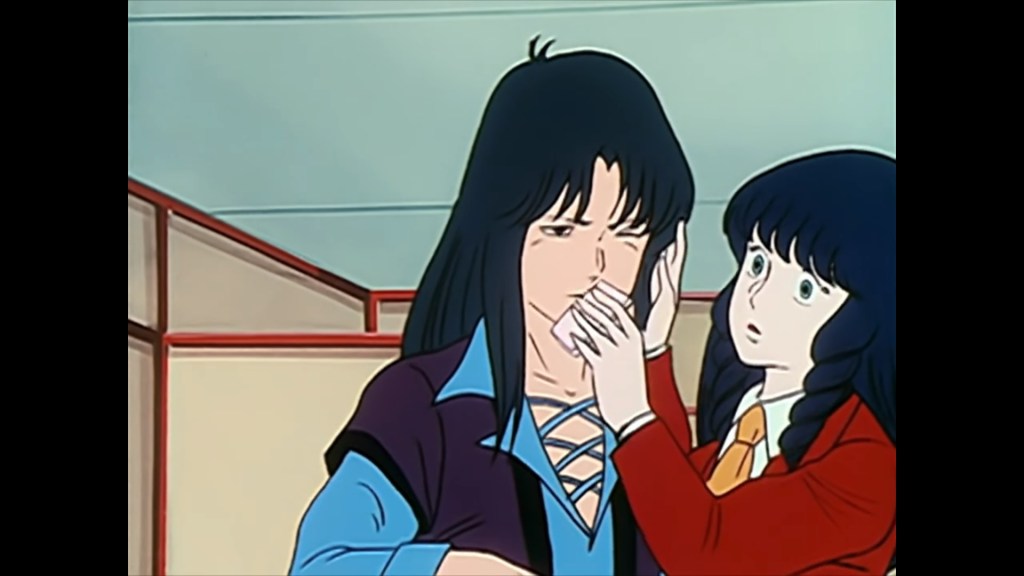


Lisa cries while trapped with Rick, and Rick offers her his handkerchief. She accepts it. This resembles Episode 16 when Lisa offered Kyle her handkerchief, but he refused it. This may symbolize the narrowness of Kyle’s code of morality and the breadth of Rick’s chivalry. Later, Lisa buys Rick a can of soda which balances the handkerchief exchange. In DYRL at 00:56:56 Hikaru (Rick) places his handkerchief on Misa’s (Lisa’s) forehead. Misa (Lisa) is resigned to death, feels hopeless, is self-pitying, and refuses to eat. She notices Minmay’s (Minmei’s) autograph on the handkerchief at 00:58:10 and views herself as a burden dependent upon Hikaru (Rick). She begins to eat and become self-sufficient. Later, at 01:27:15 she states it is too miserable to be receiving sympathy form Hikaru (Rick) while in his private quarters after walking in on him and Minmay (Minmei). Both these scenes illustrate the value Misa (Lisa) places on her independence and her criteria for a healthy romantic relationship. She does not want pity or to be a burden. The autogaphed handkerchief in DYRL recalls the same plot device discussed in the synopsis for Episode 34 of SDF Macross. Misa’s (Lisa’s) brief loss of appetite, hopelessness, and acceptance of death in DYRL recalls her expressions of the same sentiment portrayed in Episodes 7 and 12 of the television series.


There are several misunderstandings in this episode. First, Rick does not get the message Minmei has reserved a seat for him at the movie theatre. Second, in Robotech Miriya believes the long line for the movie is a line to honor the hero who defeated her. Third, Minmei sees Rick’s empty seat and assumes he is not present when in reality he is standing in the rear of the audience. Fourth, Exedore and Breetai believe the movie is a historical document. Fifth, Lisa believes Rick groped her purposefully. Sixth, Miriya passes in front of Max without realizing he is the object of her search. Seventh, Rick leads Lisa into a dead end. Eighth, an automated mobile beverage machine misunderstands Rick’s cries for help. And ninth, Rick, Lisa, and the viewers are undecided about interpreting Kyle escorting Minmei arm in arm into a hotel. These nine elements set a tone of tension and uncertainty for this series.
Episode 22: Love Concert in SDF Macross and Battle Hymn in Robotech
In SDF Macross this episode is named for a Minmei concert. In Robotech the title is likely a generic reference to combat scenes in this episode. The Robotech title may foreshadow the weaponization of Minmei’s songs in Episode 27. The title Battle Hymn will also be shared with the title of the fourth Robotech novel.
Dolza observes Kyle shooting lasers from his fingers.
Rick has an existential crisis wondering why he is on the SDF-1. He decides his purpose is to fight to protect Minmei. This motivation was previously hinted at in Episodes 2, 4, 5, and 17. Later, in Episode 29: Lonely Song, Minmei will likewise have an existential crisis wondering who or what she is singing for. In Episode 36 of SDF Macross, Lisa resolves her own crisis and explains to Minmei she may not be able to create culture, but she can protect it. In Episode 36 of Robotech Lisa explains her purpose is her new mission to find the Robotech Masters. The Zentreadi race experiences an existential crisis as they discover culture and a new mode of living.
Sammie, Kim, and Vanessa are moved by Minmei’s song while listening on the bridge. They also notice its emotional effect on Claudia and Lisa. This validates the effect Minmei’s songs have on the Zentreadi.
This episode contains another Daedalus attack, but Exedore orchestrated it in order to allow military forces to board the SDF-1.
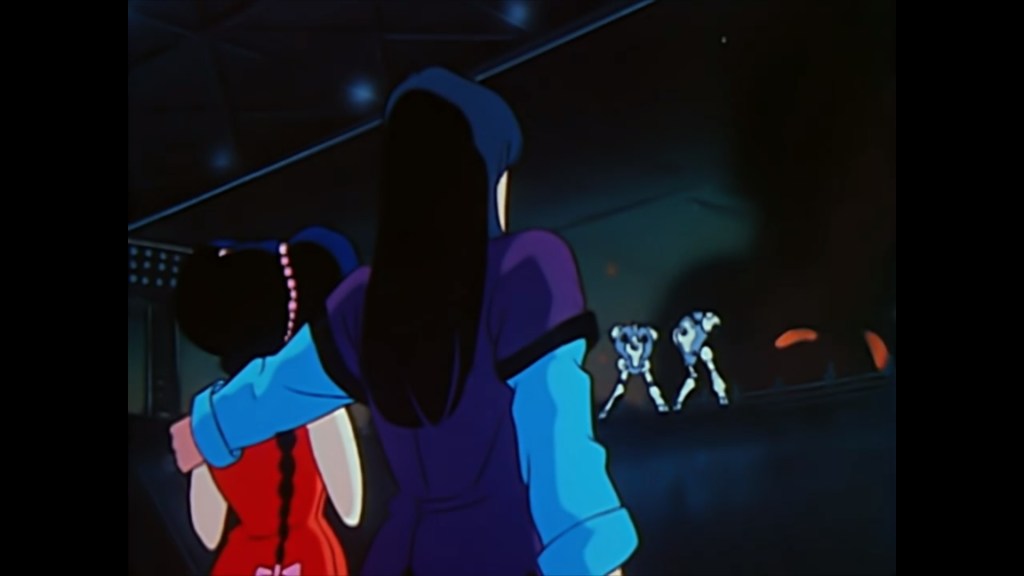

Minmei’s concert is interrupted by battlepods which will repeat in Episode 32. In SDF Macross Minmei sings “Love Flows By” which will later be the title of Episode 27. This song is subtitled as “Love Drifts Away” in the AnimEigo DVD subtitles which is also the AnimEigo title of Episode 27. This connection is absent in Robotech. Minmei sings to prevent panic in the audience and project a sense of a controlled environment.

At the end of this episode, as Minmei nurses an injured Kyle, there is an animation error and Minmei’s eyes are black empty holes. Her eyes may be intended to represent an affectionate squint or shining eyes and are simply poorly rendered. Animation errors throughout this series introduce the existence of the writers and creators of the animation which moves the series into a metafictional realm. The viewers can no longer suspend disbelief and are momentarily forced to contemplate themselves in relation to the artists creating the fictional material. Throughout this series there are many artistic devices such as black and white scenes, fades, and dissolves. Often, the animation errors are so small and fleeting the viewers are left to ponder if the image was an error or an artistic choice. This stimulates an intellectual analysis and scrutiny in the viewers’ minds which may add to the pleasure and entertainment value of this series.
Similar to animation errors, recycled scenes may add to the charm of this series. The viewers may feel a sense of pride or superiority in noticing these repeated clips. It may engage the viewers in an egocentric phenomenon. Likewise, it may motivate the viewers to apply a closer scrutiny to the series in hopes of discovering other tricks of production.
Episode 23: Drop Out in SDF Macross and Reckless in Robotech
This episode title may be an alternate English translation of the word deserters as some Zentreadi are micronized and seek asylum on the SDF-1. A symmetry is presented here as while these Zentreadi leave their society, Lisa dutifully requests to leave her comrades aboard the SDF-1 to explain the situation of the recent defectors to the UEG. It is difficult to say what the Robotech title is referencing. Reckless may refer to Khyron firing on deserters within his ranks or to Kyle forcing a kiss on Minmei. It may also refer to the behavior of the Zentreadi deserters themselves or to Rick’s aggression after seeing Kyle kiss Minmei.
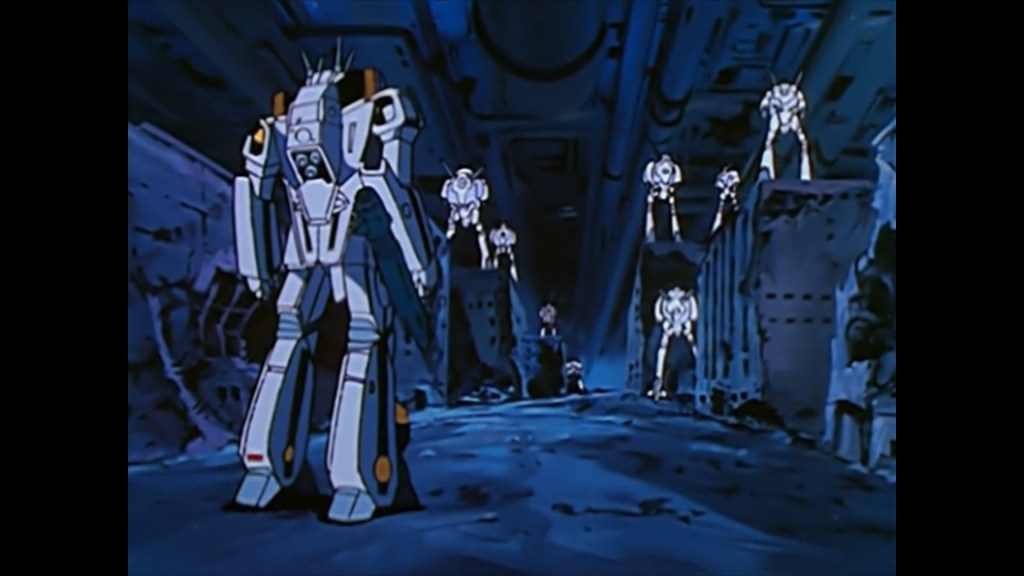


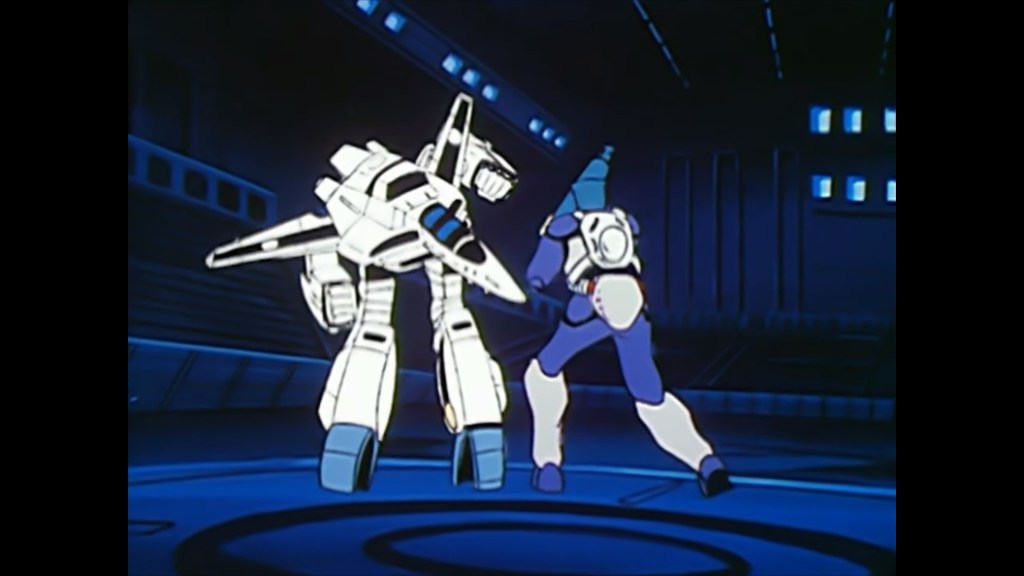


Kyle kisses Minmei against her will, but Rick misinterprets the kiss as reciprocated. Rick is shocked in the same way Dolza, Breetai, and Exedore were shocked when he kissed Lisa in Episode 11: First Contact. The tables are turned in a role reversal. A wind blows by Rick’s veritech symbolizing the vanishing of his hopes. A similar wind will blow for Minmei and Kyle in Episode 34: Private Time. Here, Rick is enraged at seeing Minmei kissed, and he channels it into combat aggression portraying “The Beserker” trope. This will be repeated in Episode 24 when Lisa’s shuttle is attacked, Episode 27 when Kyle and Minmei kiss as psychological warfare, Episode 32 when Khyron kidnaps Minmei, and Episode 36 when Khyron fires his main gun at Lisa. Rick portrayed milder versions of “The Beserker” trope in Episode 2 when he first fired on a battlepod and Episode 12 when he used a Zentreadi rifle to save Lisa.
Khyron is thwarted for a sixth time as his ranks defect to seek asylum aboard the SDF-1.
Micronized Zentreadi defectors discover a damaged Minmei doll which symbolizes the devastation of war.

Rick is summoned to a conference concerning the Zentreadi defectors. The scene is symbolic of each character’s role. Lisa and Max sit opposite RDF hardliners represented by Colonel Maistroff and a second unnamed Colonel. Captain Gloval sits in the middle representing balanced wisdom between the younger liberal ideology and the older conservative ideology. Interestingly Rick remains standing and comments on the proceedings as an outsider. Rick’s placement in the scene may symbolize a higher moral plane of independent ethics or detached natural law. Rick’s arrival to this conference bears an aesthetic resemblance to his award ceremony arrival in Episode 8: Longest Birthday. Similarly, Minmei will be the last arrival to a conference in Episode 26. The scene here in Episode 23 is a pivotal moment in the trajectory of this series. The approval of the asylum request sets into motion a sequence of events which will eventually lead to the alliance between Earth forces and Breetai’s command. In SDF Macross Rick opposes asylum but is persuaded to change his mind by Lisa. In Robotech Rick is not as initially opposed. The SDF Macross version of this scene portrays a close bond between Rick and Lisa. This subtle characterization is lost in Robotech. An interesting analysis arises here as previously in Episodes 7 and 12 Lisa was overly focused on her military mission and was unable to integrate the value of her own life and possibly her subordinates’ lives into a functional mental construct. Rick’s rescues of Lisa in Episodes 7 and 12 taught Lisa the larger mission of protecting human life. In addition to these life lessons demonstrated by Rick, Kyle and his anti-violence philosophy, demonstrated from Episode 16 through his press conference in Episode 19, have communicated to Lisa and the out-of-universe audience alternatives to combat and war. By integrating these examples, Lisa has manifested a more compassionate philosophy resulting in her urging of asylum. As stated previously, she persuades Rick in SDF Macross. Max, Lisa, and Rick persuade Captain Gloval. In Episode 25, Max will argue with Rick about his engagement to Miriya. Miriya’s beauty persuades Rick to give his blessing. The marriage of Max and Miriya also persuades Captain Gloval to hope for peace. The non-lethal combat portrayed in Episode 25 also manifests a more compassionate philosophy of war.

Captain Gloval often portrays the “Eye-Obscuring Hat” trope. This may imply he lives a contemplative life of the mind in an inner cerebral world. His hidden eyes imply humility, self-control, somber reflection, and an attempt to remain dispassionate. This aspect of his physical appearance may signify a life of immaterial virtue. His character design may have qualities of an ascetic making the visible material world a burden or impurity he must guard against. Captain Gloval’s hidden eyes in this scene as well as throughout this series may imply a higher moral plane similar to the previous paragraph’s proposed symbolism of Rick’s placement in this scene. In the Noboru Ishiguro interview included in the AnimEigo DVD version of SDF Macross, he states Haruhiko Mikimoto claimed to have based Captain Gloval’s character on Mr. Ishiguro. Interestingly, Mr. Ishiguro conjectures it was Captain Gloval’s bad karma which brought tragedy upon the SDF-1. This conjecture places the entire weight of the series on Captain Gloval’s soldiers. The Captain Gloval character does seem burdened by this guilt. The entire series could be viewed as Captain Gloval’s struggle against karmic and cosmic forces.
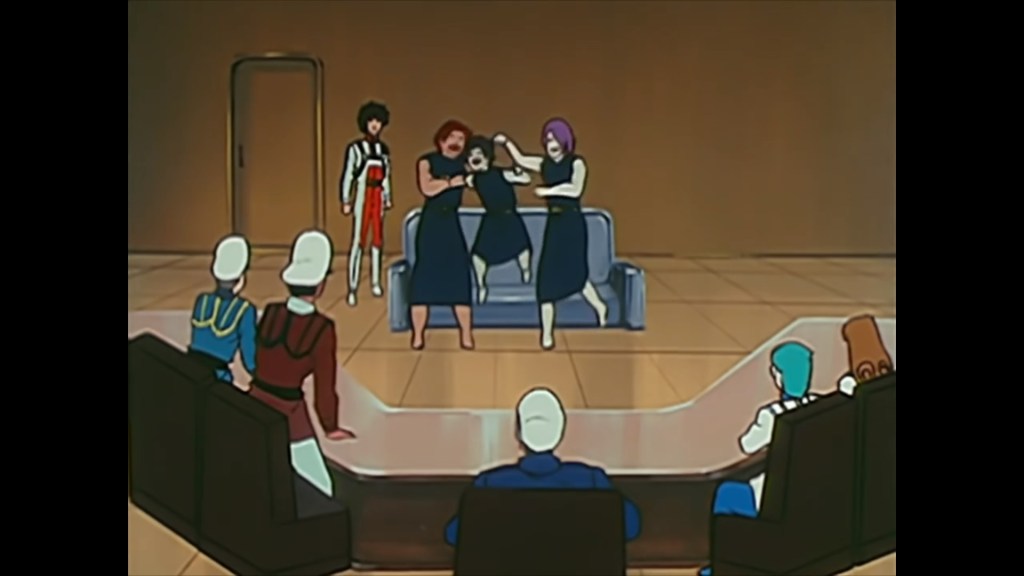
A harmonious balance is presented as the three former spies are meeting with Captain Gloval similar to earlier scenes when they were meeting with Breetai and Exedore in Episodes 10, 11, and 20.
Rick and Lisa volunteer to clean The White Dragon restaurant. This rebuilding may symbolize a new optimistic turn in the story arc along with the Zentreadi refugees presenting an opportunity for peaceful negotiations between the two societies. Rick and Lisa almost kissed in Episode 21, and cleaning may represent nesting behavior on both their parts. The act of cleaning also demonstrates military personnel as constructive rather than destructive.

A Minmei doll and The White Dragon restaurant are both damaged in this episode, and DYRL continues this theme with an abandoned city as an allegory for personal tragedy. Beginning at 00:48:20 Hikaru (Rick) and Misa (Lisa) spend time alone on the post-apocalyptic Earth. The scenery may symbolize Hikaru’s (Rick’s) loss of Minmay (Minmei) as well as Misa’s (Lisa’s) loss of Karl Riber. Karl Riber is not named in DYRL, but he is shown in a flashback at 00:21:10. Eventually, Hikaru (Rick) and Misa (Lisa) discover an abandoned ancient city belonging to the Protoculture civilization. All these images of desolation may symbolize Misa’s (Lisa’s) past romantic trauma as discussed in the synopsis for Episode 7 in relation to the imagery of Mars Base. In an abandoned kitchen in the city Misa (Lisa) has a psychic break with reality as she sets a table for an imaginary tea party. The domesticity of this scene is analogous to Rick and Lisa cleaning up The White Dragon restaurant in this episode. The imaginary tea party also recalls Minmei roleplaying as a bride in Episode 4. A seemingly apparent theme is the Hikaru (Rick) character is moved to sympathy, tenderness, and romance by the fragility of his love interests’ psyches. However, this may not be a theme at all but evidence of lazy storytelling and a repetitive shortcut in characterization. Anime tends to utilize storytelling devices which generate maximum emotional impact on the out-of-universe audience giving rise to the theme-like motif discussed in this paragraph. The fragility of these female characters may also be evidence of a more chauvinistic 1980s Japanese culture which demanded Rick be in a position of power in these relationships. These theories could also be applied to Minmei, Lisa, and Miriya’s flirtations with death which empower the male character in each of these interactions. The patriarchal point of view is also observed when Lisa apologizes to Rick in his hospital room, Minmei asks to live with Rick, Rick patronizes Minmei’s wedding fantasy and Misa’s (Lisa’s) tea party, and finally, with Minmay’s (Minmei’s) revelation of her own inauthenticity, as Rick is in a position of power in each of these interactions. See the discussion of Minmay’s (Minmei’s) inauthentic DYRL kiss in the synopsis for Episode 11 as it relates to the gender dynamic presented here.
The abandoned ancient Protoculture city in DYRL is named Altira which bears similarity to the name South Ataria Island.
In SDF Macross Lisa makes a slight comparison between her shock at Kyle’s anti-war philosophy and the Zentreadi’s shock at micronian civilian culture. This dialogue is not present in Robotech. Lisa previously compared her family’s military service to the Zentreadi’s military culture in Episode 12. There is a metafictional quality to in-universe characters pointing out the metaphorical symbolism between themselves and another story element eliminating the need for out-of-universe academic analysis. Lisa will make this comparison again in Episode 31. Out-of-universe analysis of Lisa’s self-commentary is meta-commentary.
Episode 24: Good-bye Girl in SDF Macross and Showdown in Robotech
In SDF Macross this episode is named for Rick escorting Lisa back to Earth. In Robotech the episode may be named for Max and Miriya competing in a videogame or maybe for Lisa confronting her father.


Claudia and Lisa salute in the hatch of the transport shuttle. As Claudia’s gangplank pulls away, Lisa is framed by a perfectly round hatch. Later, in Episode 27: Love Flows By, Rick will cut a hole in a Grand Cannon blast door and find Lisa inside a perfectly round hole repeating this motif. The round doorway is a portal Lisa exits through in this episode only to later return through to be reunited with Rick and her comrades. It is a passage between two different worlds.
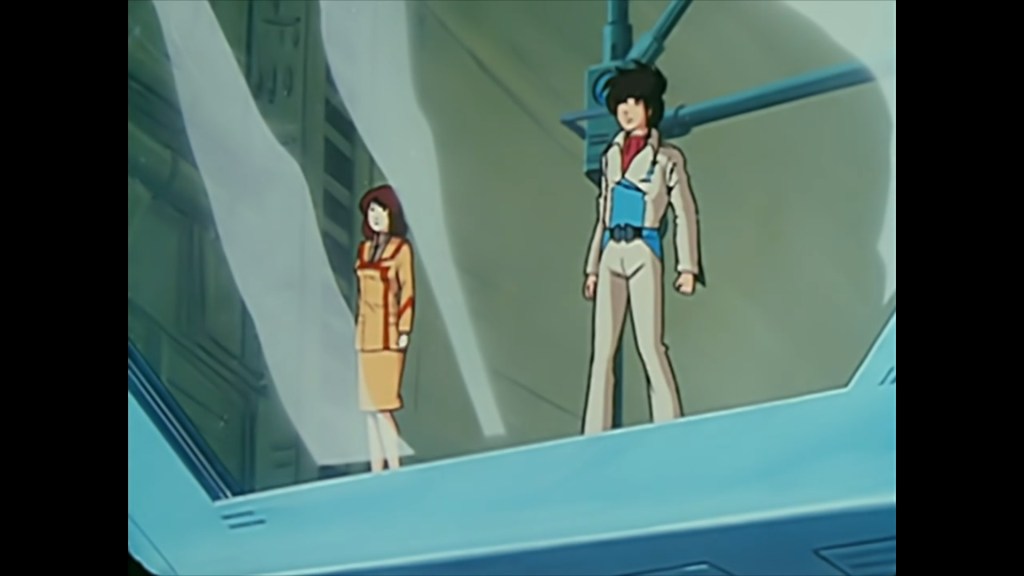
Rick portrays the “Air Voyance” trope when after speaking with Lisa on the phone he goes to a window and watches her shuttle leave for Earth.

While plot armor was discussed in the synopsis for Episode 9, the shuttle literally portrays plot armor surrounding Lisa when the shuttle is attacked. Lisa will also dramatically benefit from plot armor when she embodies the “Sole Survivor” trope inside the Grand Cannon in Episode 27 as well as the Robotech version of Episode 36. Later, a Robotech character named Thomas Riley Edwards was retconned as being a survivor of the Grand Cannon’s destruction.


A super veritech with FAST packs or Fuel Armor Sensor Tactical packs is seen for the first time in this episode. A super veritech in battloid mode with vertical mecha fins bears some resemblance to the SDF-1 in battloid mode providing a sense of harmony and balance. In SDF Macross, the super valkyrie is referred to as a booby duck. Rick portrays “The Beserker” trope as discussed in the synopsis for Episode 23.
Rick uses Morse code to send Lisa a message which portrays the “Love Letter” trope and Lisa reads it using the “Voiceover Letter” trope. This symbolizes teamwork between these love interests as Rick protects his macho male pride, and Lisa compensates for Rick’s shortcomings concerning his inability to communicate his emotions. This scene also demonstrates a bond of language and career between Rick and Lisa which are both foreign and indecipherable to Minmei. This bond between Rick and Lisa will eventually manifest in the climactic moments of Episode 36.

Lisa is seen through the shuttle window and her shuttle enters Earth’s atmosphere which portrays the “Train-Station Goodbye” trope.

Rick is unable to eat possibly due to being lovesick. Max interrupts his meal and takes him to the arcade to spur his appetite.
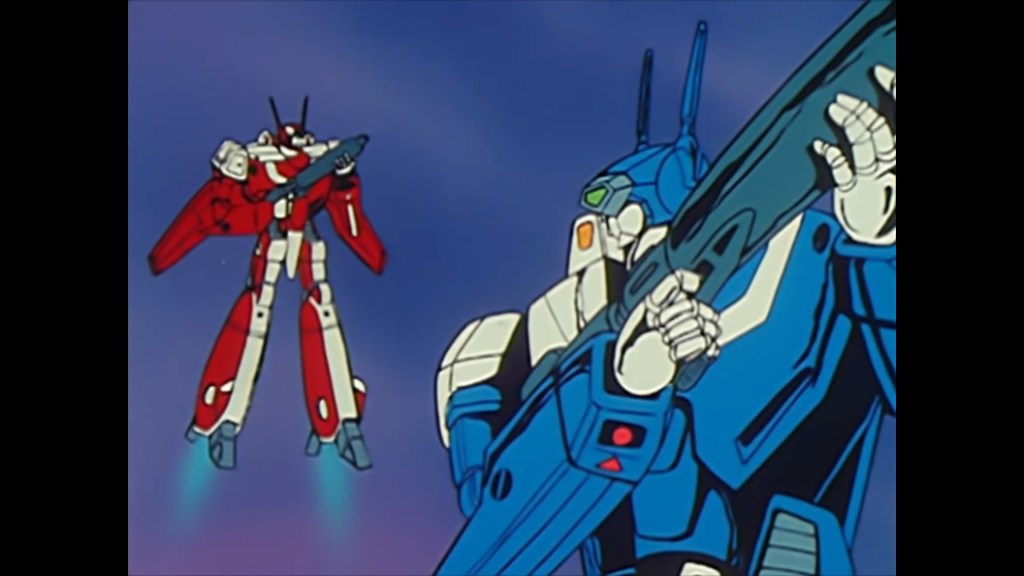
Max and Miriya play an arcade game piloting blue and red veritechs. They will later pilot actual full size veritechs with this same color scheme. During the gameplay Miriya identifies Max as the micronian pilot who dominated her in combat. There is a contrast between Max and Miriya’s internal dialogue explaining Max is in love and Miriya desires murderous revenge. This internal dialogue illuminates a symmetry between Max and Minmei as both are pure of heart in pursuing their activities while others around them scheme with ulterior motives. Miriya schemes to defeat Max unbeknownst to him. A whole host of characters have designs upon Minmei. These traits place Max and Minmei alongside the SDF-1 as holy fools. Similarities between Max and Minmei were previously discussed in the synopsis for Episode 8. Additional hidden agendas and ulterior motives throughout this series are Rick is in love with Minmei, Lisa is in love with Rick, the Zentreadi wish to capture the SDF-1 without damaging it unbeknownst to the micronian crew, Khyron wishes to covertly destroy the SDF-1, the UEG wants to use the SDF-1 as a decoy, Captain Gloval wants to disembark the refugees, Zentreadi soldiers wish to defect to the SDF-1, and Dolza likely plans to achieve victory and cleanse his ranks of micronian contamination by committing genocide against Breetai, Azonia, and Khyron’s armadas of the local war theater. Additionally, the Protoculture as defined in SDF Macross cunningly created the Zentreadi as an artificial race to be their private police force. The events of Robotech were set into motion by duplicity when Zor (Seifriet Weiße) desired to hide the protoculture matrix from the Robotech Masters. One successful component of this series is the multidimensionality of the characters illustrated here by their motivations.
Furthermore, there are interesting layers of abstract reality represented in Max and Miriya’s arcade game duel. Mecha combat is one insulated step removed from bareknuckle hand to hand combat, and playing a videogame of mecha combat is two steps removed from bareknuckle hand to hand combat. These layers are symbolic of the mysteries of love and barriers to intimacy as the viewers are able to observe a third abstract reality. This being the battle of the sexes. These abstract layers will be dissolved in the next episode by a supernatural love at first sight between Max and Miriya. This arcade game and next episode’s knife fight illustrate love conquering hate. Plato’s text The Republic describes a theory of forms. An example of the theory of forms is a bed existing as a concept in a carpenter’s mind, the actual bed he builds, and a painting of the bed. In the arcade game scene there are multiple forms. These being the concept in the animator’s mind, out-of-universe actual hand to hand combat, the physical animation itself, mecha combat as a substitution for hand to hand combat, fictional characters participating in mecha combat, in-universe pilot characters controlling avatar pilots piloting mecha in a videogame, and the overall symbolism of the battle of the sexes seen by the viewers. The preceding can be rephrased as an out-of-universe animator with a mental concept inspired by hand to hand combat drawing characters controlling avatars piloting mecha engaged in combat which is a surrogate for the battle of the sexes. These forms portray a telescoping quality and may illustrate the different levels of the human psyche, anatomy, and cognition akin to id, ego, superego, consciousness, subconsciousness, cerebrum, cerebral cortex, neocortex, deduction, intuition, involuntary smooth muscle, voluntary skeletal muscle, the reptilian brain, the frontal lobe, and the sympathetic and parasympathetic nervous systems. In addition to the abstract layers of this scene, Miriya has flashbacks to her battle with Max from Episode 18 and this animation is interspersed in the action of the arcade game. Out-of-universe viewers may recognize all these layers as an accurate portrayal of their authentic multilayered existence. The videogame play in this scene is a very rudimentary version of the matrix as seen in the 1999 film The Matrix.
A tiny Minmei is seen in the videogame kissing Max’s avatar. This introduces the fifth and smallest level of scale in this series previously discussed in the synopses for Episodes 6 and 18. A tiny Minmei charm is also shown in Episode 32. Max’s avatar is Rick which supports Max as the Anti-Rick and a character duality which was previously discussed in the synopsis for Episode 8.
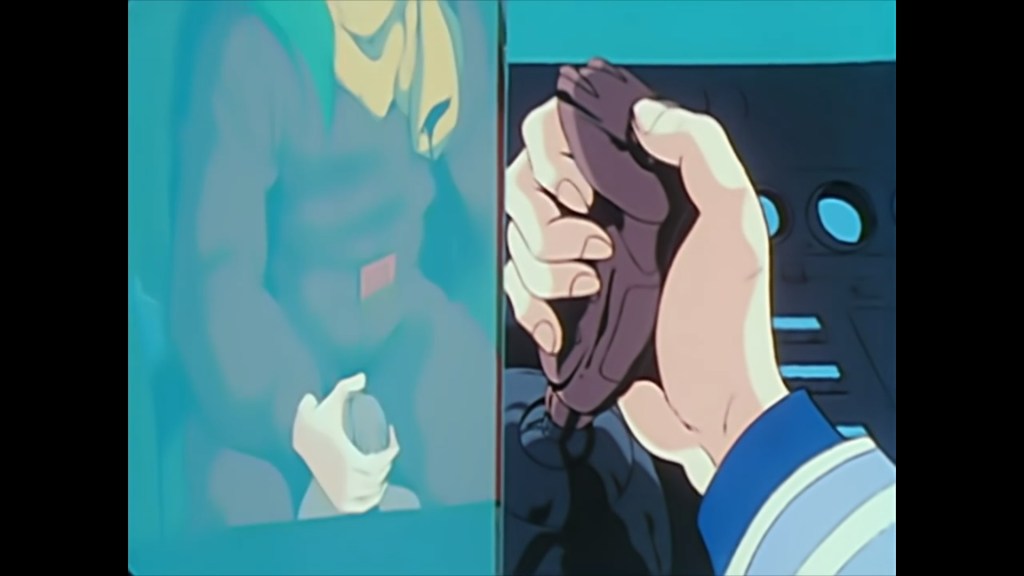

During the arcade game Max and Miriya each grip their joystick between their legs. Miriya’s joystick may signify a male anatomical pseudo appendage similar to her knife as discussed in the synopsis for Episode 25.


Lisa and her father ride in an elevator along the barrel of the Grand Cannon. This recalls similar imagery of Lisa and Captain Gloval from Episode 15: Chinatown which may be symbolic of Captain Gloval being a father figure to Lisa. The Grand Cannon may also symbolize Admiral Hayes’ emotional armor and psychological defense mechanisms. Lisa must travel to the isolated and inhospitable Alaska and then to the very heart of the complex to engage in intimacy with her father. Alaska represents isolation and the emotional distance between Lisa and her father. Even after Lisa’s symbolic penetration through her father’s symbolic defenses she is still unable to reach him and change his mind.
Lisa is a surrogate for adolescent viewers as she is often ignored or even ridiculed by surrogates for parental authority throughout this series. Notably this occurred at her debriefing after escaping Zentreadi capture, at Alaska Base, and in this episode with her father. Lisa portrays the “Adults Are Useless, Cassandra Truth, Ignored Expert, You Have to Believe Me!, and Not Now, Kiddo” tropes.

Kyle publicly reveals he is interested in marrying Minmei. This is an affront to Rick and Minmei’s secret pretend wedding in Episode 4. Max and Miriya will wed in the next episode. Annie La Belle (Mint La Bule) will obsess over marriage for most of Episodes 62 to 85.

Claudia speaks with Rick about finding love. Throughout this series Claudia portrays the “Sassy Black Woman” trope and the “Magical Negro” trope. (The term “Magical Negro” is meant to be intentionally inflammatory and carry the uncomfortable emotional weight of its loaded language to indict its subconscious use by artists.) The magic of Claudia’s character in SDF Macross may also stem from her Japanese voice actress providing the narration for the series. While the final scene of this series implies Lisa is recollecting the events of this series while perusing a photo album, there is also an implication of an older version of Claudia’s character narrating these events as recollections. This is not possible in Robotech as Claudia expires in the Robotech version of the final episode of this series.
Episode 25: Virgin Road in SDF Macross and Wedding Bells in Robotech
In SDF Macross this episode is likely named for a betrothed couple’s wedding march down a bridal aisle to join in union. The AnimEigo DVD liner notes state the Virgin Road is the Japanese term for bridal aisle. Also, Miriya will soon experience many firsts of micronian culture. The title may foreshadow the blazing of a new path and the journey of new discoveries the Zentreadi and human race will learn about each other’s societies. Virgin Road implies the road less travelled. This episode’s title may take inspiration from the original name for SDF Macross which was Battle City Megaroad. The Robotech title refers to the wedding of Max and Miriya.

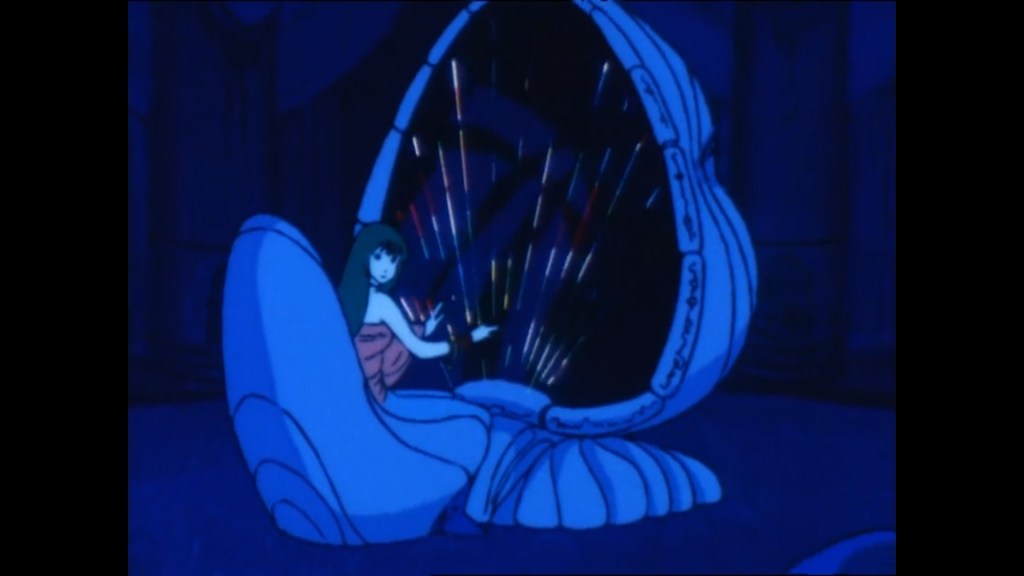


The knife brandished by Miriya may be symbolic of a male anatomical pseudo appendage. Max disarms Mirya returning her to the correct symbolic anatomy of a biological woman. Later, in The Masters (SDCSC), Musica will similarly brandish a tool or harp. Musica abandons her instrument and her sisters for a romance with Bowie Grant (Bowie Emerson). Furthermore, ignoring the Robotech edits and examining the original plots of SDF Macross and SDCSC, some similarities become apparent. In SDF Macross humanity possesses the SDF-1 and in SDCSC humanity possesses the alien planet Glorie. In each series the alien species seek to retrieve their property. In each series a female alien with green hair defects to Earth forces and assists in the victory of humanity. In each series the aliens lack freedom, culture, and constructive emotions. In addition, the original plot for GCM portrays a female alien with green blood and her sister with green hair. They both defect to Earth forces to assist in the victory of humanity. The Inbit culture also lacks freedom, culture, and constructive emotions. These four female aliens may be examples of journeys of transformative empathy. They are female archetypes possessing virtue and self-sacrificing capacities. Previously discussed in the synopsis for Episode 12, Lisa and Sue Graham each shot footage with their cameras. These cameras may continue the symbolism of male anatomy similar to Miriya’s knife and Musica’s cosmic harp. Lisa’s camera breaks, and she eventually achieves a romance with Rick. Sue Graham refuses to relinquish her camera which is met with fatal consequences.

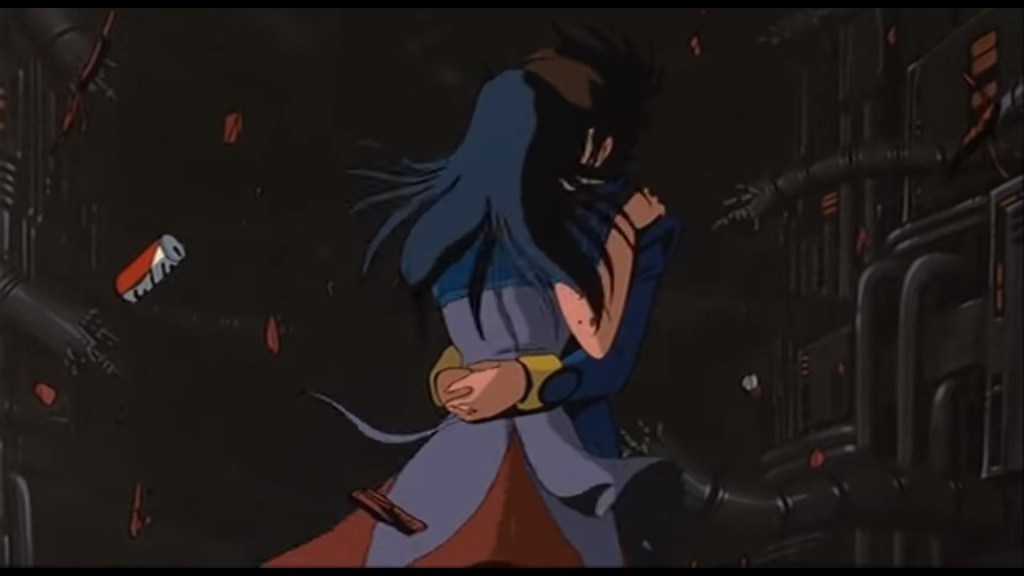


The romantic love between Max and Miriya is illustrated metaphorically by portraying them floating in midair. This technique of a change in sensations also occurred in DYRL at 00:24:40 as Hikaru (Rick) and Minmay (Minmei) float to the ground when gravity is restored during their kiss. Hikaru (Rick) and Minmay (Minmei) began this DYRL scene with gravity but perhaps Hikaru’s (Rick’s) attraction to Minmay (Minmei) was symbolized by their initial loss of gravity. Rick’s midair freefall rescue of Minmei in Episode 2 of the television series as well as the corresponding DYRL freefall rescue scene continue the theme of weightlessness. At 01:16:06 in DYRL Max and Milia (Miriya) amorously gaze upon each other exhausted, losing blood, and each oriented upside down to the other with their physical sensations mirroring their emotional sensations. Also in DYRL, when Minmay (Minemi) decides to sing the lyrics to the ancient melody and understands an unselfish non-romantic love of life itself, she and Hikaru (Rick) float above the observation deck. Rick and Lisa experience a freefall in Episode 12. Similarly, as discussed in the synopsis for Episode 3, the space fold to Pluto may also symbolize the transformational quality of love as Rick is transported across space and time after meeting Minmei. Finally, in SDF Macross Minmei’s song titled “0-G Love” alludes to this phenomenon inherent in romantic love. See the synopsis for Episode 2 for additional discussion of this topic.
Miriya cuckolds the entire Zentreadi race in this episode, and Max is portrayed as an alpha male. Miriya’s seduction illustrates the age old adage of a “thin line between love and hate.” The union of Max and Miriya foreshadows the impending union of Breetai’s command with Earth forces. Episode 8 introduced Max as an Anti-Rick. Max and Rick are further contrasted here in their conversation in an officer’s lounge which illuminates their different opinions about love.
Captain Gloval gives a speech promoting peace. One character is shown kicking a water fountain in disgust. This maintains complexity, maturity, and believability concerning the tensions and factions within society.
Lisa asks her father to stop the grand cannon operation. He refuses and extinguishes his cigarette which is symbolic of extinguishing any hope for peace. Dolza issues new orders to destroy the micronians and Earth implying the destruction of the SDF-1 as well. This statement begins to transition the main antagonist of the plot from Breetai to Dolza.
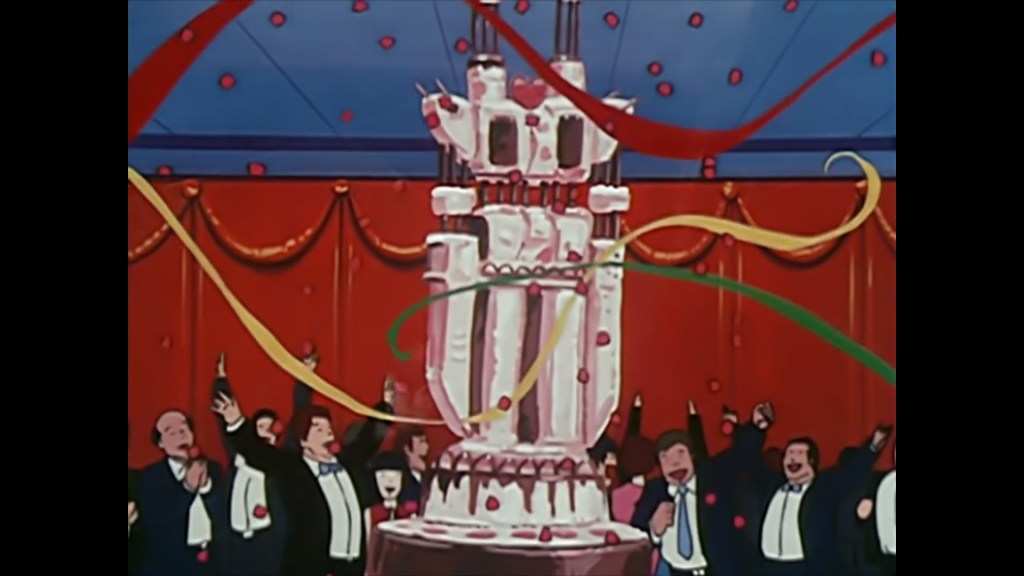
The wedding cake is a micronian-sized version of the SDF-1. This continues a theme of harmony and balance in this series.
In SDF Macross Minmei sings the music played over the closing credits which is somewhat metafictional. She will sing this song during the closing credits for Episode 36 as well. The closing credits music uses male vocals for Episodes 1 to 35 and Minmei’s vocals for Episode 36.
Max and Rick no longer shoot to kill in battle and instead aim to disable the battlepods. Disobeying the rules-of-engagement continues a subversive theme in this series. Full size Zentreadi soldiers take up arms against their superiors and refuse combat duty furthering the subversion of authority in this series. This growing mutiny guides Breetai’s decision to order a reclamation of mecha (cease fire negotiations).
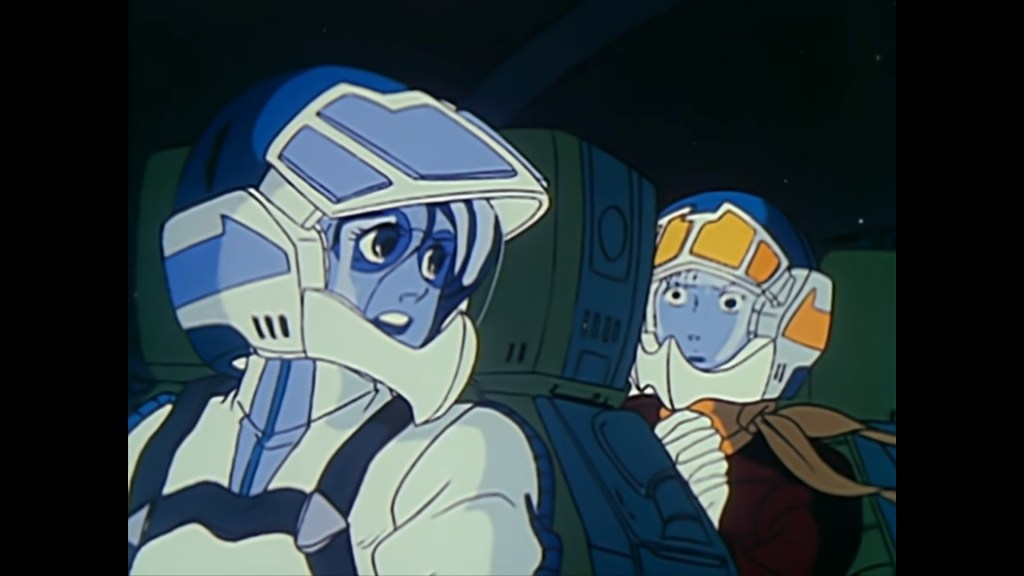
There may be a slight symbolic commentary on marriage as Miriya is shown in the co-pilot seat of Max’s veritech. The animators had the option of illustrating Miriya piloting her own veritech as will be seen later in this series. This scene could be interpreted as chauvinist but may also simply portray the romantic couple united as a team. Earlier, in the synopsis for Episode 2 and 10, the symbolism of Rick pulling Minmei inside his trainer veritech during freefall and Minmei similarly taking the co-pilot seat was discussed. While in Episode 10, Lisa was in the front seat of the catseye.
A wedding is a natural climax in a work of fiction. In western society the holiday season builds to the climax of Christmas. This series succeeds by juxtaposing plot climaxes with these celebrations. This series began with a 26 episode story arc placing the wedding near Episode 26, the intended grand finale. The length was expanded to 36 episodes with Christmas providing this same dynamism for Episode 35 and 36.
Episode 26: Messenger in SDF Macross and The Messenger in Robotech
This episode is likely named for Exedore being micronized and travelling to the SDF-1 as an ambassador of the Zentreadi.
Khyron is thwarted for the seventh time as Breetai openly fires on his forces for interfering in the cease fire negotiations.
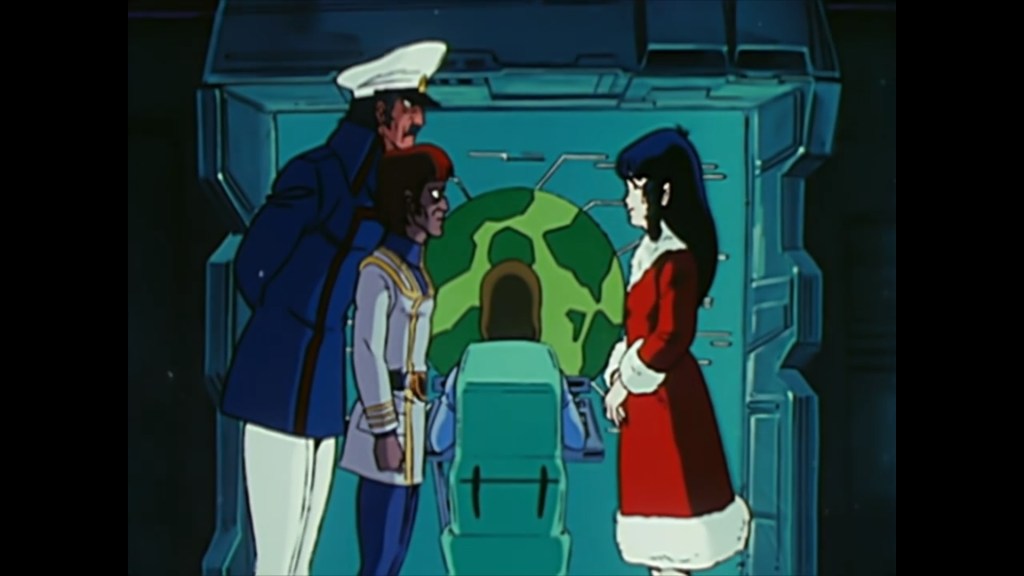
Exedore is given an RDF military uniform which foreshadows his coming alliance with the micronians. Rico, Konda, and Bron are always shown in civilian attire. Exedore is defamiliarized by the uniform and the uniform is defamiliarized by Exedore. The hem of his RDF coat is straight which contrasts with the coattails of the Zentreadi uniform. This coat hem was previously discussed in the synopsis for Episode 17.
Exedore mimics Minmei’s singing in an attempt to identify her and request her presence at the negotiations. For the first time, the micronians realize the full power of Minmei’s cult of personality among the Zentreadi. Minmei’s allure has been presented on the microcosm level as displayed by Rick’s desire for her and now Minmei’s allure is presented on the galactic macrocosm level. Minmei is the final guest to arrive at this meeting which is symbolic of her as the missing piece or linchpin to this series.
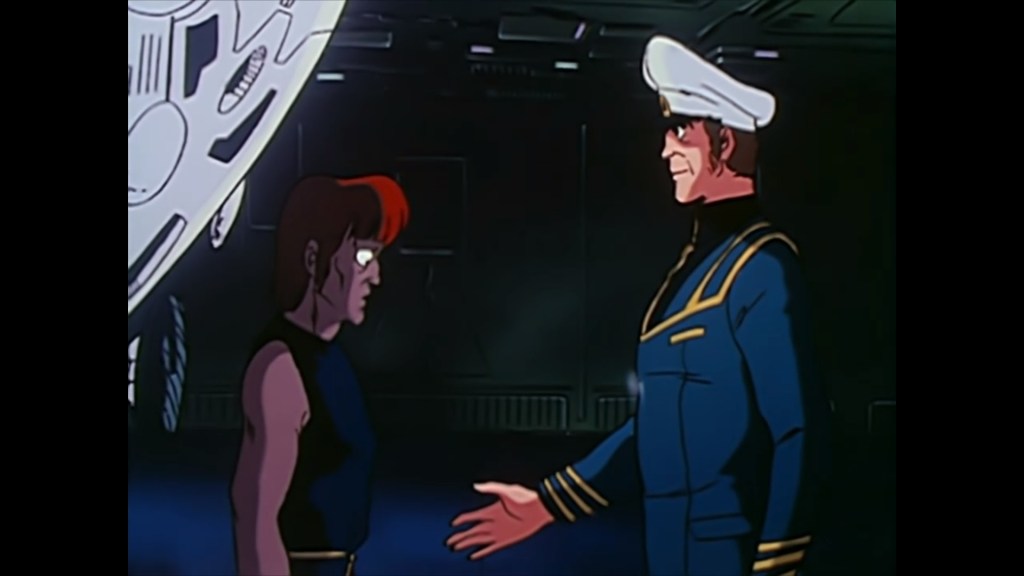


The choreography of the conference room scene is symbolic of political forces and changing political alignments. Exedore represents the Zentreadi and sits opposite the forces of the SDF-1 and Earth. Exedore stands, leaves his empty chair, walks across the room, and shakes Captain Gloval’s hand. This recalls an earlier scene in this episode when Colonel Maistroff explained a handshake as a symbolic gesture for greeting friends. Exedore and Breetai portray the “Heel-Face Turn” trope in this episode. By crossing the room Exedore symbolically dissolved the old geopolitical relationships and forged a new alignment. This is similar to Rick jumping a chasm to Minmei’s side in Episode 5: Transformation.
From Episode 21 to Episode 26, there are many references to Minmei’s film Small White Dragon. Many of these portray a trope titled “Aliens Steal Cable.” See the previous discussion of this trope in the synopsis for Episode 9. In this episode Exedore refers to Kyle and Minmei from the film. Exedore assumes Kyle has extraordinary powers and Minmei’s singing is a psychological attack.
Breetai switches allegiances to the micronians and will wage war against Dolza. Azonia allies her command with Breetai in this fight. This continues a subversive theme in this series. The Macross Chronicle Japanese publication states Khyron eventually allied with Breetai, but this is unclear in the episode.
Lisa requests permission to return to the SDF-1, but her father refuses. A contrast is presented as the enemy ambassador Exedore boards the SDF-1 and shakes hands with Captain Gloval, but Lisa is unable to return to her comrades. In SDF Macross this may further a Cinderella allusion previously discussed in the synopsis for Episode 17 as Lisa is unable to return home to the SDF-1, and Earth will turn into the proverbial pumpkin in the next episode. Also, Lisa is effectively kidnapped by her own father similar to Cinderella being locked in her room when the time came to try on the glass slipper. Lisa’s imprisonment by her father will be harmoniously balanced in Episode 32 when Khyron kidnaps Minmei. Previously, Lisa was captured by Breetai. Each damsel will be rescued by Rick. There is also a harmonious balance and slight contrast in Exedore’s previous presence at the interrogation of the micronian prisoners aboard Breetai’s ship and his presence at this summit on the SDF-1.
The negotiated peace between Breetai’s forces and the micronians demonstrated in Episodes 26 and 27 may be the most important component in the construction of this series. Not only does Breetai subvert Dolza in these episodes but this series subverts its genre. This is the plot twist. The viewers engaged with the material under the subconscious assumptions and expectations of the good guys winning, the bad guys losing, and the hero getting the girl. The Zentreadi defectors subvert these expectations. The genre of this series could be defined as science fiction, space opera, or simply, children’s cartoon. The onscreen deaths of major and minor characters alike also subverted American audiences’ assumptions about the children’s cartoon genre. This genre subversion imbues the viewers with entertainment value, intellectual stimulation, and anticipation of future episodes. In 1982 the genre of SDF Macross was possibly stale and creatively exhausted, but Episodes 26 and 27 were transformational and gave the viewers something new by advancing the genre. Breetai’s subversion of Dolza and this cartoon’s subversion of the audiences’ expectations is known by the literary concept transgression. Breetai is a transgressive character and the fiction of this science fiction series is transgressive fiction. Breetai transgresses the typical archetype role of an antagonist. The adult themes of this series transgress the typical themes of 1980s animation. The out-of-universe audience projects learned biases onto recognizable genres classifying tragedy and historical drama as nobler and higher art than comedy or animation. This bias is transgressed by this series when animation becomes noble and high art. In addition, Breetai experiences the transformational power of redemption as he observed the folly of his ways and decided to change. The synopsis for Episode 18 discusses the intentional subversion of audience expectations by writing Max to be the ace pilot instead of Rick. A final very subliminal and mild transgression is it is possible Lisa is revealed to be the true main character of all 36 episodes in the final moments of Episode 36. She is resurrected from the ashes of the SDF-1 like a phoenix. Lisa as the main character is also supported by the fact it is she who is perusing the photo album as seen in the final scene of Episode 36. See the synopses for Episodes 1, 17, 24, and 36 for discussions about this point. See the discussion of Carl Jung in the Final Thoughts section of this essay as it relates to Lisa’s possible resurrection in Episode 36 and her integration of the bridge crew as components of her inner self. Lisa’s survival in Episode 36 also embodies the “Return” stage of Joseph Campbell’s hero’s journey which is discussed in the synopsis for Episode 27. Lisa’s “Return” in Episode 36 may be amplified by Minmei possibly fulfilling the “Belly of the Whale” stage as Mimei was in a bomb shelter. See the discussion of Fairytale Inversion in the synopsis of Episode 17 for additional information related to transgressive fiction. These elements along with errors in the animation as discussed in the synopsis for Episode 22 excite the viewers’ imagination and provide entertainment value.
The formal peace achieved in this episode may also symbolize a psychological internal peace for Rick. This is discussed in the Final Thoughts section of this essay. This inner peace is only temporary as Rick’s internal turmoil returns for Episodes 28 to 36. However, the viewer must recall what became Episode 27 was originally intended to be the final episode. This Zentreadi peace symbolic of Rick’s inner peace would have provided catharsis in the final episode for the initial proposed truncated series.
In DYRL, while all Zentradi (Zentreadi) agreed to a peace treaty and alliance with the miclones (micronians), at the last minute Golg Boddole Zer (Dolza) pulls out of the peace treaty because the lyrics to the song are not completed and Minmay (Minmei) has gone missing. Some Zentradi (Zentreadi) remain loyal to Earth forces and some remain loyal to Golg Boddole Zer (Dolza). In DYRL it is established the Zentradi (Zentreadi males) are at war with the Meltrandi (female Zentreadi). Thus, Golg Boddole Zer (Dolza) simultaneously battles the Earth forces, Zentradi (Zentreadi) allied with the Earth forces, and the Meltrandi (female Zentreadi).
Episode 27: Love Flows By in SDF Macross and Force of Arms in Robotech
In SDF Macross this episode shares its title with Minmei’s song in Episode 22. This episode’s title may refer to Rick’s confession of love for Minmei in front of Kyle. There will be a symmetry to this moment in Episode 36: Gentle Farewell when Lisa confesses her love for Rick in front of Minmei. In Robotech the title likely refers to the showdown between the micronians and Dolza. The name Force of Arms will go on to bear synchronicity with the title of the fifth Robotech novel as well as the two player card game of the same name released in 2018.
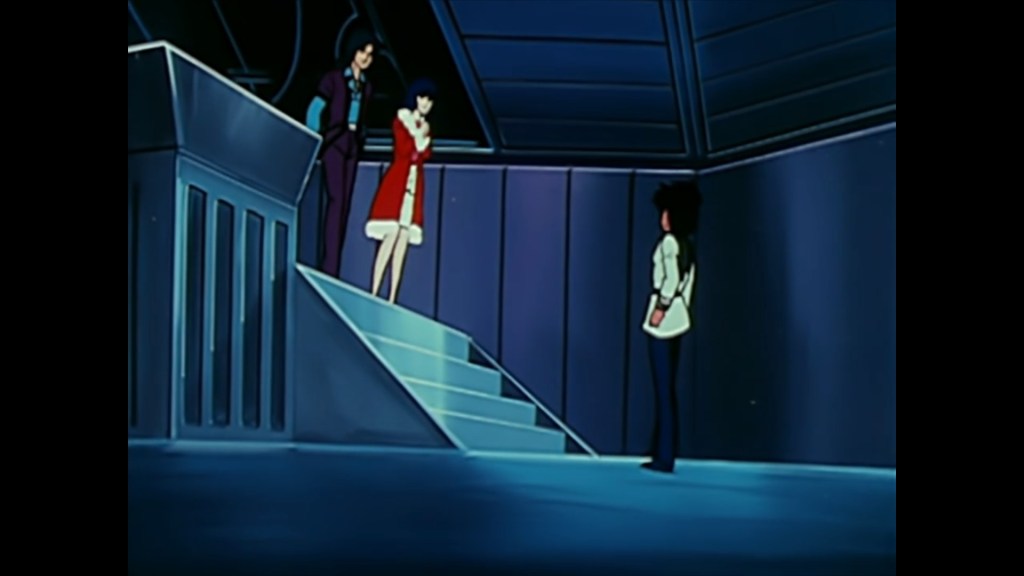


There is a symbolism in Rick’s confession of love as Minmei is standing on an elevated platform similar to the “Balcony Wooing Scene” trope previously discussed in the synopsis for Episode 8. Minmei is on a symbolic pedestal. Rick also salutes Minmei and Kyle portraying the “Military Salute” trope. Lisa will later salute Minmei and Rick in Episode 36. In DYRL at 1:32:40 Hikaru (Rick) runs up many flights of stairs to find Minmay (Minmei) on the observation deck. This again places her above Hikaru (Rick). In the synopsis for Episode 1 the symbolism of Captain Gloval taking an elevator down is discussed.
In SDF Macross Minmei visits Rick’s quarters and explains she feels more strongly towards Kyle and views Rick as a friend. This breakup is juxtaposed with Dolza’s annihilation of Earth which becomes an allegory for the psychic trauma of Rick’s heartbreak and rejection by his first love. The animation of the crash of the SDF-1 from Episode 1 is repurposed here and discussed in that episode’s synopsis. In regards to the annihilation of Earth being an allegory for Rick’s heartbreak, a similar symbolism was previously utilized in Episode 5: Transformation in the form of Rick’s junked fanjet and the SDF-1’s inability to fire its main gun. In this scene in Robotech Rick and Minmei’s conversation conveys a different meaning. Minmei apologizes to Rick about her lack of clarity regarding her feelings towards Kyle. Rick seems defensively flippant claiming they each wasted the other’s time which seems to hurt Minmei. Dolza’s rain of death is really not a metaphor for Rick’s heartbreak in Robotech. The scene simply amplifies the tension and conflict for the characters and the viewers. After 37 years of fanaticism, many fans mourn Roy’s death while no one mourns the annihilation of Earth. This reaffirms the quote “A single death is a tragedy; a million deaths is a statistic.” However, the very nature of dramatic fiction is to achieve authenticity. Thus, the viewers identify and emotionally bond with characters like Roy and mourn his death on a more personal level.
During the conversation in Rick’s quarters, Rick states he is a pilot and Minmei is a star, and these lifestyles are not compatible for a romantic relationship. He almost repeats this sentiment in the dialogue for Episode 36. As referenced in the synopsis for Episode 1, Shoji Kawamori has stated out-of-universe, Rick is the hero, Lisa is the heroine, and Minmei is the star. Upon investigation it appears Rick, Lisa, and Minmei share the out-of-universe duties of the hero as related to the template of seventeen stages popularized as the hero’s journey. Rick initially “Met his Mentor,” had the “Call to Adventure,” and “Refused the Call.” Minmei is likely the “Woman as Temptress.” At different times, Rick, Minmei, and Lisa all spend time in the “Belly of the Whale.” The veritech could be the “Supernatural Aid.” While Minmei did face her father and mother earlier, Lisa has the most prominent “Atonement with the Father.” However, Dolza could also be seen as a father figure. Rick’s brief meeting with Miriya could be construed as the “Meeting with the Goddess.” Rick, Lisa, and Minmei achieve the “Ultimate Boon” when they later experience enlightenment and self-actualization. Lisa may fulfill “Return” when she rises from the ruins of the SDF-1 in Episode 36.
Kyle and Minmei kiss for a broadcast to disorient Dolza’s forces. Rick witnesses the kiss as well, and he seems to portray the “The Beserker” trope as discussed in the synopsis for Episode 23.
Super veritechs are shown again in this episode. Max and Miriya are shown in their blue and red veritechs recalling the videogame color schemes from Episode 24.
Admiral Hayes dies in this episode as cosmic justice for asking his daughter to betray her comrades in Episode 15: Chinatown and for his stubborn refusal to abort the plans to fire the Grand Cannon in Episode 24: Good-bye Girl. This portrays the “Redemption Equals Death” trope. The next episode will illustrate a grand irony as the refugees onboard the SDF-1 are mostly unscathed after being rejected by their home world while the inhabitants of Earth suffer greatly. The SDF-1 portrays “The Ark” trope.

Rick has a flashback to his conversation with Minmei in his quarters from earlier in this episode and he kisses Minmei. This occurs upon his reentry to Earth’s atmosphere. He says goodbye to Minmei in his internal dialogue. In Robotech, Rick and Minmei go on to say “I love you” to each other which slightly muddles the resolution felt in SDF Macross. The atmospheric reentry may symbolize the end of Rick’s romance with Minmei. The flight of his soaring love is grounded. His head was in the clouds but now his veritech feet are planted firmly on the ground. It is no coincidence the transmission of Minmei’s performance playing on Rick’s monitor symbolically cuts out and is followed by Rick’s reception of Lisa’s transmission. This is similar to Lisa’s transmission in Episode 9. Rick’s heart and attentions may switch from Minmei to Lisa in these moments. He rescues Lisa as he did previously in Episodes 7, 10, 12, and 24. Rick uses his turret lasers to cut a perfectly round circle to access Lisa recalling the imagery of Lisa saluting Claudia through a round hatch in Episode 24: Good-bye Girl. Lisa sits on Rick’s lap wearing Rick’s helmet. This recalls imagery from Episode 3: Space Fold when Minmei wore Rick’s helmet and sat on his lap in his fanjet as they entered the SDF-1. It also recalls Episode 15: Chinatown when Minmei sat on Kyle’s lap as Rick piloted her fanjet. Using lasers to cut through bulkheads recalls the imagery from Episode 10: Blind Game. Lisa resembles a princess locked in a castle dungeon by her wicked father, and Rick resembles a medieval knight rescuing her from an evil King.
Khyron leers at Minmei. This leering is similar to Roy’s behavior in Episode 1 furthering the classification of the two men as counterparts or foils. Their status as foils is discussed in the synopses for Episodes 8, 18, and 32.
The SDF-1 enters Dolza’s fortress similar to Rick entering 2 battlecruisers and 1 recon vessel. Rick penetrated Zentreadi vessels in Episodes 6 and 10 and the recon vessel in Episode 9. This display of the macrocosm scale represented by the now dwarfed SDF-1 furthers the aesthetic beauty of this series constructed from the five levels of scale discussed in the synopses for Episodes 6 and 18.
The barrier system is used to destroy Dolza’s fortress. This may symbolize the antagonist’s destruction by his own hostility reflected back onto himself. This may portray the villain’s self-destruction or defeat by his own hand. The imagery of the barrier system overload is discussed in the synopsis for Episode 19: Burst Point as it relates to that episode’s overload as well as to the Regis’ exit from Earth in Episode 85. It should be noted Rick does not defeat Dolza. The main character and hero warrior is absent from the climactic battle. In fact, Minmei defeats Dolza. This may suggest Minmei is the main protagonist of the series, and Dolza is the main antagonist. Alternatively, it may suggest Rick is the main protagonist of the primary, yet to be resolved, conflict of this series being his romantic indecision between Lisa and Minmei. This would categorize the defeat of Dolza as a subplot. As previously discussed in the synopsis for Episode 19, Dolza was defeated by a combination of the SDF-1’s attributes. These being the two naval ships, the transformation, the Daedalus Attack, the pinpoint barrier system, and the omni-directional barrier.

Rick’s absence from the battle against Dolza contrasts with the version depicted in DYRL. In DYRL Hikaru (Rick) kills Golg Boddole Zer (Dolza) in front of a giant image of Minmay (Minmei) which illustrates her power. This is a more direct and classic anime climax and resolution. A more nuanced difference between SDF Macross and DYRL is Minmei’s songs in the television series are a psychological warfare assault on the Zentreadi. In DYRL she also is used for the purpose of psychological warfare but with the addition of a very specific melody and lyrics which vaguely awaken ancient memories in the Zentradi (Zentreadi) resembling déjà vu. It should also be noted it is the combination of Misa (Lisa) and Minmay (Minmei) which defeats Golg Boddole Zer (Dolza). Misa (Lisa) uses her intellect to combine the lyrics with Golg Boddole Zer’s (Dolza’s) melody. Hikaru (Rick) likely thought to utilize Minmay’s (Minmei’s) talents and natural assets after Golg Boddole Zer (Dolza) had originally intended to use her against the Meltrandi (female Zentreadi).
Rick and Lisa hear Minmei’s singing which again equates Minmei with the SDF-1, home, and nostalgia.

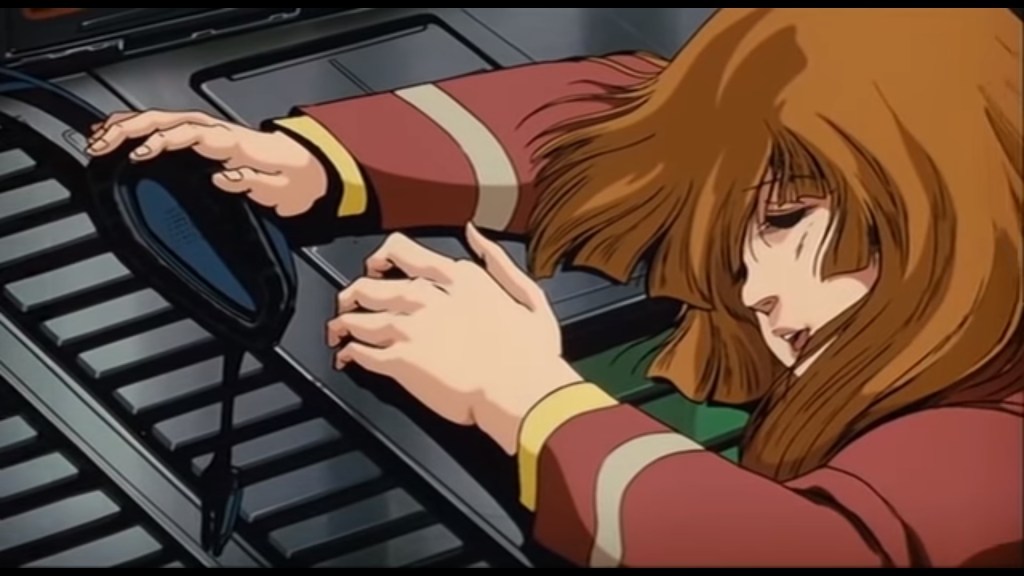
The SDF-1 seems to fall through the heavens and land back on Earth. This portrays the “Post-Victory Collapse” trope or “Power Strain Blackout” trope. This is the true victory as the spurned inhabitants of the SDF-1 are now able to return to Earth. This fulfills a revenge fantasy or vindication for the interpretation discussed in the synopsis for Episode 20 which now portrays the “I warned You” trope. In addition, Dolza’s annihilation of Earth is an analogy for the Biblical Flood which retroactively redefines the SDF-1 as a colony ship fulfilling the role of Noah’s Ark in this scene. The orbital bombardment could also be viewed as a Christian belief termed the Great Tribulation which believers hold shall occur prior to the Rapture. Following the victory in DYRL, Shammy (Sammie) will also portray the “Post-Victory Collapse” or “Power Strain Blackout” trope.
This episode is a modified version of the intended final episode of SDF Macross. This episode was planned as the finale for each iteration of the 52, 48, 39, 23, and 26 episode plot outlines. With the decision to produce the 26 episode outline, after two months of broadcast in Japan, the sponsors funded an additional 10 episodes. This decision occurred prior to Episode 17 possibly around the airing of Episodes 8 or 9 in 1982. It can only be assumed there may have been some rewrites and edits to episodes created after the decision to extend the series. DYRL does conclude on the events of this episode which was the original intent of the 26 episodes planned for SDF Macross. In SDF Macross, the likely successful dramatic elements of this series in terms of genre transgression are the hero does not save humanity, and the vast majority of humanity is vaporized along with the surface of Earth. To imagine this as a resolution, climax, and finale to a 26 episode series, and have it satisfy the viewers, is a testament to the courageous writing of this story. In addition, as previously stated in this episode’s synopsis, not only does the hero fail to save humanity, he is absent in the defeat of Dolza, the central villain. These story elements are further examples of genre transgression as discussed in the synopsis for Episode 26.
As stated in the previous paragraph, this episode represents a version of the original planned finale of a 26 episode run which was extended to 27 episodes with Episode 17 as a clip show. While Episode 27 seems to resolve the love triangle, the writers chose to revive the love triangle for the remaining nine episodes and postpone its resolution until Episode 36. This presents as a plot hole and, for Episodes 28 to 36, seems to confusingly regress Rick’s apparent romantic progress made between Episodes 1 to 26. However, the love triangle does provide conflict and tension for the remaining nine episodes.
This episode illustrates the weaponization of Minmei’s singing. In the Robotech franchise this theme somewhat continues past Episode 36. Bowie Grant is a soldier and a musician. George Sullivan is a soldier and a musician and dies in service to the RDF. Lancer is a soldier and a musician.
Episode 28: My Album in SDF Macross and Reconstruction Blues in Robotech
In SDF Macross this episode is named for a photo album Lisa discovers in Rick’s bedroom. In Robotech, this episode is named for the somber reconstruction of civilization on Earth. It also refers to Rick’s internal reconstruction as he and Minmei have moved on emotionally.
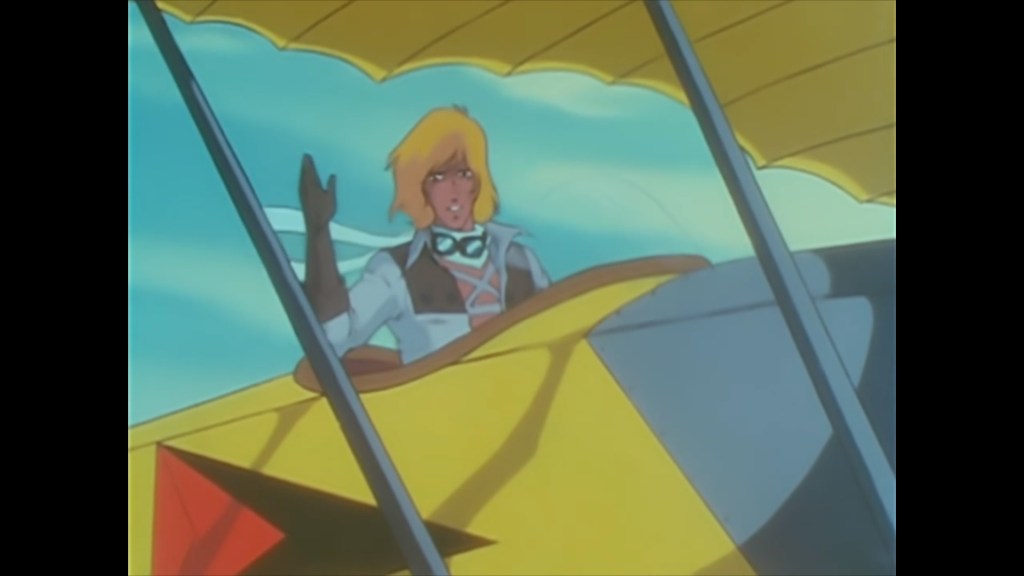
Rick has a flashback of Roy in a yellow biplane recalling the imagery from Episode 18: Pineapple Salad as well as Episode 1 in SDF Macross and Robotech Remastered. Both versions of Robotech retconned the yellow biplane into Episode 19 as well. Rick mentions the Robotech Masters in his internal dialogue.
Kyle and Minmei are paid in foodstuffs and personal goods. Kyle complains, but Minmei is appreciative. This may be an egocentric portrayal of the animators of this series as animation is not a very lucrative profession. Kyle and Minmei’s reactions may be commentary on careers in the arts. Another possible egocentric metaphor for the out-of-universe creative staff was proposed in the synopsis for Episode 20. The synopsis for Episode 20 also mentions examples present in Episode 9 and DYRL.

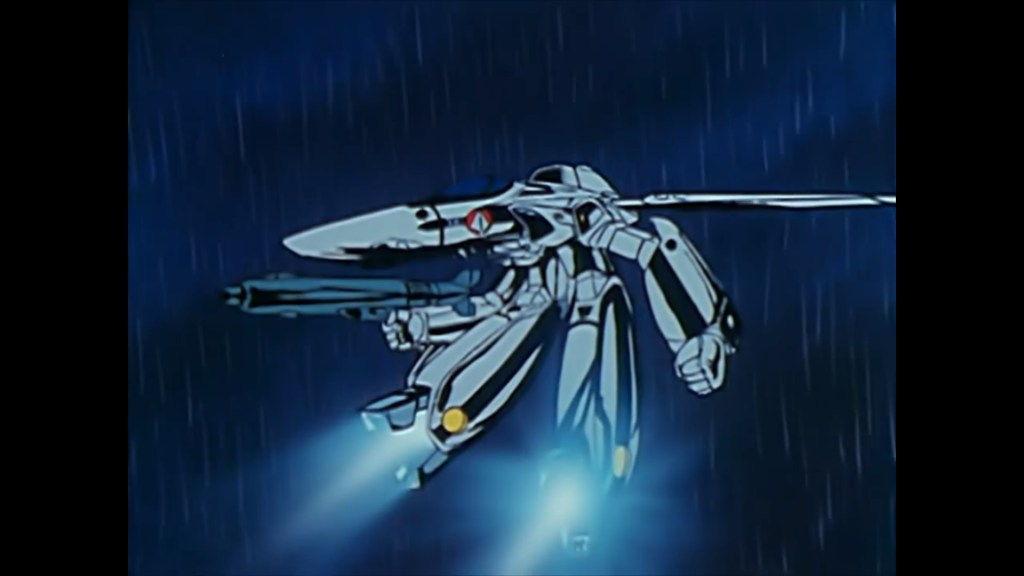
Rogue Zentreadi attack New Portland (Bjorn City). Symbols of peril are animated as gloomy rain and a barking stray dog.
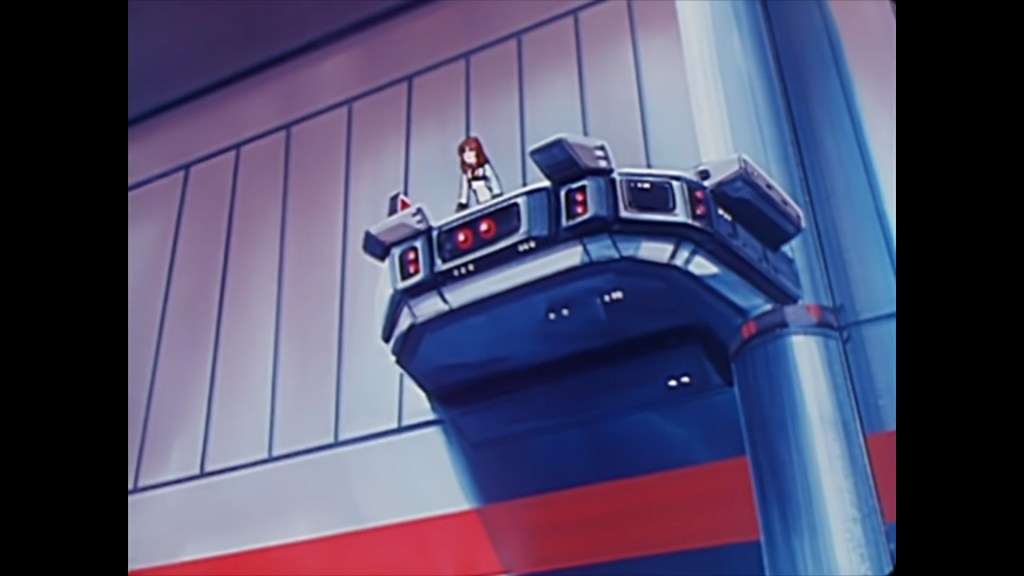
Lisa is shown in her new position on an elevated platform indicating her promotion and authority.
Zentreadi dissatisfaction in this episode is a metaphor for the tensions between Rick, Lisa, Minmei, and Kyle. If the Zentreadi are a surrogate for male puberty, their dissatisfaction symbolizes their disillusionment with adulthood.
Lisa gives Rick photos of herself presumably for their own album.
Interestingly, this series began production as a 26 episode series and never included any elements of the post-apocalypse reconstruction story arc. When the ten additional episodes were funded and approved, the post-apocalypse story arc was written and added to the 26 episodes as the series was simultaneously being produced and broadcast. The creators used one of the ten bonus episodes to create Episode 17: Phantasm which is a clip show. This brought the original story arc to 27 episodes. They then created an additional 9 episodes for the post-apocalypse story arc.
The “my” in the “My Album” episode title refers to Rick as the main character of this series as it is his photo album. This is further supported by Episode 17: Phantasm which allows the viewers to observe Rick’s dreams. This episode presents an animated version of Rick’s desk with his album and Roy’s helmet as is seen in the live action end credits of every episode for SDF Macross. The live action helmet was borrowed from Leiji Matsumoto, the Director for Space Battleship Yamato as stated by Gwyn Campbell in SpeakerPODcast Episode 119, reporting on a 2018 presentation at the Macross the Art exhibit in Takarazuka City, Japan, where Shoji Kawamori related this fact. However, the AnimEigo DVD liner notes for Episode 3 state it is an antique American Navy helmet owned by Studio Nue. The album is seemingly closed in the final scene of Episode 36. For SDF Macross, the photo album, along with the end credits musical theme, is discussed in the synopsis for Episode 1. Here in Episode 28 is the viewers’ first introduction to the significance of the end credits live action footage. The animated album may serve as a monolith or marker in time. This may imply two story arcs in SDF Macross. The first story arc spans Episodes 1 to 27 and the second spans Episodes 28 to 36.
Episode 29: Lonely Song in SDF Macross and The Robotech Masters in Robotech
In SDF Macross this episode is named for Minmei’s introspective concern about the purpose of her singing. Although partnered with Kyle, she is romantically lonely and has an existential crisis. Previously, Rick had an existential crisis in Episode 22: Love Concert. He found purpose in fighting to protect Minmei. The Zentreadi experience a crisis as they discover culture and a new way of life. In Episode 36 of SDF Macross, Lisa resolves her own crisis by explaining she cannot create culture but she can protect it. In Robotech Lisa finds purpose in searching for the Robotech Masters. In Robotech the title of this episode refers to the first onscreen portrayal of the Robotech Masters. They were briefly mentioned in Episode 1. The Robotech Masters dialogue references the Invid and the Disciples of Zor. These are major revelations for the viewers and introduce an entirely new plot and perspective on the events which have thus far transpired. The appearance of these new characters is coordinated to intrigue the viewers and orchestrate a transition to the next story arc following Episode 36.
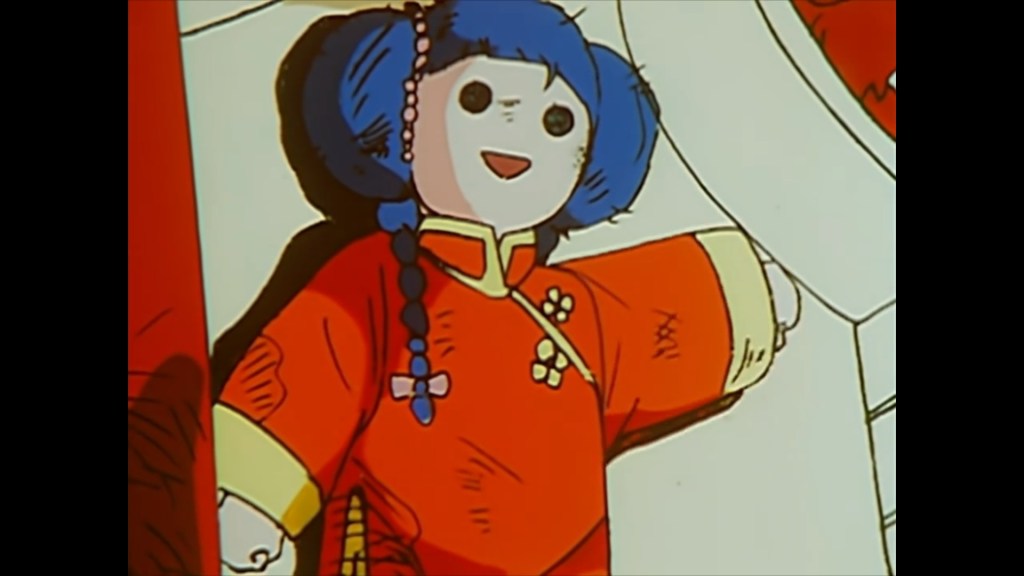


This episode opens and closes with the imagery of a full size Zentreadi skeleton clutching a Minmei doll. This is tragic imagery referencing the unfulfilled hopes and dreams of all those who embraced micronian culture. The imagery may imbue the viewers with pessimism if contextualized by a lost cause or, alternatively, a sense of proud nobility if framed by the ultimate sacrifice. The Minmei doll is robotic and programmed with a haunting frozen smile and optimism. This may be symbolic of Minmei herself or even an analogy for the SDF-1. As discussed in the synopsis for Episode 19, Minmei, her doll, and the SDF-1 may portray the wise fool or holy fool archetype and “The Fool” trope. The Minmei doll now observed in the grotesque and inappropriate setting of the wastelands reveals Minmei as a passive, static, soulless, and un-dynamic character. Ironically, Minmei and the SDF-1 may be more one-dimensional than super dimensional. The Minmei doll highlights a story arc across Episodes 18 to 29. The Minmei doll was introduced in Episode 18 with the three Zentreadi spies longing to possess one symbolizing their desire to embrace micronian culture. In Episode 23 Zentreadi defectors acknowledge the cost of war when they find a limp Minmei doll among rubble. Finally, in Episode 29, the ethereal performance of a lone Minmei doll is revealed to be hollow and shallow against an apocalyptic setting.

This series often portrays familiar elements set in grotesque and inappropriate settings introducing an element of surrealism. This episode juxtaposes the Minmei doll with the apocalyptic wastelands. Episode 12: Big Escape concludes with scenes of Minmei’s performance superimposed over combat scenes. Episode 9: Miss Macross juxtaposes combat scenes with a beauty pageant.
In SDF Macross but not shown in Robotech Minmei freezes during her opening number at a live performance. This recalls Episode 16: Kung Fu Dandy when Lisa froze during a Daedalus Attack. Next, Minmei will refuse to sing in Episode 34. In SDF Macross but not in Robotech Minmei questions her own motivation for singing.
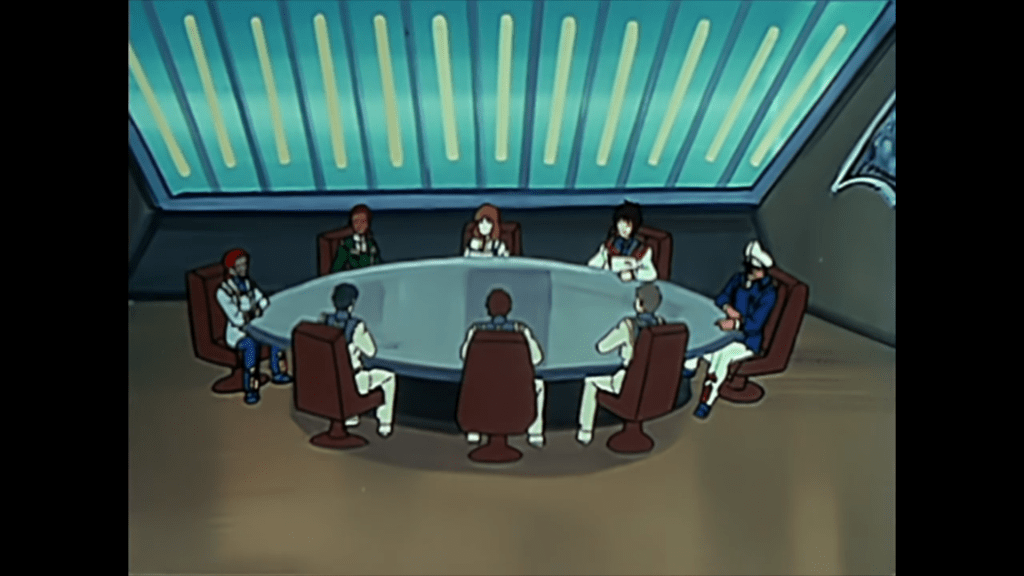
Exedore presents his scientific findings in a meeting. There may be symbolism in the imagery of the table. All the attendees are sitting around a round table which may demonstrate a democratic equality among all participants. While Captain Gloval was previously seated at the head of the table, he now sits among the attendees.
Minmei has a flashback to when Rick’s battloid damaged her bedroom. The symbolism of this imagery is speculated upon in the synopses of Episodes 2, 5, and 12. This imagery also provides for serial continuity within this series. While in her old bedroom Minmei questions her career motivations for the second time in SDF Macross but the first time in Robotech.

Rico, Konda, and Bron are shown. This is the first time Rico is seen wearing glasses. The glasses remind the viewer of the time lapse between the defeat of Dolza and the current reconstruction of Earth. The glasses help to age Rico’s character design and imply unseen events during this time such as a trip to the optometrist. The glasses may also be viewed egocentrically by the viewing audience if the out-of-universe viewing audience identifies with in-universe micronian culture which grants asylum to in-universe war refugees and treats them humanely. Perhaps a Zentreadi soldier with poor vision may simply be euthanized and recycled according to protocol while humanity places more value on the lives of individuals. Rico may be the first and only Zentreadi to ever wear glasses. The three former spies ask for Minmei’s autograph on their customer’s laundry similar to Hikaru (Rick) in DYRL asking for Minmay’s (Minmei’s) autograph on his handkerchief.

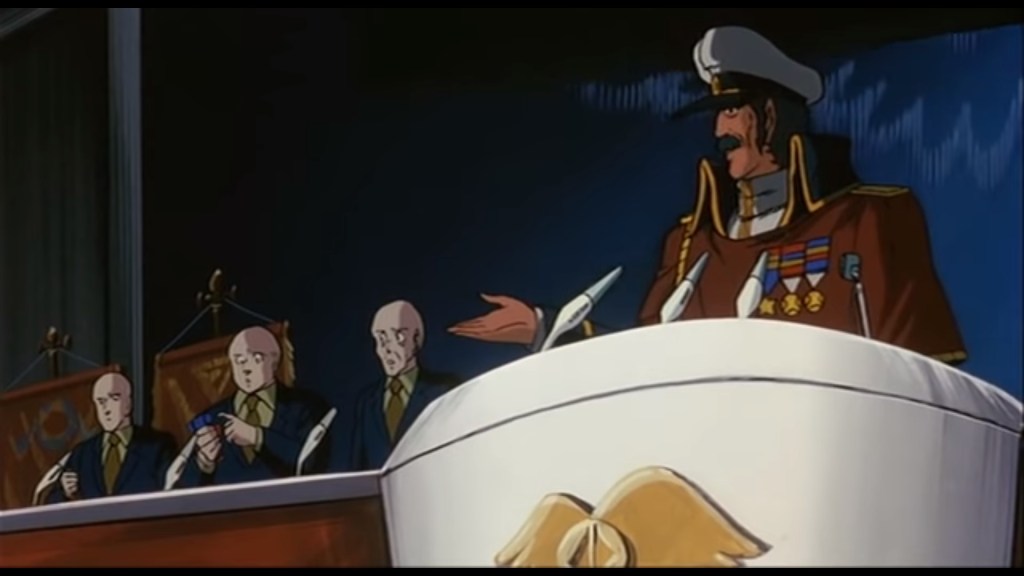
Throughout this series the out-of-universe audience may identify with the Zentreadi. The Zentreadi of the television series may inspire sympathy. DYRL redesigns the male Zentradi (Zentreadi) with green skin which may be a flawed creative decision. The Zentreadi defect to the micronians in both SDF Macross and DYRL but their SDF Macross character designs may possess more emotional impact upon the out-of-universe viewers as the viewers may identify with the more human appearance of the SDF Macross’ Zentreadi character designs. The DYRL Zentradi’s (Zentreadi’s) more alien quality or otherness may prevent the audience’s ability to bond with them. Viewers first exposed to this series prior to viewing DYRL may sub-consciously project their feelings about the Zentreadi from the television series onto the Zentradi (Zentreadi) of DYRL. However, the three micloned ambassadors in DYRL do not possess green skin and instead are Caucasian which makes them more relatable to their in-universe and out-of-universe audiences. The Meltrandi’s (female Zentreadi’s) Caucasian skin tones may reveal out-of-universe standards of beauty and audience preferences exploited by the animators to generate empathy for sympathetic characters. The Zentradi (Zentreadi) are purposefully grotesque to revolt the audience.
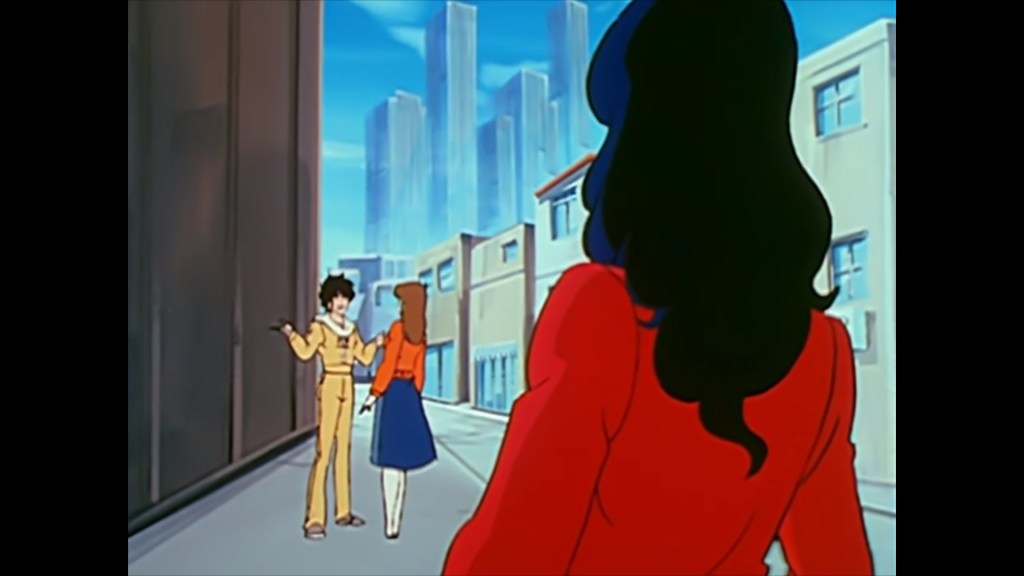
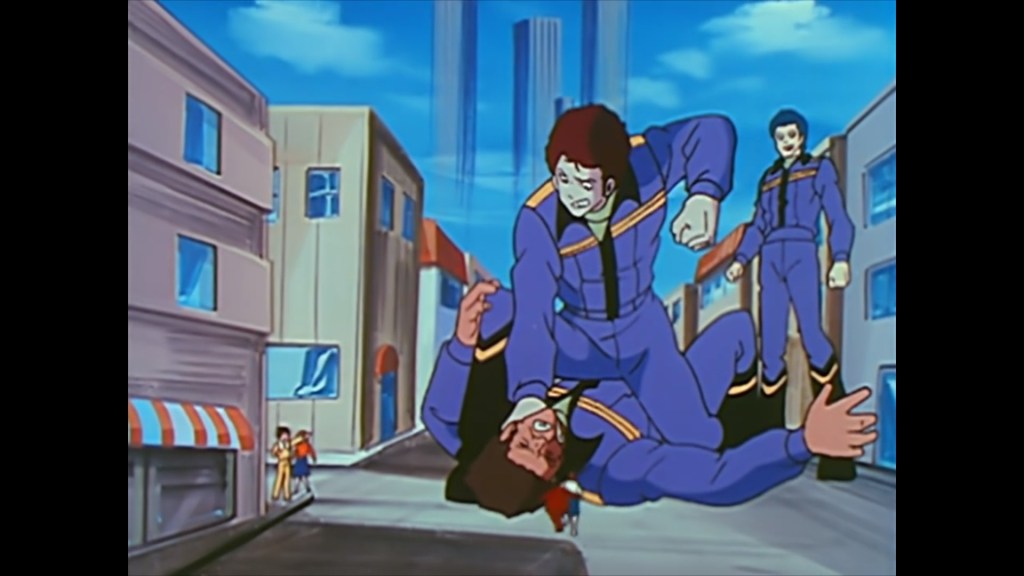

Rick, Lisa, and Minmei all coincidentally happen upon each other on the street and there is emotional tension between them. This scene is immediately juxtaposed with tension between Rick, renegade Zentreadi, and RDF mecha. Again, the viewers are shown microcosm events symbolized on a macrocosm level. The disagreement between the Zentreadi represents Rick’s internal struggles. When Rick addresses the Zentreadi he is addressing his id and superego. The mecha represent Lisa. Also, Rick literally chases Minmei in the setup which illustrates his relations with Minmei since the beginning of this series. At the beginning of this scene Rick tells Lisa he put her photos in his photo album which is another reference to the photo album discussed in the synopsis for Episode 1.


Minmei witnesses Zentreadi literally turn their back on culture and her music. This foreshadows Rick’s eventual preference for Lisa over Minmei.

Azonia is in short sleeves with her bare arms displayed. This implies a new informality and femininity to her character.
Minmei is almost late for her performance keeping Kyle and the promoter waiting. This demonstrates Minmei’s value. In Episode 8 Rick was last to arrive at an award ceremony, and in Episode 23 Rick was last to arrive at the asylum hearing. In Episode 26 Minmei was last to arrive at the peace negotiations. Minmei resolves her existential crisis which began this episode by deciding to sing songs for herself. Minmei becomes the reason for existence for herself, Rick, and Lisa as discussed in the synopsis for Episode 36.
Another meeting takes place with Captain Gloval sitting at his desk and Rick, Lisa, Max, and Miriya standing at attention. If there is an overarching progression between Episodes 8 and 32 of meetings symbolizing a trend from authoritarian politics to democratic authority, this meeting is an exception to this theory as it returns Captain Gloval to a symbolic position of high command.
Episode 30: Viva Maria (Dana) in SDF Macross and Viva Miriya in Robotech
In SDF Macross this episode is named for Max and Miriya’s child assisting in the capture of the Zentreadi Automated Robotech Factory Satellite. In Robotech this episode is named for Miriya and her maternal nature enabling the capture of the satellite.
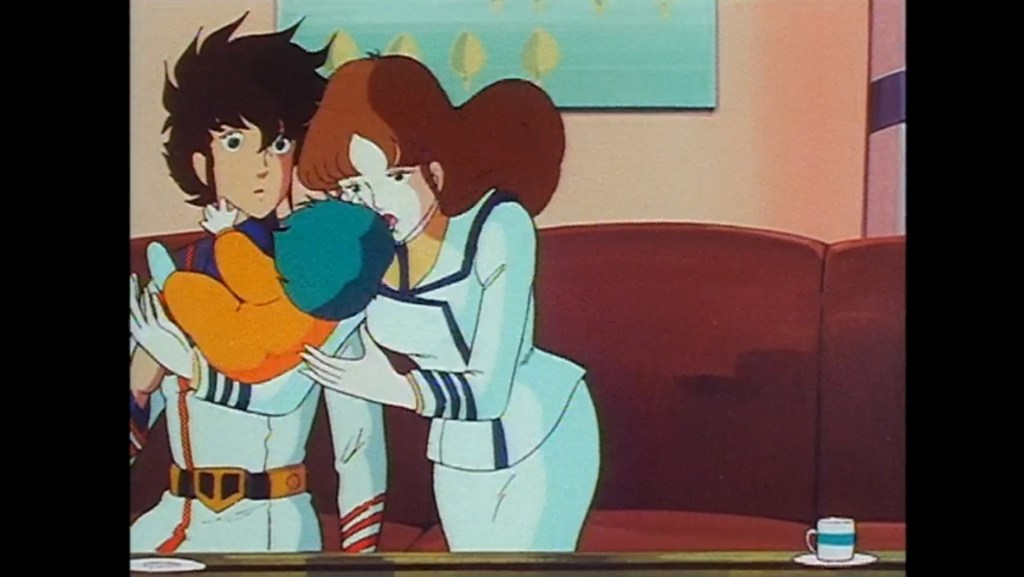
Scenes deleted from the Robotech version show Miriya tossing Komilia Maria (Dana) haphazardly to Lisa. This is a narrative device termed Defamiliarization. It was previously used in Episode 25: Virgin Road when Miriya attempted to cook as well as in many other Zentreadi-micronian interactions and observations. It allows the viewers to experience the familiar again and reevaluate their own culture from the point of view of an outsider.

Max is shown in an apron cleaning up the dishes at the end of the evening. This reinforces his alpha male superiority and confidence. The apron reveals his satisfaction with domestic bliss.
Claudia relaxes on her bed. This scene is discussed in the synopsis for Episode 15.
Rick and Lisa’s romantic progress is thwarted yet again when their evening tea is interrupted. This continues a motif of interrupted meals in this series.
In SDF Macross the mission encounters an abandoned ship of the Supervision Army. This reinforces and provides validity to Exedore and Captain Gloval’s presentation in the next episode. The ship is a portrayal of the consequence of civil war inside a culture. The ship as a link to Exedore’s theory in the next episode is lost in Robotech as the abandoned ship is rewritten as a Zentreadi recon ship, but scenes of the Robotech Masters are shown which function as a similar plot device as the abandoned Supervision Army ship. The images of the Robotech Masters demonstrate their existence and continued threat. Captain Gloval’s dialogue in the Robotech version of Episode 31 similarly alludes to civil war as well as the Zentreadi turning on their creators. Each series’ version of the abandoned ship manifests tension and a foreboding atmosphere while also functioning as a a plant-and-payoff for Exedore’s theory in the next episode.
Rick and Lisa kiss to disorient the Zentreadi operating the Robotech Factory Satellite. They first kissed in Episode 11: First Contact and again in Episode 12: Big Escape to disorient their guard who turned out to be Max in his veritech. Dana is also used to sow confusion in the Zentreadi command. This reinforces the theme of young girls yielding immense power as Minmei was weaponized in Episode 27.


The scene of Miriya revealing Dana to the Zentreadi somewhat resembles a circular firing squad of terrorized Zentradi around a Minmei doll in DYRL at 00:19:20. This scene is not present in Clash of the Bionoids.
This episode is an exposition allowing an organic flow of logical events demonstrating a consistent universe inhabited by the characters. The out-of-universe viewers’ inferences from in-universe premises are manifested as logical in-universe consequences. While the entire final story arc from Episodes 28 to 36 portrays this internally consistent universe, it is especially gracefully illustrated in this episode with a coalition military operation to the Robotech Factory Satellite.
The harmony between Breetai’s armada and RDF forces is mirrored in Max and Miriya’s marriage and domesticity in this episode. Disharmony between Rick and Lisa in this episode is mirrored by the Zentreadi divisions in their decision to ally with Breetai or not. A metaphor for harmony is contrasted with a metaphor for disharmony.
Episode 31: Satan’s Dolls in SDF Macross and Khyron’s Revenge in Robotech
In SDF Macross this episode is named for dialogue spoken by Exedore stating the Zentreadi are Satan’s dolls in the AnimEigo subititles and puppets of the devil in the Filmrise subtitles. This is changed to toys of destruction in Robotech. The Zentreadi are an artificial race created by the first culture, portions of which became the Supervision Army in SDF Macross. In Robotech this episode is named for a subplot and story arc spanning Episodes 31 to 36.
Exedore’s discoveries presented here and in Episode 29 strike a despondent note as he implies humanity’s evolution to a violent Zentreadi-like future is inevitable. The likely extinct Protoculture as later defined in the Macross franchise may be an allegory on two levels. If the Protoculture is interpreted as symbolic of parental authority, their fate serves as a warning against creating unnatural programmed offspring as they may turn against you. Continuing this theme and taking the perspective of the Zentreadi as symbolic of children, the fate of the Protoculture warns children they possess the power to destroy their parents. As a fable, the Zentreadi resemble Frankenstein as a warning against the dangers of intellectual powers. The Protoculture and Dr. Frankenstein resemble the Greek mythological figure Prometheus who is actually referenced in this series as the CVS-101 Prometheus aircraft carrier or left appendage of the SDF-1. This in turn recalls the Greek figure Daedalus as his son Icarus did not heed his warning. This theme is also embodied in Macbeth and the dangers of blind ambition as discussed in the synopsis for Episode 2.

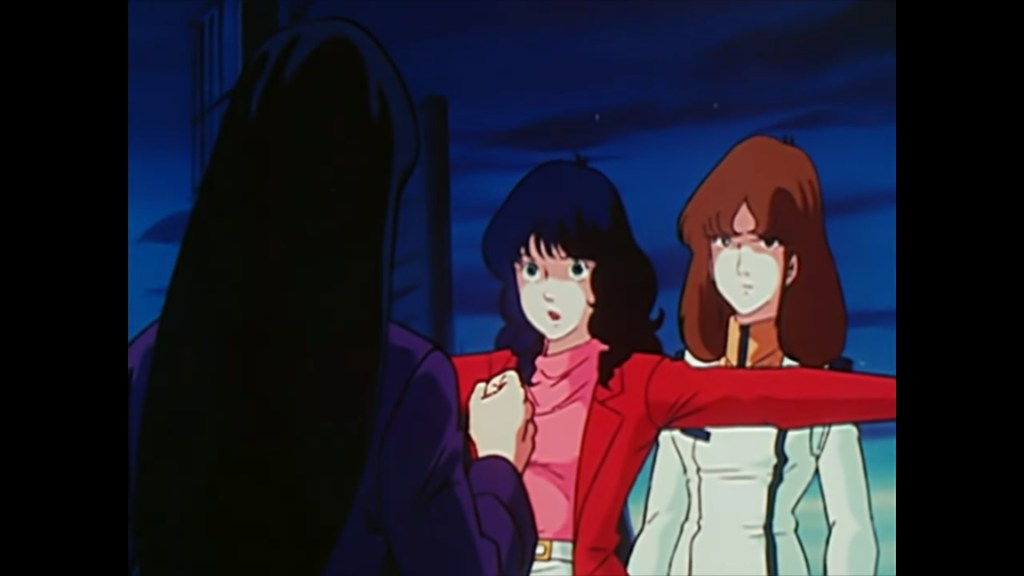
Kyle leads a mob against Rick and the efforts of the RDF. The protoculture chamber is an allegory for Minmei. Kyle and Rick have a confrontation over how best to offer protection. Minmei is inside a car which symbolizes insulation and a barrier to intimacy with Rick. Minmei stays silent and passive in the matter and regrets her behavior at the end of this episode. In the next episode, Minmei defends Lisa from Kyle showing the evolution of her character.

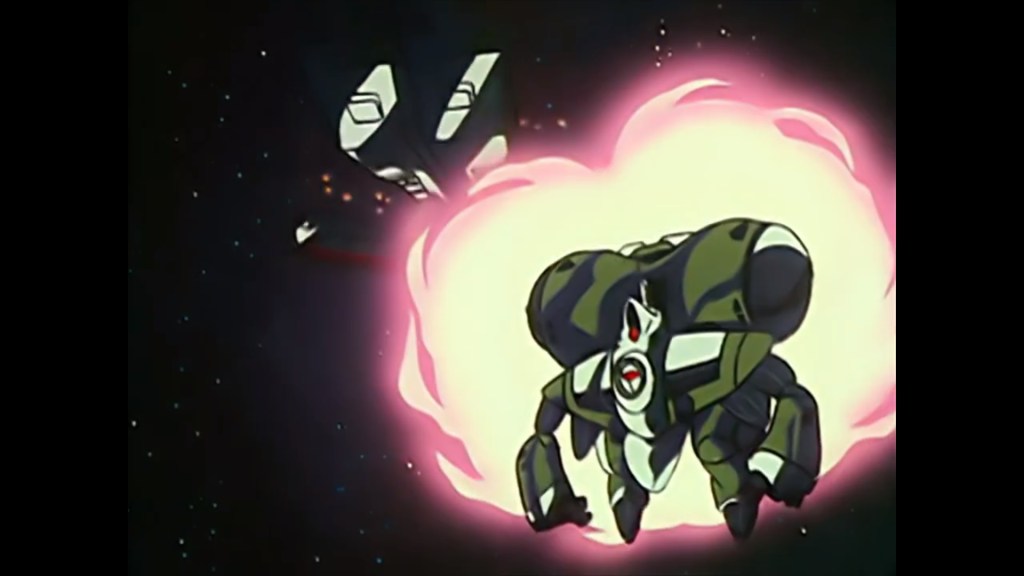
Male Zentreadi power armor (Nousjadeul-Ger) is animated in the previous and current episode. While, the battlepod is male and has 4 cannons, the power armor has one central cannon more closely approximating male anatomy. The Zentreadi female power armor lacks any obvious cannon, is much more rounded, and approximates female anatomy.
Khyron is thwarted for the eighth time when his forces fail to capture the protoculture chamber. He later captures it himself. Minmei regrets not speaking up earlier to prevent this catastrophe as Rick’s suggestion to put the device under the jurisdiction of the RDF is proven prophetic. Khyron’s seizure of the protoculture chamber somewhat foreshadows his capture of Minmei in the next episode.
As previously discussed in the synopsis for Episode 5, the letters L and R can be transposed in the Japanese Rōmaji alphabet. In SDF Macross the protoculture chamber is referred to as the micloning device. It would be equally acceptable to translate it as a microning device. However, micloning alludes to the English language word clone.
For the third time in SDF Macross and the second time in Robotech, Lisa compares herself to the Zentreadi. After Exedore’s explanation of Zentreadi ancestry and their penchant for war, Lisa points out the similarity to her and Rick always fighting. This is discussed in the synopses for Episodes 12 and 23.

Azonia is shown sipping through a straw which may be a double entendre or innuendo. Azonia is Lisa’s counterpart as discussed in the synopses for Episode 8 and 16. Previously, an allusion to Lisa sipping through a straw was portrayed in Episode 20.
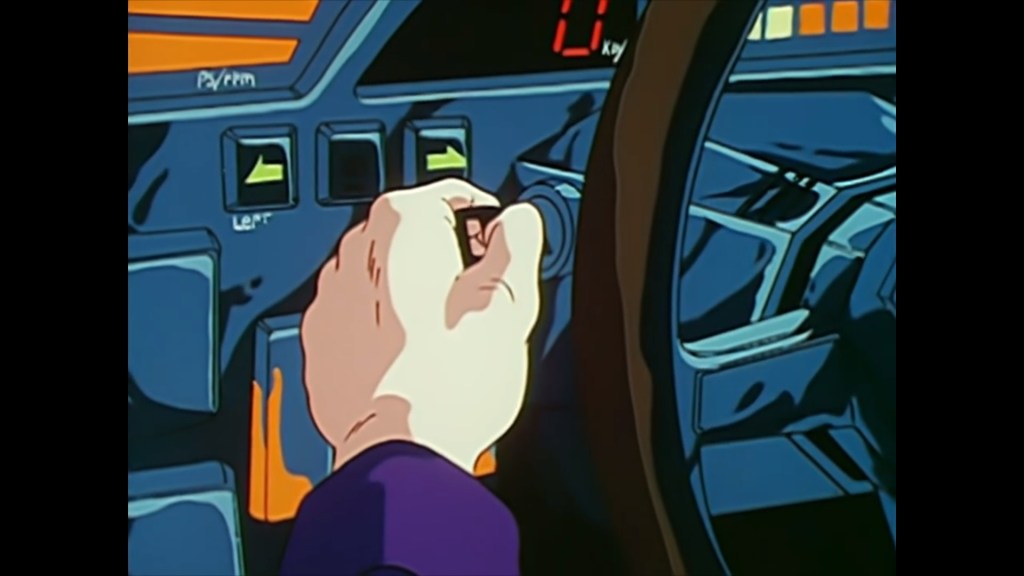
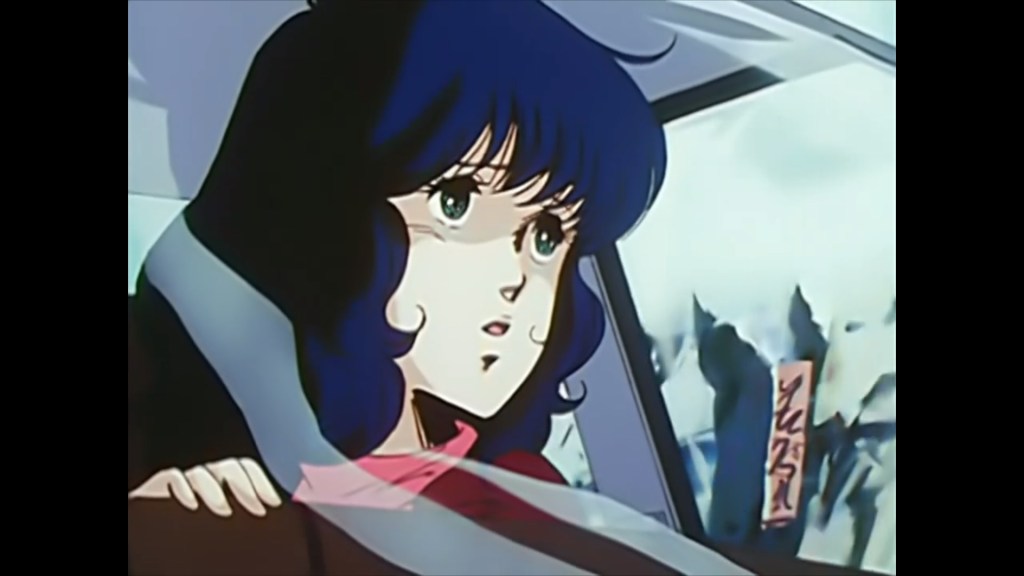
Kyle cannot start his car which builds tension and possibly implies a lack of virility. Rick chases the car as Minmei and Kyle drive away. This is symbolic of Rick’s desire for Minmei, Kyle’s possessiveness, and Minmei’s passivity.
Episode 32: Broken Heart
This episode may be named for Lisa, Rick, or Minmei’s broken hearts. It may be named for Lisa as she comments on Rick’s dedication to rescue Minmei and questions if he would demonstrate the same enthusiasm if she had been the hostage. Rick has previously rescued Minmei in Episodes 2, 3, 4, and 5 and in his dream in Episode 17: Phantasm. Rick has rescued Lisa in Episodes 7, 10, 12, 24, and 27. The title of this episode may refer to Rick or Minmei as they seem to acknowledge their romantic feelings.

Lisa is shown riding on the shoulder of Rick’s battloid.
Minmei gives a performance in a concert hall which is attacked by battlepods. This recalls Episode 22: Love Concert when battlepods penetrated inside the SDF-1 while Minmei was performing live.
Khyron demands a warship in exchange for his hostages in SDF Macross. In Robotech his demand is the SDF-1 which furthers the symbolism of the SDF-1 as a cryptic metaphor and interchangeable for Minmei which was previously discussed in the synopses for Episode 12, 19, and 29. It will next be discussed in the synopsis for Episode 36. With his hostage exchange demands, Khyron reveals his true nature as he objectifies Minmei. Whereas Breetai and Exedore possess the faculties to grasp the artistic merits of Minmei’s performances, Khyron either lacks this ability or places a higher priority on his own personal glory. In Episode 25 of SDF Macross Breetai comments on the ability of love to neutralize the differences between worlds. In the Robotech version of Episode 25 Breetai comments on the ability of Minmei’s performance to make a man feel sorrow. Exedore’s impersonation of Minmei’s performance in Episode 26 seems to suggest his acknowledgement of Minmei’s abilities. In contrast, Khyron objectified Minmei and leered at her in Episode 27 as well as here in this episode as he only sees her as something to be bargained with as a means of achieving his own selfish goals.
Khyron is Roy’s counterpart and Rick’s foil. Their status as foils is discussed in the synopses for Episodes 8, 18, 27, and 32. Roy coyly expressed interest in Minmei and teased Rick about her in earlier episodes. However, Roy also offered romantic advice and arranged Rick’s hospital visit from Minmei embodying his role as a big brother. In Episode 9 Roy incorrectly stated Jan Morris would win the Miss Macross Contest. In Episode 26 of SDF Macross Khyron states Breetai cannot defeat Dolza. This dialogue is lost in Robotech. In each contest Roy and Khyron are pessimistic and fail to predict the victor. Khyron leered at Minmei in Episode 27 prior to joining the battle. This leering was similar to Roy’s behavior in Episode 1. In this episode Khyron kidnaps Minmei which is Anti-big brother behavior similar to Roy’s initial interest in Minmei. In Episode 36 Khyron will fire upon the SDF-1 with Lisa onboard which is also the behavior of an Anti-big brother. Contained in an initial character synopsis in the possession of Tatsunoku Production Company Limited, annotated by Carl Macek, and published in 2017 as a commemorative script book for Robotech is an interesting duality between Roy and Khyron. Roy is described as hot-blooded but with a cool head. Khyron is described as pretending to be a nihilist but is in fact hot-blooded under a cool-headed mask. This illuminates Kyhron’s deceptive false exterior, and the core of these two character’s opposing natures.
Interestingly, this post-apocalyptic reconstruction story arc allowed for the exploration of acclimatization or tolerance to culture. Khyron requests Minmei sing, and he at first appears to fall under her spell of celebrity and talent. He then claims to be immune. It is likely the original 26 episode proposal would have culminated with Minmei victorious in what eventually became Episode 27. The expansion to 36 episodes added complexity as the additional episodes present the concept of habituation or conditioning.

An officer snaps a pencil discussing the strategy to free Minmei. This imagery conveys frustration.
Rick speaks to and taps a tiny Minmei charm hanging on a string in his cockpit. This demonstrates the fifth level of scale previously seen in Episode 24. The five different gradations are discussed in the synopses of Episodes 6 and 18.
Khyron and Azonia kiss in this episode.
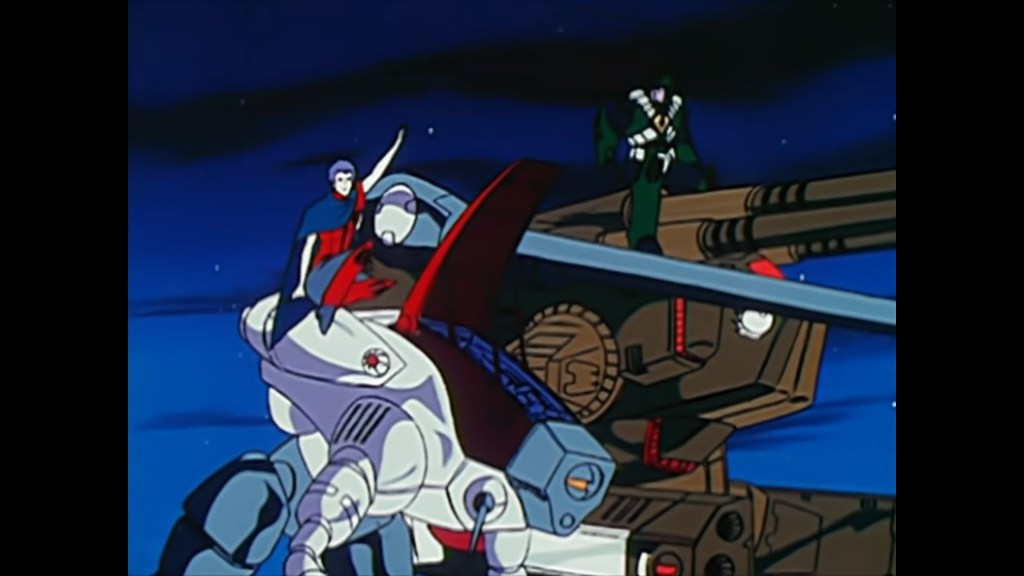
Khyron and Azonia straddle mecha and ride on top counterbalancing Lisa earlier in this episode. This is a defamiliarization of Zentreadi mecha allowing the viewers to observe the mecha from a new perspective. This alternative mode of transportation may symbolize lack of military discipline, mental instability, and emotional behavior due to contamination by micronian culture.
Khyron is thwarted for the ninth and final time in this episode when double agent Zentreadi lure him away from Minmei and lead him into a trap. Rick portrays “The Beserker” trope as discussed in the synopsis for Episode 23. While Kyle did refuse rescue and maintained his personal code of values, Rick did prove the superior alpha male in his ability to protect Minmei. Rick was also able to anticipate these events as he proposed military protection of the protoculture chamber in the previous episode which may be interpreted as an allegory for Minmei.
Minmei experiences personal growth and takes a stand defending Lisa from Kyle’s criticisms. This shows contrast with Episode 31: Satan’s Dolls when her inaction emboldened Kyle to lead a mob against Rick.
Episode 33: Rainy Night in SDF Macross and A Rainy Night in Robotech
This episode is named for a rainy night. The rain is a trope termed “Romantic Rain.” It rains inside a flashback Claudia has of Roy explaining his life as a pilot. It is also raining as Claudia tells this story and as Rick and Lisa walk to his bungalow. A trope termed the “Umbrella of Togetherness” is also portrayed.
Vanessa tells Rick Lisa loves him. Vanessa, Kim, and Sammie are plot devices utilized to communicate the nuances of the love triangle to the out-of-universe audience.
Rick thinks about the photos Lisa gave him. This further alludes to the photo album motif discussed in the synopsis for Episode 1 and shown in Episode 28.
This episode is a dramatic technique used to build Lisa’s and the viewers’ optimism for a relationship between Lisa and Rick. This set up is necessary in order for Minmei to dash this optimism in the next few episodes.
While this episode appears to be intended to fill the late into production extension of the overall episode count, the AnimEigo DVD liner notes state it was always intended to be included in the original proposal of episodes. It was simply moved to appear later in the overall storyline.
Episode 34: Private Time
This episode is named for recreational time spent by Minmei, Rick, and Lisa.
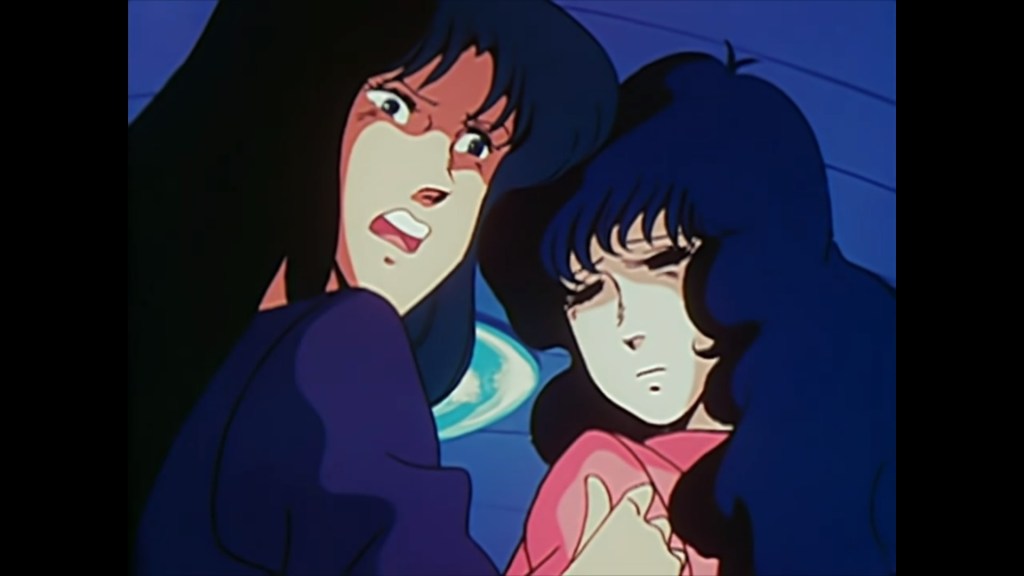
Rick is on a date with Minmei but Kyle takes her with him similar to driving her car away in Episode 31. This is symbolic or even a literal manifestation of these three characters’ interrelationships.
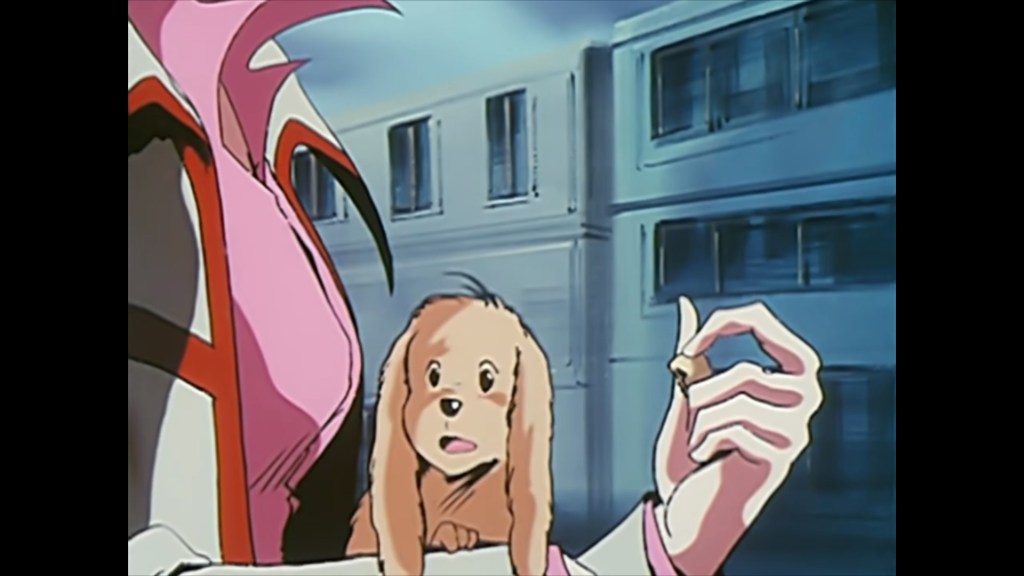


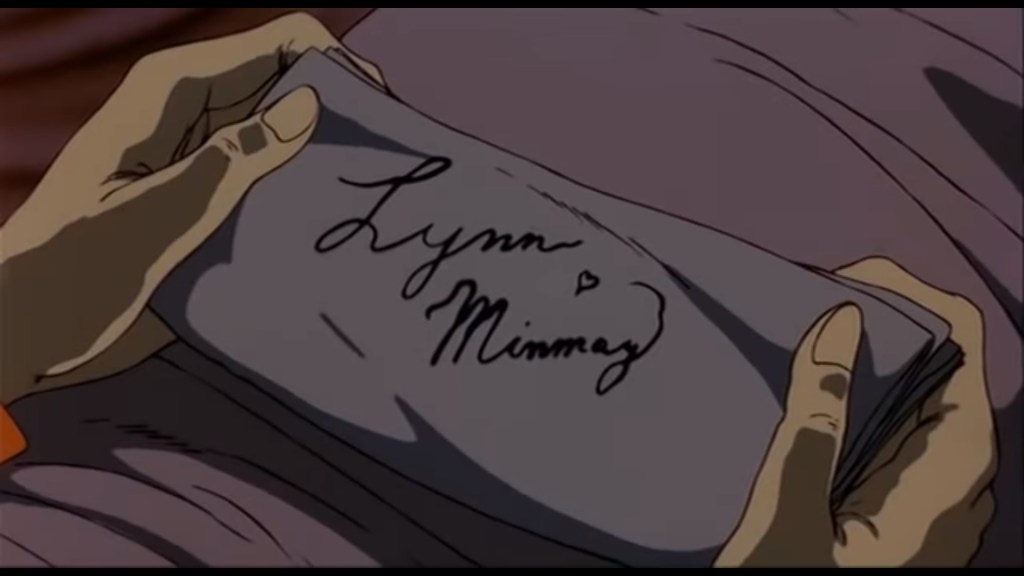
Lisa feeds a stray dog, but it runs to its owner. This symbolizes Lisa’s plans to feed Rick with a picnic, but instead, Rick runs to his owner, Minmei. Rick arrives late to his date with Lisa, and in SDF Macross she discovers an embroidered monogram on a scarf around his neck given to him by Minmei. In Robotech Lisa recognizes Minmei’s perfume, and the scenes showing the monogramed initials H.I. for Hikaru Ichijyo are deleted. This symbolizes a dog collar and dog tags and implies his owner is Minmei similar to the dog shown in this scene. The symbolism between Rick and this stray dog is another pleasing example of mise en abyme. Lisa leaves and turns her back on Rick as it begins to snow. This is the “Snow Means Love” trope. The scarf is “The Lady’s Favour” trope. The monogram motif is also utilized in DYRL but it is Hikaru’s (Rick’s) handkerchief autographed by Minmay (Minmei). See the synopses for Episodes 12 and 21 for a further discussion.
Minmei refuses to sing at her concert. In SDF Macross this recalls Episode 29: Lonely Song. In SDF Macross and Robotech it recalls Episode 16: Kung Fu Dandy when Lisa froze during a Daedalus Attack. See the synopsis for Episode 16 for a discussion of the “Heroic BSoD” trope.

Kyle and Minmei breakup. In the Filmrise subtitles of SDF Macross Kyle speaks highly mature and evolved dialogue explaining to Minmei she only thinks of herself, and her songs will improve if they contain the “kindness that cares for how others feel.” In the AnimEigo subtitles for SDF Macross Kyle states, “When your songs have a kindness that projects concern about people’s feelings, then you’ll be a real singer.” This dialogue is obscured and vague in the Robotech version of this scene. A ship moves across a lake in the background possibly recalling the phrase, “This ship has sailed,” denoting an irreversible action. The shoreline may also symbolize the finiteness of their romantic relationship. He wraps her in his blazer symbolizing his love for her. A wind blows out to sea symbolizing the evaporation of their relationship. This wind resembles wind in Episode 23: Drop Out when Rick witnessed Kyle kissing Minmei.
In this episode Lisa leaves Rick, and Kyle leaves Minmei.
Episode 35: Romanesque in SDF Macross and Season’s Greetings in Robotech
This episode title is likely referencing the Christmas Holiday in an indirect and poetic way or possible mistranslation of Japanese to English. Romanesque usually refers to a style of architecture and less commonly a period of art. The title of this episode is probably meant to refer to Western, European, Roman, or even Roman Catholic traditions involving Christmas.
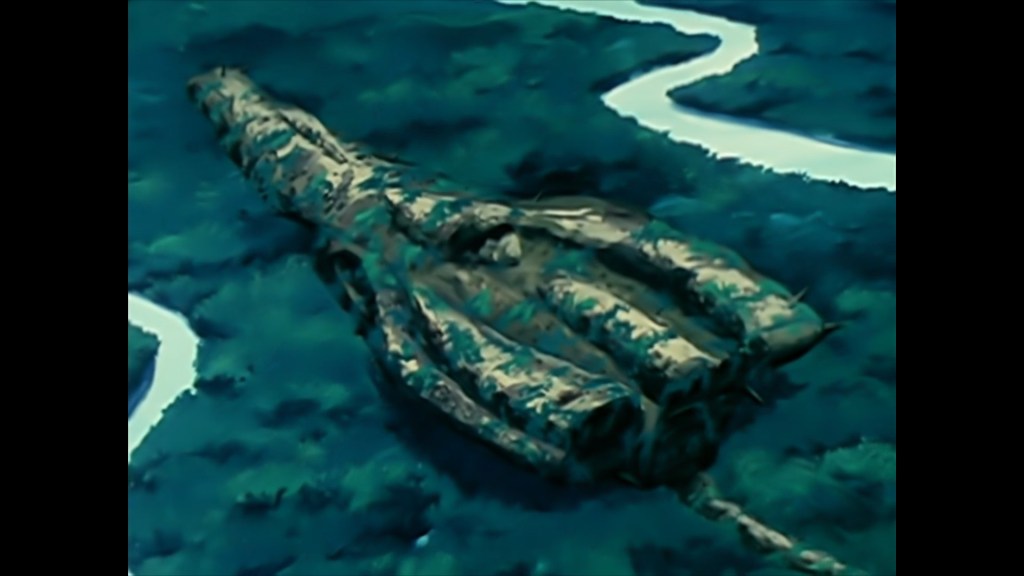

In an opening sequence a mother bird attempts to protect her chicks from an approaching snake. The following scenes show Khyron implying his revenge and maniacally laughing. The scene cuts back to a napping and content snake making the birds nest its home with feathers strewn about. A snake represents evil and this scene foreshadows Khyron’s plan for the SDF-1. The napping snake in the nest is juxtaposed with an image of the Zentreadi cruiser nesting in the jungle. The jungle heat may represent hell. There is also a contrast of setting as previously Khyron’s base was in the snow. Each location representing an extreme and a barren wasteland.
This episode fulfills the “Christmas Episode” trope. Snow and melancholy are each presented.

An industrial worker is shown checking the shipping invoice of a cargo truck. This scene establishes the innocence of life which will be tragically cut short later in this episode with a similar worker. In addition, Bron is shown checking the sales of his toy stand mirroring this first industrial worker. This legitimizes the three former spies as fully integrated into micronian society.
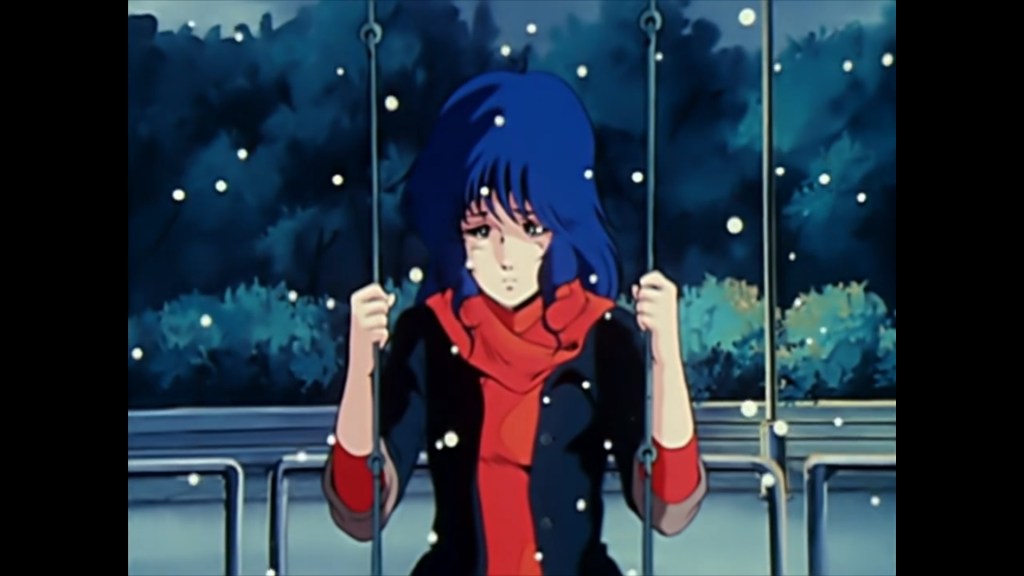

Minmei is shown in a playground on a swing portraying the “Swing Low, Sweet Harriet” trope. This is illustrative of reliving childhood in light of her current romantic crisis. A similar scene is portrayed in DYRL when Minmay (Minmei) leaves Hikaru’s (Rick’s) private quarters and goes to sit on a bench on an observation deck. Minmei seeks introspective solitude in each scene.


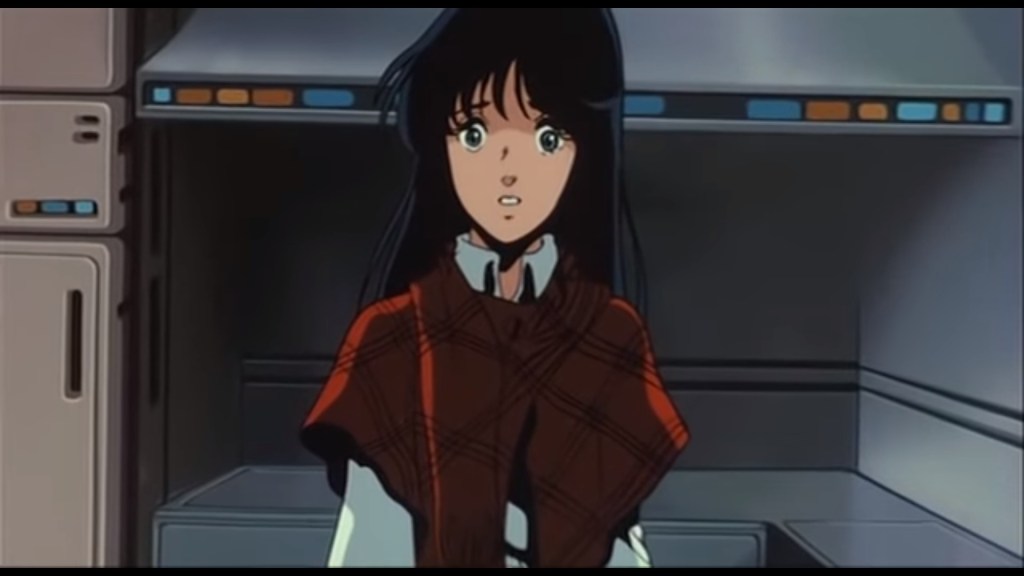
Minmei asks to stay at Rick’s and Lisa accidentally overhears the request. In Episode 5: Transformation Rick was staying with Minmei above her Aunt and Uncle’s restaurant. This scene bears some similarity to Episode 5 when Rick overheard Minmei explaining to soldiers Rick was just a friend. Rick returns to his bedroom and closes the door. Here in this episode’s scene Lisa closes Rick’s front door. This may symbolize Lisa ending her relationship with Rick. A similar scene is shown in DRYL when Misa (Lisa) walks in on Hikaru (Rick) and Minmay (Minmei). Minmay (Minmei) storms out and closes the door behind her possibly symbolizing the end of her relationship with Hikaru (Rick).

Rick portrays the “Beautiful Dreamer” trope.
Khyron attacks New Macross City (Onogi City) looking for a protoculture storage matrix (reaction engine). The scene is humanized by a lone industrial worker taking a cigarette break at the water’s edge and getting blasted by a battlepod. This moves the viewers between the microcosm and macrocosm level.
As previously discussed in the synopsis for Episode 18: Pineapple Salad, Minmei drops a pineapple in the supermarket which is juxtaposed with an explosion. This is reminiscent of Roy’s death and Claudia’s pineapple salad. This may also be an obscure reference to World War II as the Mk 2 fragmentary grenade was nicknamed the pineapple.


Khyron creates an explosive diversion for his escape violating the sanctity of Christmas iconography. During the battle a Church is shown as a shelter. After the battle the Church is shown damaged, but the people sing a Christmas carol symbolizing their resiliency. Christmas, a holiday of the West, often contains an ambiguous grief, tragic beauty, or sense of bittersweet mourning, and these are echoed in this scene. The desecration of Christmas imagery may be an omen portending the breakup of Minmei and Rick’s relationship. Minmei, Khyron, and the snake shown at the beginning of this episode may all be harbingers of doom.
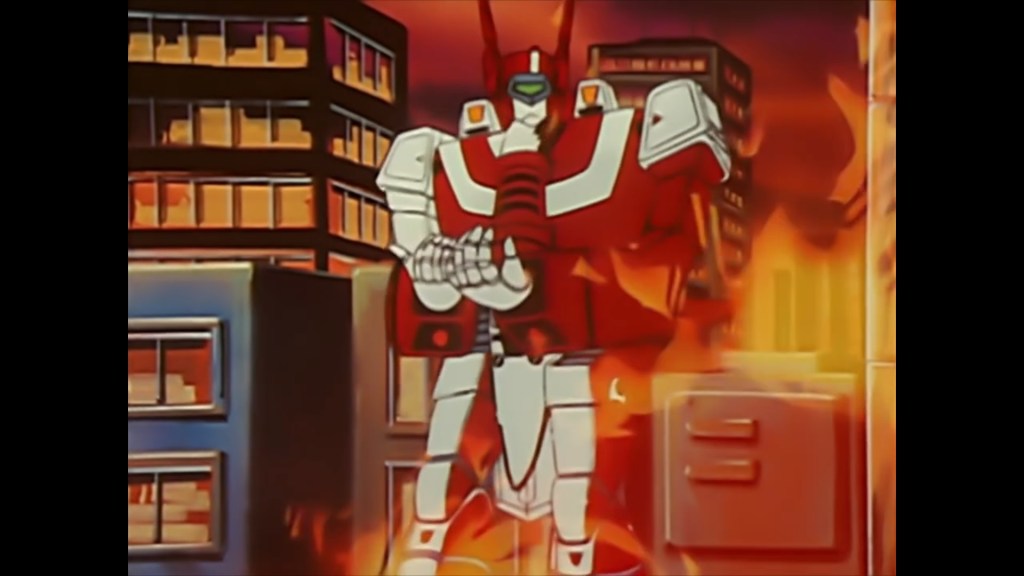
Miriya’s red veritech is shown carrying the wounded. Re-contextualizing Miriya’s veritech into a humanitarian setting is a defamiliarization technique. The veritechs launch fire-retardant missiles recalling Rick and Lisa cleaning up The White Dragon restaurant in Episode as this portrays the military as constructive rather than destructive.
The citizens spontaneously sing Silent Night. This continues the theme of music, art, and culture as powerful forces of motivation and organization as noted in The Macross Chronicle Japanese publication. While music was more sweeping and macroscopic in SDF Macross, it was more microscopic and individual in GCM as it pertains to Robotech. In the Staff Interviews of the DVD liner notes for GCM, Yasuhiro Tomita states Mr. Iwata, Mr. Yamada, and himself decided to use this concept as a guiding principle in the composition of GCM.
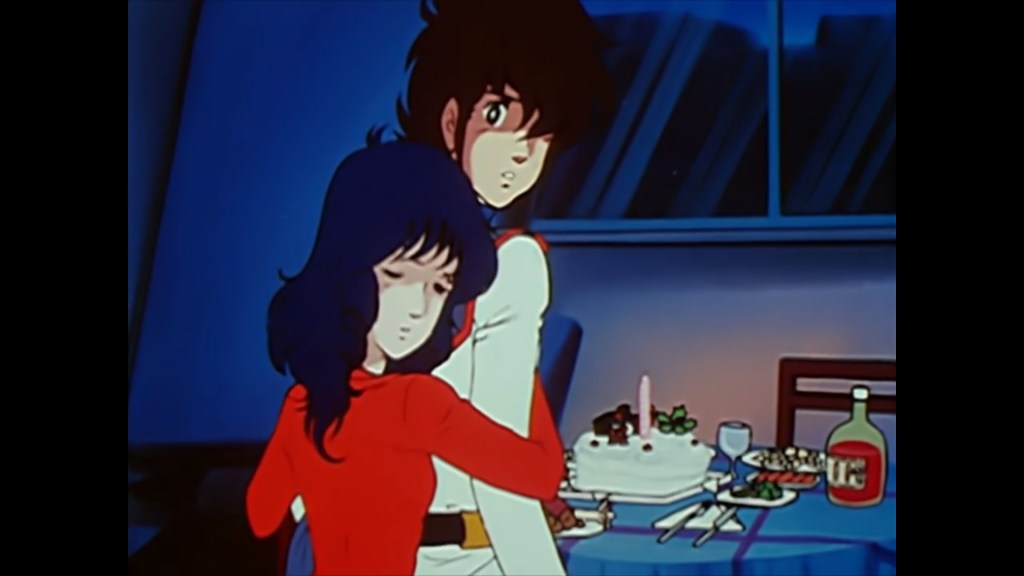

Minmei asks Rick to quit the military. She is likely motivated by selfish reasons and not Rick’s personal safety. Ironically, Rick’s reason for existence is to be in the military to protect Minmei. This was finally clearly iterated in Episode 22: Love Concert but had been hinted at in Episodes 4 and 17. Minmei embraces Rick from behind which will be portrayed again in DYRL. Minmei’s approach could be viewed as that of a predator or aggressor. In this episode and the next episode Minmei implies she has no desire to continue her career and is open to marrying Rick. This may have had more of an impact for Japanese audiences of 1982 as out-of-universe romantic availability of female singers was a component of their professional success. The marriage of a female singer could diminish their profits.
Rick and Minmei kiss over dinner by the light of a Christmas cake candle. This recalls their interrupted kiss lit by the light of their portable stove in Episode 4. In Japan, Christmas is a romantic holiday somewhat similar to Valentine’s Day. Thus, the setting for this scene has additional romantic overtones for Japanese viewers.
Episodes 28 to 35 are an orchestrated dramatic buildup to the next episode as they set a pessimistic tone to contrast with the optimistic finale. The pessimistic tone is set by the Zentreadi rejecting civilian life, the dysfunctional relationship of Kyle and Minmei, Exedore’s discovery of the Zentreadi as an artificial race, Exedore’s assertion the Zentreadi and micronians enjoy war, Khyron’s immunity to Minmei’s singing, Minmei’s loss of professional motivation, Lisa overhearing Minmei ask to stay at Rick’s, and the dysfunctional Robotech Factory Satellite.
Episode 36: Gentle Farewell (Goodbye Tenderness or Farewell to Tenderness) in SDF Macross and To the Stars in Robotech
In SDF Macross the title of this episode is probably an odd translation of a bittersweet goodbye. It may refer to a goodbye to Minmei or Earth itself. Considering the metafictional nature of the storytelling in this series, the title may imply this series is saying goodbye to the viewers or vice versa. “Farewell to Tenderness” is also a Minmei song heard in this episode. In Robotech the episode title refers to Rick and Lisa’s next mission to find the Robotech Masters’ home world.
In Robotech Rick fondly remembers Roy and agrees with his statement about “this Robotech stuff” getting in your blood. This quote is discussed in the synopsis for Episode 1.
Lisa contemplates quitting the military and has an existential crisis.
Rick contemplates quitting the military.
In SDF Macross Captain Gloval proposes colonizing worlds. With this suggestion he becomes an uber-patriarch. In Robotech he proposes travelling to the Robotech Masters’ home world. He proposes all this to Lisa while on the bridge of the decommissioned SDF-1. The setting of this scene on the old bridge sets up the impending resurrection and victory of the SDF-1 which will retroactively classify the SDF-1 shown here as the “Grail in the Garbage” and “Excalibur in the Rust” tropes. Captain Gloval’s new mission and promotion for Lisa is an example of female empowerment in this series.
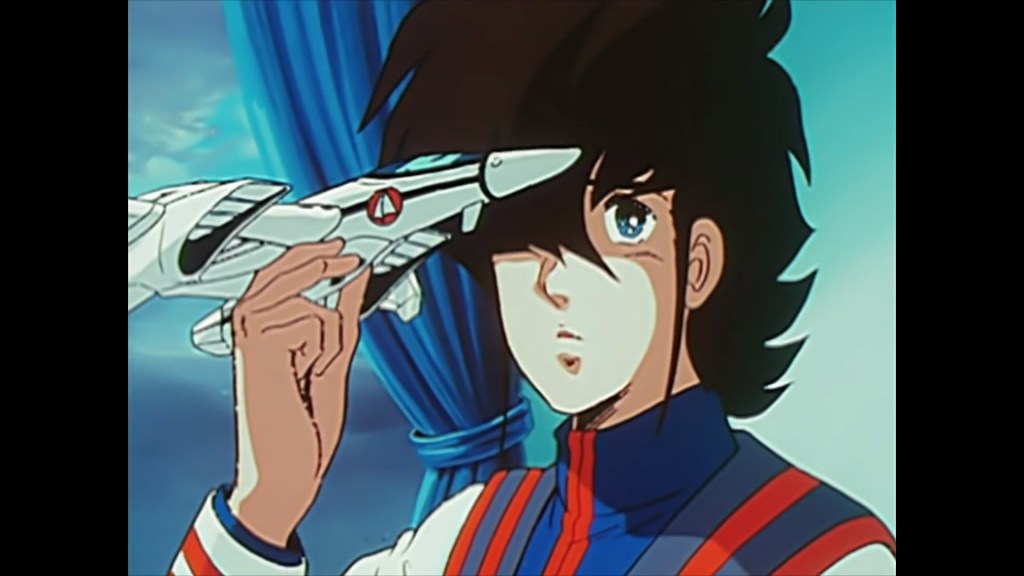
Rick is shown playing with a model airplane which recalls him playing with a yellow biplane in Episode 18.
In SDF Macross Lisa says goodbye to Minmei and explains she cannot create culture like Minmei, but she can protect it. This becomes Lisa’s reason for existence as previously discussed in the synopses for Episodes 22 and 29. In Robotech, Lisa simply explains her new mission. Lisa confesses her love for Rick in front of Minmei. In Episode 27 Rick confessed his love for Minmei in front of Kyle. Each participant in this love triangle now openly acknowledges the dynamic. Lisa salutes Rick after she confesses her love with a teary-eyed salute which portrays the “Military Salute” trope. In Episode 27 Rick saluted Minmei and Kyle. Rick attempts to chase Lisa, but Minmei stops him. Earlier, Rick had chased Minmei in Episodes 29 and 31, and Minmei chased Rick in Episode 32.

Previously, Rick saw Minmei in Episode 1, and the SDF-1 involuntarily fired its main gun. Rick’s romantic inexperience was shown as he stumbled into Minmei’s bedroom and was paralleled by the SDF-1’s failure to launch. While marooned, Rick and Minmei’s impending kiss was interrupted by an explosion and their rescue. Rick’s rescue of Minmei from a chasm in the ground and decision to join the military was symbolized by the SDF-1 regaining its virility and firing its main gun. Rick’s desire to see Minmei in her swimsuit was interrupted by an impending collision with a recon vessel. Minmei’s explanation to Rick about her preference for Kyle manifested in the entire Earth being incinerated by Dolza. Rick, Lisa, and Minmei’s meeting on the street and their tension was symbolized in negotiations between Rick, full size Zentreadi, and RDF mecha. And finally, in a symbolic climax, the exposing of the love triangle and its tensions is symbolized by a missile barrage from Khyron’s attack. Minmei clings to Rick and he frees himself from her grasp physically and symbolically. Rick follows Lisa and they perform their duties leaving Minmei behind.
A precise scrutiny of the dialogue in the subtitles of SDF Macross is open for interpretation. One analysis is it is best these three characters pursue their own personal happiness by doing activities they enjoy. Saving humanity, praise, and adoration are secondary concerns and benefits. Minmei may mistakenly assume Rick and Lisa are in the military for fun. Alternatively, an opposing analysis reveals a possible simultaneous revelation shared by both Lisa and Minmei. Lisa and Minmei both realize Minmei sings for herself and not for her fans. Lisa accuses Minmei of this selfishness but confusingly for out-of-universe viewers also states she and Rick fight for the same reason Minmei sings. This would imply all three characters are motivated by selfish reasons, but Lisa is likely generously allowing Minmei the illusion they all are motivated by service to others. Lisa and Rick experience a call of duty. Lisa justifies their actions by explaining the three of them have their careers, and Rick and Lisa must now perform the functions of their careers. Minmei realizes she should sing not for herself but for humanity in the same way Rick and Lisa perform their duties for humanity. This subtlety is lost in the ADV English dub of SDF Macross but is present in the ADV English subtitles of SDF Macross. There are major differences in wording and meaning between the ADV English dub and subtitles. In the denouement later in this episode, Minmei seems to acknowledge Lisa’s accusation and references a future in which she will sing her true songs. In the AnimEigo subtitles for SDF Macross these true songs are referred to as real songs. All this subtlety is lost in the adapted dialogue for Robotech. Minmei’s reference to her true songs in the subtitles of the SDF Macross version of this episode recalls Kyle’s advice to her in Episode 34. This reference is lost in the ADV English dub and subtitles of SDF Macross as it does not strongly reference Kyle’s dialogue in Episode 34. Minmei has a subtle story arc between Episodes 29 to 36 regarding her existential purpose and these future true songs. A similar story arc presents in a leaked copy of a 14 page Macross live action film treatment written by Shoji Kawamori in 1992. While the television series alludes to a future insightful humanity expressed in Minmei’s songs, the film treatment focuses on the progress of her technical singing abilities and self-confidence. In the plot for this abandoned film project Maria (Minmei) loses confidence in her physical singing ability, and Ellen (Lisa) also insults the technical skill of Maria’s (Minmei’s) songs. Later, Ace (Rick) convinces Maria (Minmei) to sing for the war effort, and Maria (Minmei) gains confidence and achieves improved technical singing abilities as the film’s climax. This also somewhat resembles DYRL when Hikaru (Rick) convinces Minmay (Minmei) to sing as the climax for the film. Here in Episode 36 it is the realization of the possibility of a life in which one can achieve both altruism and self-satisfaction which seems to dawn on both Rick and Minmei. Lisa had already arrived at this realization and was frustrated by the priorities Rick assigned to his personal desires. A self-reinforcing positive feedback loop is achieved when Rick and Minmei both altruistically set the other free romantically which grants the other’s real time altruism and self-satisfaction as well as their own. Not only does this succeed in the context of the microcosm of their relationship in real time, but the series ends with a ripe future fertile with a potential exponential growth of altruism and self-satisfaction for the universe inhabited by these characters. The altruistic behaviors of this scene could be viewed as mild forms of martyrdom. The SDF-1, Lisa, Rick, and Minmei each become martyrs. Lisa was willing to sacrifice romantic love with Rick to serve in the military. Rick chose to sacrifice romantic love with Minmei to serve in the military. Minmei was willing to sacrifice her career and escape with Rick. Also, Minmei accepts her romantic loss with Rick and chooses to pursue singing for humanity. The SDF-1 literally martyred itself. Khyron and Azonia martyred themselves. Kyle previously selflessly overcame his possessiveness of Minmei so she could pursue her own happiness. The resolution and finale of this episode can be contrasted with the original proposed resolution portrayed previously in the events of Episode 27. It seems reasonable to assume the 10 episode extension in this series allowed for a more nuanced development of Minmei’s growth in depth of feeling and comprehension. Without these 10 episodes the story arc of her existential crisis between Episodes 29 and 36 would either have not occurred or would have been compressed inside episodes prior to the events of Episode 27. The additional episodes allowed a slower dynamic pacing which led to Minmei’s epiphany in Episode 36 sharing a symmetry with Rick’s epiphany. If Minmei’s existential crisis or maturation was completely eliminated in a 26 episode series, the climax of the series would have resulted in Rick rescuing Lisa and Minmei remaining as a static superficial idol singer after the events of Episode 27. It is the symmetry shared by Rick and Minmei’s epiphanies which achieves a deeper impact on the viewers. This briefly presents a theme of the benefits of concluding, resolving, and moving on from one’s own past. Lisa moved on from Karl, Minmei moved on from Kyle, and Rick and Minmei move on from each other. In addition, there is a theme of letting go, maturation, and surrender as Rick and Minmei set each other free. By abandoning their selfish desire for romantic love, they are able to experience a more profound non-romantic and humane love. There is also a theme of internal tension being an element of the human condition. There is sometimes a conflict between the desires of the heart and the mind inside a single individual. A well-known quote has been paraphrased as “The heart has desires of which the mind knows not.” This is a theme of conflict between the emotional and the logical which shares a symmetry with the conflict between the Zentreadi and humanity and their cultures.
Lisa and Minmei represent two archetypes of the female gender. Minmei weaponizes her femininity while Lisa conceals her femininity and achieves her goals through academic and professional accomplishments. Neither archetype is misguided. They are simply two different strategies. Rick eventually chooses practicality and embraces Lisa. DYRL may hint at a fantasy of combining these two female archetypes. The synopsis for Episode 27 noted it was Misa’s (Lisa’s) idea in DYRL to combine the lyrics with the melody. The lyrics may symbolize Misa (Lisa) and the melody may symbolize Minmay (Minmei). Misa (Lisa) is the intellect and Minmay (Minmei) is the raw talent. Hikaru’s (Rick’s) request for Minmay (Minmei) to perform this song enables the defeat of Golg Boddole Zer (Dolza). Thus, in DYRL it is the love triangle itself which brings victory in the form of the teamwork and union of these three characters. Also of interest, if the Zentreadi are viewed as a symbolic manifestation of Rick’s subconscious, they display a preference for Minmei. Some Zentreadi later sour on Minmei and Breetai and Exedore eventually share a more balanced friendship with Lisa. This symbolically illustrates Rick’s story arc of tension between Lisa and Minmei.
Minmei may also represent a childhood romance from Ricks’s past while Lisa engenders a mature adult relationship and the future.
In SDF Macross, the opening theme music is played as the SDF-1 lifts off, but it is not metafictional as the in-universe characters cannot hear it.
Azonia and Khyron hold hands and ram the SDF-1. The explosion may be symbolic of the passion of their romance. After being thwarted from destroying or capturing the SDF-1 seven times, Khyron does seemingly destroy it. It is rebuilt in the SDF Macross universe but buried in the Robotech universe. While the SDF-1 previously portrayed the “Legendary Weapon” trope, it portrays the “Breakout the Museum Piece, Older is Better, Ancestral Weapon, and They Don’t Make Them Like They Used To” tropes in this episode. The SDF-1 may also portray the “Messianic Archetype” trope or the “Inspirational Martyr” trope as it self-sacrifices to save New Macross City. Captain Gloval portrays the “Old Master” trope. The bridge crew reunites portraying the “Putting the Band Back Together” trope.
Rick portrays “The Beserker” trope when Khyron fires his main cannon at the SDF-1 in SDF Macross rewritten as the SDF-2 in Robotech. This trope is discussed in the synopsis for Episode 23.
While Khyron’s main plot thread is resolved with his death, he could also be viewed as a residual echo of Kyle. Kyle was consistently possessive and controlling of Minmei from Episodes 16 to 34. If the SDF-1 symbolizes Minmei and Khyron absorbs Kyle’s plot tension and plot thread as a scorned and rejected lover, Kyle’s hostile behavior is manifested and exorcised in this scene with self-destructive results. This provides catharsis for Khyron and Kyle’s story arcs. However, this proposal conflicts with the symmetry between Kyle and Breetai as portrayed as a hybrid in Episode 17 and discussed in that episode’s synopsis instead of a Kyle-Khyron hybrid. Additionally, given the acknowledgement and exposure of the love triangle in this episode, Khyron’s attack may also absorb Minmei’s plot thread of a scorned and rejected lover. Khyron’s death provides catharsis for both Kyle and Minmei’s internal torment. In this proposal the SDF-1 would symbolize Lisa. However, Khyron is also symbolic of an undesirable personality trait existing in Rick’s psyche and also Rick’s foil. These may all be multilayered simultaneous symbolisms.

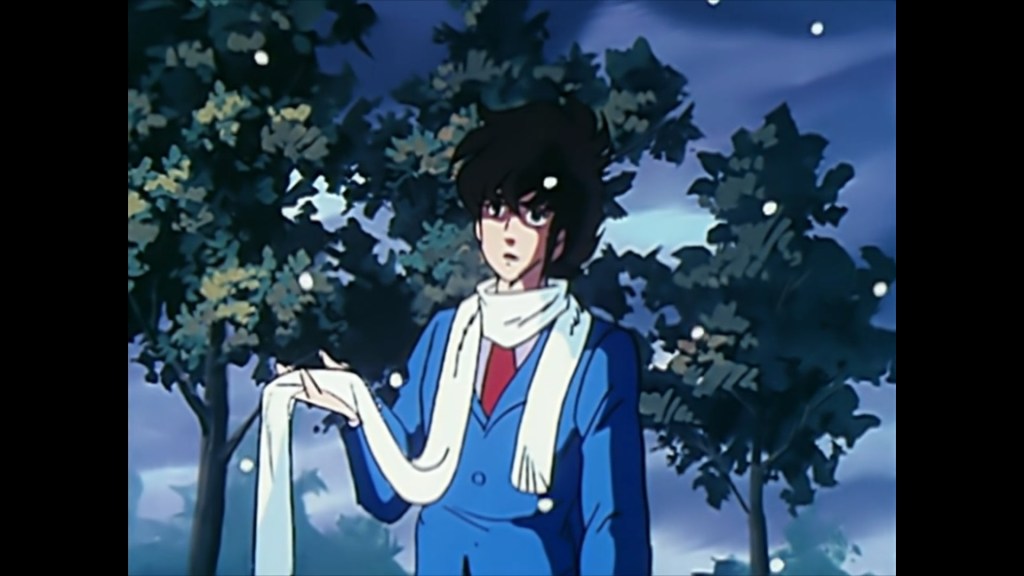
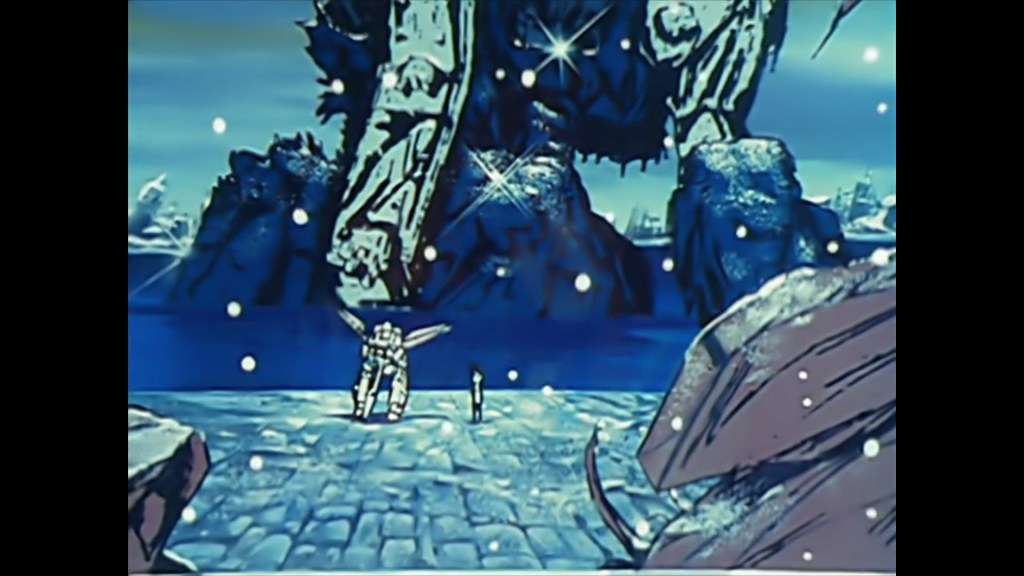
The city is in rubble, and the three parties to the love triangle find resolution. The raging battle symbolized their internal struggles and decisions. Minmei kisses Rick on the cheek. Minmei exits, and Rick and Lisa become a romantic couple. This fulfills the “First Girl Wins” trope previously discussed in the synopsis for Episode 1: Boobytrap. Between Lisa and Minmei, Lisa was the first girl shown on screen as well as the first girl Rick spoke with through the monitor of his veritech. It begins to snow on Minmei again presenting the “Snow means Love” trope as in Episode 34. The perspective widens revealing Rick’s veritech in a similar posture as the SDF-1 now towering above it. The veritech in guardian mode is in a deep bow posture appearing submissive to Rick’s commands and in solemn mourning. Three levels of scale are observed as the SDF-1 towers over the veritech which itself towers over Rick and Lisa. Again, this imagery provides a sense of balance and harmony between the microcosm and the macrocosm. The scene freezes as a photo in a photo album. This imagery was previously discussed in the synopses for Episodes 1 and 28. In SDF Macross the animated hand closing the album clearly shows the sleeve of Lisa’s uniform. In Robotech the animation is cropped, and Lisa’s sleeve is not shown allowing ambiguity as to whose hand is closing the album. Seemingly, Rick is the main character as discussed in the synopses for Episodes 12, 17, and 28. However, while Rick was the main character throughout this series, it was simultaneously all a recollection in Lisa’s mind as she peruses Rick’s album in a metafictional plane of reality. This perhaps implies Rick is the main character in the story of Lisa’s life. This inherently defines a metafictional future and past for these characters. The viewers only have access to events within the photo album but now yearn to discover the events transpiring after the final photo. As there are five levels of scale as referenced in the synopses for Episodes 6 and 18, so too are there two timelines as implied by this episode’s closing scene. One timeline is that which the viewers have up until now perceived as the in-universe present. Upon viewing the final scene of Episode 36, what was perceived as the present is revealed to in reality be the past. The viewers now desire access to Lisa’s present. This allows the viewers to empathize with Lisa’s nostalgia and fondness for these events and actually participate in her recollections. The Robotech novels also convey this retrospective point of view by including fictional epigraphs.


A sense of symmetry and closure is achieved as the series had begun with Rick and Lisa and closes with Rick and Lisa. The series began with the SDF-1 on an island in the ocean and ends with it becoming an island in a lake on Earth. The water around the SDF-1 symbolizes its insulation, removed detachment, and tragic romance. Also, Minmei and the SDF-1 share another analogy here as both are exhausted and resigned to their fate. Minmei’s exit walk portrays the “Off-into-the-Distance Ending” trope. Minmei’s resignation repeats the motif of the drained SDF-1 sinking in the falling action of the plot. This is a mirroring of the rising action of the plot when moments ago Lisa surrendered Rick to Minmei, and Lisa and the SDF-1 were thought to be resigned and anchored to their fates. As the SDF-1 had a victorious resurrection, so too does Lisa now beam with victory over Minmei.
An additional sense of symmetry occurs in Robotech as Lisa speculates about the future stating the SDF-1 and SDF-2 are each destroyed. These ships are now allegories for Rick and Lisa’s past selves or components of the love triangle and Kyle. Rick suggests building the SDF-3 and travelling to the stars. This is an allegory for building a new relationship with Lisa and soaring to the heavens on the wings of love. Carl Macek may have had overly ambitious plans to have a new ending animated for Episode 36 portraying the proposed SDF-2 so as to assist his 85 episode story arc. This rewrite was never animated but it was portrayed in the Comico Comics version of this episode illustrated by Carl Macek’s wife, Svea Stauch Macek.
The concept of an SDF-2 seems predestined as soon as the SDFM series named the Supervision Army ship the SDF-1. It almost begs for a sequel. The Macross franchise did indeed follow the plot of exploring the universe in Mega-Road class ships. The Robotech franchise also took this cue.
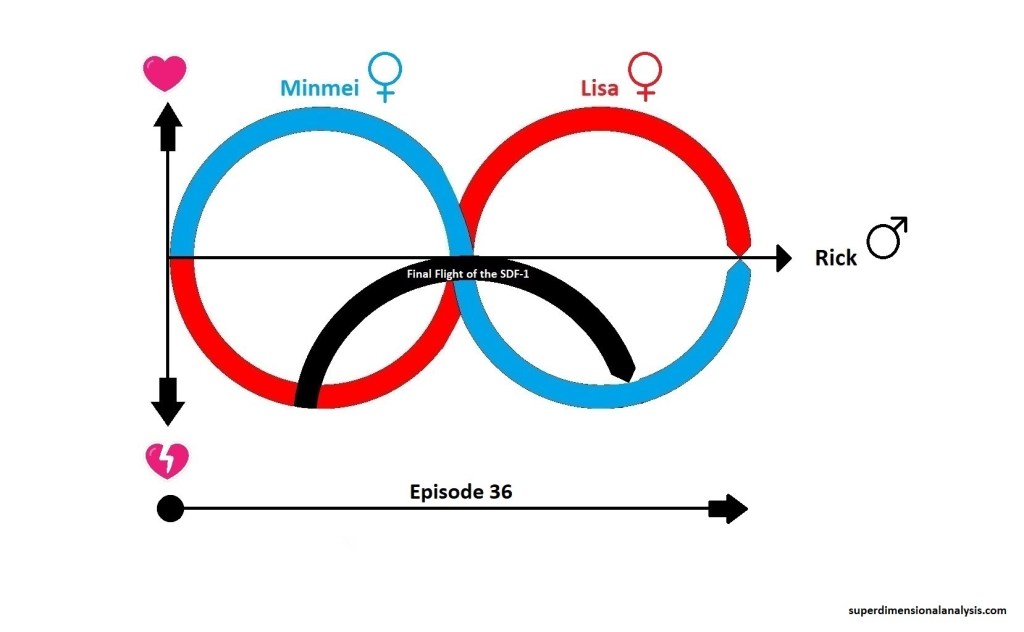
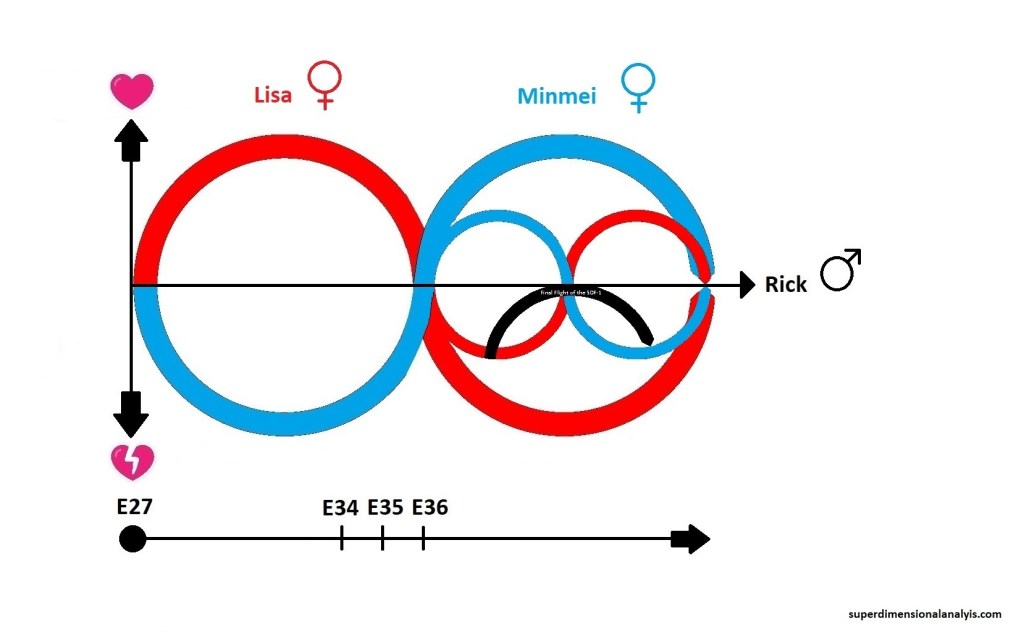

The final climax shown in this episode resolves two characters’ conflicts both internally and symbolically. The two characters are Minmei and Lisa. Their internal conflict was romantic rivalry for Rick and its outcome’s possible corresponding career consequences. This drama is symbolized in the form of the SDF-1 reflecting both Minmei and Lisa. Minmei, Lisa, and the SDF-1 each travel a rhythmic undulating path visualized as an oscillating sine wave passing through peaks and troughs and eventually arriving at a neutral node of resolution. This can be visualized as a smooth mathematical periodic oscillation. Initially, Lisa surrenders to Minmei on Rick’s doorstep and slides to a trough or low point on her path. Lisa is thus harmoniously symbolized as the rusted hulk of the SDF-1. With this news Minmei ascends in victory as she possesses Rick and arrives at a peak or crest on her path. Rick shortly chooses Lisa, and Lisa ascends to a crest which is later rhythmically symbolized when the SDF-1 resurrects for one final flight. Upon losing Rick, Minmei sinks to a trough which is later rhythmically symbolized by the SDF-1 falling back to Earth. These interlacing arcs and the SDF-1’s split duties between first incarnating Lisa and then Minmei achieves an aesthetic harmony which satisfies the viewers and provides a believable resolution. Each character arrives at a fair, successful, and balanced conclusion.
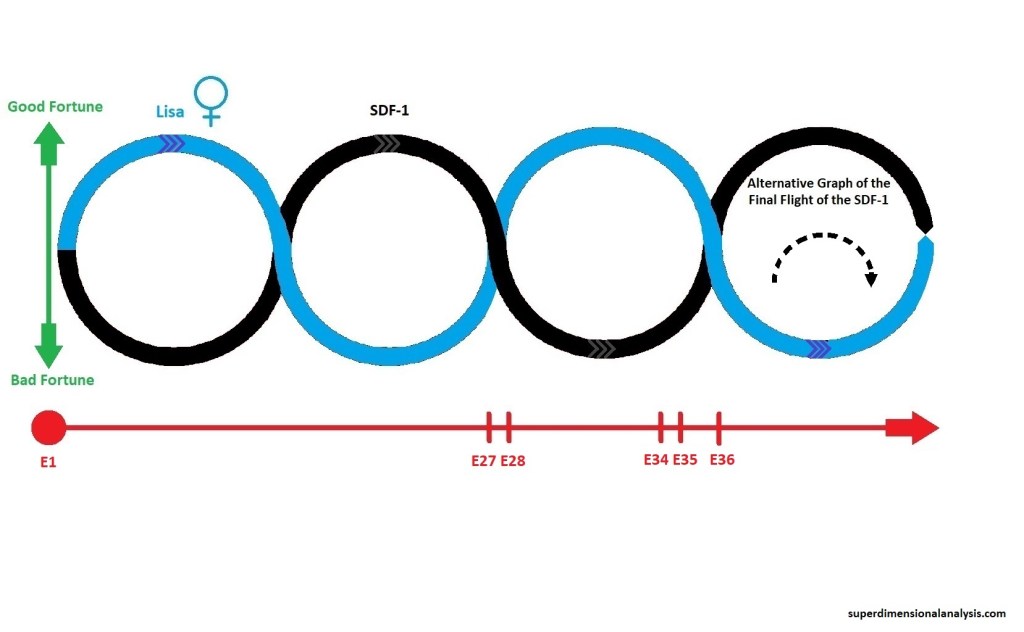
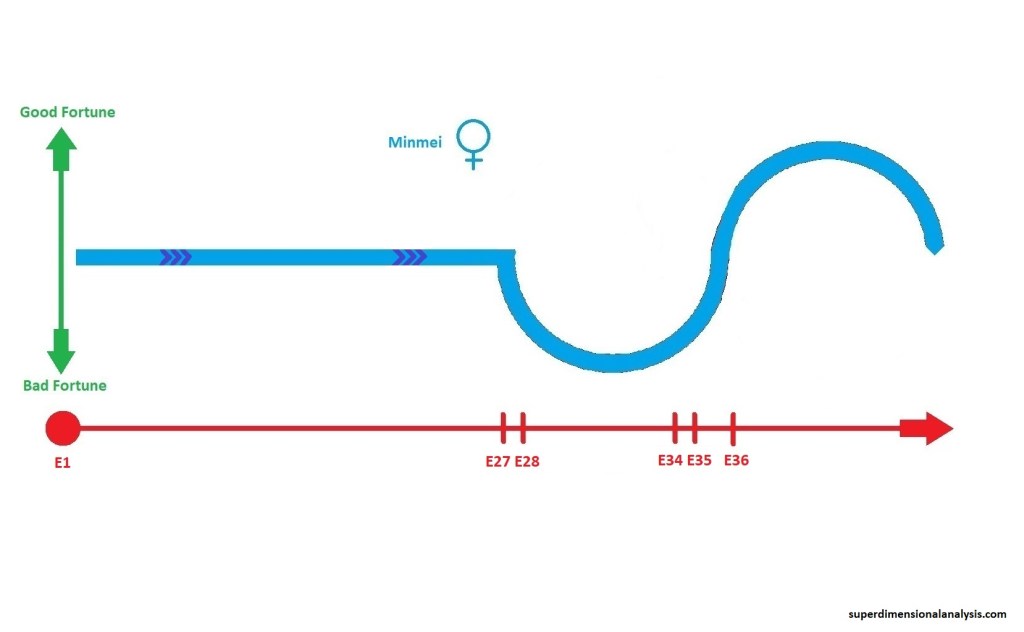
The wave imagery alluded to in the previous paragraph may be further elaborated upon by referencing standard oceanic waves. Throughout this series several gales and gusts of characterization, rising action, and drama churn up different waves which the characters and viewers precariously surf upon until they arrive at their logical destinations. In SDF Macross Minmei suggested a quick death in Episode 4, Lisa resigned herself to death in Episodes 7 and 12, and Miriya desired a merciful end to her humiliation in Episode 25. Miriya’s wave quickly peaked and broke upon the shores of love. Lisa and the viewers were forced to surf her wave of suppressed nihilism from Episodes 7 to 36 when it finally cast itself on the shores of romance. In SDF Macross the viewers surfed Minmei’s wake as she was carried atop a rising swell until it finally fell upon the coast of maturity and friendship. Minmei’s concealed comfort with death is not as evident in Robotech. However in Episode 31 of Robotech she does state, “My life is a song,” and in Episode 36 of Robotech she states, “There’s no future.” These existential sentiments as well as a possible psychic spillover from her SDF Macross character generates dramatic tension and concern for her character’s wellbeing forcing Rick and the viewers to helplessly watch as she rides her wave towards a deadly coastline but ultimately is delivered safely to shore. Rick fought the tidal current sweeping him away from Minmei until the tide turned and brought Minmei to him in Episode 35. He was then adrift in a windless sea but finally filled his sails and steered for Lisa. Claudia makes her peace with this metaphorical sea beginning in Episode 18 and slips beneath its tranquil surface in Episode 36 of Robotech. Khyron and Azonia’s wave is compelled to be dashed and broken upon the rock which is the SDF-1. The SDF-1 inundated and broke the seawall which was Dolza’s fortress. Dolza was doomed to drown when his initial wave (Breetai) hit the sheer cliffs of humanity, joined humanity’s wave at its resonant frequency, multiplied its amplitiude, and reflected back upon him (omni-directional barrier). In this metaphorical nautical tale the SDF-1, Captain Gloval, Roy, Claudia, and the Bridge Bunnies all alternate roles as lighthouse keepers, tugboats, coast guards, and lifeguards. Throughout this series the viewers surf these plot threads while slowly accumulating oceanic data about the dynamism roiling just beneath the surface of these characters, eventually seeing them rise like tsunamis to reveal their fates on the shorelines of destiny.

The resolution of the love triangle satisfies the viewer because it is rational and believable. Rick achieves his career as a pilot, Lisa carries out her military duty, and Minmei decides to continue singing. Prior to these decisions each character had contemplated abandoning their career. The theme of professional satisfaction carried into DYRL. Around 00:20:43 in DYRL fan subtitles for Misa (Lisa) state, “A boy will be unhappy all his life if he chooses the wrong job. Since I was a little girl, I’ve devoted myself to the service.” For viewers of DYRL who have not seen SDF Macross or Robotech, this dialogue somewhat foreshadows the resolution of the love triangle. For viewers familiar with SDF Macross and Robotech, this dialogue simply recalls the outcome of the love triangle in Episode 36. While Minmay (Minmei) does not ask Hikaru (Rick) to resign from the military in DYRL, at 01:35:08, she does ask him to remain on the observation deck with her as she believes the battle is hopeless and they will all die. Minmay’s (Minmei’s) defeatist sentiment reflects her dialogue in Episode 4 from SDF Macross when she suggested the vacuum of space as an alternative death to starvation. Minmay’s (Minmei’s) selfishness in this scene from DYRL recalls her behavior in Episode 36 when she begged Rick to stay with her. At 00:13:45 In Clash of the Bionoids Misa’s (Lisa’s) dialogue works to the opposite effect as DYRL. She states Hikaru (Rick) should never have been a soldier and should find another job. This supplies tension through negative assumptions about Hikaru (Rick) which he will eventually prove false.
The central love triangle of this series can be deconstructed by comparing it to the love triangle dramatized in Episodes IV, V, and VI of the Star Wars film series. In this trilogy Luke Skywalker and Han Solo represent two archetypes of the male gender. Luke is moral simply for the sake of being moral while Han Solo primarily seeks financial compensation and views morality as a secondary concern. Eventually, Han Solo embraces morality as his primary motivator when he flies cover for Luke at the end of Episode IV. The Star Wars love triangle is resolved when Princess Leia and Luke discover their familial love, and Princess Leia and Han Solo embrace romantic love. The three members of the Star Wars love triangle eventually collaborate to achieve good. In SDF Macross and Robotech it is the female gender which is split into two archetypes. Lisa is similar to Luke as she is sacred, pure, selfless, and noble. Minmei is similar to Han Solo as she is secular, worldly, and materialistic. Minmei eventually embraces selflessness as her primary purpose. Their love triangle is resolved when Rick and Minmei discover platonic love, and Rick and Lisa embrace romantic love. In the television series the three members of the love triangle envision a future in which they will collaborate to achieve good. In Star Wars Han and Luke achieve growth by borrowing elements from each other to become more desirable self-actualized balanced full wholes. In SDF Macross and Robotech Lisa and Minmei achieve growth by borrowing elements from each other similar to Han and Luke. This is cathartic for the out-of-universe audience which may process this information on the subconscious level.
Final Thoughts
As stated in the Introduction section of this essay, much of the symbolism and interpretation found throughout this essay is more comprehendible when the material is viewed in isolation from later entries in the franchise. The proposals asserted in this essay are most reasonable to a Robotech viewer or in relation to material existing between the years 1982 and 1991. The Robotech material limits the Zentreadi story possibilities and not until 1992 did the Zentreadi storyline branch into new directions in the Macross franchise material. The more defined the Zentreadi become in the franchise, the more narrowed their symbolic interpretation becomes. As previously stated, the symbolism of the SDF-1 becomes somewhat diluted after 1991 as franchise sequels introduced additional Megaroad-class ships.


The surface level arch-plot of this series relates an alien ship arriving on Earth and humanity’s ensuing struggle against alien forces for possession of this ship. However, there is a deeper eternal human story intertwined with these events and for which these superficial events are actually surrogates for. The human story and primary arch-plot relates the story of a young girl arriving in the protagonist’s life and his ensuing struggles to possess her. The SDF-1 represents Minmei, and the Zentreadi represent Rick. The internal emotional engine for this arch-plot and basis for the main symbolism of this series is Rick has a crush on, infatuation with, and unrequited love for Minmei from Episodes 1 to 26. Minmei is Rick’s first love, and in SDF Macross she rejects him in Episode 27 while in Robotech the two characters part ways slightly more equitably. Later, Kyle and Minmei end their relationship in Episode 34, and Minmei romantically rebounds with Rick in Episode 35. However, Rick understandably now feels he is her second choice as Minmei would colloquially be described as Kyle’s sloppy seconds. Rick ends his relationship with Minmei and chooses Lisa in Episode 36. The entire series is symbolic of Rick’s internal emotional life. Rick and the Zentreadi males shadow and rhyme with each other throughout this series as they respectively grow and mature. Rick and the Zentreadi males are each coming of age in this story. The SDF-1 represents Minmei, and the metaphorically prepubescent Zentreadi males put up a macho front for her from Episodes 1 to 9. In Episodes 10 to 26 they metaphorically pass through puberty and repeatedly unsuccessfully court the SDF-1 as symbolized by combat. The turning point from macho stubbornness to a relationship of equals begins in Episode 10 at the emotional debriefing of the Zentreadi recon mission as the Zentreadi begin to process their feelings resulting from observations of Minmei. In Episode 11, during Dolza’s interrogation, the Zentreadi are akin to thirty foot tall children trying to understand carnal knowledge and are also the incarnation of Rick’s own curiosity and journey of discovery. In Episode 26 the Zentreadi forces of the local war theater learn their lesson and join with the SDF-1 symbolizing a mature adult relationship between two equal partners. This is portrayed by Exedore’s peace negotiations. In Episode 27 these same Zentreadi forces allow the SDF-1 to symbolically blossom, bloom, and express its love without shame which brings victory and success. This is portrayed as the SDF-1’s military victory over Dolza. Rick follows this rhythm as after many trials and tribulations since Episode 1 he sets himself and Minmei free in Episode 27, and like the SDF-1, Minmei is free to fully express her feminine charm. The battle between the SDF-1 and the Zentreadi represents the battle of the sexes as does the tension between Minmei and Rick. This recalls Max and Miriya’s dogfight in Episode 18, their arcade game in Episode 24, and the Meltrandi (female Zentreadi) of DYRL. Simultaneously, the Zentreadi may represent Rick’s passionate animal urges, id, ego, and superego. All of Rick’s battles against the Zentreadi may represent his internal struggles to control his own libido, and their giant size indicates the enormity of Rick’s lust. In this conjecture Minmei is again symbolized as the SDF-1. Rick is able to assimilate the more mild and negotiable aspects of his extreme physical urges and eliminate the more stubborn and irrational portions. Thus, Breetai, Exedore, Miriya, Azonia, and Khyron represent the retained portions of Rick’s psychology while Dolza is discarded in Rick’s first stage of maturation. Rico, Konda, and Bron seem independent of this analogy but can also easily fit this proposed theory. In a later second stage, Rick’s personality traits symbolized as Khyron and Azonia will neutralize and eliminate themselves, and Rick will reach emotional maturity in their absence symbolized as the surviving Breetai, Exedore, and Miriya. Adolescent pubescent viewers and especially male viewers may find these aspects of this series especially autobiographical and relatable. Puberty and a first love arrive in an adolescent’s life like a bizarre alien force which must be tamed and subdued. The lyric “some kind of alien” from the Van Halen song Love Walks In uses this same metaphor. Alternatively, the Zentreadi may be seen as overcoming their shortcomings or toxic past. They engender hope and the possibility of self-improvement. Some viewers may identify with being emotionally stunted, having personal internal struggles, and facing futures of difficult obstacles. For these viewers, select Zentreadi are inspirational role models. In DYRL, Golg Boddole Zer (Dolza) and Laplamiz (Azonia) may be surrogates for divorced parents. The audience is able to express their repressed rage through Hikaru’s (Rick’s) victory. The other main symbolism of this series is an allegory for the World War II Allied bombing, occupation, and reconstruction of the nation of Japan. This is discussed in the synopsis for Episode 8. Robotech has a larger arch-plot or myth arc spanning 85 episodes involving protoculture as a fuel source and the defense of Earth. In SDF Macross there is a larger arch-plot spanning many different series within the larger Macross franchise.
While the Zentreadi symbolized Rick’s psyche allowing his eventual elimination or assimilation of them as elements of his personality, the bridge crew of the SDF-1 may symbolize Lisa’s psyche. She united and absorbed these manifestations of her personality into her mental construct becoming a mature and fully integrated adult. At the end of the series finale, Rick and Lisa achieve catharsis by becoming fully self-actualized and manifest wholes. Consequently, in SDF Macross the romantic union of Rick and Lisa combines their psychic representatives in the form of Breetai, Exedore, Miriya, and the entire bridge crew into a functional partnership. If the deaths of these characters indicate a rejected personality trait, this symbolism is stronger in SDF Macross and weaker in Robotech as the bridge crew were all slain in Robotech but survived in SDF Macross. However, contemporary with the original broadcast of this series and prior to any SDF Macross sequels, this symbolism regarding character deaths was fairly equally weak in both Robotech and SDF Macross. In SDF Macross, survival of the bridge crew is not definitively implied or referenced in any way. Only later would details emerge about the fate of the bridge crew and thus retroactively strengthen this symbolism regarding the bridge crew as surrogates for Lisa’s different personalities when they are revealed to have survived. Perhaps this proposed symbolism should not be strictly bound to the consistent logic of requiring the life or death of theses characters to imply their acceptance or rejection as avatars for personality traits.
The Swiss psychiatrist Carl Jung proposed a system of archetypes in his theory of analytical psychology which are helpful in elucidating Rick’s character. Rick may represent the self. His shadow, as defined by Jung, could be Roy, Ben, and Kyhron as they represent lustful desire and violence. Rick’s unconscious female nature or anima might be represented as both Lisa and Minmei. Miriya may also be a component of Rick’s anima. Rick’s senex might be Captain Gloval and Breetai as wise old men. At the end of this series, using Jungian terminology, Rick achieves self-actualization through individuation. This is cathartic for the out-of-universe audience. These characters can all be viewed as archetypes symbolizing components of Rick’s psyche. The out-of-universe audience may process the entire series as a journey of the self, represented as many individual fictional characters. Alternatively, as mentioned in the synopsis for Episode 26, Lisa may be the main character, and all the characters are components of her psyche. Minmei may be Lisa’s shadow as Minmei’s hair color is more shadow-like. Assuming this cast of characters are components of Lisa’s self, Rick is Lisa’s animus. All of this is another example of mise en abyme as there is a telescoping quality of Rick and Lisa being two different characters who could also be viewed as the anima and animus portions of one psychic character.
Dolza’s fortress may also be viewed as an analogy for Rick’s subconscious. It is interesting to note Rick did not defeat Dolza in SDF Macross as he was not present at the battle. Therefore, Dolza’s defeat could be interpreted as Minmei and Lisa, with Lisa represented by the bridge crew of the SDF-1, destroying Dolza where the Dolza character represents Rick’s immature passions. Whereas Rick was a passive actor in this proposed psychological development in the television series, this symbolism is redefined in DYRL as Hikaru (Rick) kills Golg Boddole Zer (Dolza), and thus, Hikaru (Rick) is an active participant in his own maturation and life path. Later, in the television series, Rick is again passive when Khyron and Azonia self-destruct as they no longer serve any productive purpose if interpreted as symbolic traits of his personality. Continuing this theme, this series may again be illustrating the same event on both the microcosm and macrocosm scale when Lisa appears on Rick and Minmei’s doorstep. This confrontation may be observed on the macrocosm scale with the collision of Khyron’s ship and the SDF-1 if the SDF-1 represents Minmei, the bridge crew represents Lisa, and Khyron’s ship represents Rick. Rick, Lisa, and Minmei could all be seen as passive in these events but still returning from them as profoundly changed. Passive psychological development also occurred when Rick rescued Lisa from her past at Mars Base, Lisa referenced pulling Rick from water and a hallucination of Minmei in Episode 12, and Minmei somewhat passively accepted Kyle as her romantic interest in Episode 27. In contrast with their passive nature in the television series, the characters of DYRL were much stronger active participants as Misa (Lisa) chose to eat the fish in the tent as discussed in the synopsis for Episode 21, Minmay (Minmei) romantically pursued Hikaru (Rick), and Hikaru (Rick) chose Misa (Lisa) over Minmay (Minmei).
As stated in the previous paragraph, Rick did not defeat Dolza in SDF Macross, but Hikaru (Rick) did defeat him in DYRL. In SDF Macross if Dolza represents Rick’s immature passions, the love triangle is somewhat passively resolved for Rick but actively resolved in DYRL. In SDF Macross, Episode 27 was the intended finale for a proposed 26 episode series and its version of resolution to the love triangle may have been slightly vague. Perhaps serendipitously, with the 10 episode extension, Episode 36 provides a much more definitive resolution to the love triangle especially because in this series finale Minmei is not present and is not an active participant in the victory. Minmei’s role is reduced to that of a spectator. However, she may be symbolized as the SDF-1. Minmei’s lack of direct active participation in Episode 36 brings more symbolic closure, catharsis, and resolution to the love triangle as compared to the defeat of Dolza in Episode 27 because Minmei’s absence during the climactic battle of Episode 36 broadcasts the dissolution of the love triangle to the viewer. Episode 36 concludes the love triangle more decisively than Episode 27 because in addition to the dialogue, Minmei is absent from the battle. In Episode 36 Rick and Lisa are now united in their efforts and united romantically. In fact, while this essay previously suggested Khyron and Azonia neutralized each other or self-destructed as symbols of Rick’s passions and the SDF-1 may represent Minmei, perhaps the SDF-1 represents Lisa and Khyron’s ship represents Rick. Their romantic union, symbolized by the collision of these two ships and the penetration of the SDF-1, annihilated Khryon and Azonia. Rick’s experience of mature love expunges these last symbolic vestiges of his adolescence.
Previously, Rick rescued Lisa from Mars Base which was a forced emotional maturation for Lisa. The destruction of Mars Base symbolized the release of Lisa’s past emotional baggage. In Episode 36 of Robotech, Lisa claims Captain Gloval pushed her into an escape capsule. This dialogue is most likely intended to amplify the emotional impact of the moment. However, a repercussion of this dialogue may again portray Lisa as a passive actor in her own emotional maturation. The destruction of the SDF-1 may again symbolize her past emotional baggage.
Compartments and Zentreadi vessels may often represent the cranium or subconscious of different characters. The compartment and parachute tent may represent Rick and Minmei’s inner selves. When Rick’s battloid stumbled and fell inside a Zentreadi cruiser in Episode 6, he may have confronted his inner self when he faced the frightened Zentreadi soldier. Instances of Rick entering Zentreadi vessels may represent Rick entering himself. Mars Base or Riber’s quarters may symbolize Lisa’s inner world. When Rick penetrates the recon vessel in Episode 9 he may be wandering through Minmei’s subconscious or maybe his own subconscious. When the team is captured by Breetai, the micronians may all be manifestations of Rick’s personalities. They are lost and must integrate in order to self-actualize and return home. He is returned home on Azonia’s vessel. She is female and this may be another rebirth for Rick similar to his escape from being marooned inside the SDF-1. Rick’s self-actualization by individuation is represented as the team commandeering a battlepod which is consistent with Zentreadi vessels as metaphors for Rick’s subconscious. Rick and Lisa’s isolation in Episode 21 could be an exploration of the self. While Lisa is at Alaska Base in Episode 27, the bridge crew may be her symbolic self as the crew and Minmei penetrate Dolza’s ship and destroy him. This might be seen as a lobotomy on Rick’s immaturity if Dolza symbolizes this aspect of Rick’s consciousness. When Miriya shows Dana to Commander Reno (Dagao), she may have penetrated Rick’s subconscious and is showing Rick the power of love and the potential future available to him.
In addition to the arch-plot, Episodes 1 to 36 may also have several mini-plots, subplots, and even an anti-plot. Some subplots are Lisa letting go of her past romance, Minmei becoming an entertainer, Minmei and Kyle’s romance, the quest to return home from Pluto, Khyron’s intention to destroy the SDF-1, the escape shown in Episodes 10 to 12, Miriya and Max’s romance, Ben and Roy’s story arcs, and Dolza’s true intentions. See the synopses for Episodes 8 and 24 for a discussion of some of the storylines mentioned here. Robotech introduces the subplot of the Robotech Masters as well. Robotech may introduce an anti-plot as seen in Episode 85 when the Regis transmutates and departs for another plane of reality. This is more obvious in the novelizations which also includes hints at a time loop. The Robotech novels can be interpreted as having an indeterminate reality, time, protagonist, conflict, and ending. These novels also introduce a metaphysical mysticism with protoculture itself possibly controlling events and destinies. This concept removes choice, random chance, and free-will from the characters’ actions and reduces them to cosmic playthings. A nihilistic interpretation could view Optera and Earth’s shared viability for the Flower of Life as a random coincidence. Also, the genetic similarity of the micronians, Robotech Masters, Supervision Army, and the Protoculture, as defined in SDF Macross, may simply be matters of chance. These aspects all support the assertion of an anti-plot.
The enjoyable quality of watching this series may stem from its internal patterns and repetitions. These motifs may be visual, cinematic, structural, linguistic, or musical. The viewers experience the repeated element and perceive it as comfortably familiar, reassuring, pleasurable, entertaining, and aesthetically beautiful. Iconic images like battloids and Zentreadi gripping people in their fists often repeat in this series. One motif presented in this series is the freefall or “0-G Love.” This may be most pronounced in a frame by frame analysis of Rick and Minmei’s 20 second freefall in Episode 2. It provides a visual outline for future events in a condensed and miniature form as explained in the synopsis for Episode 2. This freefall reveals the structure for the entire series and Rick’s main 36 episode story arc. The freefall is portrayed a second time in Episode 17. Robotech shows the freefall three times as it is first seen in Codename: Robotech. A fourth iteration of the freefall was included on a VHS tape in an Episode titled Battle Royale. This recording was included in a Matchbox Robotech playset issued in 1986. In another repeating motif, as discussed in the synopsis for Episode 5, milestones in Rick and Minmei’s relationship are often juxtaposed with the destruction of their surroundings. Another repeated motif may be metaphors for the subconscious. This occurred in Episode 4: The Long wait as Rick and Minmei were trapped in a compartment under a city in a section of the SDF-1 as well as further contained inside their parachute tent likely symbolizing Minmei’s subconscious all while the SDF-1 itself was in the outer solar system. Additionally, all these locations portray a telescoping quality. This metaphor occurred again in Episode 9: Miss Macross when Rick penetrated inside the Recon ship as a possible analogy for Minmei’s subconscious. Considering the theory of forms, Max and Miriya’s arcade game might illustrate the many layers of human psychology. As previously stated, Dolza’s fortress could be interpreted as representing Ricks’ subconscious with Minmei and Lisa, as represented by the SDF-1 bridge crew, eliminating Dolza as a component of Rick’s personality. A similar psychological metaphor may be present in viewing the Zentreadi characters as aspects of Rick’s personality and the bridge crew of the SDF-1 as aspects of Lisa’s personality. Alaska Base likely represents Admiral Hayes’ subconscious. Another motif of this series is present in the 5 levels of scale presented in this essay. Max and Miriya portray another repeated motif when they engage in combat in Episode 18 and later play an arcade game in Episode 24. Furthermore, several events occur on a microcosm level which pair up with events on the macrocosm level creating repeating motifs across the 5 levels of scale. Finally, there may be a pleasing motif illustrated in Episode 27 when Rick sets Minmei romantically free. She is closer to Kyle, and Rick bonds with Lisa. Later in Episode 36, Rick breaks from Minmei and begins a relationship with Lisa. Minmei relents, and the weight of the past is released similar to the character growth and cathartic climax in Episode 27. Due to the extension of this series from 26 to 36 episodes, the climax of Episode 27 has an encore in Episode 36. See the synopsis for Episode 6 for a brief discussion of the topic of repetition in this series. See List 27 at the end of this essay for a summary of these repeating motifs.
The medium of this series is animation, and the creators of this animation deftly utilized the audio-visual language to convey inner meaning which often relegates dialogue as wholly unnecessary. This series contains much more imagery, symbolism, tropes, plot devices, narrative techniques, and motifs than presented in this essay. This essay focuses on the more obscure examples so as to assist viewers in their comprehension of this series and their own out-of-universe selves. Some unmentioned obvious examples of storytelling techniques which are equally deserving of analysis are many fades, dissolves, flashbacks, fantasies, recollections, daydreams, imaginings, and out-of-universe cost saving re-use of animation sequences. These devices all lend themselves to a feeling of familiarity or even confusion at times. This series can almost become hypnotic, subliminal, trancelike, and dreamlike in its repeating images and sequences. In addition, only selected tropes are presented in this essay. Please refer to the internet (Macross version) or other reference materials for a more comprehensive exploration of tropes appearing in this series. There is also a repetition in the various iterations and versions of Robotech to which any novice or advanced fan may at different times have been unwittingly exposed to. An admirer’s first exposure and entrance point to this series could be through any of its many different incarnations. A selection of these being SDF Macross, SDF Macross: Do You Remember Love?, Robotech TOBV, 6 volumes of edited Robotech full length features on VHS by Family Home Entertainment, and Robotech Remastered. See List 28 at the end of this essay for a summary of different versions of Robotech. In addition, the clip shows compound a sense of déjà vu. The clip shows are Codename: Robotech, Episode 14: Global’s Report, Episode 17: Phantasm, Episode 37: Dana’s Story, and to a small extent, Episode 73: Sandstorm. Robotech Love Live Alive is also a clip show and Robotech Wars are two 30 minute episodes of clips. There is an intertextual relationship between all these versions of Robotech. Additionally, there is likely a natural harmony achieved in the pacing and rhythm over the entire series as well as within each episode. This is achieved by balance of exposition, conflict, and resolution as well as foreshadowing and recurring patterns. Perhaps the main success of this series is owed to its multiple levels of reinforced plot across overlapping complimentary systems. These levels and systems containing simultaneous reinforcing elements are the emotional, the logical, the rational, the intellectual, the visual, the mystical, the spiritual, the musical, the metrical, and the lyrical. The narrative, characters, and themes work in harmony with the aesthetics. These categories form a tableaux capturing an intangible element of structure, form, and function which approaches the divine.
The viewers experience a metafictional relationship with this series for many reasons. See List 29 at the end of this essay for a summary of these reasons. The metafictional nature of this series has been discussed throughout this essay. An additional element of this aspect in Robotech may be seen in any commercial bumper. Within these bumpers several characters announce the commercial sponsors and then announce a return to the regularly scheduled programming. The characters break the fourth wall and directly address the viewers. This element is lost in Robotech Remastered. Also, there are many hidden Easter eggs in this series. Some examples are background text referencing creative staff, studios, or Japanese pop stars. These cultural references assert a metafictional tone in this series as they acknowledge an out-of-universe reality. Recycled scenes of battles and other examples also reveal the hidden hand of the production team. The viewer is asked to participate in metacinematic reflection.
SDF Macross is 36 episodes in length and premiered on Sundays at 2pm over 39 weeks in Japan from October 3, 1982 to June 26, 1983. During its original run four Sundays were skipped. Thus, four times there were two weeks between episodes stretching 36 episodes over 39 weeks. It is 39 weeks instead of 40 weeks because the first two episodes were broadcast as a television special on October 3, 1982 which is 35 episodes over 39 weeks. Robotech is 85 episodes in length and premiered weekdays over 17 weeks from March 4, 1985 to June 28, 1985. The 36 episodes of Robotech adapted from SDF Macross were broadcast over 7 weeks and the following Monday from March 4, 1985 to April 22, 1985. In-universe time lapses likely felt more believable with the out-of-universe Japanese television schedule of one episode per week. These same time lapses likely felt more jarring for American and international audiences of Robotech with a television schedule of five episodes per week. Supposedly, the Japanese broadcast time was not the usual anime time slot and was more conducive to a family audience while the American broadcast time was geared more to children only. This would help explain the adult themes of SDF Macross and the need for revisions in Robotech.
Finally, as reported by Gwyn Campbell in SpeakerPODcast Episode 119, in a 2018 presentation at the Macross the Art exhibit in Takarazuka City, Japan, Shoji Kawamori mischievously stated canon is made to be broken. In a Macross 7 Fun Net interview from September 24, 1998, Shoji Kawamori stated none of the Macross material is the real in-universe universe. He stated SDF Macross is an episodic in-universe animated television show dramatizing actual unseen in-universe historical events. The in-universe unseen viewers as well as the out-of-universe viewers are watching the same animation. In SDF Macross and not Robotech, Lisa’s live action hand turning the pages and animated hand closing the photo album were likely his then contemporary attempt at achieving this artistic vision of a metaverse. In light of this 1998 interview, the photo album motif is likely inconsistent and now appears clumsy and superfluous. However, even with the insight of the 1998 interview the photo album motif can still succeed when viewed through the lens of the unseen in-universe creators of the animation framing the show for the unseen in-universe viewers as Lisa’s recollection. The unseen in-universe viewers would actually exist on the same timeline as the real unseen historical figure Lisa. However, the live action hand turning the photos would now be an actress and not the real unseen Lisa as first assumed by out-of-universe viewers of SDF Macross prior to 1998. Interestingly, historical figure Lisa, the actress playing her hand, and the unseen in-universe viewers all occupy the same metafictional plane and timeline. They were all aware they were watching an animated version of historical events while the out-of-universe viewers were not made aware of this until the 1998 interview. Another deduction of this postulate is any material portraying the actual in-universe historical events must be live action as the photo album and hand were live action. While in SDF Macross the series looks forward to the SDF-2 Megaroad, any viewers of Episodes 1 to 36 and beyond are travelling on the meta-road. And while the metafictional nature of this series blurs the line ever fainter between the fictional world and the real world, the events of this drama will always be… out of this world. Against the backdrop of intergalactic war and aliens, the themes of this epic are nothing less than universally human.
Appendix
List 1: Instances of Rick’s chance meetings with Lisa
1. Episode 1: Booby Trap – Lisa approves Rick in his fanjet for landing.
2. Episode 1: Booby Trap – Lisa tells Rick to take off in a veritech.
3. Episode 6: Daedalus Attack – Rick bumps into Lisa in a lingerie store.
4. Episode 6: Daedalus Attack – Rick bumps into Lisa on the sidewalk with Roy.
5. Episode 7: Bye Bye Mars – Rick is chosen to rescue Lisa.
6. Episode 10: Blind Game – Lisa volunteers for the catseye recon in Macross but ordered in Robotech.
* DYRL: At 00:42:22 Hikaru (Rick) and Misa (Lisa) are thrown together when the Meltrandi (female Zentreadi) attack.
7. Episode 16: Kung Fu Dandy – Rick escorts Kyle to his parents and Lisa drops by.
8. Episode 21: Micro Cosmos – Rick stumbles into Lisa exiting Minmei’s movie premier.
9. Episode 24: Good-bye Girl – Captain Gloval orders Rick to defend Lisa’s shuttle.
10. Episode 27: Love Flows By – Rick hears Lisa’s distress call.
11. Episode 29: Lonely Song – Rick bumps into Lisa on the sidewalk.
List 2: Possible symbols of male hubris, male libido, and male anatomy
1. Episode 1: Booby Trap – Rick sees Minmei and the SDF-1 involuntarily fires its main gun.
2. Episode 4: Lynn Minmay – An enemy (dud) missile penetrates a hole but is slanted downward.
3. Episode 5: Transformation – Rick’s fanjet is in disrepair and the SDF-1 cannot fire its main gun.
4. Episode 5: Transformation – The SDF-1 fires its main gun after Rick jumps a chasm and saves Minmei.
5. Episode 15: Chinatown – The Yokohama Marine Tower is portrayed.
6. Episode 18: Pineapple Salad – Roy’s guitar is slanted upward but falls to the floor.
* DYRL: At 00:59:07 Misa (Lisa) spots a tower from Altira City.
7. Episode 25: Virgin Road – Max and Miriya fight with knives.
8. Episode 27: Love Flows By – Admiral Hayes fires the Grand Cannon.
9. Episode 31: Satan’s Dolls – Kyle has trouble starting his car.
List 3: World War II allusions
1. Episode 1: Booby Trap – Captain Gloval makes an analogy between the SDF-1 and German booby traps.
2. Episode 5: Transformation – Minmei’s Aunt and Uncle reference army rations.
3. Episode 6: Daedalus Attack – Retitled as Blitzkrieg in Robotech which is a term associated with World War II.
* Episode 8: Longest Birthday – An allusion to the 1962 film “The Longest Day” (SDF Macross only)
* A vinyl record titled The Super Dimension Fortress Macross Vol. III MISS D.J. released June 21, 1983 includes a popular World War II track performed by Minmay (Minmei) titled “Lili Marleen.” (See the discussion in the synopsis for Episode 8.)
4. Episode 13: Blue Wind: — The character Minmei is likely a direct manifestation of the fictional character Lili Marleen combined with inspiration from Akina Nakamori and Seiko Matsuda.
5. Episode 15: Chinatown – Minmei’s father describes her as entertaining the troops or “Imon Butai.”
6. Episode 35: Romanesque – Minmei’s pineapple explodes like an Mk 2 fragmentary pineapple grenade.
7. The crash landing of the SDF-1 and Dolza’s bombardment of Earth could be metaphors for the two 1945 Allied nuclear attacks on Japan. The Zentreadi could be metaphors for Allied occupational forces devoid of culture.
* Scott Bernard’s VR-052 Cyclone (MOSPEADA) in battloid armor mode features D-Day invasion stripes on the lower extremities. These stripes are also present on the wings of the Beta (Tread) fighter and Horizon T-Class dropship (Descent Shuttle Horizont).
List 4: Examples of Rick’s veritech as a symbol for his identity
1. Episode 2: Countdown – Rick’s pubescence is symbolized by his veritech transforming into a battloid.
2. Episode 9: Miss Macross – Rick’s binoculars resemble his veritech’s visor.
3. Episode 9: Miss Macross – Rick’s armored veritech symbolizes his emotional armor.
4. Episode 9: Miss Macross – Rick’s uniform colors match his veritech’s color scheme.
List 5: Examples of mise en abyme
1. Episode 2: Countdown – The transformation of Rick’s veritech as symbolic of his puberty is repeated with the Zentreadi exposure to micronian culture as symbolic of Rick’s exposure to Minmei
2. Episode 2: Countdown – The body language of Rick and Minmei’s freefall visually condenses their character arcs throughout the series which are later represented emotionally and verbally through dialogue.
3. Episode 4: Lynn Minmay – The depth of exploration of Minmei’s subconscious is portrayed as a parachute tent inside a compartment under a city inside the SDF-1 in the outer solar system.
4. Episode 6: Daedalus Attack – Rick is unable to fire on an unarmed Zentreadi. The audience identifies with the Zentreadi as the sympathetic character. The conflict of man versus machine is portrayed as a flesh and blood Zentreadi versus a battloid, but internally it is a robotic culture versus a human with freewill.
5. Episode 12: Big Escape – The POWs are inside a holding cell, inside Breetai’s flagship, inside Dolza’s fortress, in intergalactic space.
6. Episode 12: Big Escape – Transitions of child to adult, prepubescent to pubescent, ignorance to awareness of social roles, civilian to military, rookie to veteran, and the Zentreadi’s introduction to culture. Also, the military can be viewed as a more rigid and defined sub-culture of human society. Additionally, relationships are inflated from two individuals and ascend through family, career, city, nation, planet, species, and the intergalactic.
7. Episode 21: Micro Cosmos – Small White Dragon is a film inside an animated series which is framed as Lisa’s reminiscence of historical events for an unseen in-universe audience as she peruses Rick’s photo album. The historical events, animated series, and fictional film all have similar themes.
8. Episode 24: Goodbye Girl – The battle of the sexes is illustrated repeatedly in this series. This episode highlights the concept as an out-of-universe animator with a mental concept inspired by hand to hand combat drawing characters controlling avatars piloting mecha engaged in combat which is a surrogate for the battle of the sexes.
9. Episode 36: Gentle Farewell – The series framing device is revealed to be Lisa’s reminiscence of events as she peruses Rick’s photo album.
* The retelling of this series as SDF Macross, DYRL, and Robotech furthers the element of mise en abyme.
List 6: Abridged list of major symbolic metaphors
1. Episode 1: Booby Trap – Rick sees Minmei and the SDF-1 involuntarily fires its main gun.
2. Episode 2: Countdown – Rick’s battloid stumbles into Minmei’s room and the SDF-1 fails to launch implying Rick’s romantic intentions toward Minmei but also his analogy with the SDF-1 and Captain Gloval.
3. Episode 3: Space Fold – Rick’s fanjet entangles upside down and his life turns upside down.
4. Episode 4: Lynn Minmay – Romantic tension and an explosion in the ceiling imply the emotional significance of a kiss. Also, Rick and Minmei’s exploration of their surroundings is a metaphor for their exploration of each other.
5. Episode 5: Transformation – Rick’s indecision/decision and the main gun’s failure/success
6. Episode 7: Bye Bye Mars – The explosion of Mars Base Sara and Lisa letting go of her past
7. Episode 9: Miss Macross – Anticipation to see Minmei’s swimsuit and a collision with a recon vessel implying the emotional dangers inherent in a romance with Minmei
8. Episode 12: Big Escape – Rick and Lisa fall into water symbolizing romance.
9. Episode 13: Blue Wind – A debriefing is shown which begins a pattern of democratization by moving from an authority at a rectangular table to a group of peers at a round table later in this series.
10. Episode 18: Pineapple Salad – Max and Miriya’s combat symbolizes the battle of the sexes.
11. Episode 27: Love Flows By – Minmei and Rick part ways and Earth is annihilated.
12. Episode 29: Lonely Song – The love triangle meets on the street and tense RDF negotiations follow.
13. Episode 36: Gentle Farewell – The love triangle is acknowledged and missiles strike the city in a release of explosive tension.
List 7: Instances of Rick rescuing Minmei (numbered items only)
* Episode 2: Countdown – Roy, not Rick, rescues Minmei from being stomped by a battlepod.
1. Episode 2: Countdown – Rick rescues Minmei from a warzone in the fist of his guardian.
2. Episode 2: Countdown – Rick rescues Minmei from freefall at high altitude.
* Episode 2: Countdown – Roy rescues Minmei from a full size Zentreadi soldier.
3. Episode 3: Space Fold – Rick rescues Minmei from the vacuum of space.
* DYRL: At 00:11:51 Hikaru (Rick) rescues Minmay (Minmei) from freefall after the malfunction of artificial gravity.
4. Episode 4: Lynn Minmay – Rick rescues Minmei from their exile in the SDF-1.
* DYRL: At 00:47:35 Hikaru (Rick) is unable to rescue Minmay (Minmei) as a fold sends him to an apocalyptic Earth.
5. Episode 5: Transformation – Rick rescues Minmei from a crack in the ground.
6. Episode 17: Phantasm – Rick rescues Minmei in his dream.
* Episode 21: Micro Cosmos – Kyle rescues Minmei from a crack in the ground.
* Episode 22: Love Concert – Kyle rescues Minmei from a falling stage light.
7. Episode 32: Broken Heart – Rick rescues Minmei from Khyron’s abduction.
List 8: The soaring wings of romantic love symbolized as weightless zero-gravity (0-G)
1. Episode 2: Countdown – Rick rescues Minmei from freefall at high altitude.
*DYRL: At 00:11:51 Hikaru (Rick) rescues Minmay (Minmei) from freefall after the malfunction of artificial gravity.
*DYRL: At 00:24:40 Hikaru (Rick) and Minmay (Minmei) float to the ground during their kiss.
2. Episode 3: Space Fold – The fold transports Rick and Minmei to zero gravity.
3. Episode 12: Rick and Lisa freefall into reservoir liquid.
4. Episode 17: Phantasm – Rick rescues Minmei from freefall in his dream.
* Episode 17: Phantasm – Minmei sings a song titled “0-G Love.”
5. Episode 25: Virgin Road – Max and Miriya are portrayed as weightless in the park.
*DYRL: At 01:16:06 Max and Milia (Miriya) amorously gaze upon each in lightheaded exhaustion.
*DYRL: At 01:36:31 Hikaru (Rick) and Minmay (Minmei) float above the observation deck when they discover platonic love.
*In GCM Episode 16: Trap Reggae but deleted from the Robotech adaptation as Episode 76: Metamorphosis, Yellow (Lancer) and Sorgi (Sera) meet and fall over a waterfall symbolizing love at first sight.
List 9: Instances of Rick calling Lisa an old lady or sourpuss
1. Episode 3: Space Fold
* Episode 6: Daedalus Attack (The second time but only in SDF Macross.)
* Episode 6: Daedalus Attack (The third time but only in SDF Macross.)
2. Episode 7: Bye Bye Mars (The fourth time in SDF Macross and second time in Robotech.)
3. Episode 17: Phantasm (The fifth time in SDF Macross and third time in Robotech.)
4. Episode 17: Phantasm (The fourth time but only in Robotech.)
5. Episode 21: Micro Cosmos (The sixth time in SDF Macross and fifth time in Robotech.)
* Episode 64: Survival – Rand calls Rook a sourpuss.
List 10: Instances of the SDF-1’s accidents and/or solutions
1. Episode 1: Booby Trap – Reflex firing of the main gun on Macross Island
2. Episode 2: Countdown – The failure to launch using anti-gravity
3. Episode 3: Space Fold – The fold taking Macross Island to Pluto
4. Episode 3: Space Fold – The disappearance of the fold system
5. Episode 4: Lynn Minmay – Attaching two naval ships to the SDF-1
6. Episode 5: Transformation – The transformation of the SDF-1
7. Episode 6: Daedalus Attack – Using distortions in space-time to create the pinpoint barrier system
8. Episode 6: Daedalus Attack – The interference of the pinpoint barrier with the main gun
9. Episode 6: Daedalus Attack – The Daedalus Attack
10. Episode 19: Burst Point – The explosion of the omni-directional barrier.
List 11: Emotional breakdowns
* Episode 4: Lynn Minmay – In SDF Macross only Minmei suggests a quick death in space.
1. Episode 7: Bye Bye Mars – Lisa wishes to be left alone to be consumed in the explosion of Mars Base.
2. Episode 12: Big Escape – Lisa desires to be left behind on Breetai’s flagship when her camera breaks.
* DYRL: At 00:56:56 Misa (Lisa) is resigned to death, feels hopeless, is self-pitying, and refuses to eat.
3. Episode 25: Virgin Road – Miriya begs Max to end her life.
* DYRL: At 01:35:08 Minmay (Minmei) asks Hikaru (Rick) to remain on the observation deck with her as she believes the battle is hopeless and they will all die.
List 12: Daedalus Attacks
1. Episode 6: Daedalus Attack
2. Episode 16: Kung Fu Dandy
3. Episode 22: Love Concert
* Episode 27: Love Flows By (The SDF-1 penetrates Dolza’s fortress.)
List 13: Interrupted and missed meals
* Episode 6: Daedalus Attack – Rick’s meal is interrupted for his first mission (SDF Macross only).
1. Episode 8: Longest Birthday – Minmei’s birthday is interrupted.
2. Episode 18: Pineapple Salad – Roy dies prior to his meal.
3. Episode 19: Burst Point – Ben never finishes his meal.
4. Episode 24: Good-by Girl – Max interrupts Rick’s meal.
5. Episode 25: Virgin Road – Max and Miriya’s wedding is interrupted.
6. Episode 30: Viva Maria – Rick and Lisa’s evening tea is interrupted.
7. Episode 33: Rainy Night – Claudia and Lisa’s bottle of wine is interrupted.
8. Episode 35: Romanesque – An industrial worker’s cigarette break is interrupted.
List 14: Instances of Rick penetrating inside Zentreadi vessels
1. Episode 6: Daedalus Attack – Rick’s veritech stumbles inside a Zentreadi cruiser.
2. Episode 9: Miss Macross – Rick enters the recon vessel.
3. Episode 10: Blind Game – Rick chases Lisa’s catseye into Breetai’s flagship.
* DYRL: At 00:38:52 Hikaru (Rick) and Minmay (Minmei) are captured by Zentradi (Zentreadi).
4. Episode 12: Big Escape – Rick returns to his solar system in a ship from Azonia’s fleet and a battlepod.
* DYRL: At 01:41:42 the SDF-1 and Hikaru (Rick) penetrate Golg Boddole Zer’s (Dolza’s) fortress.
5. Episode 30: Viva Maria – Rick travels to the Robotech Factory Satellite in Breetai’s flagship.
List 15: Five levels of scale from smallest to largest
1. The Minmei arcade game avatar and Rick’s cockpit Minmei charm
2. The Minmei doll and Miss Macross trophy topper
3. Micronians
4. Zentreadi and Battloids
5. The SDF-1 in Battloid mode (Storm attacker or battle mode)
List 16: In-Universe subversive thematic plot points
1. Episode 2: Countdown – Roy reveals the secret about the battloids being built to battle giant aliens.
2. Episode 7: Bye Bye Mars – Rick tells Minmei the public address announcement was false.
3. Episode 9: Miss Macross – Roy tells Max and Ben the Miss Macross Contest is rigged.
4. Episode 15: Chinatown – The UEG admits to a cover-up of the Zentreadi invasion.
5. Episode 16: Kung Fu Dandy – Miriya disobeys orders forbidding combat with the micronians.
6. Episode 19: Burst Point – Captain Gloval disobeys orders and cruises at low altitude over cities.
7. Episode 19: Burst Point – Kyle indicts celebrity worship.
8. Episode 20: Paradise Lost – In Robotech Captain Gloval silently accepts his orders to leave Earth.
9. Episode 20: Paradise Lost – The three spies secretly keep some micronian artifacts.
10. Episode 25: Virgin Road – Max and Rick disobey the rules of engagement during combat.
11. Epiosde 25: Virgin Road – Zentreadi take up arms and refuse to follow orders.
12. Episode 26: Messenger – Breetai and Azonia switch allegiances to the micronians.
* Villains are by definition subversive. Thus, not included in this list are Kyhron’s many instances of disobeying orders.
** In addition to in-universe subversion, this series also has a meta-subversion or out-of-universe subversion as it relates to Fairytale Inversion and Transgressive Fiction.
List 17: Instances of Rick rescuing Lisa (numbered items only)
1. Episode 7: Bye Bye Mars – Rick rescues Lisa from Mars Base Sara.
2. Episode 10: Blind Game – Rick rescues Lisa from the captured catseye cockpit.
* Episode 12: Big Escape – Max rescues his comrades.
3. Episode 12: Big Escape – Rick rescues Lisa by using a full size Zentreadi rifle.
4. Episode 24: Good-bye Girl – Rick defends Lisa’s shuttle.
5. Episode 27: Love Flows By – Rick rescues Lisa from the Grand Cannon.
List 18: Obstacles preventing Khyron’s attempts on the SDF-1
1. Episode 7: Bye Bye Mars – A reflex furnace overload
2. Episode 8: Longest Birthday – A wide area beam signal recall
3. Episode 13: Blue Wind – Azonia blockades Khyron.
4. Episode 16: Kung Fu Dandy – An SDF-1 Daedalus attack repels a collision with a ship.
5. Episode 19: Burst Point – The barrier overloads and repels Khyron.
6. Episode 23: Drop Out – Defecting Zentreadi wreak havoc in Khyron’s ranks.
7. Episode 26: Messenger – Breetai fires on Khyron as he negotiates a cease fire.
8. Episode 31: Satan’s Dolls – Khyron’s troops fail to capture the protoculture chamber.
9. Episode 32: Broken Heart – Full size Zentreadi trick Khyron and he loses his hostages.
List 19: Multilateral meetings
1. Episode 8: Longest Birthday – Rick is decorated.
2. Episode 11: First Contact – The Zentreadi interrogate their prisoners.
3. Episode 13: Blue Wind – The escaped heroes are debriefed.
4. Episode 15: Chinatown – Captain Gloval and Lisa appear before the UEG.
5. Episode 23: Drop Out – The defectors request asylum.
6. Episode 26: The Messenger – Exedore discusses a cease fire.
7. Episode 29: Lonely Song – Exedore presents scientific findings about the Zentreadi and humanity.
8. Episode 29: Lonely Song – Captain Gloval briefs his commanders about the Robotech Satellite.
9. Episode 31: Satan’s Dolls – The Robotech Masters discuss their strategy (Robotech only)
10. Episode 31: Satan’s Dolls – Exedore presents more scientific findings at a round table.
11. Episode 32: Broken Heart – Plans to rescue Minmei are discussed at a rectangular table.
List 20: Opposites, equals, counterparts, doppelgangers, archenemies, alter egos, and more
1. Max is the Anti-Rick. (See the synopses for Episode 8 and 24.)
2. Khyron is Roy’s counterpart and Rick’s foil. (See the synopses for Episodes 8, 18, 27, and 32.)
3. Azonia is Lisa’s counterpart.
4. Minmei is the Anti-Lisa and Anti-Dolza.
5. Minmei and Captain Gloval are mirrors. (See the synopsis for Episode 13.)
6. Kyle is a doppelganger for Karl Riber according to Lisa.
7. Kyle is Rick’s romantic rival for Minmei and Lisa.
8. Admiral Hayes and Colonel Maistroff are the Anti-Kyles or Anti-Karls. (See the synopsis for Episode 8.)
9. Breetai is Captain Gloval’s archenemy.
10. Exedore and Claudia are counterparts as advisors.
11. Vanessa, Kim, and Sammy balance Rico, Konda, and Bron.
12. Max and Minmei are mirrors as the alpha male and alpha female and as ingénues.
13. Sammie, Grel, and Ben’s characters each fulfill similar comic relief roles.
14. Jan Morris is a minor antagonist for Minmei.
15. Admiral Hayes, Rick, Kyle, and Karl are connected by Lisa and may all have similar personalities but opposite philosophies. (See the synopsis for Episode 8.)
List 21: Examples of Minmei’s passivity
1. Episode 9: Miss Macross – The mayor submits Minmei’s application to the Miss Macross contest unbeknownst to her.
2. Episode 9: Miss Macross – Minmei’s wins in the face of her humility and lack of expectations, ambition, and effort.
3. Episode 10: Blind Game – Minmei’s piano teacher pressures her into breaking her date with Rick.
4. Episode 11: First Contact – In a dressing room, an unseen stagehand calls Minmei away from her thoughts of Rick.
5. Episode 18: Pineapple Salad – Minmei’s manager retrieves her from Rick’s hospital room.
6. Episode 22: Love Concert – Kyle insists Minmei continue singing to keep the audience from panicking.
7. Episode 26: The Messenger – Exedore requests Minmei’s presence at the peace negotiations.
8. Episode 31: Satan’s Dolls – Minmei remains in Kyle’s car as he leads a mob against Rick.
9. Episode 34: Private Time – Kyle forcefully removes Minmei from her her date with Rick.
List 22: Parallels between Rick and Minmei
1. Episode 9: Miss Macross – Rick takes enemy fire and Minmei falls onstage.
2. Episode 9: Miss Macross – Minmei wins the contest and Rick survives his battle.
3. Episode 9: Miss Macross – Minmei wins a trophy akin to Rick’s medal and promotion.
4. Episode 10: Blind Game – Rick and Minmei have defective romantic radar or social intelligence.
5. Episode 11: First Contact – Minmei has a training montage akin to Rick’s training montage.
6. Episode 19: Burst Point – Minmei faints akin to Rick’s fainting spell in Episode 4.
7. Episode 19: Burst Point – Minmei is hospitalized akin to Rick’s hospitalization.
List 23: Minmei’s symbolism with the SDF-1 (numbered items only)
* Episode 1: Booby Trap – Rick and the SDF-1 are analogous when he sees Minmei and the SDF-1 involuntarily fires its main gun.
1. Episode 1: Booby Trap – The Zentreadi pursue the SDF-1 and later Rick pursues Minmei.
2. Episode 2: Countdown – The SDF-1 and Minmei enter Rick’s life.
* Episode 2: Countdown – Rick’s battloid is slumped on a building and the SDF-1 falls onto its supports.
3. Episode 3: Space Fold – Breetai desires to capture and subdue the SDF-1 undamaged as Rick desires to possess and subdue Minmei and receive her voluntary reciprocation of his love.
* Episode 3: Space Fold – Rick falls in love and the SDF-1 is transported across space and time.
* Episode 5: Transformation – Rick changes his mind and the SDF-1 changes shape.
* Episode 5: Transformation – Rick pulls Minmei out of a chasm and the SDF-1 fires its main gun.
* Episode 7: Bye Bye Mars – Emotional baggage weighs upon Lisa and gravity mines ground the SDF-1.
4. Episode 10: Blind Game – Minmei and the SDF-1 have damaged radar.
5. Episode 12: Big Escape – Minmei is seen as half submerged similar to the SDF-1 in water.
6. Episode 12: Big Escape – Minmei’s song broadcast identifies her with the SDF-1 for the escapees.
* Episode 15: Chinatown – The UEG uses the SDF-1 as a decoy as Minmei uses Rick as a suitor.
* Episode 15: Chinatown – The UEG does not want the SDF-1 on Earth as Minmei does not desire Rick.
7. Episode 19: Burst Point – Minmei faints and recovers as the SDF-1 rises from its crater.
8. Episode 27: Love Flows By – Minmei and the SDF-1 defeat Dolza.
9. Episode 27: Love Flows By – Minmei’s song broadcast identifies her with the SDF-1 for Rick and Lisa in Alaska.
10. Episode 29: Lonely Song – A Minmei doll and the SDF-1 are both portrayed as battle scarred and possibly one-dimensional passive characters.
11. Episode 32: Broken Heart – In Robotech only, Khyron demands the SDF-1 in exchange for Minmei.
12. Episode 36: Gentle Farewell – Minmei and the SDF-1 find resolution.
List 24: Instances of authorities disregarding Lisa’s opinions.
1. Episode 13: Blue Wind – Lisa’s debriefing after escaping Zentreadi capture
2. Episode 15: Chinatown – Lisa’s presentation to Alaska Base for peace talks and repatriation of the civilians
3. Episode 24: Good-bye Girl – Lisa’s trip to Alaska Base to convince her father of peace negotiations
4. Episode 26: Messenger – Lisa’s request to return to the SDF-1
List 25: Minmei’s juxtapositions with Captain Gloval
1. Episode 13: Blue Wind – Minmei is the authority thanking the POWs for their brave service.
2. Episode 15: Chinatown – Minmei travels to Yokohama and Captain Gloval travels to Alaska Base.
3. Episode 18: Pineapple Salad – The diagonal closure of Minmei’s cheongsam dress also seen in Episode 5 is akin to Captain Gloval’s double-breasted jacket.
4. Episode 20: Paradise Lost – Minmei and Captain Gloval appear on television to explain their exile.
5. Episode 25: Virgin Road – Minmei and Captain Gloval toast Max and Miriya at their wedding.
6. Episode 26: Messenger – Exedore requests Minmei’s presence at the peace negotiations.
7. Episode 27: Love Flows By – Minmei and Captain Gloval defeat Dolza.
List 26: Genre classifications
1. Science Fiction, Space Opera
2. Fairytale Inversion (See the synopsis for Episode 17)
3. Transgressive Fiction (See the synopsis for Episode 26)
4. Japanese Animation, Anime, Mecha Anime
5. Children’s cartoon, Merchandising
6. Drama, Melodrama, War drama
7. Comedy, Satire, Parody, Homage (See the synopses for Episodes 1, 2, and 3)
8. Invasion, Alien invasion
List 27: Repeating motifs
1. Freefall or “0-G Love”
2. Milestones in Rick and Minmei’s relationship juxtaposed with the destruction of their surroundings.
3. Minmei’s subconscious portrayed as a tent and recon vessel, biological and cognitive systems of Max and Miriya’s physical beings portrayed as combat and an arcade game, Rick’s subconscious portrayed as Dolza’s fortress, Lisa’s subconscious portrayed as the bridge crew of the SDF-1, and Admiral Hayes’ subconscious portrayed as Alaska Base.
4. Repeating concepts portrayed on both the microcosm and macrocosm as shown across the 5 levels of scale (See List 15)
5. Rick and Minmei’s romantic failure in Episode 27 repeats for an encore in Episode 36.
6. Forced emotional and mental maturation due to circumstances beyond the character’s control due to Zentreadi attack, falling in love, folding to Pluto, enrollment in the Miss Macross contest, rescue from Mars Base, and exposure to culture.
List 28: Abridged selection of incarnations of this series (SDF Macross: Do You Remember Love? re-imagines Episodes 2 to 27.)
1. The Super Dimension Fortress Macross premiered on Japanese television 10/3/1982.
2. SDF Macross: Do You Remember Love? premiered in Japanese theaters 7/7/1984.
3. Super Spacefortress (one word) Macross VHS (DYRL English dub) released 7/21/84.
4. Clash of the Bionoids VHS (edited DYRL English dub) released in 1984.
5. Space Fortress (two words) Macross (A 25 minute pre-Robotech Macross branded pilot of Episode 1.)
6. Macross Volume 1: Booby Trap (70 minutes) VHS released in 1984. (An extended version of Space Fortress (two words) Macross using Episodes 1 to 3.) This was the first Macross material from the television series sold in America. It is Volume 1 of an incomplete cancelled release of possibly 12 Volumes of a pre-Robotech Macross branded dub and adaptation. It teases the next release of Volume 2: Transformation. The VHS clamshell case was titled Macross Volume 1: Booby Trap and the VHS cassette inside was labelled Space Fortress (two words) Macross Booby Trap. It utilized the original Japanese Macross title card logo onscreen. It was later issued as a DVD extra titled Macross Extended Pilot.
7. Codename: Robotech (A 73 minute clip show using Episodes 1 to 14) broadcast on 3/1/1985.
8. Robotech – The Original Broadcast Version premiered on United States television 3/4/1985. This version was aired with incomplete soundtrack mixes for Episodes 1 to 27.
9. Robotech TOBV with corrected complete soundtrack mixes.
10. Robotech Wars released in 1986. Two 30 minute episodes on a VHS tape included in a Robotech playset by Matchbox.
11. Robotech (Edited as 6 full length features on VHS by Family Home Entertainment) released in 1987.
12. Robotech Perfect Collection: Macross (A cancelled release of eight VHS tapes of sixteen episodes with two episodes of English subtitled SDF Macross and the corresponding two episodes of Robotech on each tape) released in 1994.
13. SDF Macross: DYRL Perfect Edition (edited DYRL) released on LaserDisc 7/25/1998.
14. Macross Ultimate Collection (SDF Macross DVDs) released by Madman between 2001 and 2003.
15. Robotech Remastered released in 2004.
16. SDF Macross English dub (Mari Iijima voices Lynn Minmay with no Robotech voice actors utilized) streamed on Hulu between 2010 and 2013. This ADV release allows the option of the original Japanese audio as well as English or Japanese subtitles.
17. SDF Macross: Do You Remember Love? (edited DYRL) released on Blu-Ray 7/26/2012.
18. Robotech: The Classic Collection Volume 1 (An incomplete cancelled release of DVDs containing the first 18 episodes of Robotech and the first 18 episodes of SDF Macross with Japanese or English subtitles and the English dub previously streamed on Hulu.) released in 2014.
List 29: Metafictional elements in Robotech
1. The celluloid film scroll at the beginning of the opening credits
2. The photo album motif
3. Lisa comparing herself to the Zentreadi in Episodes 12, *23 (SDF Macross only), and 31
4. The giants and eyepatch in the Small White Dragon film
5. The commercial bumpers in TOBV
6. Hidden Easter Eggs
7. Animation errors and recycled scenes
8. The theme song being played in-universe
9. The ambiguous rhetorical or directed nature of questions from the extradiegetic narrator
10. The clip shows
* The original suggestion for Macross to be a parody of Space Battleship Yamato and Mobile Suit Gundam
* Shoji Kawamori states SDF Macross is an in-universe TV show watched by unseen characters.
* The fictional epigraphs in the Robotech novels.
List 30: Themes
1. Invasion, Alien invasion
2. A Love triangle, romance, boy meets girl, friendship, duty
3. Adolescence, puberty, coming of age
4. Pacifism, militarism, globalism, capitalism
5. Space colonization
6. Authority, parents, government, dictatorship, democracy, politics
7. The function, purpose, meaning, and power of artistic expression
8. Gender, sexism
9. Lolita fetishism, military fetishism, uniform wardrobe fetishism
10. Foreign culture, Westernization, culture shock, cultural ambassadorship, hospitality, etiquette
11. Nuclear holocaust, war, post-apocalypse society
12. Moral dilemma
13. Immaturity, selfishness, altruism, public service careers
14. Existentialism, nihilism, moving on, letting go of the past
15. Emotion versus logic, heart versus mind
List 31: Engines of tension propelling the plot’s forward motion toward catharsis
1. Rick’s desire to possess Minmei and his jealousy of others
2. The conflict between Breetai’s goal to capture the SDF-1 and his goal to not damage it in the process.
3. Captain Gloval’s mission to repatriate the civilian population to Earth
4. Rick’s interrupted kisses and unconsummated romantic unions
5. Khyron’s desire to covertly destroy the SDF-1 in violation of his orders
6. The Zentreadi’s journey of self-discovery and awakening to culture
7. Lisa’s discovery and embrace of her own humanity
8. Lack of closure in the love triangle and Rick’s indecision between Lisa and Minmei
9. Minmei and Kyle’s dysfunctional relationship
10. Lisa’s struggle against sexism and unreceptive authority figures (See List 24)
List 32: Pivotal turning points in this series
1. Episode 4: Lynn Minmay – Rick and Minmei are rescued through a hole which is a point of no return.
2. Epiosde 5: Transformation – Rick jumps a chasm and decides to join the military.
3. Episode 10: Blind Game – The three recon scouts squabble after exposure to a broadcast of culture implying the contagion of emotion has taken root.
4. Episode 12: Big Escape – Lisa’s past sense of self shatters with her camera as she embraces her new humanity.
5. Episode 12: Big Escape – Max shatters a glass bubble which hermetically sealed the Zentreadi from culture.
6. Episode 23: Drop Out – Captain Gloval approves the Zentreadi’s request for asylum.
7. Episode 26: Messenger – The antagonists ally themselves with the protagonists in a role reversal.
8. Episode 36: Gentle Farewell – Rick chooses Lisa as his love interest.
 Super Dimensional Analysis